
Adding to your income while traveling is not just a matter of choosing an activity: each option comes with obligations that are worth understanding before you start. This article helps you identify what must be declared when you earn money through a platform, understand VAT as a micro-entrepreneur, follow YouTube's Shorts monetization timeline, and properly disclose a partnership with a brand. It is aimed mainly at travelers and digital nomads linked to France; the legal and tax points do not constitute individual advice.
Extra Income While Traveling: Where to Start
Four options come up often among long-term travelers: task and mission platforms, short-form video content, brand partnerships, and networking with other professionals. None of them guarantees income: the point is to try them without locking yourself in.
Professional and life transitions don't follow a straight line toward a predefined identity: we move forward by trying a series of “possible selves,” and self-knowledge comes from doing and experimenting, not the other way around. According to this approach, this logic of provisional but active testing is the normal mechanism by which we reinvent ourselves, which is especially relevant for a nomad whose life encourages constant rethinking.[1] In practice: test one activity at a time, for a limited period, and keep what works.
One rule applies to all of these options: tax and reporting obligations don't begin once your enthusiasm reaches a certain level. Transactions carried out through platforms, including occasional ones, may be taxable and subject to reporting obligations.[2] The following sections detail this framework.
Task and Mission Platforms: What Changes for Taxes
Carpooling, short-term rentals, selling goods or clothing: the French tax authorities remind us that these transactions, even occasional ones, may be taxable and subject to reporting obligations.[2] Income received through an online platform falls under the same logic: you need to check whether it is taxable.
Each year, collaborative economy platforms transmit information about their users' income to the tax authorities.[2] They also send each user an information document indicating, among other things, the number of transactions carried out in the previous year, the net amount received, and the amount of fees and taxes deducted by the platform.[2] Keep this summary: it makes your tax return easier.
Another point to keep in mind: if this information is missing, in whole or in part, from your pre-filled tax return, you are still responsible for determining whether the amounts received are taxable and, where applicable, reporting them on your return.[2] Finally, the amounts declared by each platform are indicated in the currency in which they were paid.[2] If you are paid in dollars or another currency, look for this notation when you fill out your return.
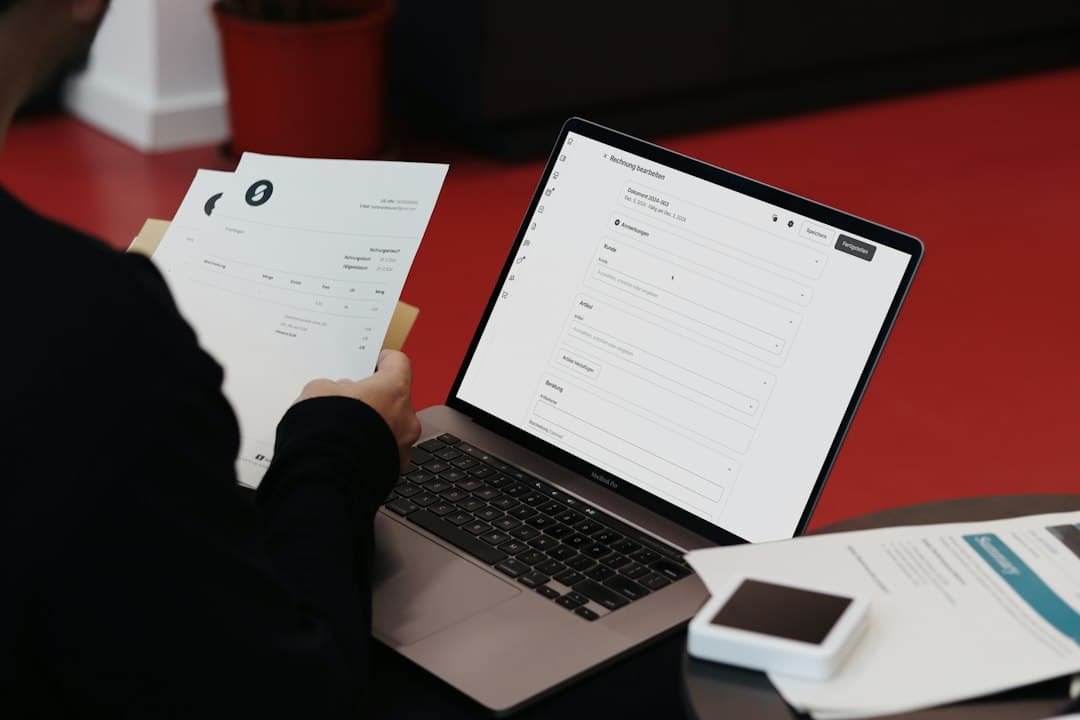
Starting as a Micro-Entrepreneur: VAT and Invoices
If you invoice for services (writing, video editing, consulting) under micro-entrepreneur status, VAT is the first thing to understand. As a general rule, micro-entrepreneurs have no VAT reporting obligations, because they fall under the franchise-in-base regime, as long as their revenue stays within the thresholds of that regime.[3] The amounts of these thresholds are set by the administration: check them on impots.gouv.fr before you get started.
Under this regime, you do not show VAT on the invoices you issue to your clients.[3] However, each invoice must bear the notice “TVA non applicable, article 293 B du Code général des impôts (CGI)” (or, depending on the version of the text, “article L. 223-3 du Code des impositions des biens et des services”).[3]
If your client is a company established in another European Union member state, a specific rule applies: a micro-entrepreneur who provides services to a taxable person established in another EU member state is affected, whatever the amount. The VAT small business exemption no longer works in the same way, and you should check your VAT obligations on impots.gouv.fr[3]. For a digital nomad working for European clients, this is a common situation.
Short-form video content: YouTube monetization and timeline
If you are counting on YouTube Shorts to supplement your income, note two deadlines. According to YouTube, to receive your share of the monthly Shorts Creator Pool, you will need to maintain 10M qualified Shorts views over the last 90 days[4]. Missing this threshold does not remove you from the YouTube Partner Program and does not affect the program's other revenue, including revenue from long-form videos[4].
Second deadline: if you do not accept the new monetization terms before January 31, 2027, you will stop receiving revenue from the associated features starting February 1, 2027[4]. You accept the terms in YouTube Studio. For channels affiliated with a multi-channel network (MCN), the managing MCN does not need to accept the new terms[4]. Check in YouTube Studio what applies to your channel. Add this date to your calendar now, especially if you travel and check your messages infrequently.

Collaborations with Brands and Professionals
As soon as a brand pays you or sends you products in exchange for content, the collaboration must be disclosed. According to the Autorité de régulation professionnelle de la publicité (ARPP), the existence of a commercial collaboration between an influencer and an advertiser must in all cases be made known to the public by the influencer[5].
Some collaborations are classified as advertising, particularly when the content is paid for or involves another form of compensation, such as receiving products or services[5]. To identify such content, the ARPP recommends adding an explicit indication that makes it instantly recognizable[5]. This identification can be made by any means: in the spoken content, in the text accompanying the content, or through a mention within the video[5].
Useful clarification: the ARPP is a private self-regulatory body, and its recommendations are not, in themselves, legal texts; they work alongside applicable law[6]. The law of your country of residence and that of the country targeted by your audience may therefore apply in addition to these recommendations.
Finding Missions and Partners: The Network Before the Platform
Professional opportunities (missions, clients, collaborations, information) tend to circulate more through weak ties, meaning distant acquaintances and contacts, than through close friends, because these ties give access to circles and information different from your own. Maintaining a broad and diverse network of light relationships is therefore an underrated source of opportunities[7]. While traveling, you naturally make many of these connections: remember to stay in touch.
If you use LinkedIn, note that in March 2026 the platform announced a feed based on generative recommendation models supplemented by LLMs, which take into account industry, skills, experience, geography, and sustained engagement behavior[8]. A precise profile and regular activity therefore matter more than occasional visits.
Points to Watch
- Platform income missing from the pre-filled tax return: this does not exempt you from determining whether it is taxable and declaring it if necessary[2].
- Exceeding the revenue thresholds of the VAT small business exemption: you become liable for VAT and must charge it to your clients[3].
- Client established in another EU member state: an intra-community VAT number is required regardless of the amount of the service[3].
- Paid content or content produced in exchange for products, not disclosed: the collaboration must always be made known to the public[5].
- YouTube deadline of January 31, 2027: without accepting the new terms in YouTube Studio, the associated revenue stops on February 1, 2027[4].
Checklist Before You Get Started
- Choose a single lead to test for a few weeks, then evaluate it.
- Keep the annual summary document sent by your platforms every year, showing the net amount received and the fees deducted.
- If you invoice as a micro-entrepreneur, add the mandatory VAT notice on every invoice and track your revenue against the thresholds.
- If you publish videos on YouTube, note the dates of January 31 and February 1, 2027.
- Include a clear disclosure on any content resulting from a commercial collaboration.
- Stay in touch with the contacts you meet along the way: they are often the source of your next assignments.
Sources
- 1.^Mira Knowledge — We move forward by trying out a series of possible identities, and knowledge comes from experimentation, not the other way around; this is especially relevant for a digital nomad. Verified on 06/26/2026: reference source academic.named-researcher. (accessed June 26, 2026)
- 2.^ abcdefgimpots.gouv.fr — Income from collaborative platforms | impots.gouv.fr: “These transactions, including occasional ones, may be taxable and are subject to reporting obligations.” “Each year, collaborative economy platforms transmit to the tax administration information on the income received by their users.” “To each of their users who has received sums on the occasion of transactions carried out through them, an information document is provided, mentioning in particular the number of transactions from the previous year, the net amount received, and the amount of fees and taxes deducted by the platform.” https://www.impots.gouv.fr/revenus-de-plateformes-collaboratives-0 (accessed October 20, 2026)
- 3.^ abcdefimpots.gouv.fr — I am a micro-entrepreneur or run a micro-enterprise. Do I have VAT reporting obligations? | impots.gouv.fr: “Micro-entrepreneurs generally have no VAT reporting obligations, as they fall under the VAT franchise scheme provided their revenue meets the threshold conditions.” “Micro-entrepreneurs benefiting from this scheme must not show VAT on the invoices they issue to their clients.” “Any micro-entrepreneur benefiting from the VAT franchise must include the following notice on their invoices: TVA non applicable, article 293 B du Code général des impôts (CGI) or TVA non applicable, article L. 223-3 du Code des impositions des biens et des services (CIBS).” https://www.impots.gouv.fr/professionnel/questions/je-suis-micro-entrepreneur-ou-la-tete-dune-micro-entreprise-ai-je-des (accessed October 20, 2026)
Show 5 more sourcesShow less
- 4.^ abcdesupport.google.com — Changes to the YouTube Partner Program - YouTube Help: “To earn money each month with the Shorts Creator Pool, creators will now need to maintain 10M qualified Shorts views over the last 90 days.” “If you miss this threshold, you will not be removed from the YouTube Partner Program and this will not affect other program revenue, including long-form videos.” “If you do not accept the updated terms before January 31, 2027, you will stop earning money from the associated monetization features starting February 1, 2027.” https://support.google.com/youtube/answer/12843009?hl=en (accessed October 20, 2026)
- 5.^ abcdearpp.org — 04/03/2017 - Influencer and brand communications, new provisions adopted in the ARPP Digital Advertising Communication Recommendation - ARPP: “The existence of a commercial collaboration between an influencer and an advertiser for the publication of content must in all cases be disclosed by the influencer to the public.” “When the content is produced under reciprocal commitments; the influencer's statement being subject to payment or any other consideration, such as, for example, the provision of products or services in their favor.” “To identify these communications made in collaboration with a brand (unless this identification is obvious), it is recommended to add an explicit indication making it identifiable as such, so that this nature is instantly apparent.” https://www.arpp.org/actualite/communication-influenceurs-marques/ (accessed October 20, 2026)
- 6.^Mira Knowledge — The ARPP is a private self-regulatory body; its recommendations are not, in themselves, laws and work alongside applicable law. Verified on 09/01/2026: reference source arpp.org. https://www.arpp.org (accessed September 1, 2026)
- 7.^Mira Knowledge — Opportunities circulate more through weak ties than through close contacts, because they provide access to different circles and information; maintaining a broad and diverse network of light relationships is an underrated lever. Verified on 06/26/2026: 2 concordant sources (journal.peer-reviewed, journal.peer-reviewed, academic.body-of-work). (accessed June 26, 2026)
- 8.^Mira Knowledge — In March 2026, LinkedIn announced a feed based on generative recommendation models that take into account industry, skills, experience, geography, and sustained engagement. Verified on 09/01/2026: official source news.linkedin.com. https://news.linkedin.com/2026/ImprovingTheFeed (accessed September 1, 2026)