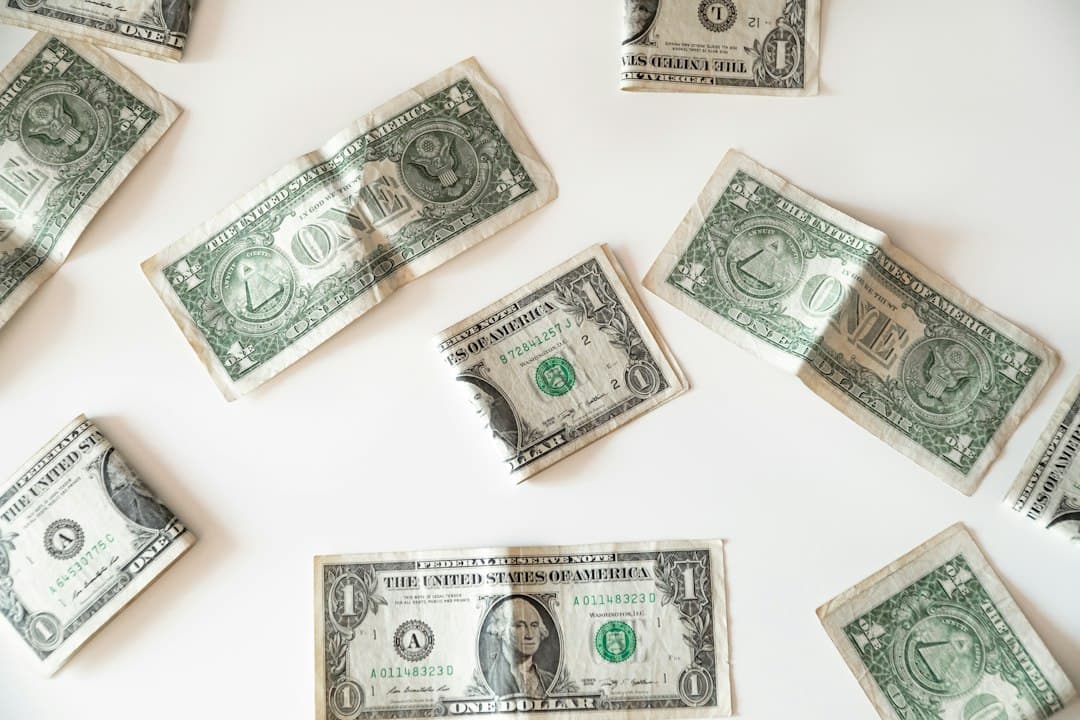
Saying a country "uses the dollar" can mean three very different things: it has adopted it as its official currency, it tolerates it alongside its own money, or its "dollar" has nothing to do with the US one. This article helps you place each destination in the right category. You'll also learn what to check for your dollar transfers before you leave.
Official dollar, parallel use, simple name coincidence: three situations to tell apart
Officializing the dollar means adopting it as the official currency in place of a country's own national currency: this is called official dollarization[1]. It is very different from a country where the dollar only circulates alongside the local currency.
The US dollar carries the ISO code USD, and ISO has also assigned the numeric code 840 to this currency[2]. This code is useful for identifying without ambiguity the currency of a displayed price or a bank statement: names like "dollar," "franc," "peso," or "pound" are used in many countries, with very different values[2].
So keep three cases in mind: countries where the USD is official, those where it is accepted without being official, and those whose "dollar" is a different currency. The following sections cover them in that order.
Sovereign states that use the US dollar
Seven sovereign states have adopted the US dollar as their official currency: Ecuador, El Salvador, the Marshall Islands, Micronesia, Palau, Panama, and Timor-Leste[1]. The ISO 4217 list of countries whose currency is the USD matches these seven names[2].
According to publications, the list varies. A Le Figaro article counts eleven "countries" with no territorial link to the United States whose national currency is the dollar (a list that also includes territories such as the British Virgin Islands, the Turks and Caicos Islands, and Bonaire), and notably includes Zimbabwe, where the current status of the currency should be verified[3]. Wise groups Zimbabwe with Ecuador and El Salvador among countries often associated with official dollarization, but each arrived there for different reasons[1]. If your plans involve one of these countries, check the status of the currency with the local central bank before setting your budget.
Territories that use the dollar without being independent states
Five territories attached to the United States have the US dollar as their official currency: Puerto Rico, Guam, American Samoa, the US Virgin Islands, and the Northern Mariana Islands[3].
Other territories also use the USD without being sovereign states: the British Virgin Islands, the Turks and Caicos Islands, and Bonaire, Sint Eustatius and Saba, according to the ISO 4217 list[2]. They are therefore not among the countries whose official currency is the dollar: if you compare destinations, keep these territories in a separate category.
Panama, El Salvador, Timor-Leste: what changes on the ground
In Panama, the US dollar has been in use since 1904. The national currency, the balboa, remains pegged 1 to 1 to the dollar and exists essentially only as coins[1]. In practice, you pay in dollars, receiving balboa coins as change.
In El Salvador, the economy was "dollarized" in 2001[4]. The country was also the first to adopt bitcoin as legal tender, which drew criticism from the IMF[4].
In Timor-Leste, the US dollar is the official currency, and the country also issues local centavo coins for small change[1].
Dual-currency countries: the dollar without being official
In these countries, the dollar is accepted, but prices and payment rules still depend on the local currency.
- Cambodia: the US dollar was introduced in the 1990s to stabilize the economy. Prices are often quoted in both dollars and riels, and you can pay in either currency, but dollar coins are not accepted[3].
- Canada and Mexico: the US dollar is accepted mainly in border areas, not systematically elsewhere[3]. According to Wise, acceptance is generally limited to tourist zones, border towns, and a few hotels or shops, and it is not the best option for everyday payments[1]. In Mexico, the official currency is the Mexican peso; USD withdrawals are possible at some border-area ATMs, but rare elsewhere[5].
- Costa Rica: the Costa Rican colón is the official currency, but U.S. dollars are accepted in many places[6].
- Argentina: the Argentine peso is the official currency; there is a dual exchange rate for dollars, official and “blue” (parallel market), and these rates may have changed: check the rate in effect before you leave[7].
These “dollars” that have nothing to do with the U.S. dollar
In Australia you pay in Australian dollars (AUD), and in Canada in Canadian dollars (CAD): these currencies are not the U.S. dollar, and the Australian dollar, for example, floats against other currencies[1].
The Australian dollar has floated since 1983: its value rises or falls against other currencies depending on the market and the economy[1]. The Canadian dollar also has a floating rate, which is not pegged to the U.S. dollar[1].
The same word also covers other currencies: the Bahamian, Barbadian, Bermudian and Cayman Islands dollars, as well as the East Caribbean dollar, used in particular in Antigua and Barbuda, Saint Lucia, Grenada, Dominica, Saint Kitts and Nevis, and Saint Vincent and the Grenadines[1]. The ISO code (USD, AUD, CAD, HKD…) avoids the confusion[2].
Paying, withdrawing and transferring in dollars from France
An international transfer (outside SEPA) generally costs more than a SEPA transfer, and fees vary depending on banks and intermediaries[8]. Two types of fees apply: issuance fees, sometimes a percentage and sometimes a flat amount, and exchange fees, which represent the bank's margin on top of the official exchange rate[8]. Check your bank's fee schedule to find out what they are[8].
As for timing, a SEPA transfer is executed within one business day at most, whereas an international transfer takes longer[8]. In general, count on 4 business days[8]. And if the order is placed over a weekend or public holiday, the timeline only starts on the next business day[8].
Within the European Union, regulations require banks to disclose to you the ECB exchange rate and their conversion fees before any card payment or transfer in a currency other than the euro[9]. Use this information to compare your bank with a neobank before a transfer or withdrawal.
Pitfalls and points to watch
- Blocked or refused transfer: an international transfer may not go through for several reasons. In that case, contact your bank to learn the exact reason so you can respond[8]. In countries where foreign currency controls are strict, or for a large amount, you may be asked to state the purpose of the transaction and provide supporting documents[8].
- Receiving fees: some banks charge for receiving international transfers. The recipient may therefore pay fees even if the sender covered all issuance fees[8].
- Confusing the dollars: the Australian and Canadian dollars have no link to the U.S. dollar[3], while the Hong Kong dollar, a separate currency, has a value closely tied to the USD[1]. Treating the Australian and Canadian dollars as currencies linked to the USD skews your cost estimates, since they have their own exchange rates (the Australian dollar floats, for example)[1].
- Border areas (Canada, Mexico): the U.S. dollar is accepted there, but it is not the best option for everyday payments[1].
Steps to take before you leave
- Identify the currency actually used on site, then check whether coins are accepted or only bills (no dollar coins in Cambodia[3]).
- Compare your bank's exchange fees with a neobank's before a transfer or withdrawal, and ask your bank for its conversion rate and fees[9].
- Check your bank's fee schedule for issuance and exchange fees on an international transfer, and any receiving fees on the recipient's side[8].
- Allow about 4 business days for an international transfer[8].
- Keep in mind what this article does not cover: choosing a bank or neobank, on-site withdrawal limits and fees, and the exact status of each currency at your destination require further research before you can truly settle in.
Sources
- 1.^ abcdefghijklmwise.com — Which countries use dollars? A global currency guide - Wise: “Seven sovereign countries use the U.S. dollar as their official currency, including Ecuador, El Salvador, the Marshall Islands, Micronesia, Palau, Panama and Timor-Leste.”; “Official dollarization is when a country adopts the U.S. dollar as its official currency instead of relying on its own national currency.”; “Ecuador, El Salvador and Zimbabwe are often grouped together here, but each arrived there for different reasons.” https://wise.com/gb/blog/countries-that-use-dollars (accessed October 28, 2026)
- 2.^ abcdeen.wikipedia.org — ISO 4217 - Wikipedia: “USD, numeric code 840: United States dollar, used in the United States, American Samoa, the British Virgin Islands, Bonaire, Sint Eustatius and Saba, Ecuador, El Salvador, Guam, the Marshall Islands, Micronesia, the Northern Mariana Islands, Palau, Panama (alongside the balboa), Puerto Rico, Timor-Leste, the Turks and Caicos Islands, the U.S. Virgin Islands and the United States Minor Outlying Islands.”; “This removes the problem posed by the names dollar, franc, peso and pound, used in many countries with very different values.”; “ISO 4217 also assigns a three-digit numeric code to each currency. For example, USD (United States dollar) has the numeric code 840, which is also the ISO 3166-1 code for the United States.” https://en.wikipedia.org/wiki/ISO_4217 (accessed October 28, 2026)
- 3.^ abcdeflefigaro.fr — You can pay in U.S. dollars in many countries other than the United States (and here are which ones): “Eleven other countries with no territorial link to the United States have made the dollar their national currency: Ecuador, El Salvador, Zimbabwe, Palau, the Marshall Islands, Panama, the British Virgin Islands, the Turks and Caicos Islands, Timor-Leste, Micronesia and Bonaire.”; “The U.S. dollar is also the official currency of five territories attached to the United States: Puerto Rico, Guam, American Samoa, the U.S. Virgin Islands and the Northern Mariana Islands.”; “For example, Cambodia introduced the U.S. dollar in the 1990s to stabilize its economy, which had been devastated under the Khmer Rouge regime.” https://www.lefigaro.fr/voyages/conseils/vous-pouvez-payer-en-dollars-americains-dans-bien-d-autres-pays-que-les-etats-unis-et-voici-lesquels-20240815 (accessed October 28, 2026)
Show 6 more sourcesShow less
- 4.^ abdiplomatie.gouv.fr — El Salvador - Presentation of El Salvador | France Diplomatie: “Since 2003, it has implemented CAFTA-DR (the free trade agreement between Central America, the Dominican Republic and the United States), which links it to the United States (in 2001, the economy was dollarized).”; “El Salvador was the first country to adopt Bitcoin as legal tender, drawing criticism from the IMF over the transparency of the currency.” https://www.diplomatie.gouv.fr/fr/information-par-pays/salvador/presentation-du-salvador (accessed October 28, 2026)
- 5.^Mira Knowledge — The official currency of Mexico is the Mexican peso, and withdrawals in dollars are only possible at certain border ATMs, rarely elsewhere. Verified on 06/11/2026: official source banxico.org.mx. https://www.banxico.org.mx/indicadores/ (accessed June 11, 2026)
- 6.^Mira Knowledge — The Costa Rican colón is the official currency of Costa Rica, but U.S. dollars are accepted in many places. Verified on 06/11/2026: reference source en.wikipedia.org. https://en.wikipedia.org/wiki/Costa_Rica (accessed June 11, 2026)
- 7.^Mira Knowledge — The Argentine peso is the official currency of Argentina, with a dual exchange rate for dollars: official and “blue” (parallel market). Verified on 06/11/2026: reference source britannica.com. https://www.britannica.com/place/Argentina (accessed June 11, 2026)
- 8.^ abcdefghijkbanque-france.fr — International transfers: “An international transfer is generally more expensive than a SEPA transfer, and bank fees vary depending on the banks and intermediaries involved.”; “These fees represent the bank's margin and are charged in addition to the official exchange rate.”; “You should check your bank's fee schedule to learn the fees applied by the institution.” https://www.banque-france.fr/fr/a-votre-service/particuliers/mieux-connaitre-moyens-paiement/virement-international (accessed October 28, 2026)
- 9.^ abbanque-france.fr — Help and FAQ | Banque de France: “To ensure better comparability of currency conversion fees, European regulation requires banks to disclose to their clients the exchange rate published by the ECB as well as their currency conversion fees (the margin on the exchange rate applied by the bank) before any card or transfer transaction carried out within the European Union in a currency other than the euro.” https://www.banque-france.fr/fr/aide-faq/Devises%20%C3%A9trang%C3%A8res (accessed October 28, 2026)



