Mexico does not have a digital nomad visa. Remote workers either come on a visitor stay or apply for temporary residence. This article explains how to choose between the two, what you need to prove, what changes for taxes, and how to organize healthcare, housing, internet, and travel. It ends with the steps to follow in order, from planning to settling in.
The essentials at a glance
- Mexico does not have a digital nomad visa. Remote workers come on a visitor stay or apply for temporary residence based on economic solvency[1].
- A visitor stay can last up to 180 days, but the immigration officer decides the length[2].
- In 2026, temporary residence requires about 79,771 pesos in monthly income over 6 months, or an average savings balance of about 1,344,373 pesos over 12 months[1].
- The residence visa is usually applied for at a Mexican consulate abroad, then exchanged for a resident card at the INM within 30 days[2].
- Working for a Mexican employer or Mexican clients requires authorization from the INM[1].
- Visa and tax residence are two separate matters: tax residence depends on your home and the center of your vital interests, with no legal day count[3].
- There is no social security agreement between France and Mexico, so international health insurance should be arranged before departure[4].
- A solo budget is around €900 to €1,300 per month depending on the city[5].
Mexico has no nomad visa: what you need to know first
Mexico has not created an official digital nomad visa as of 2026[6]. Long-stay remote workers make one of two choices: come on a visitor stay, or apply for temporary residence by proving income or savings[1].
Be careful with visitor status: a tourist is not allowed to earn income from Mexican sources, and the law does not expressly provide for remote work for a foreign employer under this status[1]. In practice, this kind of remote work is widely tolerated in Mexico City, Oaxaca, and Playa del Carmen[7], but tolerance is not a right.
The length of a visitor stay is not automatic: it can go up to 180 days per entry, and the immigration officer decides how many days are granted[2]. In most cases, a tourist cannot extend their stay or switch to residence from within Mexico[2].
Visa and residence permit: temporary residence based on economic solvency
To settle in, most foreigners obtain a residence visa at a Mexican consulate abroad, enter Mexico, then exchange it for a resident card with the National Institute of Migration (INM) within 30 days[2]. Temporary residence lasts from 1 to 4 years and can lead to permanent residence after 4 years[2].
Without an employer or family in Mexico, the common route is economic solvency. In 2026, you must prove either after-tax monthly income of about 79,771 pesos over the last 6 months, or an average savings balance of about 1,344,373 pesos over the last 12 months[1]. These amounts are indexed and change every year[1].
Each consulate converts these amounts into local currency at its own rate, so the figures vary from one post to another. Rely on the up-to-date page of the consulate you are assigned to[2].
Some consulates also ask for a letter from your employer approving remote work from Mexico[1]. For the interview, you will need to explain your plan: remote work, financial stability, and planned length of stay[8]. If the application is approved, the visa is affixed to your passport, valid for 180 days to enter Mexico and then convert into a resident card[8].
The application is in principle made from abroad, not from within Mexico[2].
Work status: foreign employee, freelancer, Mexican client
With temporary residence, you can work remotely for foreign clients without restriction[9], but the permit does not automatically give you the right to work for a Mexican employer or Mexican clients: that requires authorization from the INM[1].
If you work as a freelancer for Mexican clients, you must, in addition to INM authorization[1], register with the Mexican tax registry (RFC) and issue electronic invoices in pesos. A simplified regime exists for small freelancers[9].
Taxation and Tax Residence
No special tax regime is attached to this visa, and Mexico provides no tax exemption for digital nomads[3]. Immigration status and tax residence are two separate matters: having your home in Mexico can make you a Mexican tax resident, which may require you to declare your worldwide income in Mexico, while your country of origin may also continue to tax you[1].
Under the federal tax code, an individual becomes a Mexican tax resident when they establish their home in Mexico; if they also keep a home abroad, they are only a resident if the center of their vital interests is in Mexico[3]. This is a fact-based test, with no legal day count[3]. Mexican tax residents are taxed on their worldwide income[3], under a progressive scale reaching up to 35%[9].
The "183-day" rule circulates widely as an automatic threshold. Treat it with caution: the legal test rests on the whole of your ties, and you should confirm your situation with the tax authority[3]. If you also remain a tax resident elsewhere, a double taxation treaty between Mexico and that other country generally determines which one taxes each part of your income[3]. Consult a qualified professional before acting.
Health and Insurance
In Mexico, health insurance determines access to hospital care: private hospitals systematically refuse patients without a financial guarantee, according to the French consulate in Mexico City, and frequently require an “open” credit card imprint even if you are insured[4]. One day of hospitalization costs an average of €1,000[4].
If you are enrolled in the French Social Security system, be aware that there is no social security agreement between France and Mexico: nothing will come from the French system[4]. The public system (IMSS, ISSSTE) is only accessible to contributing employees[10]. International health insurance is therefore essential[10]: take out a policy before departure, covering hospitalization and repatriation.
Arrival Procedures: Resident Card, Bank Account, Phone
Once you arrive, you have 30 calendar days to go to the INM and convert your visa into a temporary resident card[8]. Missing this deadline is one of the most costly pitfalls of the process.
If you need to invoice locally, you will need the RFC, Mexico's tax identification number, issued by the SAT[8].
For banking, an online multi-currency account lets you hold pesos, make transfers to Mexican accounts, and pay by card, often at a lower cost than your home bank[8].
As for phones, local prepaid plans often cap at 8 or 10 GB[11], which is short for remote work: a data eSIM lets you be online from the moment you land.
Housing
Most standard Mexican leases require a property-owning guarantor in the same city (the “aval”), which a foreigner usually cannot provide[7]. The usual solution is a short-term furnished rental or paying several months in advance[7]. So book a furnished place for the first month, then look for a longer lease once you are on site.
To search beyond international platforms, neighborhood Facebook groups and “SE RENTA” signs in windows offer prices 30 to 40% lower[7]. Whichever route you choose, visit the property once in Mexico and avoid any advance payment without having seen the place[12].
Cost of Living by City
A single person can live comfortably on €900 to €1,300 per month depending on the city[5]. Rents are lowest in Mérida or Oaxaca, higher in Mexico City, and highest in Playa del Carmen or Tulum, where tourism has driven prices sharply up[5].
In Playa del Carmen and Tulum, the low season (May to October) cuts prices by half[7].
Internet and Connectivity
Mexico City offers the fastest and most reliable connection, the most coworking spaces, and the largest digital nomad community in the country[13]. Fiber is mainly available in the major cities[9].
Power outages are not rare, especially in remote areas, and the rainy season from June to October, with the risk of hurricanes, can leave you without internet for several days[12]. Keep a backup eSIM or SIM card.

Cities and Regions
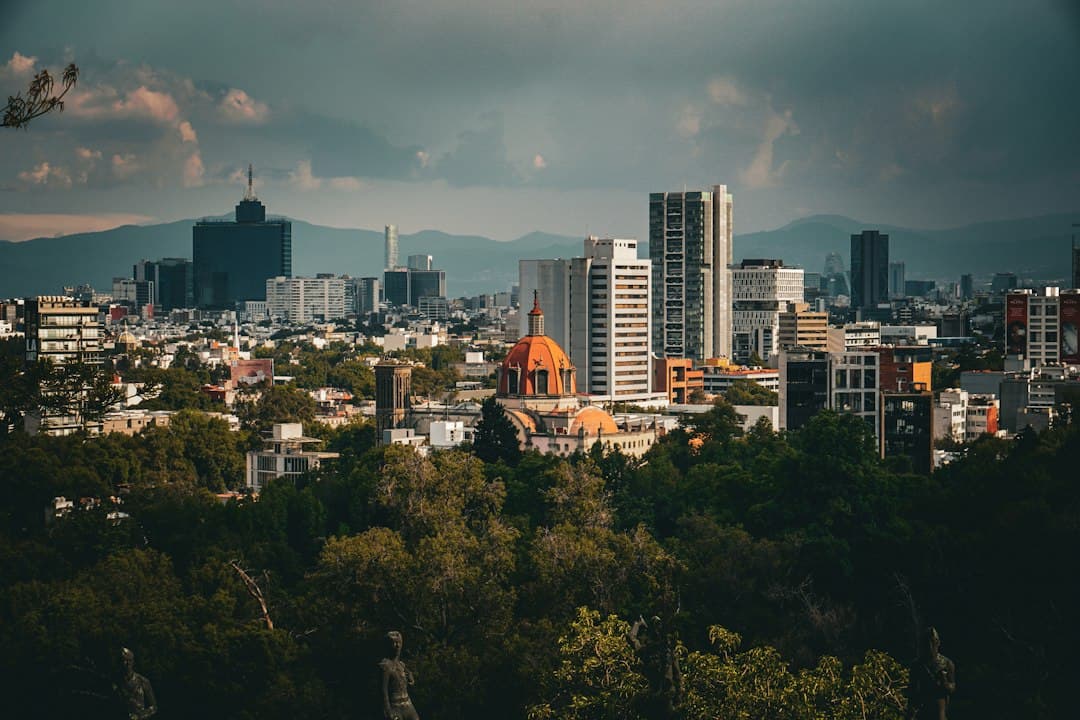
Mexico City is the country's largest nomad community, but it is also a metropolis of more than 22 million people: noise, pollution, and heavy traffic are real[13]. The central highlands are mild all year round, while the coasts are hot and humid, with a hurricane season from June to November[14].
- Playa del Carmen and Tulum: international community, more expensive, exposed to hurricanes[14].
- Oaxaca: gastronomic capital, gentler budget, more modest internet[14].
- Mérida: among the safest cities in the country, scorching heat from April to June[14].
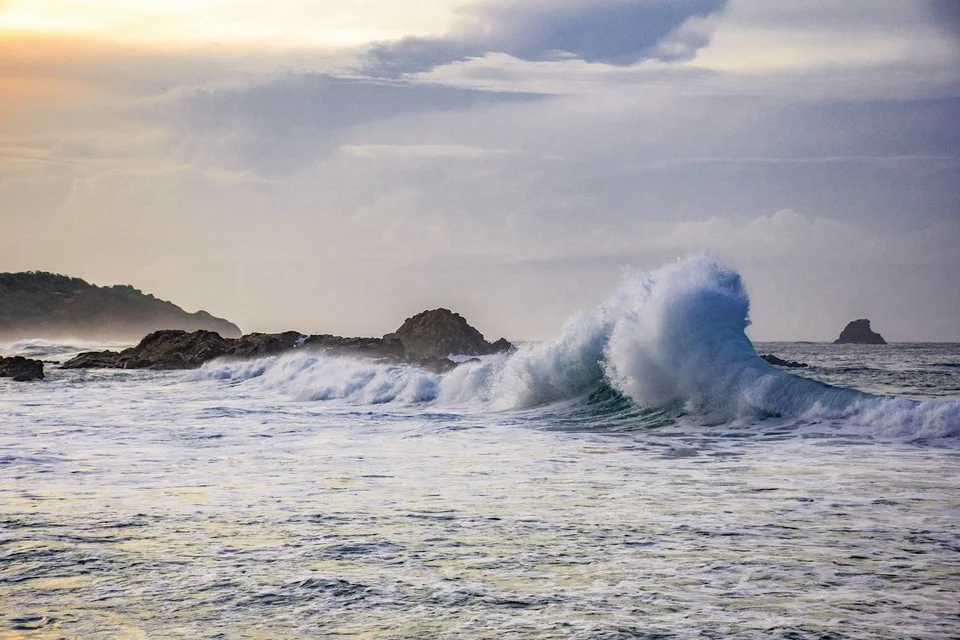
- Puerto Escondido: surfing and remote work, variable internet[14].
Before you commit, spend a few weeks in the city you're considering: you can't judge Mérida's heat in May or Mexico City's altitude from a photo[5].

Transportation
In Mexico City, the metro is very inexpensive[15]. In the downtown areas of Playa del Carmen and Oaxaca, everything is within walking distance[15].
Uber and Didi are not available in Tulum, Oaxaca, and San Cristóbal de Las Casas: taxis are the only on-demand option there[13]. Install transport apps before you arrive[15].
Language, Integration, and Community
French is rarely spoken outside diplomatic circles and French schools: Spanish is essential for daily life and administrative procedures[9]. It is also important to step outside the nomad bubble and interact with locals[16].
Mexico is home to one of the largest French communities in Latin America, with 20,643 registrants in the consular register at the end of 2025[9].
Traps, Scams, and Points of Caution
Status and Procedures
- The length of your tourist stay is written by the officer on the stamp, often 90 or 180 days depending on what you declare; back-to-back 180-day stays are increasingly being cut short to 30 or 60 days[7].
- The tourist stamp prohibits any paid activity in Mexico[7].
- The 30-day deadline after entry to register with the INM is mandatory[8].
- Required amounts and documents vary from one consulate to another: use the up-to-date information sheet from the relevant consulate[2].
- Never hand your passport to an intermediary, and never pay for “guaranteed” results[2].
Money and Housing
- A remote-work visa tells you nothing about your tax situation: don't rely on a 183-day threshold presented as an absolute rule[3].
- Never pay any advance for accommodation you haven't seen[12].
- Credit card fraud is common, especially card skimming: always keep your card in sight[17].
Safety on the Ground
- In Tulum, the French Ministry of Foreign Affairs has reported an increase in extortion by local police: never pay a fine to a lone officer who cannot provide a receipt; if in doubt, call 911[17].
- Taxis: prefer taxis from official stands (“sitio”), and check that the vehicle and driver match the documents displayed[17].
- Travel to the triangle formed by Celaya, Irapuato, and Salamanca is strongly discouraged[17].
- In Mexico City, several neighborhoods north and northeast of the Zócalo are discouraged unless absolutely necessary: consult the up-to-date travel advice[17].
- Beaches are often dangerous and very rarely patrolled by lifeguards[17].
Steps, in Order
- 1. Choose your status based on how long you plan to stay: visitor to test the waters, temporary residency to stay longer, and check the up-to-date page of the Mexican consulate you depend on[2].
- 2. Gather your supporting documents: bank statements covering 6 or 12 months depending on the route you choose[1], and your employer's letter if your consulate requests it[1].
- 3. Submit your application and attend the interview at the consulate[8].
- 4. Take out international health insurance before you leave[10].
- 5. Enter Mexico, then apply for your resident card at the INM within 30 days[8].
- 6. Get settled: furnished accommodation for the first month[7], a multicurrency account[8], an eSIM[11], and an RFC if you invoice locally[8].
- 7. Review your tax situation (center of vital interests, applicable tax treaty) with a qualified professional[3].
These milestones will help you choose your status and prepare for departure in the right order. They do not replace the detail of each procedure, from the consular file to the resident card, nor a budget established line by line, nor the choice of a city and a neighborhood. To truly settle in, these are the points where you need to go further.
Frequently Asked Questions
Can you move without a job?
Yes: most foreigners without a job are eligible for temporary residency based on financial solvency[2].
Can you apply for residency from within Mexico?
Usually not: in most cases, the residence visa is obtained at a Mexican consulate abroad[2].
Can you work for a Mexican client?
This requires authorization from the INM[1], and registration in the tax registry if you invoice locally[9].
Sources
- 1.^ abcdefghijklmnnorthamericans.com — Mexico Digital Nomad Visa? Remote Work Options in 2026 | NorthAmericans: “Mexico does not have a separate digital nomad visa: remote workers use the visitor stay or temporary residency based on financial solvency.” ; “Visitors entering on a tourist basis are not allowed to earn income from Mexican sources, and the law does not expressly authorize remote work for foreign employers under visitor status; long-stay remote workers therefore usually apply for temporary residency by proving income or savings.” ; “With the 2026 UMA of 117.31 pesos per day, temporary residency requires approximately 79,771 pesos in monthly income over 6 months, or an average savings balance of approximately 1,344,373 pesos over 12 months.” https://northamericans.com/mexico/digital-nomads/ (accessed October 19, 2026)
- 2.^ abcdefghijklmnorthamericans.com — Settling in Mexico in 2026: Residency, Visas, Steps | NorthAmericans: “Up to 180 days per entry, but the immigration officer decides how many days are granted. In most cases, tourists cannot extend their stay or switch to residency from within Mexico.” ; “Most foreigners who settle in Mexico obtain a residence visa at a Mexican consulate abroad, enter Mexico, then exchange it for a resident card with the INM within 30 days. Temporary residency (1 to 4 years) is usually based on income or savings, a job offer, or family ties, and can lead to permanent residency after 4 years.” ; “Consulates convert these amounts into local currency at their own exchange rate, so figures vary from one consulate to another. Always use your consulate's current page.” https://northamericans.com/fr/mexico/ (accessed October 19, 2026)
- 3.^ abcdefghiliving-abroad.org — Mexico Remote Worker Visa Tax: “No special tax regime is attached to this visa, and Mexico provides no tax exemption for digital nomads.” ; “Individuals become Mexican tax residents when they establish their home in Mexico; those who also keep a home abroad are Mexican residents only if their center of vital interests is in Mexico.” ; “This is a fact-based test, with no legal day count for individuals.” https://www.living-abroad.org/fr/pays/mexique/impots/ (accessed October 19, 2026)
Show 14 more sourcesShow less
- 4.^ abcddecauxassurances.com — Expat Insurance Mexico: Health, CFE and 2026 Rates: “Hospitals systematically refuse patients who lack a financial guarantee (French consulate in Mexico City), frequently require an open credit card voucher even if you are insured, and a hospital day costs on average €1,000 (MEAE).” ; “And since there is no France-Mexico social security agreement (CLEISS), nothing will come from the French system.” https://www.decauxassurances.com/assurance-expatrie-mexique/ (accessed October 19, 2026)
- 5.^ abcdcapmexique.fr — Living in Mexico: Budget, Cities and Visa in 2026: “A single person lives comfortably on 900 to 1,300 € a month, depending on the city.”; “Budget 350 to 500 € for a decent one-bedroom in Mérida or Oaxaca, 500 to 700 € in Mexico City in a pleasant neighborhood such as Roma or Condesa, and 700 to 1,100 € in Playa del Carmen or Tulum, where tourism has driven prices sharply up.”; “Come scout out the area outside peak tourist season, and stay at least three weeks in the city you're considering. Mérida's heat in May, the rainy season in Puerto Vallarta, or Mexico City's altitude can't be judged from photos.” https://capmexique.fr/expatriation/vivre-au-mexique (accessed October 19, 2026)
- 6.^openshores.co — Is It Easy to Immigrate to Mexico in 2026? “Mexico has not created an official digital nomad visa in 2026, unlike some other destinations.” https://www.openshores.co/blog/est-ce-facile-d-immigrer-en-mexique (accessed October 19, 2026)
- 7.^ abcdefghledigitalnomad.com — Working Remotely from Mexico City: The Complete Guide (2026): “Mexico has no dedicated nomad visa; the tourist stamp prohibits any paid activity in Mexico and says nothing about remote work for foreigners, which is widely tolerated in Mexico City, Oaxaca and Playa del Carmen.”; “The guarantor: most standard Mexican leases require a property-owning guarantor in the same city, which is impossible for a foreigner to provide.”; “The usual solution is a short-term furnished rental or paying several months in advance.” https://ledigitalnomad.com/s-expatrier/mexico/ (accessed October 19, 2026)
- 8.^ abcdefghijvivreaumexique.com — Step-by-Step Plan to Become a Digital Nomad in Mexico - Vivreaumexique.com: “At your consulate interview, clearly explain your project: remote work, financial stability, and intended length of stay. If your application is accepted, your visa is affixed in your passport, valid for 180 days to enter Mexico, after which you convert it into a resident card.”; “Once you arrive, you have 30 calendar days to go to the INM (Instituto Nacional de Migración) and convert your visa into a temporary resident card.”; “Then, if you need to invoice locally or open certain services, you will need the RFC (Mexican tax ID number). It is obtained from the SAT (the Mexican tax authority).” https://vivreaumexique.com/plan-nomade-digital-mexique (accessed October 19, 2026)
- 9.^ abcdefgxn--lexpatri-i1a.fr — Remote Work in Mexico: Visa, Taxes, Connectivity: “It allows you to work for foreign clients from Mexico without restriction.”; “This visa does not automatically grant the right to work for a Mexican employer.”; “Caution: if you carry out activities for Mexican clients, you must register for the RFC (Mexican tax) and invoice legally in MXN, issuing a CFDI (electronic invoice).” https://xn--lexpatri-i1a.fr/destinations/mexique/teletravail (accessed October 19, 2026)
- 10.^ abcassuranceinternationale.fr — Complete Guide to Expatriating to Mexico for French Citizens (2025) | AssuranceInternationale.fr: “The public system (IMSS, ISSSTE) is only accessible to contributing employees.”; “International health insurance is essential.” https://assuranceinternationale.fr/guide/partir-en-expat-au-mexique/ (accessed October 19, 2026)
- 11.^ abgomoworld.com — Digital Nomad in Mexico: Best Internet Solution 2026: “Binding data limits: local plans often cap at 8 GB or 10 GB.” https://www.gomoworld.com/fr/blog/teletravail-mexique (accessed October 19, 2026)
- 12.^ abcexpatden.com — Is Mexico a Good Place for Digital Nomads? Let's Find Out: “Whichever route you choose, it's best to check the place once you're in Mexico and avoid any advance payment without having seen the property.”; “Power outages are not uncommon in Mexico from time to time, especially in remote areas. And the rainy season from June to October in some regions, along with the risk of hurricanes, can leave you without internet for several days.” https://www.expatden.com/fr/mexico/nomades-numeriques-mexique/ (accessed October 19, 2026)
- 13.^ abcexpatden.com — Is Mexico a Good Place for Digital Nomads? Let's Find Out: “Mexico has the fastest and most reliable internet (from 50 Mbit/s to 1 Gbit/s), the most coworking spaces and the largest digital nomad community in the country.”; “Among the coworking spaces in Mexico City's nomad hub are El 3er Espacio, Impact Hub, HomeWork and Cubic Idea.”; “There are also larger coworking players such as WeWork, present at several locations in Mexico City and other major cities in the country.” https://www.expatden.com/mexico/digital-nomads-mexico/ (accessed October 19, 2026)
- 14.^ abcdenomadsociety.fr — Mexico - Nomad Society: “Central plateaus (Mexico City at 2,240 m, Oaxaca): mild year-round. Dry season (November to April) ideal. Caribbean and Pacific coasts: hot, humid, hurricane season from June to November (especially August to October).”; “Riviera Maya, turquoise waters, cenotes. Well-established international community, coworking spaces on La Quinta. More expensive and touristy; watch out for hurricanes.”; “Gastronomic and artisanal capital, UNESCO-listed center, relaxed atmosphere, among the lowest prices (from around 600 € a month). Internet is more modest.” https://nomadsociety.fr/project/mexique/ (accessed October 19, 2026)
- 15.^ abcledigitalnomad.com — Traveling to Mexico: The Complete 2026 Guide: “In Mexico City, the metro costs 5 pesos per ride, about 25 euro cents. In Playa del Carmen and Oaxaca, everything can be done on foot in the center.”; “Rule that applies everywhere: install transport apps before you arrive.” https://ledigitalnomad.com/voyages/mexique/transports/ (accessed October 19, 2026)
- 16.^expatden.com — How to Become a Digital Nomad in Mexico in 2025: “It is also important to step out of your bubble and interact with locals.” https://www.expatden.com/fr/mexico/digital-nomads-mexique-guide/ (accessed October 19, 2026)
- 17.^ abcdefdiplomatie.gouv.fr — Mexico - Security | France Diplomatie: “Particular caution is advised with taxi drivers, who may be accomplices to criminals or may themselves kidnap passengers.”; “In Tulum, there has been a surge in extortion by local police. Please note that no fine should be paid to an officer acting alone who cannot provide a receipt.”; “If this happens, it is recommended that you immediately call the emergency number 911 to report a possible extortion attempt.” https://www.diplomatie.gouv.fr/fr/information-par-pays/mexique/conseils-aux-voyageurs-securite (accessed October 19, 2026)