Moving to Mexico starts with a question of status: tourist, temporary resident, or permanent resident. This article helps you choose the right one, spot the steps to take before and after you arrive, and avoid mistakes that can lead to detention or deportation. It also says plainly what our sources can't yet confirm.
Tourist or resident: choosing the right status
On arrival, an interview with agents of the Instituto Nacional de Migración (INM) confirms, among other things, the purpose of your stay. You then receive an entry stamp in your passport showing the authorized duration, which cannot exceed 180 days[1]. The migration form (FMM) is no longer filled out on paper, but it is still generated electronically at entry points[1].
If you plan to stay longer, tourist status is not enough. For a stay of more than 180 days and less than 4 years, a temporary residency visa is mandatory[2]. To stay more than 4 years, you must apply for a permanent residency visa, subject to conditions[2].
Another case where tourist status does not work: any paid activity requires a visa[1]. Keep this in mind if you are a digital nomad and plan to work on site.

Temporary residency: steps before and after arrival
Two separate authorities are involved. Mexican embassies and consulates around the world issue visas; INM offices in Mexico handle immigration formalities on site[1]. From France, the visa is requested from the consular section of the Mexican embassy[1].
The visa does not close the process. The resident card, which proves your legal stay, must be requested within 30 calendar days after you enter the country[2]. It is best to plan this INM appointment before you leave, rather than discovering it when you land.
Permanent residency: requirements and documents to prepare
The permanent residency visa is meant for people who want to stay more than 4 years[2]. The first requirement: be a national of the country where you file the application, or prove legal stay in that country[2].
Family ties are one possible basis: parents, minor children, siblings, common-law partners, or minor stepchildren of a Mexican citizen or permanent resident[2]. For a spouse or common-law partner, a temporary residency visa is issued first, to be held for 2 years, before you ask the INM for the permanent resident card[2].
The pages we were able to read do not detail income or savings thresholds, the exact list of required documents, or the fees. Don't rely on a figure you found on a forum: ask the Mexican consulate you depend on for the current list, or check the Secretaría de Relaciones Exteriores page on the permanent residency visa (gob.mx/sre).

Car insurance: what to nail down
Before signing a contract, review the three points that matter in any policy: what is covered, what is excluded, and the steps to follow in case of a claim. To learn what the law requires, contact the insurer itself and the competent Mexican authorities, and ask them for the answer in writing.
English-speaking real estate agents and moving
- Ask any agent about their commission terms and references before you visit anything.
- Check with the relevant consular or postal services about the customs rules that apply to your belongings before entrusting a move to a company.
- Require written, detailed quotes, and compare several of them.
Pitfalls, scams, and points to watch
At entry: refusal is possible
French consular authorities have been alerted to cases of French tourists refused entry, based on answers judged unconvincing about the purpose of the stay (“filtro inconsistente” or “entrevista incoherente”) or for failing to present the required supporting documents. These people were denied admission, then deported[1]. If you are preparing a move, be consistent about what you declare at the border and keep your supporting documents within reach.
On the ground: passport and immigration form on you
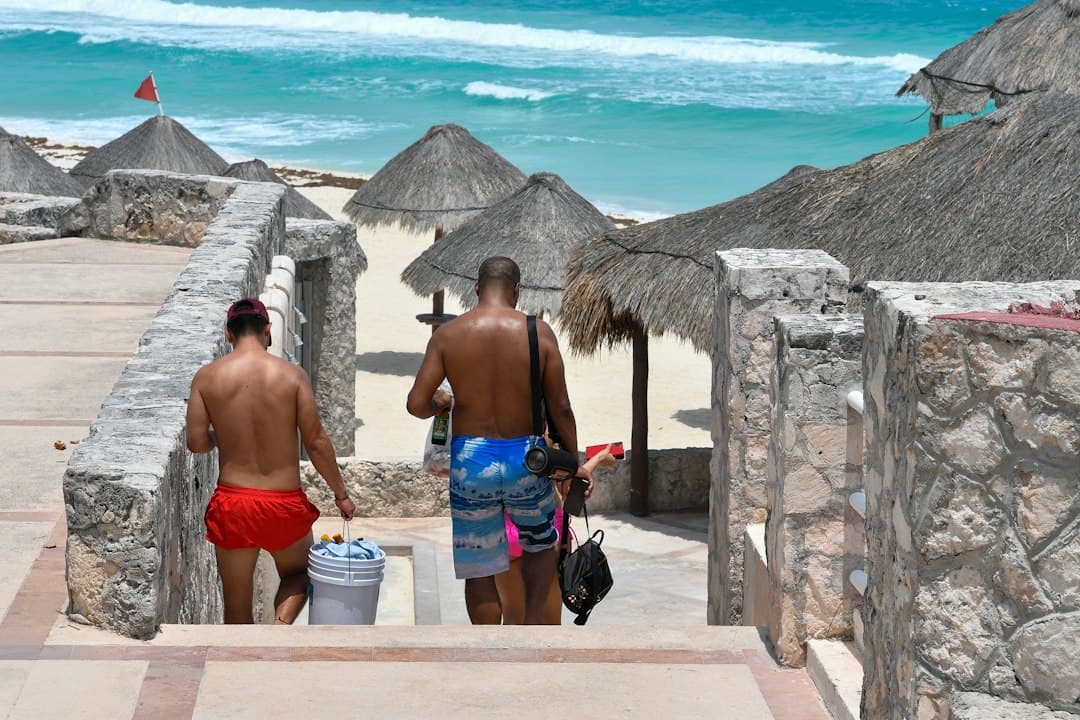
Keep the original passport and immigration form on you at all times, in a safe place, especially in beach tourist areas[1]. Anyone who cannot immediately prove their stay is legal risks being transferred and held in administrative detention until the originals are produced[1].
Entering by land
If you enter by land (borders with the United States, Guatemala, or Belize), you must go through a border checkpoint to obtain the entry stamp and the immigration form[1]. Without them, you are considered to be in an irregular situation and may be detained until your deportation[1].
The 30-day deadline
The residence card must be requested within 30 calendar days of entering the country[2]. For everything else, check amounts and conditions with the consulate before paying anything, and be wary of any intermediary who promises guaranteed approval: only consular and immigration authorities decide.
Pets: see the dedicated article
The health rules for traveling with an animal are covered in a dedicated Hello Mira article, which we refer you to rather than summarizing them here. For a multi-year move, read it before booking your transport.
Pre-departure checklist
- Determine your status based on the planned length of stay and the nature of your activity, paid or unpaid.
- Contact the Mexican consulate that covers your area to get the up-to-date list of documents and fees.
- Plan your appointment at the INM for the residence card from the start.
- Prepare supporting documents consistent with the purpose of stay you will declare.
- Set aside a safe place for your originals: passport and immigration form.
- Request in writing the terms of your car insurance, your real estate agent, and your mover.
Sources
- 1.^ abcdefghijmx.diplomatie.gouv.fr — Entry and stay in Mexico | France in Mexico: “At the end of the interview, which in particular confirms the purpose of the stay, travelers are given an entry stamp in their passport indicating the length of stay authorized in the country, which may not exceed 180 days.”; “While tourists no longer need to fill out a paper immigration form (FMM), it is important to note that it has not disappeared; it continues to be generated electronically at points of entry into Mexico.”; “A visa is required in particular for all paid activities, international corporate volunteering, and students.” https://mx.diplomatie.gouv.fr/fr/entree-et-sejour-au-mexique (accessed October 11, 2026)
- 2.^ abcdefghgob.mx — Permanent residence visa | Secretaría de Relaciones Exteriores | Gobierno | gob.mx: “If the length of stay in Mexico will be more than 180 days and less than 4 years, it is mandatory to apply for a temporary residence visa.”; “If the intention is to remain in Mexico for more than 4 years, you must apply for a permanent residence visa, meeting the following conditions.”; “Note: the residence card, which certifies legal stay and allows you to remain in the national territory, must be requested within 30 calendar days of entering the national territory.” https://www.gob.mx/sre/acciones-y-programas/visa-de-residencia-permanente (accessed October 11, 2026)