
Georgia has no visa dedicated to digital nomads, but it offers concrete ways to settle there and work remotely. This article sorts out what really exists: visa-free entry, residence permits, the right to work, tax residence, and sole proprietor status. You will also see what changed in 2026, from mandatory insurance to the new work rules, then the arrival steps, budget, and daily life, in the order you will meet them.
The Essentials at a Glance
- No visa dedicated to digital nomads exists in Georgian law[1].
- Citizens of more than 95 countries can stay for one year without a visa[1].
- Since January 1, 2026, valid health and accident insurance covering the full length of your stay is mandatory upon entry[2].
- Since March 2026, a residence permit alone no longer gives you the right to work[3].
- Fully remote work is one of the exceptions to the work authorization requirement[3].
- Tax residence starts after 183 days spent in Georgia within a continuous 12-month period[4].
- A sole proprietor who has obtained small business status is taxed at 1% of turnover, up to 500,000 GEL per year[1].
- The Georgian lari (GEL) is not pegged to the euro, and its exchange rate floats[5].
Georgia and Remote Work: What Exists, What Doesn't
Georgian law does not provide a visa dedicated to digital nomads[1]. The “Remotely from Georgia” program, created during the pandemic, is not the tool nomads rely on today[1]. You will find pages presenting this program as still active, with a threshold of $2,000 per month: do not build your plan on it.
The country does offer several general options instead: a one-year visa-free entry regime for citizens of more than 95 countries, an immigration visa for self-employed professions, a temporary residence permit for the IT sector, and the sole proprietor route with the 1% small business tax[1]. The first question to ask yourself is who your activity serves: only foreign clients, or also clients in Georgia[1].

Visa and Right to Stay
A French citizen can enter Georgia and stay up to one year without any visa formalities[6]. This right of stay does not make you a permanent resident or a tax resident[6].
Many nomads leave and then come back to reset the clock, for example after a trip to Turkey or Armenia. This practice is tolerated rather than guaranteed[6]. For real roots, a residence permit or an individual entrepreneur registration is the better choice[6].
The Residence Permit for the IT Sector
IT professionals can apply for a special temporary residence permit, in force since September 1, 2025[1]. Official texts require a total of at least two years of experience in the sector[7].
They also require earnings of at least $25,000 equivalent in lari over the previous year, received at least twice at 30-day intervals[7]. Another page adds a physical presence of 183 days per year in Georgia and a duration of 3 years, renewable[8].
The Work Residence Permit
For the work residence permit, you need a document proving a monthly income from entrepreneurial or salaried activity in Georgia of at least five times the average consumer's subsistence minimum[7]. An expat guide puts this threshold at 1,272.50 lari per month[9]. The employing company must reach a minimum turnover of 50,000 lari per foreign employee hired[9].
According to the same guide, the application must be filed at least 40 days before the legal stay expires, at a Public Service Hall[9].
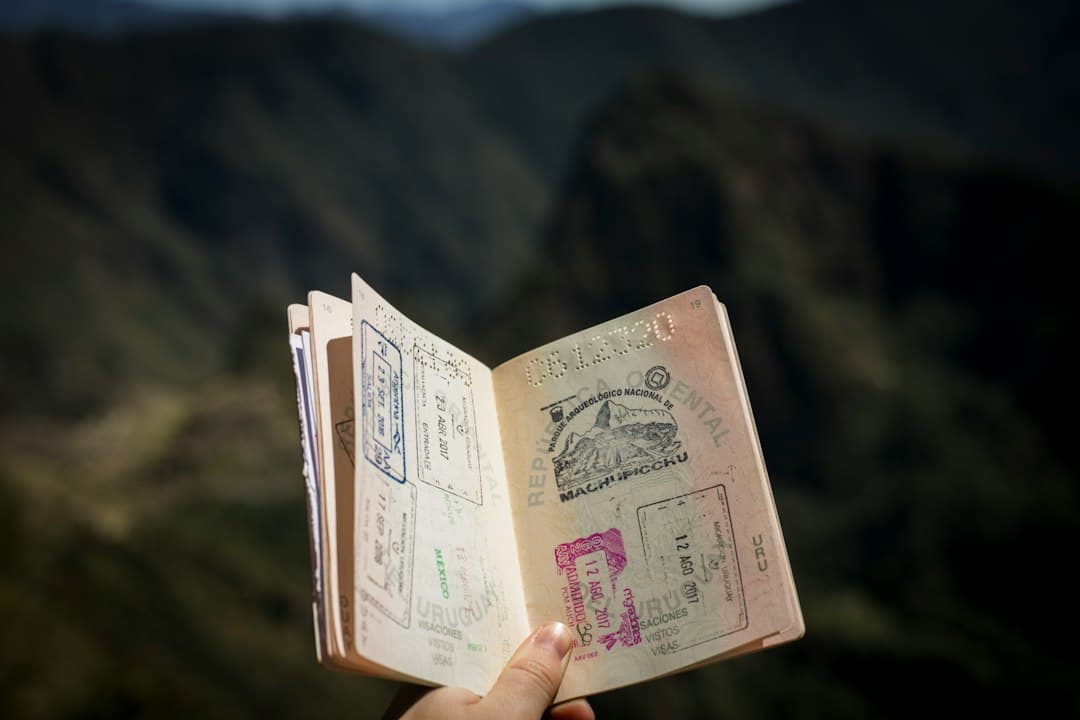
Work status: foreign employee or self-employed
Since March 1, 2026, most foreigners who work as employees, self-employed, or entrepreneurs in Georgia must first obtain the right to work, and then hold the appropriate immigration status[3]. The principle is clear: “A residence permit alone no longer grants the right to work.”[3]
Two exceptions apply to the typical digital nomad: working entirely remotely, and providing services to a non-resident for their business outside Georgia[3]. The exception does not apply if you are a sole proprietor and need a residence permit to stay legally[3].
As soon as the activity becomes local (a Georgian employer, Georgian clients, services delivered in the country), the right to work becomes mandatory[1]. The boundaries of these rules are still evolving in administrative practice: check your personal situation before you commit[3].
The Sole Proprietor
A foreigner can register as a sole proprietor (IE) in Georgia without permanent residence[8]. Registering as an IE alone does not give you the 1% rate: you must then apply for small business status with the Revenue Service[10].
Taxation and Tax Residency
“Tax residency and legal residency are separate statuses with different consequences.”[11] A visa says nothing about your taxes, and this is the most common mistake[6].
You become a tax resident for the full year as soon as you spend 183 days in Georgia within a continuous 12-month period ending in that year, and any day started counts[4]. A residence permit alone is not enough to make you a tax resident[4].
Georgia applies a territorial system, but work performed from Georgia is taxed there, even for foreign clients[4]. A freelancer based in Georgia who invoices foreign clients therefore earns Georgian-source income: 20%, or 1% with small business status[4].
The 1% Small Business Status
Small business status is available up to GEL 500,000 in annual revenue, with 1% tax on turnover[10]. It suits freelancers whose activity is not on the list of excluded activities (consulting, medical, architecture, legal, etc.), and provided they are not an employee disguised as a contractor[10].
For months in which you are a tax resident and earned income before obtaining the status, 20% applies to gross income[10]. Check the conditions and filing deadlines with the Revenue Service or a tax advisor.

If You Are a French Tax Resident
Keeping a home or family in France may be enough to keep you a French tax resident, even beyond 183 days elsewhere[6]. Days are counted by country[6]. Before you leave, have your situation reviewed by a tax advisor: Georgia does not automatically sever your tax ties with France.
Health and Insurance
“As of January 1, 2026, foreign visitors wishing to enter Georgia must have valid health and accident insurance for the duration of their stay.”[2] It must be written in English or Georgian, with minimum coverage of GEL 30,000 (about €9,500)[2]. Each traveler must be able to prove it at a border check[2].
Before booking your ticket, check that your current policy meets these requirements: coverage of at least GEL 30,000, written in English or Georgian, and a certificate in your name. International insurance often remains a sensible choice if you travel regularly[9].
Arrival Steps: Personal Number, SIM, Bank
In Tbilisi, go to the Justice House with your passport to obtain your Georgian personal identification number, essential for any administrative procedure[12]. This is also where you register your IE, a prerequisite for applying for small business status[12].
A Georgian bank account is used to pay local bills and receive income from Georgian activity[13]. The two major banks, TBC Bank and Bank of Georgia, offer English-language interfaces, mobile apps, and multi-currency accounts (GEL, USD, EUR)[13].
The official currency is the Georgian lari (GEL), issued by the National Bank of Georgia[5]. Georgia is not part of the SEPA zone, and the lari is pegged neither to the euro nor to the dollar: its rate is set by the market[5]. So plan for fees and exchange-rate differences on transfers from Europe.
Internet, Coworking and Connectivity
Tbilisi has many coworking spaces, around €80 to €150 per month for unlimited access, and many cafés offer fast Wi-Fi[14].

Keep a backup plan: according to France Diplomatie, a major power outage hit nearly the entire country on August 5, shutting down the Tbilisi metro and disrupting internet and mobile phone service, and further incidents cannot be ruled out[2].
Cities, Regions and Housing
Tbilisi is the area most sought after by nomads, with the largest choice of housing and coworking spaces[15].
Batumi, on the Black Sea, has fewer coworking spaces but many well-connected cafés[16].
For housing, it is often wise to book the first month online, for example through Airbnb or Booking.com, so you can see the place before signing a longer lease[15]. Many landlords accept short leases and often do not ask for a deposit[15].
Cost of Living
A comfortable lifestyle in Tbilisi costs between $900 and $1,500 per month, with a one-bedroom apartment in a central neighborhood, a coworking space, groceries, restaurants and leisure[17]. On a tight budget, expect $600 to $900 per month[17].

Transport, Language and Social Life
In Tbilisi, the Bolt app is the most convenient for car rides, and the train connects to Batumi in 5 to 6 hours[18].
“Road safety is a serious concern, due to the failure to follow basic traffic rules.”[19] Georgia is also a livestock country without fences: stay extra alert when driving, at night as well as in tunnels[19]. Avoid driving at night on mountain roads, where lighting is limited and livestock may be on the road[18].
Georgian is the official language, with its unique alphabet; English is widely spoken by the younger generation and in tourist areas, while Russian is mostly spoken by older people[16].
Georgia ranks very well for cultural integration: “locals often invite foreigners to supras (feasts)”[20]. In Tbilisi, the expat scene is active, with Meetup and InterNations groups and nomad hubs[20].

Pitfalls, Scams and Points of Caution
- A false landmark: “Remotely from Georgia” and its $2,000-per-month threshold are presented by some pages as current, although no dedicated digital nomad visa exists in law[1].
- A valid residence permit alone no longer grants the right to work as of March 1, 2026[3].
- The right to work is still required as soon as the activity becomes local: a Georgian employer, Georgian clients, services rendered within the country[1].
- Standard travel insurance may not be enough: a minimum of 30,000 GEL is required, a text in English or Georgian, and a certificate to present at the border[2].
- “Entry into Georgian territory may be refused even to holders of a valid Georgian residence permit.” The cited risk factors are taking part in demonstrations and activity on social media[2].
- Travelers are systematically photographed at the border, both on entry and on exit[2].
- Working from Georgia is required, even for foreign clients: do not assume an exemption[4].
- Being registered as an IE is not enough to get the 1% rate: small-business status must be requested separately[10].
- Some activities are excluded from small-business status (consulting, medical, architecture, legal…), and a contractor who can be treated like an employee is not eligible[10].
- Travel is formally advised against in Abkhazia and South Ossetia; entering these regions from Russia exposes you to criminal prosecution in Georgia[19].
- In the mountains, take into account the risks of rockfalls, avalanches and landslides, and avoid mountain roads in the rain[19].
Steps, in order
- Check that your nationality allows entry without a visa, and before you leave, get insurance that meets the entry requirements (at least 30,000 GEL, in English or Georgian).
- Decide on your status: visa-free stay with fully remote work, IE with small-business status, IT permit, or work residence permit.
- On arrival, go to the Public Service Hall (House of Justice) with your passport to get your personal number.
- Open a Georgian bank account (TBC Bank or Bank of Georgia).
- If you settle in Georgia and invoice your clients from the country (including foreign clients), register your IE, then apply for small-business status with the Revenue Service to qualify for the 1% rate.
- Count your days of presence to know when you become a tax resident, and consult a tax advisor before you move your residence.
- Start your residence permit application before your legal stay ends, and remember that the right to work must be requested separately if your activity becomes local.
These benchmarks help you choose your path and prepare your move. They do not replace the details of each procedure, case by case, nor a budget set out item by item, nor the choice of a neighborhood in Tbilisi or Batumi. To settle in for real, these are the points you need to go further on.
Sources
- 1.^ abcdefghijklegal.ge — Digital Nomad Visas in Georgia | Legal.ge: “There is no visa dedicated to digital nomads in Georgian legislation.” “The Remotely from Georgia entry scheme, created during the pandemic, is not the instrument nomads rely on today.” “Georgia actually offers a combination of general instruments: a visa-free regime of one year for citizens of more than 95 countries, an immigration visa for self-employed persons, a special temporary residence permit for the IT sector, and the individual entrepreneur route with the 1% small-business tax.” https://legal.ge/en/service/migration-and-immigration-law-en/digital-nomad-visas-1411-en (accessed October 19, 2026)
- 2.^ abcdefghdiplomatie.gouv.fr — Georgia - Travel advice - Latest updates and alerts - Page 1 of 1 - France Diplomatie | France Diplomatie: “As of January 1, 2026, foreign visitors wishing to enter Georgia must have valid health and accident insurance for the duration of their stay.” “It must be written in English (or Georgian). Coverage must be at least 30,000 GEL (about €9,500). Each traveler must be able to prove this insurance at the border if checked.” “Entry into Georgian territory may be refused even to holders of a valid Georgian residence permit.” https://www.diplomatie.gouv.fr/fr/information-par-pays/georgie/dernieres-minutes-et-alertes (accessed October 19, 2026)
- 3.^ abcdefghrelocation.ge — Georgia for Digital Nomads (2026) — Relocation.ge: “A residence permit alone no longer gives the right to work.” “Under the Labor Migration Law, most foreign nationals who engage in paid, self-employed or entrepreneurial activity in Georgia must first obtain the right to work.” “The most significant change for digital nomads took effect on March 1, 2026.” https://relocation.ge/en/georgia-for-digital-nomads/ (accessed October 19, 2026)
Show 17 more sourcesShow less
- 4.^ abcdefexpat-llc.com — Residence in Georgia 2026: IE at 1%, permits and taxes: “You are a resident for the entire tax year as soon as you spend 183 days in Georgia over a continuous 12-month period ending within the year, and any day started counts (Tax Code, Article 34).” “As everywhere, a residence permit alone does not make you a tax resident.” “Two points are often oversold: work done from Georgia is taxed there, even for foreign clients, and citizenship is slow (10 years).” https://expat-llc.com/guides/residence/georgie (accessed October 19, 2026)
- 5.^ abcMira Knowledge — The official currency of Georgia is the Georgian lari (GEL), issued by the National Bank of Georgia. Verified on 06/11/2026: official source nbg.gov.ge. https://nbg.gov.ge/en/georgian-money/georgian-lari (accessed June 11, 2026)
- 6.^ abcdefgxn--lexpatri-i1a.fr — Remote work in Georgia: visa, taxes, connectivity: “Georgia's trump card: a French citizen can enter and stay up to one year with no visa formalities at all.” “Many digital nomads operate through back-and-forth trips (a border crossing resets the counter), but this practice is tolerated rather than guaranteed and does not make you a tax resident or permanent resident.” “For real roots, a residence permit or entrepreneur registration is better.” https://xn--lexpatri-i1a.fr/destinations/georgie/teletravail (accessed October 19, 2026)
- 7.^ abcsda.gov.ge — Migration/Residence Permits – State Services Development Agency : “Document attesting that a foreign national's monthly income or remuneration from entrepreneurial or employment activities in Georgia is not less than five times the average consumer subsistence minimum in Georgia.” ; “A document confirming a total of at least 2 years of experience working or conducting economic activities in the field of information technology (IT).” ; “A certificate confirming that the remuneration received over the last year for work or economic activities in the IT field is not less than the equivalent of 25,000 USD per year in lari. The documents must confirm receipt of this remuneration at least twice during the last year, at intervals of at least 30 days.” https://sda.gov.ge/en/products/migration-residence-permits/ (accessed October 19, 2026)
- 8.^ abanuragverma.co — Georgia digital nomad visa: requirements (2026) | Anurag Verma : “Foreign nationals can register as individual entrepreneurs (IE) in Georgia without permanent residence.” ; “Introduced in September 2025. Requires at least 2 years of IT experience, confirmed income of at least $25,000 per year, and 183 days per year of physical presence in Georgia.” ; “Issued for 3 years and renewable up to 12 years.” https://anuragverma.co/worldwatch/georgia/digital-nomad (accessed October 19, 2026)
- 9.^ abcdexpat.com — Expat Guide to Georgia: What You Need to Know to Move Abroad - Expat.com : “The employing company must generate a minimum turnover of 50,000 Georgian lari per foreign employee hired.” ; “You will need to earn at least 1,272.50 lari per month, which is five times the subsistence minimum.” ; “You must submit your application at least 40 days before your legal stay expires, at one of the Public Service Halls located throughout the country.” https://www.expat.com/fr/guide/asie/georgie/ (accessed October 19, 2026)
- 10.^ abcdefgic.bz — Solopreneurship : “Registering as an individual entrepreneur (IE) does not automatically grant you the 1% tax rate on its own.” ; “To access the tax benefits described above, you must use your individual entrepreneur status to apply for small business status with the Revenue Service.” ; “Small business status results in a 1% tax rate and is available to those with annual turnover below 500,000 GEL.” https://gic.bz/solopreneurship (accessed October 19, 2026)
- 11.^relocationoffers.com — Residency in Georgia: Requirements, Visas & Tax | RelocationOffers : “Tax residence and legal residence are two distinct statuses with different consequences.” https://relocationoffers.com/fr/residency/georgia (accessed October 19, 2026)
- 12.^ abdigitalnomadfam.fr — Georgia Digital Nomad Visa: Remotely from Georgia and 1% Flat Tax : “Go to the Justice House in Tbilisi with your passport. You will receive a Georgian Personal Number, which is essential for any administrative procedure.” ; “Also at the Justice House, you register your IE.” https://digitalnomadfam.fr/visa-digital-nomad-georgie/ (accessed October 19, 2026)
- 13.^ abgeorgiefacile.com — Moving to Georgia: Complete Guide to Settling In Successfully : “A Georgian bank account is necessary to pay your local bills, receive your income from Georgian activity, and simplify your daily life.” ; “The two major banks in the country are TBC Bank and Bank of Georgia: both offer English-language interfaces, high-performance mobile apps, and multi-currency accounts (GEL, USD, EUR).” https://georgiefacile.com/expatrier-georgie-guide-complet/ (accessed October 19, 2026)
- 14.^fiscalia.co — Georgia 1% Flat Tax: 2026 Freelancer Guide | Fiscalia : “Tbilisi has many coworking spaces: Impact Hub Tbilisi, Terminal, Uspace, Lokal, and many more.” ; “Prices range from €80 to €150 per month for unlimited access. Many cafés also offer fast, free Wi-Fi.” ; “The main providers are Magti, Silknet, and Caucasus Online.” https://fiscalia.co/fr/blog/georgie-flat-tax-digital-nomad (accessed October 19, 2026)
- 15.^ abcexpatden.com — Settling in Georgia: Expat Living Guide (2025) : “This is the most sought-after area among digital nomads, and for good reason.” ; “Unlike Vake, it is ideally located near the Rustaveli metro station. It is within walking distance of the Old Town, which makes it a better choice. It also offers a wide range of coworking options.” ; “It can be expensive, as it is one of the most popular options, with prices comparable to Vake.” https://www.expatden.com/fr/georgia/s-installer-en-georgie/ (accessed October 19, 2026)
- 16.^ abdigitalnomadfam.fr — Georgia, the New Paradise for Digital Nomads : “In Tbilisi, expect to pay between €300 and €500 per month for a modern one-bedroom apartment in a central, lively neighborhood. For the same apartment in Paris, be prepared to pay at least three times as much!” ; “Coworking spaces are fewer than in Tbilisi, but places like Regus Batumi or WorkFrom offer everything you need to work efficiently.” ; “Although Georgian is the official language (with its unique alphabet that may seem intimidating at first), English is widely spoken by the younger generation and in tourist establishments.” https://digitalnomadfam.fr/georgie-digital-nomad/ (accessed October 19, 2026)
- 17.^ abgttoursgeorgia.com — Georgia Guide for Digital Nomads: Visas, Cost of Living & Best Neighborhoods in Tbilisi (2026): “A comfortable lifestyle as a digital nomad in Tbilisi costs between $900 and $1,500 per month, with a one-bedroom apartment in a central neighborhood, a coworking space, groceries, restaurant meals and leisure activities.” ; “Travelers on a tight budget can get by on $600 to $900 per month.” https://www.gttoursgeorgia.com/fr/blog/georgia-digital-nomad-guide (accessed October 19, 2026)
- 18.^ abgttoursgeorgia.com — Getting Around Georgia: The Complete Transportation Guide: “Bolt is the app you need.” ; “Tbilisi → Batumi (5 to 6 hours, from about 25 GEL): the best train in Georgia.” ; “Night driving: avoid it on mountain roads. Lighting is limited, there are no guardrails on secondary roads, and livestock may be on the road after dark.” https://www.gttoursgeorgia.com/fr/blog/getting-around-georgia (accessed October 19, 2026)
- 19.^ abcddiplomatie.gouv.fr — Georgia - Safety | France Diplomatie: “Road safety is poor, due to the widespread failure to follow basic traffic rules.” ; “Georgia is also a country of open-range livestock. Extreme vigilance is therefore recommended for drivers, in towns and in the countryside, especially when driving at night and when passing through tunnels.” ; “Travel to Abkhazia and South Ossetia is strongly advised against, as these regions are outside the central government's control.” https://www.diplomatie.gouv.fr/fr/information-par-pays/georgie/conseils-aux-voyageurs-securite (accessed October 19, 2026)
- 20.^ abnestfainder.ai — Settling in Georgia | NestFainder: “Georgia ranks very well for cultural integration thanks to its legendary hospitality; locals often invite foreigners to supras (feasts).” ; “A thriving expat scene in Tbilisi with InterNations, Facebook groups and digital nomad hubs.” https://www.nestfainder.ai/fr/country/georgia/guides/social-integration (accessed October 19, 2026)