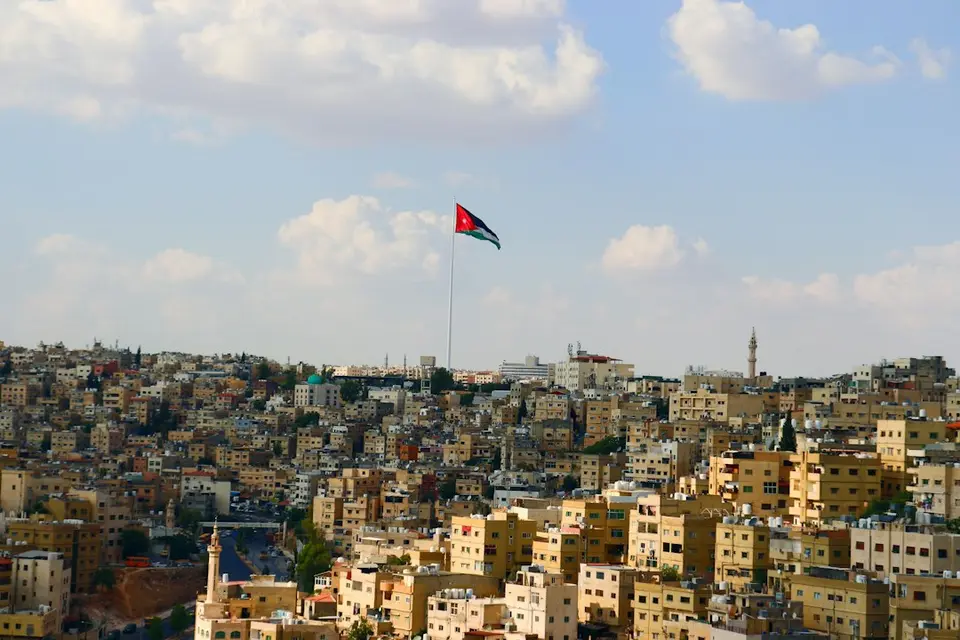
Agadir is a large beach resort rebuilt after 1960, while Taghazout is a former fishing village that has become Morocco's surf capital, about twenty kilometers to the north. This article helps you plan your days around the kasbah, the souk, the harbor, Amazigh culture, the waves, and day trips. You'll also learn how to get between the two places, how much time to allow, and what to watch out for.
Agadir and Taghazout at a glance
Agadir is presented as the country's main beach resort, with 300 sunny days a year[1]. Its seafront stretches for 10 kilometers and offers lovely views of the ocean[1].
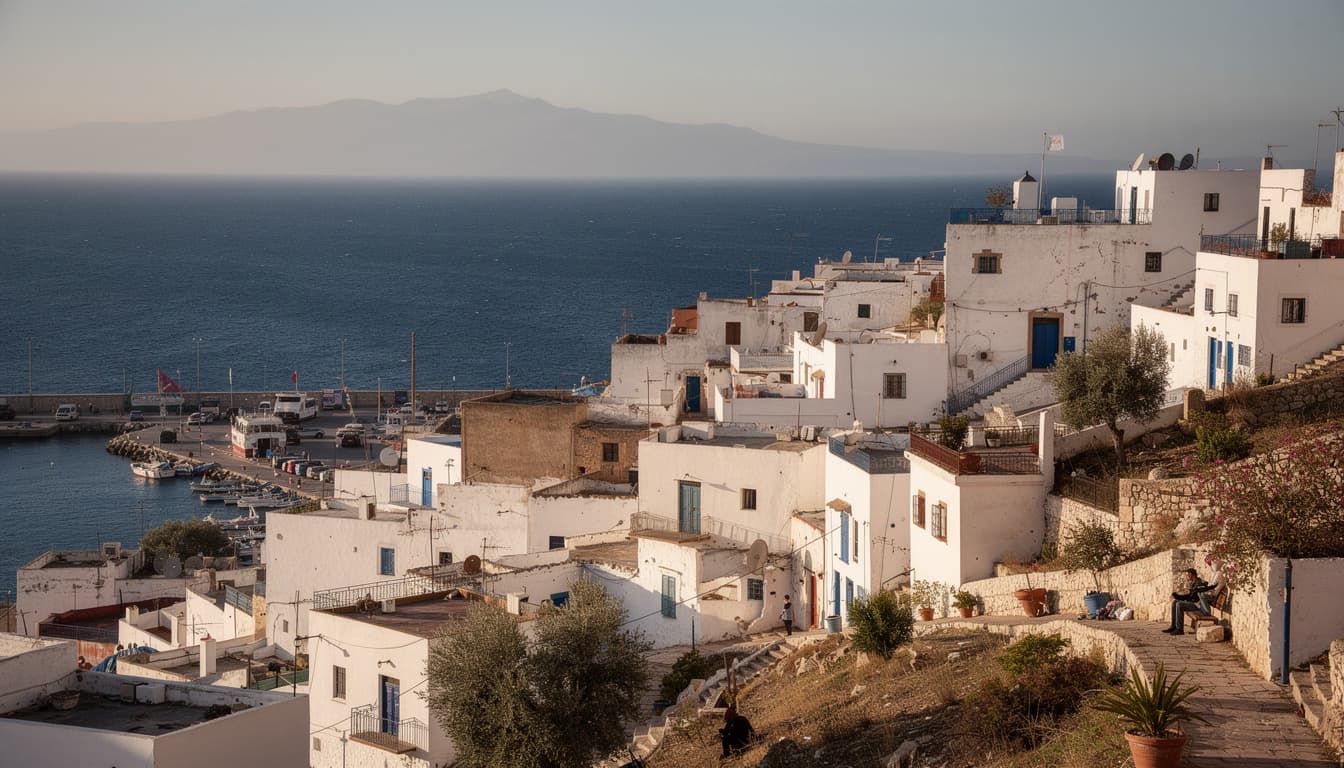
Taghazout is a former fishing village on the Atlantic coast, north of Agadir, today known as Morocco's surf capital[2]. The village is small: a cluster of whitewashed cube houses and surf school signs, perched on a headland above several breaks[3].
The two atmospheres complement each other: a modern resort on one side, a coastal village facing the ocean on the other. To combine the city, the beach, and a day trip, plan for three full days; add a fourth or fifth day if you want to surf in Taghazout, hike in Paradise Valley, or slow the pace down[4].
Agadir: history, kasbah, and post-1960 architecture
Agadir was rebuilt after the 1960 earthquake, which destroyed much of the historic city. It now has two faces: an active fishing port and a calm beach, lined with wide avenues of palm trees interspersed with examples of brutalist architecture[5].
The Agadir Oufella kasbah, perched on the hill, is one of the few historic buildings still standing and offers a panoramic view of the city[5]. The site, of which one enclosure was restored and reopened in February 2024, includes wooden walkways, a Saadian gate, and a memorial trail above the city destroyed by the earthquake, which killed around 15,000 people[6].
Entry costs 90 MAD, the audio guide 30 MAD, and the outdoor esplanade is free[6].
To climb up, the cable car crosses the port in six minutes to the hill[6]. The round trip costs 130 MAD, from the lower station near the Tildi bridge, and the cable car stops in strong winds[6].
In town, the Wall of Remembrance bears inscriptions in Arabic script dedicated to the victims of the 1960 earthquake[7]. The nearby Olhão Garden offers tropical plant gardens, pools, and interesting architecture[7].
The Agadir Medina, for its part, is a reconstruction of the old walled town, created by designer Coco Polizzi in the 1990s, with craft workshops, small shops, and cafés[8]. It is not an original medina: the old one disappeared in 1960[8]. It is located several kilometers from the center, and a taxi is the simplest way to get there[8]. It is a photogenic and quiet place, but a recreation, not a living old town[6].
Agadir: souk, port, beach, and marina
The El Had souk spreads through the streets: more than 6,000 shops invite your curiosity, in an atmosphere animated by merchants' bargaining[1].
The promenade follows most of the beach as far as the cafés and bars of the marina[6]. The marina is the city's most polished district, with seafront restaurants, bars, and boat outings[8].
For a meal, head to the fishing port, north of the marina: numbered grill stands where you choose your fish, which is weighed and then grilled with bread and salad[6]. Expect around 50 to 120 MAD per person for composed plates[6]. It is one of the best meals in Agadir, provided you agree on the price per kilo and the total before it is cooked[6].
After the beach or surfing, a hammam is a good break: it is cheaper in neighborhood public baths than in hotel spas[8]. For many Moroccans, it is a weekly ritual dating from a time when people did not have a bathroom at home[7].
Amazigh culture and Souss flavors
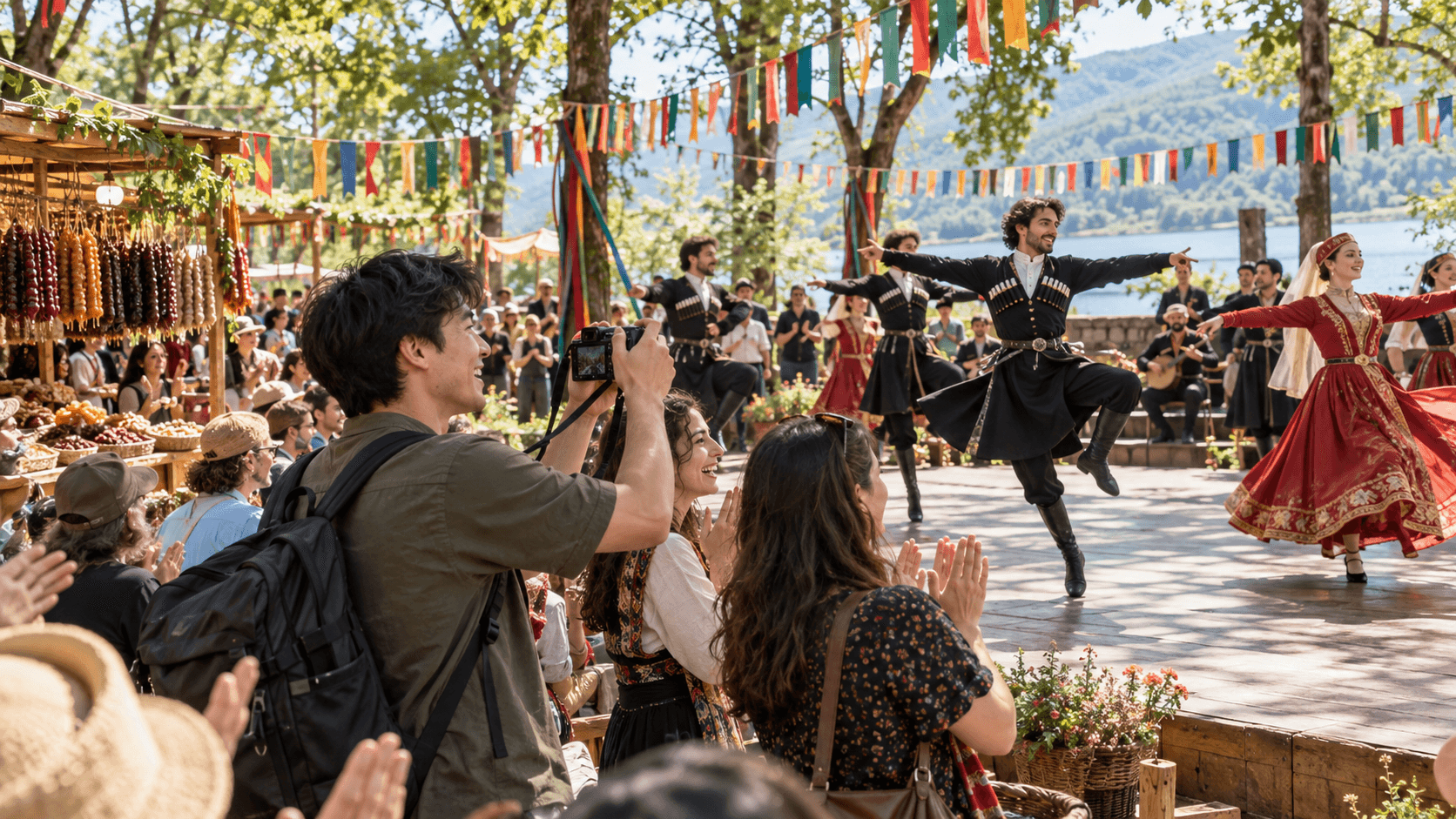
The Amazigh Heritage Museum is devoted to the Amazigh culture of the Souss, with a collection of traditional objects, jewelry and rugs[9]. Amazigh jewelry is one of the reasons to visit[5]. Two other sites round out the picture: a space dedicated to the history of Agadir and its reconstruction after 1960[9], and another devoted to the argan tree and argan oil in the heritage of Souss-Massa[9].
At the table, the regional cuisine of Souss-Massa puts argan oil front and center, drizzled over amlou, a paste of almonds and honey[3]. Every summer, the Timitar festival is dedicated to world music and, more specifically, Amazigh music[1]; in July, musicians and DJs perform in the streets and on the squares[5].
Taghazout: Surf, Village, and the Coastal Way of Life
For a long time, Taghazout was a hamlet of Berber fishermen; foreign surfers started arriving in the 1970s[3]. Since then, the village has added yoga centers, surf lodges and a small food scene, while keeping its village character[3].
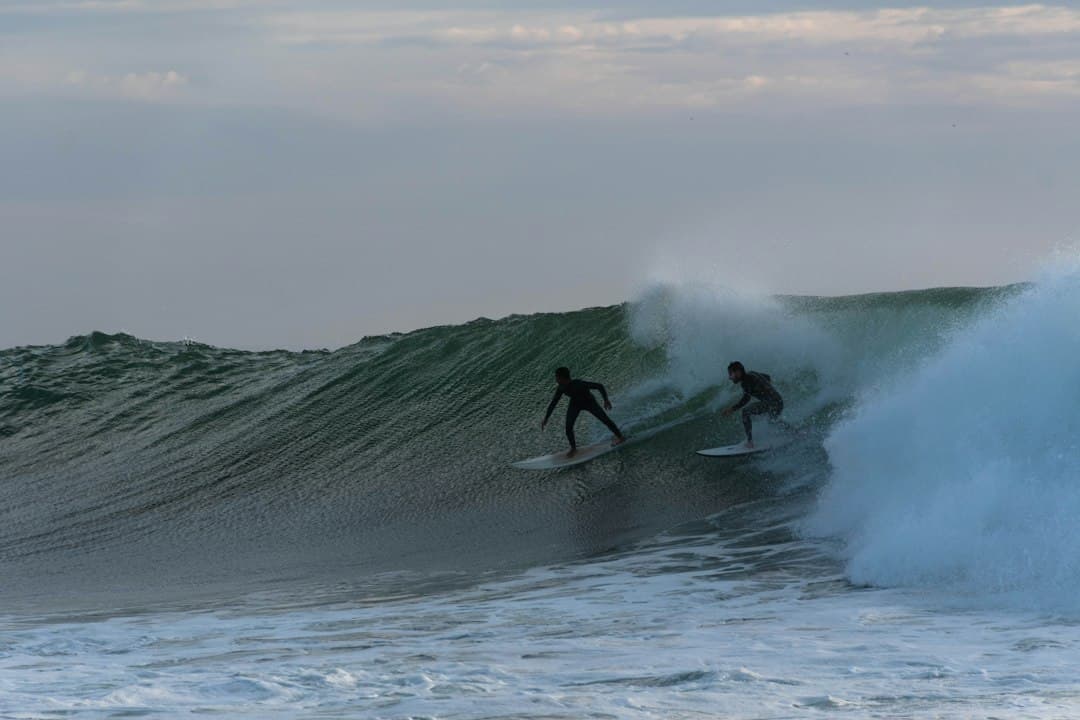
Hash Point, just below the village, is the most accessible spot for beginners and where most surf schools operate[3]. Anchor Point, 2 km to the north, is the flagship spot: a right-hand wave that works best with a 2 to 4 meter swell and rewards intermediate to advanced surfers[3].
A group lesson of 2 to 2.5 hours, with board and wetsuit, costs 250 to 450 MAD[6]. Winter brings the biggest swells and the most people in the water; summer is calmer[10]. The breaks reliably work from October to April[3], and beginners do better from April to October[6].
When the waves are small, the region has other highlights. The argan forest, a UNESCO-listed site, begins just inland: local guides offer 2 to 4 hour walks, around 150 to 200 MAD, where you can spot goats climbing into the branches to eat the fruit[3].
Day Trips from Agadir and Taghazout
Choose one excursion per day, starting from where you're staying and comparing the departure point, the walking and the return trip, rather than chaining together distant places just because they look close on the map[11]. Paradise Valley suits an inland outing, Timlaline is best for sandboarding, and Agadir works for city stops[11].
- Paradise Valley: a gorge lined with palm trees, with pools and small waterfalls, about an hour inland from Agadir and closer to Taghazout[8].
- Souss-Massa National Park: 45 to 60 minutes south of the city, it protects estuaries, dunes and coastal wetlands[8]. It's the entry point for wildlife watching[5].
- Crocoparc: a zoo-garden on the edge of the city, with hundreds of Nile crocodiles, botanical gardens and tree-lined paths; a reliable stop for families[8].
- Timlaline Dunes: golden dunes near the ocean, explored by quad, dromedary ride or sandboard[2].
- Essaouira: for a longer excursion, it takes a full day[8].
When to Go, How Long to Stay, How to Get There
There's no bad time to visit Agadir, which has a mild climate for much of the year. From May to September, the weather stays relatively gentle while the rest of Morocco swelters; July and August are the busiest months, as many Moroccans head down to the south coast[5].
For a long weekend, you'll have time to see the marina, the souks and the kasbah, and enjoy the beach; with a few more days, you can add Taghazout, Souss-Massa or Paradise Valley[5]. One day is enough for the city's highlights: the cable car, the kasbah, the souk, the port and the beach[6].
Taghazout is about 20 km north of Agadir, or 25 to 30 minutes by car along the coastal road[2]. Agadir's orange petit taxis only operate within the city and can't take you there[2].
Bus 32 is the most economical option[12]; allow 40 to 60 minutes for the trip, plus waiting time at the stop[12]. The shared grand taxi usually waits until it's full before leaving[12], and the fare is confirmed before you get in[12].
From Agadir Al Massira airport, Taghazout is about 45 km away, roughly 45 minutes to 1 hour, and a grand taxi costs around 300 dirhams during the day[2]. To get from the airport to downtown Agadir, the taxi has a fixed rate of 200 MAD[5].
Pitfalls, Scams, and Points of Caution
- Swimming: Extreme caution is essential, even on lifeguarded beaches, due to strong tides and currents; the vast majority of beaches are not lifeguarded, and drownings are frequent[13].
- Aggressive sales: In some areas with a high concentration of tourists, commercial companies use aggressive tactics, sometimes under the pretext of gifts or prize draws, to get people to sign contracts (timeshare apartments, discounted travel offers) in exchange for an immediate large payment[14]. Never give out your bank details or your payment card[14].
- Roads: Traffic is dangerous, and driving at night is not recommended[13]. The mountain highway between Marrakech and Agadir is known to be very dangerous, especially on the descent into Agadir, where you need to be extra vigilant around trucks[13].
- High-risk activities: For quad biking or sea activities, keep in mind that local emergency response capacity is often limited[13].
- Stray dogs: Packs of dogs are a recurring threat to pedestrians, especially in the south of the country, including in cities and tourist resorts[13].
- Fish and taxis: Agree on the price per kilo and the total before the fish is cooked[6], and confirm the taxi fare before getting in, especially for a late departure or when you have bulky luggage[12].
Steps for Planning Your Stay
- Plan for three full days, or four or five if you surf or hike in Paradise Valley[4].
- Set aside one day for the city: cable car, kasbah, Souk El Had, the port, and the beach[6].
- Choose only one excursion per day, taking your return schedule into account[11].
- For Taghazout, take bus 32 or a grand taxi, not a small orange taxi[2].
- For surfing, aim for October to April for the waves, or April to October if you're a beginner[3][6].
This article gives you the essentials to decide what to see. It does not detail the day-by-day itinerary, nor the choice of a surf school or accommodation, which require further research to prepare a stay on site.
Keep exploring
- Morocco: The Highlights, Region by Region
- Casablanca : que voir et que faire en deux jours
- Dakhla : que voir et que faire entre lagune, dunes et désert
- Rabat : que voir et que faire dans la capitale impériale du Maroc
Sources
- 1.^ abcdvisitmorocco.com — Agadir holidays: things to do & best time | Visit Morocco: “The country's main seaside resort, the city with 300 days of sunshine a year, is full of activities.”; “Above all, its 10-kilometer seafront offers tourists magnificent views of the blue ocean and the chance to laze about in the best conditions.”; “Further into the city, the Souk El Had stretches through the streets and spreads out its stalls: more than 6,000 shops await your curiosity, and you will enjoy strolling through this lively atmosphere filled with the bargaining of merchants.” https://www.visitmorocco.com/en/travel/agadir-taghazout (accessed November 22, 2026)
- 2.^ abcdefyoutours.ma — Agadir to Taghazout: Taxi, Bus & Airport Transfer (2026): “Taghazout is a former fishing village on the Atlantic coast, north of Agadir, today famous as Morocco's surf capital.”; “Note that Agadir's small orange taxis only operate within the city: they cannot take you to Taghazout.”; “Taghazout is about 20 km north of Agadir, 25 to 30 minutes by car via the coastal road.” https://youtours.ma/agadir-to-taghazout/ (accessed November 22, 2026)
- 3.^ abcdefghimorocco-escape.com — Taghazout Travel Guide 2026: Surf: “The village is small: a cluster of whitewashed cube houses and surf school signs, perched on a headland above a series of Atlantic breaks, 20 km north of Agadir.”; “For most of its history, Taghazout was a Berber fishing hamlet. Foreign surfers began arriving in the 1970s, drawn by breaks that work year-round, accessible to beginners and intermediate surfers while still offering a real challenge in big swell.”; “In the 2010s, Taghazout added yoga retreat centers, surf lodges, and a small food scene: enough infrastructure to be comfortable, while keeping enough village character not to feel like a resort.” https://www.morocco-escape.com/destinations/taghazout/ (accessed November 22, 2026)
Show 11 more sourcesShow less
- 4.^ abtravellingthroughmorocco.com — Agadir Morocco: 15 Best Sights and Essential Tips: “Quick answer: plan three full days for the city, the beach, and a nearby excursion.”; “Add a fourth or fifth day if you want to surf in Taghazout, hike in Paradise Valley, or slow the pace down.” https://travellingthroughmorocco.com/agadir-agadir-morocco/ (accessed November 22, 2026)
- 5.^ abcdefghlonelyplanet.com — A guide to Agadir, Morocco - Lonely Planet: “One of Morocco's most modern cities, Agadir, on the country's south coast, was rebuilt after an earthquake in 1960 destroyed large parts of the historic town.” ; “Today it has two faces: a bustling fishing port and a quiet beach with wide avenues lined with palm trees, punctuated by examples of brutalist architecture.” ; “Take in the view from the Agadir Oufella kasbah on the hill, one of the only historic buildings in Agadir still standing.” https://www.lonelyplanet.com/articles/guide-to-agadir (accessed November 22, 2026)
- 6.^ abcdefghijklmnotickets-agadir.com — Things to Do in Agadir 2026: 30 Best Picks with Prices: “Six minutes above the port up to the hill overlooking the bay.” ; “130 MAD round trip (about €12), 100 MAD for children under 1.40 m, from the lower station near the Tildi bridge, a 15-minute walk from the marina. Daily from 10 am until late evening; it stops in strong winds.” ; “The ruined kasbah on the hill, one wall of which was restored and opened in February 2024: wooden walkways, a Saadian gate and a memorial trail above the town destroyed by the 1960 earthquake, which killed around 15,000 people. 90 MAD (about €8), separate from the cable car; audio guide 30 MAD.” https://tickets-agadir.com/things-to-do-in-agadir/ (accessed November 22, 2026)
- 7.^ abclonelyplanet.com — 12 Best Things to Do in Agadir - Lonely Planet: “Near the post office, stop at the Wall of Remembrance: these engravings in Arabic script are dedicated to the victims of the 1960 earthquake and remind residents to accept fate without losing heart.” ; “From the Liban Mosque, cross Avenue des FAR to the Olhão Garden, which offers pretty tropical plant gardens, pools and interesting architecture.” ; “Dating from a time when homes had no bathrooms, the hammam remains a weekly ritual for many Moroccans.” https://www.lonelyplanet.com/articles/top-things-to-do-in-agadir (accessed November 22, 2026)
- 8.^ abcdefghithetaghazoutguide.com — Things to Do in Agadir | The Taghazout Guide: “The Agadir Medina is a recreation of the old walled town, created by designer Coco Polizzi in the 1990s, with craft workshops, small shops and cafés.” ; “It is not an original medina, since the old one was lost in 1960, but it is a calm place to browse crafts and see how the city's heritage is preserved. It is several kilometers from the center: a taxi is the simplest way to get there.” ; “The marina is the most polished part of the city, with waterfront restaurants, bars and boat trips.” https://www.thetaghazoutguide.com/activities/things-to-do-in-agadir/ (accessed November 22, 2026)
- 9.^ abcazul-agadir.com — What to see and do in Agadir and Taghazout | Azul Agadir: “A museum devoted to Amazigh culture of the Souss, with a collection of traditional objects, jewelry, carpets and pieces of local heritage.” ; “A place dedicated to the history of Agadir and its reconstruction after the 1960 earthquake, to better understand how the city was transformed.” ; “A space devoted to the argan tree and its role in the heritage and traditions of Souss-Massa, above all argan oil.” https://azul-agadir.com/ (accessed November 22, 2026)
- 10.^opentravelguide.com — Taghazout, Agadir — Attraction Guide 2026: “Winter brings the biggest swells and the most people in the water, while summer is calmer.” https://opentravelguide.com/morocco/souss-massa/agadir/attractions/taghazout/ (accessed November 22, 2026)
- 11.^ abctaghazout.io — Day trips from Taghazout: valleys, dunes and Agadir | Taghazout: “Choose Paradise Valley for an inland outing, Timlaline for sandboarding, or Agadir for stops in the city. These outings involve different journeys and activities. Start from your place of stay and compare the pickup point, the walking and the return arrangements, rather than combining distant places just because they appear on the same map.” https://taghazout.io/day-trips/ (accessed November 22, 2026)
- 12.^ abcdeexperienceagadir.com — Taghazout to Agadir by Bus 32 or Taxi | Stops & Fares: “Bus 32 is the cheapest option, with a stop near the taxi station in central Taghazout.” ; “Expect roughly 40 to 60 minutes of travel, plus waiting time at the stop.” ; “Shared taxis usually wait until the seats fill up: plan for that wait, even though the ride itself takes about half an hour.” https://experienceagadir.com/taghazout-to-agadir/ (accessed November 22, 2026)
- 13.^ abcdediplomatie.gouv.fr — Morocco - Safety | France Diplomatie: “The utmost caution is advised for swimming, even on supervised beaches, due to strong tides and currents.” ; “The vast majority of beaches are not supervised, and drownings are frequent.” ; “Travel at night is also not recommended.” https://www.diplomatie.gouv.fr/fr/information-par-pays/maroc/conseils-aux-voyageurs-securite (accessed November 22, 2026)
- 14.^ abdiplomatie.gouv.fr — Morocco - Useful Information | France Diplomatie: “In some areas with high tourist concentration, commercial companies use aggressive sales and pressure tactics to get passing visitors to sign contracts for services such as timeshare apartment sales or membership in discounted travel or holiday offers, sometimes under the pretext of exceptional benefits (gifts or prize drawings), in exchange for an immediate large sum of money from the recipients.” ; “Never give your bank details or payment card, and file a complaint without delay if you believe you have been the victim of fraudulent schemes.” https://www.diplomatie.gouv.fr/fr/information-par-pays/maroc/conseils-aux-voyageurs-informations-utiles (accessed November 22, 2026)