
Far from the office, the line between work and personal life gets blurry: you reply as soon as a message arrives, and flexibility slowly turns into being available all the time. This article helps you set up your remote work in writing, know what you need to disclose when you work somewhere other than home, protect yourself from the pressure to reply immediately, and spot excessive monitoring. It also offers ideas for continuing to grow while working remotely. The rules cited come from French labor law: which law applies to your situation depends on your country of residence, your employer's country, and your status.
Setting the Framework in Writing
Remote work can be introduced through a collective agreement or a charter drawn up by the employer. Without a collective agreement or charter, the employer and the employee may agree together to use it[1]. This agreement can be formalized by any means: a clause in the employment contract or an amendment is enough, for example[1].
This written framework is your best protection against ambiguity. Under French law, the collective agreement or charter must in particular set the time slots during which the employer may usually contact the employee working remotely, as well as the conditions for returning to performing the employment contract without remote work[1]. These contact windows are a useful anchor: they give you a written reference for discussing your availability with your employer, but they do not replace a conversation about what is expected of you outside them.
Two other points to keep in mind. Refusing to switch to remote work is not a valid reason for terminating the employment contract[1]. And the employee may work from the locations defined by the collective agreement or charter, or authorized by the employer[1]. For a long-term traveler, this last sentence matters: the place of work is negotiated, not presumed.
Working Remotely Outside Your Home (and Your Country): What to Disclose
In the absence of specific company rules, working remotely somewhere other than your home is in principle possible under certain conditions, but the employer may object if it wishes[2]. The collective agreement or an internal charter may also provide for this possibility[2].
The first condition is to inform your employer of the location. This information is essential because of questions around workplace accidents, insurance, and cybersecurity, especially when the employee handles sensitive data[2]. The second concerns your working conditions: a stable and secure internet connection, suitable equipment, and the ability to guarantee the confidentiality of communications[2]. A crowded café with public Wi-Fi does not meet these criteria for every type of file.
An agreement, even an informal one, between the employee and the employer is enough to set up this remote work[2]. Still, prefer a written message: if a disagreement arises, you will be able to prove what was agreed.
If you work from abroad, let your employer know before you leave. This situation can have several consequences that the employer must monitor[2].
If working remotely abroad is long-term or regular, the local law of the country where you are may apply, with implications for the legal working time or health and safety rules[2]. Poorly supervised remote work can also cause social security problems (contribution errors, insufficient or missing coverage) and tax risks for the company[2].

Truly Disconnecting: Telepressure
Telepressure is the sense of urgency to reply quickly to work messages. It is associated with poorer recovery, more work-related rumination, sleep disturbances, and a higher risk of burnout, regardless of the actual workload[3].
When you work with colleagues or clients spread across several time zones, it disguises itself as "I'll reply as soon as I see it," which amounts to being available 24/7[3]. In practice: if your team is in Paris and you are in Bali, every evening notification seems harmless, but together they erase your boundaries.
To set your own boundaries, rely on the contact windows provided in your agreement or charter[1]. A written limit is easier to defend than one only you know about. Then, tell your team: share your response hours and let messages sent outside those hours wait until the next day.

Staying Productive Without the Office
Under French law, the workload, production standards, and performance criteria expected of a remote worker must be equivalent to those of employees in comparable roles working on-site[1]. If you feel you have to do more simply because you are remote, that is something to raise with your manager.
The same text provides that workload and deadlines must be assessed using the same methods as for work done on-site, and that they must allow compliance with the maximum working time and rest periods[1]. The employer must also hold an annual interview covering, among other things, the employee's working conditions and workload[1]. Use that interview to talk about rhythm, not just results.
The risks specific to remote work are recognized: isolation from the work community and the use of digital tools can be included in the employer's occupational risk assessment[1]. In the French civil service, the administration cites among these risks the use of laptops, the weakening of collective ties, and the risk of exceeding working hours[4]. Staying connected with your team is therefore not a luxury: it is a way of preventing an identified risk.
Meetings and Monitoring: Spotting What Is Disproportionate
An employer may monitor its employees' activity, but it must inform all employees, before implementation, of any monitoring systems in place[5]. According to the CNIL, courts have held that evidence obtained through such systems generally cannot justify a sanction when this information was not provided[5].
There is a clear limit: a system that places employees under constant surveillance is excessive and cannot be implemented, whether the goal is security or tracking working time[5]. The CNIL's example is telling: requiring an employee to stay in a video call for their entire working day to verify their presence at the screen[5]. Less intrusive alternatives exist to meet these goals[5].
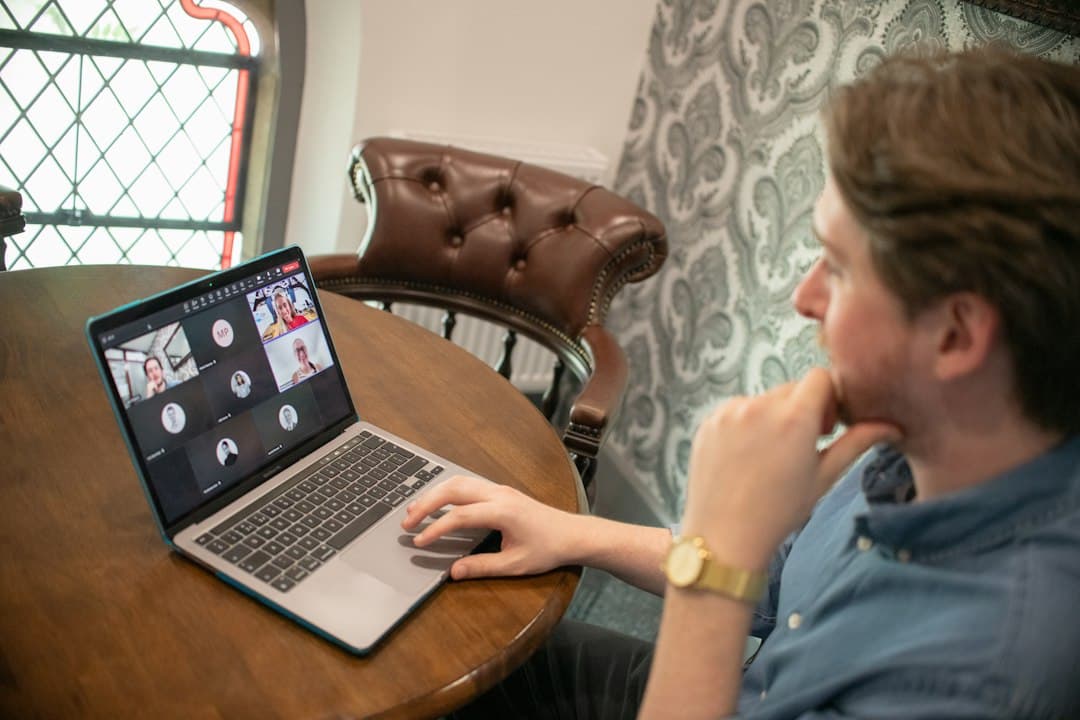
As for video calls, the CNIL encourages employers to favor solutions that allow blurring the background, so you don't have to show your home or the people passing behind you[5]. If the tool allows it, the employer may then ask you to turn on your camera during a meeting, as if you were in the workplace[5].
Remote work also raises questions about the right to disconnect, the blurring of personal and professional life, and how work is evaluated[5]: all topics to discuss openly with your manager.
Pitfalls and Points to Watch
- Remote work is prohibited during paid leave[2]. Working from a tourist destination during your vacation is therefore not authorized remote work.
- If you work outside your home, inform your employer of the location: workplace accidents, insurance, and cybersecurity are at stake, and the employer may object[2].
- From abroad, long-term or regular remote work may bring local law into play, with implications for working time, health and safety[2], as well as social security coverage and contributions[2].
- A remote employee is not a “home worker”[6]: that distinct status notably involves a flat-rate pay set in advance and work performed for a company[6].
- Contracts, taxation, and status depend on individual circumstances and jurisdiction: consult a qualified professional (lawyer, attorney, accountant)[7][8].
Keep Growing from a Distance
Working remotely shouldn't put your growth on hold. Changing direction or building new skills doesn't start with a perfect plan mapped out in your head: you reinvent yourself by experimenting, testing new activities, connecting with new networks, and making sense of what emerges[9]. Knowing "what I want to do" comes from doing, and waiting for clarity before acting is the main mistake in a career pivot[9]. A side project, a short assignment, or a new tool tested on a small scale are experiments you can run from anywhere.
Your network matters just as much. Professional opportunities (assignments, clients, collaborations, information) tend to travel more through weak ties, meaning distant acquaintances and contacts, than through close friends, because those ties open access to circles and information that differ from your own[10]. Maintaining a broad, varied network of light connections is therefore an underrated lever[10]. A message now and then to former colleagues or people you met at a coworking space is enough to keep those ties alive.
For a digital nomad, these reinventions are almost part of the routine. Transitions don't follow a straight line toward a predefined identity: you move forward by trying out a series of “possible selves”[11]. These provisional yet active trials, with experiments and new networks, are the normal mechanism through which people reinvent themselves, and they are especially relevant for a digital nomad whose life naturally invites reinvention[11].

Checklist Before Your Next Departure
- Get the remote work framework written down or confirmed in writing: permitted locations, contact hours, and conditions for returning to on-site work.
- Inform your employer of the exact place you will work from, and get their approval before working from abroad.
- Check your connection, your equipment, and the confidentiality of your communications before each change of location.
- Share your response hours with your team, especially if your time zones differ.
- Do not work remotely during your paid vacation days.
- Ask your employer which monitoring systems are in place, and report any system of constant surveillance.
- Schedule one experiment or one contact to nurture each month so you keep growing.
- Have questions about your contract, taxes, and social protection validated by a qualified professional in your country of residence.
This article gives you the essential benchmarks. It does not detail the tax, social protection, or residence rules that apply to an employee working remotely from abroad, nor the day-to-day work organization methods. To truly settle into a country, these points require going further, with advice tailored to your situation.
Sources
- 1.^ abcdefghijservice-public.gouv.fr — Remote work for private-sector employees | Service Public: “They formalize their agreement by any means. For example, this agreement may be a clause in the employment contract or an amendment to the contract.”; “In the absence of a collective agreement or charter, the employer and the employee may agree to use remote work.”; “Determining the time slots during which the employer may usually contact the employee working remotely.” https://www.service-public.gouv.fr/particuliers/vosdroits/F13851 (accessed October 27, 2026)
- 2.^ abcdefghijklentreprendre.service-public.gouv.fr — Business management: Remote work: what conditions apply to working outside one's home? | Service Public Entreprendre: “However, the employer may object if they wish.”; “The collective bargaining agreement covering the company or an internal charter may specify whether an employee can work remotely outside their home.”; “This information is essential because of questions relating to workplace accidents, insurance, and cybersecurity, particularly when the employee handles sensitive data.” https://entreprendre.service-public.gouv.fr/actualites/A18995 (accessed October 27, 2026)
- 3.^ abMira Knowledge — Telepressure is the sense of urgency to reply quickly to work messages; it is associated with poorer recovery, more rumination, sleep disturbances, and a higher risk of burnout, independently of the actual workload. Verified on 06/26/2026: 2 concordant sources (academic.body-of-work, journal.peer-reviewed). (accessed June 26, 2026)
Show 8 more sourcesShow less
- 4.^fonction-publique.gouv.fr — Remote work in the civil service | Civil Service Portal: “The employer assesses and takes all necessary measures to reduce the occupational risks specific to remote work, for example risks related to the use of laptops, the weakening of collective ties, and the risk of exceeding working hours.” https://www.fonction-publique.gouv.fr/etre-agent-public/mon-quotidien-au-travail/le-teletravail-dans-la-fonction-publique (accessed October 27, 2026)
- 5.^ abcdefghcnil.fr — The CNIL's Q&A on remote work | CNIL: “Before they are implemented, the employer must, in this capacity, inform all employees of any devices used to monitor their activity.” ; “The courts have repeatedly recalled that evidence obtained through such devices cannot, in principle, be used to justify a sanction.” ; “Such a system places employees under permanent surveillance: it is excessive and therefore cannot be implemented, whether the aim is security or monitoring working time.” https://www.cnil.fr/fr/les-questions-reponses-de-la-cnil-sur-le-teletravail (accessed October 27, 2026)
- 6.^ abservice-public.gouv.fr — Home worker | Service Public: “An employee working remotely is not a home worker.” ; “They receive a fixed flat-rate pay, set in advance, for the work they have been asked to do.” ; “They do work for a company, not for their own clients.” https://www.service-public.gouv.fr/particuliers/vosdroits/F58 (accessed October 27, 2026)
- 7.^Mira Knowledge — Concrete financial management (budgeting, savings, taxes, status, investing, insurance and provident coverage) depends on your individual situation and jurisdiction, and calls for qualified professional advice. Verified on June 26, 2026: 2 consistent sources (hello-mira.com, practitioner.framework). (accessed June 26, 2026)
- 8.^Mira Knowledge — Contracts, debt collection, and taxes fall under professional advice (legal counsel, lawyer, chartered accountant), depending on jurisdiction. Verified on June 26, 2026: 2 consistent sources (hello-mira.com, practitioner.framework). (accessed June 26, 2026)
- 9.^ abMira Knowledge — Changing professional direction doesn't start from a perfect plan: you reinvent yourself by experimenting, testing new activities, spending time with new networks, and giving meaning to what emerges. Verified on June 26, 2026: reference source academic.named-researcher. (accessed June 26, 2026)
- 10.^ abMira Knowledge — Professional opportunities tend to travel more through weak ties than strong ones, because weak ties give you access to circles and information different from your own. Verified on June 26, 2026: 2 consistent sources (journal.peer-reviewed, journal.peer-reviewed, academic.body-of-work). (accessed June 26, 2026)
- 11.^ abMira Knowledge — Professional and life transitions don't follow a straight line toward a predefined identity: you move forward by trying out a series of “possible selves.” Verified on June 26, 2026: reference source academic.named-researcher. (accessed June 26, 2026)