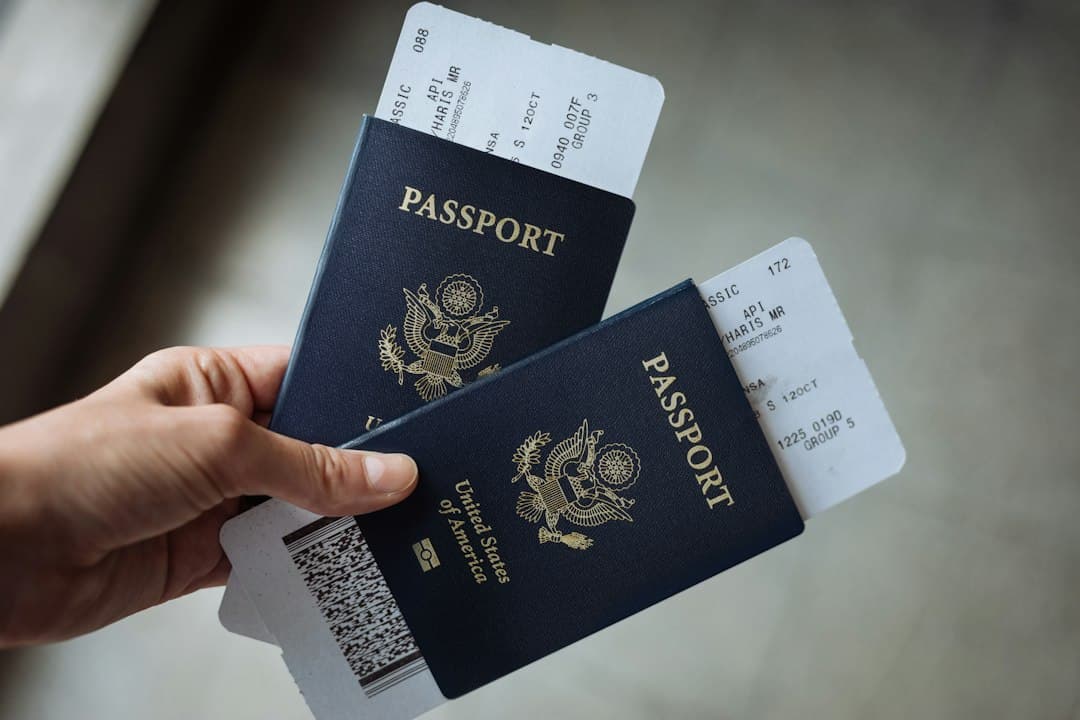
Before a long trip, measles is a risk that's easy to rule out: just check your vaccination status in time. You'll learn how to confirm you're protected, how many MMR doses to aim for, how long before departure to get vaccinated, and how to respond if symptoms appear during your trip or after you return.
Why you should check your vaccines before any trip
Measles is very widespread around the world and highly contagious: a traveler can be exposed in any country they visit, especially where it still circulates or where large outbreaks are active[1]. It is therefore not a concern limited to one particular destination.
Imported cases in the United States show this clearly: nearly 90% of them are considered preventable through vaccination, because the travelers involved did not have the vaccination appropriate for their age and their trip[1]. These travelers often fall ill after returning home and can spread the virus to those around them[1].
The MMR vaccine protects against three diseases: measles, mumps, and rubella[2].
Knowing whether you're protected: vaccine record, age, proof of immunity
Start by looking for your vaccination record or any document showing the doses you received. If you were born in 1957 or later and you're unsure of your status, this is the first step: locate your vaccination records or proof of immunity, such as a positive blood test for measles IgG antibodies[3].
A few reference points to help you take stock:
- Without written proof of immunity, the recommendation is to receive one dose of MMR[3].
- You can also have your IgG levels tested (a blood test) to find out whether vaccination is needed[3].
- According to the CDC, receiving an extra dose of MMR when you may already be immune is not harmful; if you are pregnant, have a weakened immune system, or have doubts, ask your doctor for advice before getting vaccinated[3].
- People born before 1957 are presumed immune from a childhood infection, so no test or vaccination is needed[3].
- With two doses received from 12 months of age onward, you are protected for life: no booster is needed[4].
The vaccination schedule to aim for before traveling
For international travel, the CDC (the US public health authority) recommends two doses of MMR, or of another vaccine containing measles, for most children and adults born in 1957 or later[4]. The two doses should be spaced at least 28 days apart[3].
For children, three scenarios:
- An infant aged 6 to 11 months who is traveling receives one dose of MMR before departure, then two more doses after their first birthday[2].
- This early dose does not replace the usual schedule: the child then receives two doses, at 12–15 months and at 4–6 years[3].
- A child traveling internationally may receive their second dose earlier, as soon as 28 days after the first[3].
In terms of effectiveness, two doses protect about 97% against measles after exposure to the virus; a single dose protects about 93%[4].
The right timing: how long before departure
Plan to be vaccinated with both MMR doses at least two weeks before you leave to get the best protection[5]. If you've already received one dose, get the second one before the trip[5].
If your departure is less than two weeks away and you are not protected, one MMR dose is still recommended[4].
To book an appointment, call your doctor or the public health department where you live, or find a health center or clinic near you[5]. Review the situation for the whole family, children included: infants under 6 months, however, are not eligible for the measles vaccine[5].
Recognizing symptoms and responding while traveling
Measles begins with fever, cough, a runny nose, and red eyes. A rash appears 2 to 4 days later, starting on the face and spreading down the body[6].
It is extremely contagious: the virus can remain in the air and on surfaces for up to 2 hours after an infected person has left[6]. An infected person can spread it from 4 days before the rash appears to 4 days after[5].
Complications mainly affect certain groups: infants under 12 months and unvaccinated young children, unvaccinated pregnant people, and people whose immune system is weakened by illness or treatment[7].
If you or your child have a fever and a rash, tell your doctor that you have traveled abroad and say whether you have received the MMR vaccine[5]. Monitor your health for 3 weeks after you return[5].

Pitfalls and Points to Watch
- Without a vaccination record or a blood test, you have no proof of immunity. In that case, the recommendation is to get vaccinated[3].
- A memory or a verbal statement that you were vaccinated is not proof of immunity[1].
- The vaccine does not protect you right away. You are considered protected about 2 to 3 weeks after vaccination, which is why you should get vaccinated at least two weeks before departure[4].
- If you suspect measles, do not go to a clinic or healthcare facility without calling ahead. Call before you go to avoid exposing other people[7].
- A dose given to an infant aged 6 to 11 months does not replace the two doses in the standard schedule after age one[3].
- Presumed immunity for people born before 1957 is based on birth year. The CDC applies this rule to everyone, regardless of country of birth, but other countries use different cutoff years[4].
Steps, in Order
- Find your vaccination record or proof of immunity, as well as those of your children.
- Contact your doctor, a vaccination center, or public health service as soon as your travel plans are set.
- If you are not protected, get vaccinated at least two weeks before departure[5]. If the two-dose schedule still needs to be completed, the doses must be spaced at least 28 days apart[3], and a single dose is enough to complete a schedule that has already started[5], so start as soon as possible. If your departure date is close, one dose is still useful[4].
- Keep your doctor's contact details handy so you can call before going in person if you have symptoms.
- After you return, monitor your health for three weeks.
This article covers the essentials of prevention. Choosing health insurance and understanding how to get care in the country you are visiting require more preparation before you leave.
Sources
- 1.^ abcdcdc.gov — Measles (Rubeola) | CDC Yellow Book™: “Given the high global burden of measles and its high contagiousness, travelers may be exposed to the virus in any country visited, especially where measles remains endemic or where large outbreaks are occurring.”; “Nearly 90% of imported measles cases in the United States are considered preventable by vaccination (that is, travelers did not have the recommended vaccination appropriate for their age and travel).”; “These travelers develop symptoms after returning to the United States and sometimes infect others in their community, causing outbreaks.” https://www.cdc.gov/yellow-book/hcp/travel-associated-infections-diseases/measles-rubeola.html (accessed November 12, 2026)
- 2.^ abcdc.gov — Measles Vaccination | Measles (Rubeola) | CDC: “MMR vaccine protects your child from measles, mumps, and rubella, potentially serious diseases caused by viruses.”; “Travelers: Anyone traveling internationally should be fully vaccinated before departure. Infants aged 6 to 11 months should receive 1 dose of MMR vaccine before travel, then 2 more doses after their first birthday.” https://www.cdc.gov/measles/vaccines/index.html (accessed November 12, 2026)
- 3.^ abcdefghijkcdc.gov — Clinical Questions about Measles | Measles (Rubeola) | CDC: “If they were born in 1957 or later and are unsure of their vaccination status, they should first try to locate their vaccination records or a document proving measles immunity (positive IgG result).”; “If they cannot find any written documentation of immunity, such as an MMR vaccination record or positive IgG, they should receive an MMR vaccine.”; “Patients can also have their measles IgG levels tested to determine whether they need an MMR vaccine.” https://www.cdc.gov/measles/hcp/clinical-overview/questions.html (accessed November 12, 2026)
Show 4 more sourcesShow less
- 4.^ abcdefgcdc.gov — Questions About Measles | Measles (Rubeola) | CDC: “No. If you received 2 doses of measles vaccine starting at 12 months of age according to CDC recommendations, you should be protected for life and do not need a booster.”; “CDC recommendations for international travel include an early dose of MMR for infants 6 to 11 months old and 2 doses of MMR (or another measles-containing vaccine) for most children and adults born in 1957 or later.”; “The measles vaccine is highly effective. Two doses are about 97% effective at preventing measles if exposed to the virus. One dose is about 93% effective.” https://www.cdc.gov/measles/about/questions.html (accessed November 12, 2026)
- 5.^ abcdefghicdc.gov — Plan for Travel | Measles (Rubeola) | CDC: “For the best protection, plan to get 2 doses of MMR at least 2 weeks before you leave.”; “If you or your child has already received 1 dose of MMR, get the second dose before your trip.”; “Call your doctor or local health department, or find a health center or clinic near you to schedule an MMR vaccine appointment. CDC does not recommend the measles vaccine for infants younger than 6 months old.” https://www.cdc.gov/measles/travel/index.html (accessed November 12, 2026)
- 6.^ abcdc.gov — Healthcare Providers: Stay Alert for Measles Cases | Measles (Rubeola) | CDC: “Measles is extremely contagious and begins with fever, cough, runny nose, and red, watery eyes (conjunctivitis), followed 2 to 4 days later by a rash that starts on the face and spreads down the body.”; “The virus spreads through direct contact with infectious droplets or through the air when an infected person breathes, coughs, or sneezes, and it can remain infectious in the air and on surfaces for up to 2 hours after an infected person has left.” https://www.cdc.gov/measles/hcp/clinical-overview/stay-alert-for-measles-cases.html (accessed November 12, 2026)
- 7.^ abdoh.wa.gov — Rougeole | Washington State Department of Health: “Infants younger than 12 months and young children who are not vaccinated.”; “Unvaccinated pregnant people and their unborn babies.”; “People whose immune systems are weakened, whether by illness or by medical treatment.” https://doh.wa.gov/fr/you-and-your-family/illness-and-disease-z/rougeole (accessed November 12, 2026)