In late September 2026, heavy rains flooded Bangkok and much of the country. This guide draws on that episode to show you where to find official guidance, how to check your housing, and organize your travel by road or air. It also highlights costs that add up when your departure is delayed, like your new visa-free stay duration.
Understanding the Risk: A Phenomenon Linked to Rainy Season
Rain is part of daily life in Thailand, and September marks the peak of the rainy season[1]. In 2026, many residents felt the year seemed worse than previous ones[1]. If you're settling for several months, count late summer and early fall among the periods when you need to stay alert.
The Late September 2026 Episode
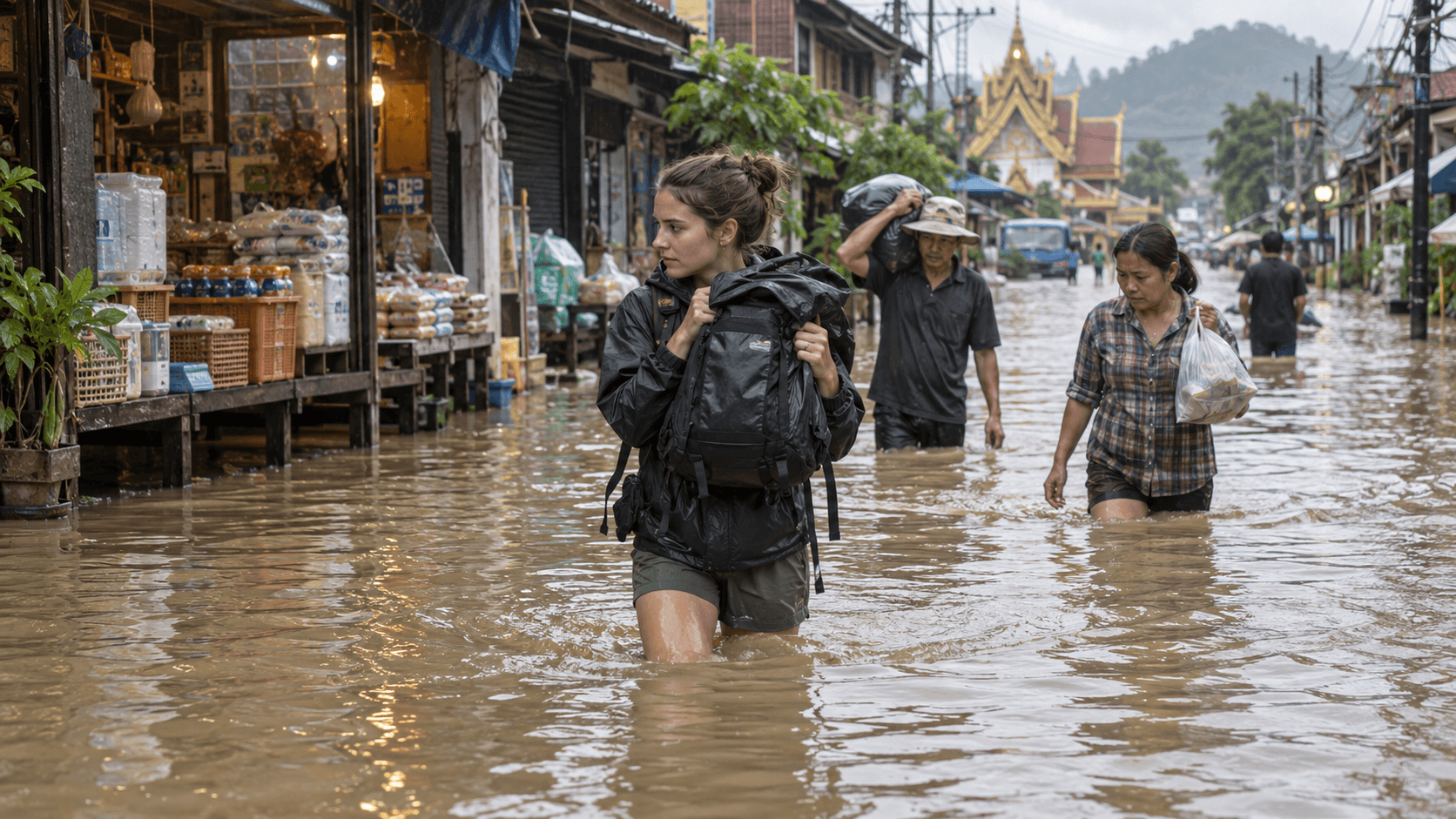
Heavy rains starting September 25 caused flooding in Bangkok and 27 provinces, including Phra Nakhon Si Ayutthaya, Pathum Thani, Nakhon Sawan, Chon Buri, Rayong, Chanthaburi, and Trat[2]. The capital declared a general disaster after nearly 48 hours of heavy rain that swelled canals and flooded roads[1].
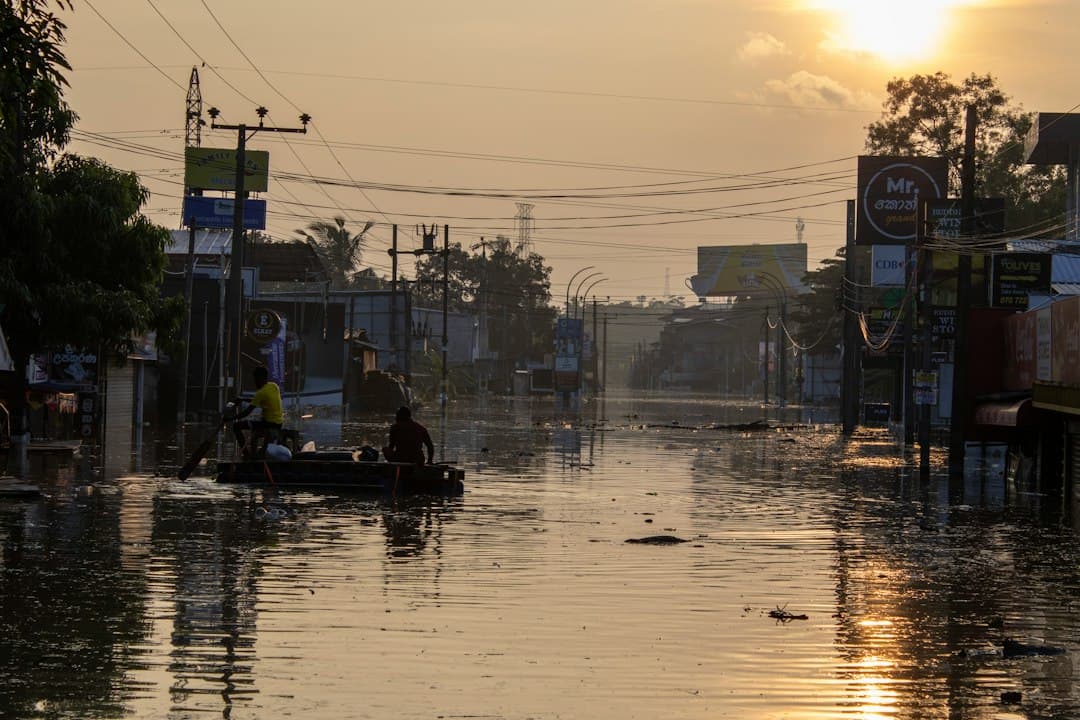
Outside Bangkok, over 500,000 households and 1.7 million people were affected, plus about 52,000 additional households in the capital[1]. In an eastern Bangkok neighborhood, residents waded through water up to their waists[1]. In Bang Kapi, one of the hardest-hit areas, some used small boats to get around[3].
Death tolls changed over time and vary by source: for current figures, refer to Thai government announcements rather than a dated article.
Staying Informed: Alerts and Official Sources
The French Embassy recommends following local authorities' guidance, citing two specific channels: Thailand's meteorological service website and the Thai government spokesperson's Facebook page[2]. It was this meteorological service that announced heavy rain elsewhere in the country while Bangkok was expected to stay dry[3]: a lull in the capital doesn't apply to all of Thailand.
On the French side, France Diplomatie's « Breaking News and Alerts » page groups current messages about Thailand and directs you, for violent wind episodes, to the typhoon guidance sheet on the Travel Advice page[4]. The Embassy also posts its own alerts on its website[2].
- Bookmark Thailand's meteorological service website.
- Follow the Thai government spokesperson's Facebook page.
- Check France Diplomatie's « Breaking News and Alerts » page for Thailand before each trip.
- Read France Diplomatie's typhoon guidance sheet before rainy season, not during.
Thai emergency numbers don't appear in the official sources consulted for this guide: verify them on France Diplomatie's Travel Advice page or with the French Embassy in Bangkok, and write them down before an episode starts.
Choosing and Preparing Your Housing
The official guidance is clear: make sure your accommodation is protected against strong winds and heavy rain[4]. If it isn't, France Diplomatie recommends moving to a safe location and avoiding staying isolated[4]. In practice, if you live alone in an exposed house, identify in advance where you'll go and who you'll notify.
Location matters too. Near the Chao Phraya River and its tributaries, the Embassy recommends the greatest caution[2]. If you're looking for an apartment in Bangkok, Ayutthaya, or another city crossed by the river, factor this proximity into your choice.
No official sources consulted list flood-prone neighborhoods or rules about which floor to prioritize. Before signing a lease, ask the landlord and neighbors about past episodes, and check the meteorological service and local authorities' guidance for your target area.
- Does the accommodation withstand strong winds and heavy rain?
- Is it close to the Chao Phraya or one of its tributaries?
- What safe location can you reach if it's not?
- Who can you contact to avoid being isolated?
Adapt Your Travel Plans
On the road, the rule is to follow local authorities' guidance before planning a route[2]. A dry street where you are tells you nothing about road conditions further ahead.
In Bangkok, after the rains ended, Governor Chadchart Sittipunt indicated that traffic should return to normal on most major roads within two days, but it could take up to seven days for roads to dry in some low-lying areas[3]. If your route passes through these areas, plan for up to a week of buffer time rather than two days.
For flights, France Diplomatie advises you to stay informed about flight updates from airlines[4]. During the September 2026 episode, the country's main airport experienced flight cancellations[3]. Check your flight status directly with your airline before heading to the airport.
Pitfalls, Scams, and Points to Watch
Dam Water Releases
The danger doesn't come only from rain falling in your area: water releases can be made by authorities controlling dams, which is why extreme caution is urged around the Chao Phraya and its tributaries[2]. Water levels can rise even when it's no longer raining where you are. Near the river, follow local authorities' announcements even during dry weather.
Baggage Stuck at Suvarnabhumi
After the episode, Thai Airways, one of the main companies handling baggage at Suvarnabhumi Airport, apologized for a massive delay in baggage processing, partly due to staff shortages caused by the flooding[3]. Hundreds of suitcases lined the arrivals area and the Royal Thai Air Force sent personnel to assist[3]. If you're traveling during those days, keep medications, documents, and work equipment in your carry-on.
The 30-Day Visa-Free Limit
A canceled flight or closed road can delay your departure. Since September 15, 2026, French citizens holding a regular passport can stay in Thailand visa-free for up to 30 days for tourism purposes only, down from 60 days previously[4]. Beyond the 30 authorized days, without an extension from Thai immigration services, overstaying results in a fine or even deportation[4]. If a delay brings you close to this limit, check with Thai immigration services about a possible extension before the deadline.
If you're thinking of bypassing a flooded area by driving to a neighboring country, know that only two visa-free land border crossings per calendar year are now allowed; beyond that, a visa is required at land border posts[4].
Insurance
France Diplomatie strongly recommends purchasing an insurance policy before any trip that covers your entire stay abroad[4]. The sources consulted don't specify how policies handle natural disasters: review your policy's exclusions and ask your insurer in writing (flood-related damage, extended stay costs, delayed baggage).
No scams related to flooding are documented in the official sources consulted for this guide.
After the Episode: Return to Normal and Resources
Return to normal happens in stages. In Bangkok, drainage systems lowered water levels enough for more people to move around, but some areas still faced high water levels, according to government spokesperson Ekkapob Pianpises[1]. On September 29, residents in 29 of 76 provinces remained affected by flooding, according to authorities[3].
The sources consulted don't describe the conditions or procedure to benefit from it: if you're affected, check with your province's local authorities and, for consular assistance, contact the French Embassy.
Checklist Before and During Rainy Season
- Follow Thailand's meteorological service and government spokesperson updates.
- Note verified emergency numbers from the French Embassy.
- Identify a safe location if your accommodation is exposed to wind and rain.
- Near the Chao Phraya, monitor announcements even after the rain stops.
- Allow up to seven days for travel in low-lying areas.
- Confirm your flights with the airline and keep essentials in your carry-on.
- Calculate your 30-day visa-free expiration date and plan for an extension.
- Review your insurance exclusions.
Sources
- 1.^ abcdeffrance24.com — Thailand: eight dead in floods since September 16 (government): "Thailand is used to rainy weather and September marks the peak of the rainy season, but many residents said this year seemed worse than previous ones." ; "Some 52,000 additional households were affected in the capital, which declared a state of general disaster on Saturday after nearly 48 hours of heavy rain that swelled canals and flooded roads." ; "Outside Bangkok, more than 500,000 households and 1.7 million people across 27 provinces in this Southeast Asian country were affected by flooding, according to the same source." https://www.france24.com/fr/info-en-continu/20260928-tha%C3%AFlande-huit-morts-dans-les-crues-depuis-le-16-septembre-gouvernement (accessed October 1, 2026)
- 2.^ abcdefth.diplomatie.gouv.fr — Heavy Rain and Flooding – Alert | France in Thailand: "Heavy rains affecting Thailand since September 25 have caused flooding in Bangkok and 27 provinces" ; "You should follow instructions issued by local authorities (Thailand's meteorological service website and the Thai government spokesperson's Facebook page), especially before planning road travel." ; "Near the Chao Phraya River and its tributaries, extreme caution is recommended, as water releases may be carried out by authorities controlling dams." https://th.diplomatie.gouv.fr/fr/pluies-et-inondations-appel-la-vigilance (accessed October 1, 2026)
- 3.^ abcdefgabcnews.com — Thailand's govt approves emergency funding after deadly floods that impacted millions - ABC News: "In Bang Kapi, one of Bangkok's hardest-hit neighborhoods, residents waded through water and some used small boats to get around." ; "While Bangkok was expected to stay dry, heavy rain was forecast elsewhere in Thailand for Tuesday, according to Thailand's meteorological department." ; "City Governor Chadchart Sittipunt said traffic should return to normal on most major roads within two days, though in some low-lying areas it could take up to seven days for roads to dry." https://abcnews.com/Business/wireStory/thailands-government-approves-emergency-funding-after-deadly-floods-136845658 (accessed October 1, 2026)
- 4.^ abcdefghdiplomatie.gouv.fr — Thailand - Travel Advice - Latest Updates and Alerts - Page 1 of 1 - France Diplomacy | France Diplomacy: "For more information, see the typhoon fact sheet on the Travel Advice page." ; "Make sure your accommodation is adequately protected against strong winds and heavy rain. If not, it's recommended to move to a safe location and avoid staying isolated." ; "You should strongly follow instructions issued by local authorities, especially before planning road travel, and stay informed about flight updates from airlines." https://www.diplomatie.gouv.fr/fr/information-par-pays/thailande/dernieres-minutes-et-alertes (accessed October 1, 2026)