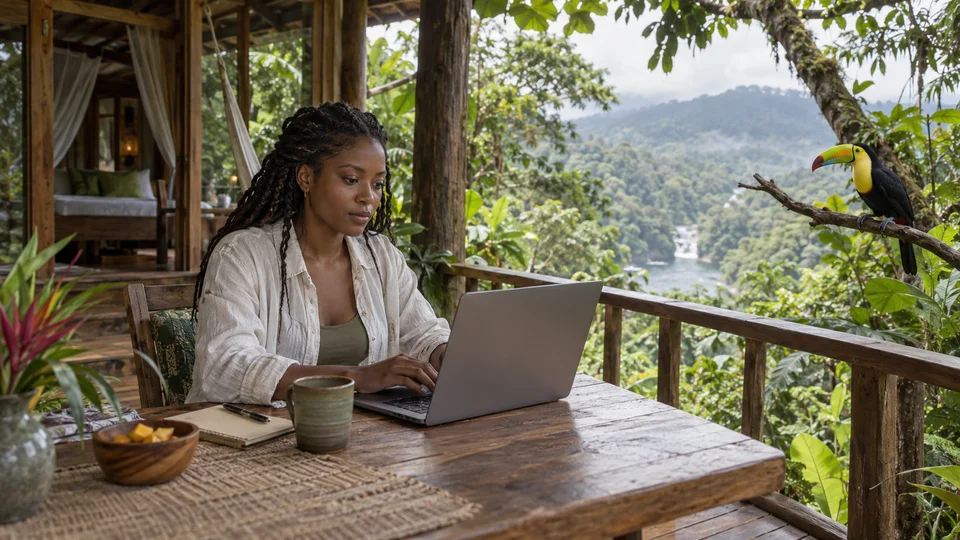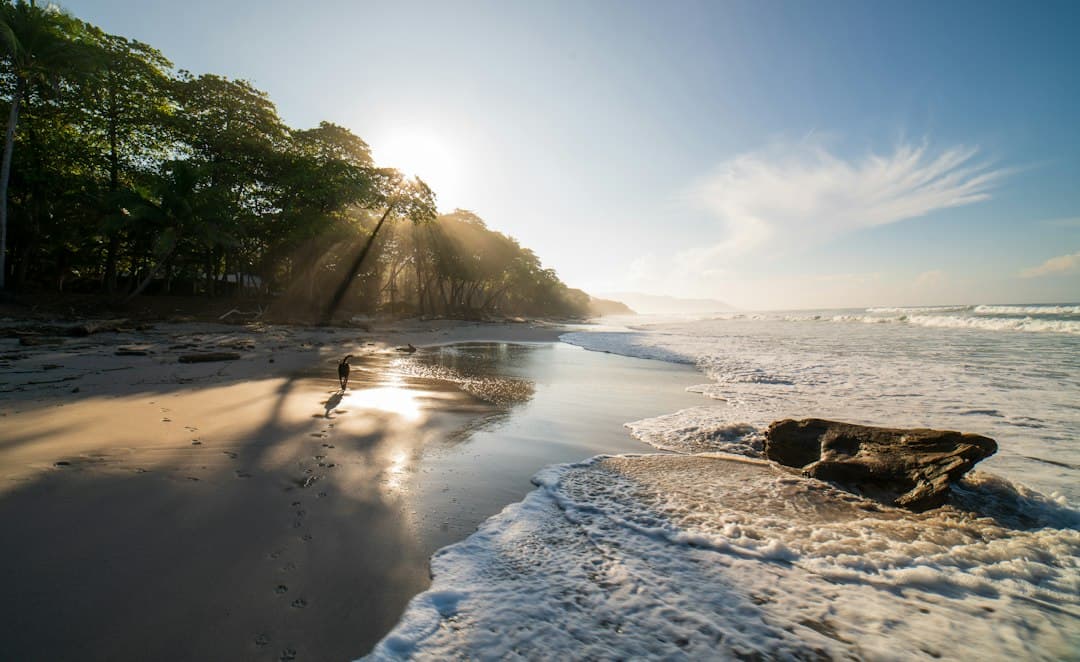
Torn between San José and its surroundings, the Pacific coast, and the beach resorts of Guanacaste? This article helps you compare the regions on what matters day to day (rent, internet, budget, seasons) and spot the fees and conditions that get expensive when you discover them too late. You'll also learn the requirements of the status designed for remote workers and the order in which to proceed.
Pitfalls and Points to Watch
A few points often come to light too late. Here they are before anything else, with the exact requirements.
- Remote worker status application fee: the $100 must be received in full (net) by the Ministry of Finance accounts. The fees charged by the bank sending the international transfer are added, as are the $15 deducted by the receiving bank (Banco de Costa Rica). You should therefore send more than $100[1].
- Housing: visit the property and check the lease before committing[2]. The security deposit is not strictly capped: plan for 1 to 3 months' rent[3].
- Air conditioning on the coast: it is not always included in the base rent and can significantly increase the electricity bill[2].
- High season: on the coastline, rent can reach $1,500 or more between December and April[2].
- Translations: any document issued in a foreign language must be accompanied by an official Spanish translation[2]. Official pages indicate it is more practical to go through a Costa Rican translator, to avoid errors or problems that slow down the application[1].
Central Valley, Pacific Coast: Which Region for Which Profile
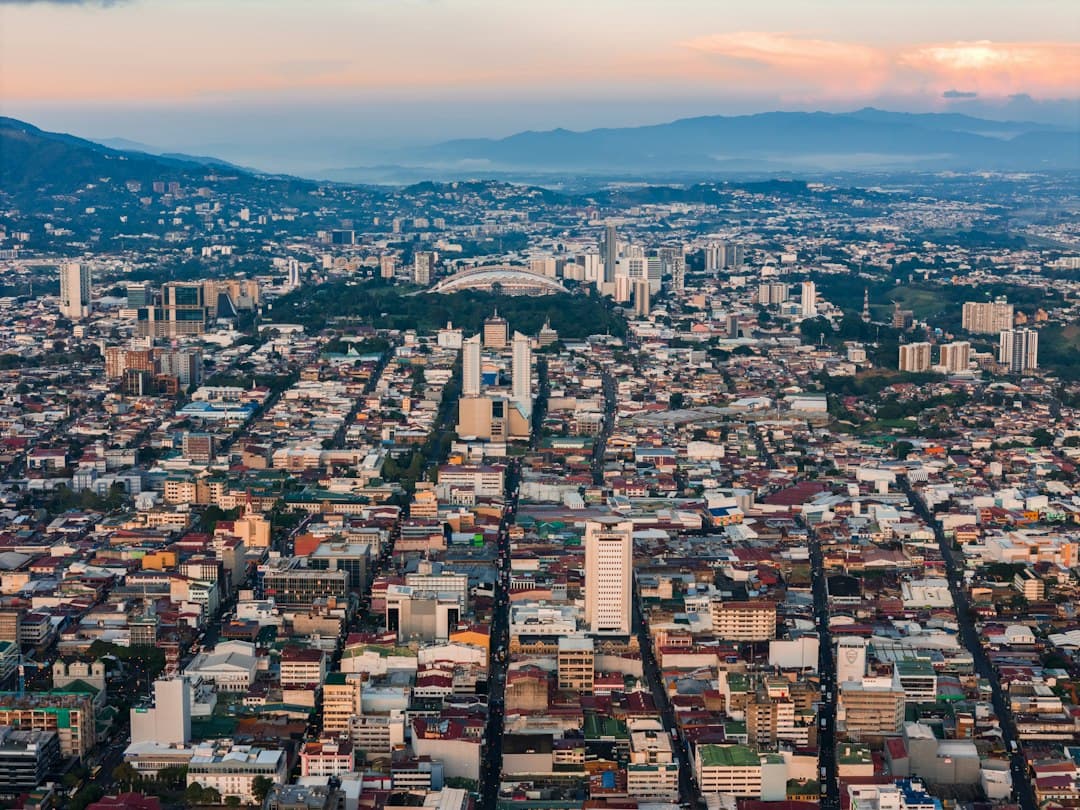
The choice comes down mainly to the interior versus the coastline. The Central Valley, around San José, offers a good balance between accessibility and modern services[4]. It is the administrative and economic heart of the country: it concentrates hospitals, universities, free trade zones and a diverse range of housing, in a permanent spring-like climate thanks to its altitude[4].
Communities such as Escazú or Santa Ana are more sought-after and more international, while other parts of the valley remain noticeably more affordable[4].
Guanacaste and the Pacific coast meet a different desire: ocean, beaches and beach life. Housing is pricier in the tourist resorts (Tamarindo, Nosara, the Nicoya Peninsula), with marked seasonality between the dry and rainy seasons that affects rents and activity[4]. The overall budget gap between the interior and the tourist coast can be substantial, which is why a scouting stay before any commitment is worthwhile[4].
In terms of community, Tamarindo has a strong North American and European presence: the digital nomad community is real but less dense than in Santa Teresa[2]. Santa Teresa, on the Nicoya Peninsula, is one of the most popular spots with digital nomads: beaches, a laid-back atmosphere, an international community, cafés with Wi-Fi and coworking spaces[5]. San José remains the most urban option, with modern infrastructure, a varied cultural scene and several coworking spaces[5].
Finally, keep in mind that prices vary considerably from one region to another, with large internal differences that make any average misleading[4].
Housing: Rents, Platforms and Security Deposits
In San José, expect about $500 for an apartment in the city; a house in the countryside may cost less, but it is far from amenities[2]. A beachfront apartment can cost between $800 and $1,500 per month[2]. On the coast, a one-bedroom apartment falls between $800 and $950 per month, and easily $1,500 or more in high tourist season, from December to April[2].
To search, online platforms such as Encuentra24 and Facebook groups make the hunt easier, but it is essential to visit the properties and check the contracts before committing[2]. The standard security deposit is 1 to 3 months' rent; the law governing rentals does not impose a strict cap[3]. Ask in writing for the amount, the refund conditions and what the rent includes, air conditioning included.
Internet, SIM Cards and Coworking
For fixed internet, the provider Metrocom is presented as the best performer in the country, with a median download speed of 310 Mbps and an upload speed of 277 Mbps, according to Ookla[2]. These figures don't hold for every address: check the offers available in your neighborhood before signing a lease, especially if you're aiming for the coast.
Coworking spaces can be found in particular in San José and Santa Teresa[5]. In Tamarindo, expect two decent coworking spaces and several suitable cafés[2]. Check the rates and their billing periods directly with each space.

Monthly Budget and Cost of Living
Depending on the region and your lifestyle, a monthly budget of between $1,800 and $3,000 generally allows you to live comfortably[5]. In Tamarindo, the range runs from €1,230 per month on a frugal budget to €3,010 without restrictions, with a comfortable profile at around €1,910[2].
Lifestyle matters more than the country itself: buying local products and living inland keeps costs modest, whereas recreating an imported daily routine on the coast drives the budget up[4].
Many items are cheaper than in France (local fruits and vegetables, labor, certain services), but on imported goods, electronics, cars, and housing in sought-after areas, costs approach international standards or even exceed them[4].
For groceries, the main chains are Walmart (Maxi Palí, Palí), Megasuper, Masxmenos, and Auto Mercado; local markets (ferias) are held every week in towns for fresh produce[6].
Seasons, Climate, and Neighborhood Life
The dry season, which generally runs from December to April, is the sunniest and draws many visitors[5]. The green season also offers a pleasant climate, very lush nature, and fewer tourists[5].
On the coast, this seasonality affects rents: they rise the most in high season, from December to April[2]. Inland, the Central Valley enjoys a permanent spring-like climate thanks to its altitude[4].

Remote Worker Status: The Requirements to Know Before You Choose
The digital nomad program lets you extend a 90-day tourist visa to a full year, with the option to renew for one additional year[1]. It is intended for people whose entire income comes from sources outside Costa Rica; renewal requires a presence of at least 180 days (non-consecutive) during the first year[4].
- Income: proof of stable net income of at least $3,000 per month ($4,000 with dependents)[1].
- Health insurance: it must cover the entire length of your stay, with coverage of at least $50,000 USD[1]. Any dependents accompanying you must also be covered[1].
- Bank account: digital nomads can open a local bank account, and their foreign-source income is not subject to Costa Rican income tax[1]. This says nothing about your tax residence elsewhere: check your situation with the tax authority in your home country.
- Supporting documents: bank statements accompanied by a sworn statement confirming they were requested and obtained from the relevant financial institution[2].
Steps, in Order
- Choose the region according to your budget, the internet quality, and the community you're looking for, ideally after a scouting trip.
- Gather proof of income, bank statements with a sworn statement, official translations into Spanish, and health insurance covering at least $50,000 USD for the entire stay.
- Pay the $100 fee, allowing for the bank fees of both banks, then submit the application.
- On arrival, look for housing: visit in person, read the contract, and clarify the deposit amount and whether air conditioning is included.
- This gives you the essentials for choosing a region. Step-by-step procedures, a line-by-line budget, and choosing the exact neighborhood require going further to truly settle in.
Sources
- 1.^ abcdefgfr.visitcostarica.com — Digital Nomads: Living and Working - Visit Costa Rica: “The $100 fee associated with this application must be received in full (net) by the Ministry of Finance accounts. It is therefore important to take into account bank charges, both from the sending bank abroad and from the receiving bank (Banco de Costa Rica), which charges a $15 fee.”; “Documents may also be translated abroad, but it is more convenient to work with a Costa Rican translator to avoid errors or problems that usually slow down the process.”; “This program allows you to extend a 90-day tourist visa to a full year, with the option to renew it for an additional year.” https://fr.visitcostarica.com/digital-nomads (accessed October 31, 2026)
- 2.^ abcdefghijklmnhello-mira.com — Digital Nomad in Costa Rica: The Essentials to Get Started | Hello Mira: “Online platforms like Encuentra24 and Facebook groups make it easier to find housing, but it is essential to visit the places and check the contracts before committing.”; “Keep air conditioning in mind when looking for a coastal home: it is not always included in the base rent and can significantly increase your electricity bill.”; “Rents are higher there: expect between $800 and $950 USD per month for a one-bedroom apartment, and easily $1,500 USD or more during peak tourist season (December to April).” (accessed October 31, 2026)
- 3.^ abMira Knowledge — The standard security deposit is 1 to 3 months' rent, and the rental law does not impose a strict cap. Verified on June 11, 2026: reference source numbeo.com. https://www.numbeo.com/cost-of-living/in/San-Jose-Costa-Rica (accessed June 11, 2026)
Show 3 more sourcesShow less
- 4.^ abcdefghijapp.expatriation.io — Living and Working in Costa Rica: San José Guide · EXPATRIATION.IO: “The Central Valley, around San José, offers a good balance between accessibility and modern services.”; “The country's administrative and economic heart, it concentrates hospitals, universities, free trade zones and a diverse range of housing, in a permanent spring climate due to its altitude.”; “Communities such as Escazú or Santa Ana are more sought-after and international, while other areas of the valley remain noticeably more affordable.” https://app.expatriation.io/fr/culture/countries/costa-rica (accessed October 31, 2026)
- 5.^ abcdefadobecar.com — Digital Nomad in Costa Rica: Working and Exploring the Country: “Santa Teresa, on the Nicoya Peninsula, has become one of the most popular spots for digital nomads: beautiful beaches, a laid-back atmosphere, a dynamic international community, cafés with Wi-Fi and modern coworking spaces.”; “The capital San José remains an interesting option for a more urban environment: modern infrastructure, a varied cultural offering and several coworking spaces.”; “Depending on the region and lifestyle, a monthly budget of between $1,800 and $3,000 usually allows you to live comfortably.” https://www.adobecar.com/fr/conseils/nomade-numerique-costa-rica/ (accessed October 31, 2026)
- 6.^Mira Knowledge — The main supermarket chains are Walmart (Maxi Palí, Palí), Megasuper, Masxmenos and Auto Mercado; local markets are held weekly in towns for fresh produce. Verified on June 11, 2026: official source visitcostarica.com. https://www.visitcostarica.com (accessed June 11, 2026)