
Are you thinking about settling in Canada for a few years or longer? This article helps you tell the possible statuses apart (visitor, work permit, permanent residence), spot the immigration pathways open to French speakers, and compare rents across major cities, with Montréal as a reference point. It also details the traps to know about before you pay for anything: fake visa promises, unauthorized representatives, scams after arrival.
Traps, Scams and Warning Signs
Start with what costs the most when you get it wrong: the rules, the intermediaries and the scams.
Rules That Keep Changing
IRCC rules change from one year to the next: exemptions from the study permit cap, simplification of the co-op work permit, restrictions on the start-up visa, draws by category under Express Entry[1]. Financial thresholds are indexed and draws vary: check canada.ca and ircc.canada.ca before each step[1]. For example, the financial requirements for a study permit rose from $10,000 to $20,635 on January 1, 2024[2], then to $22,895 on September 1, 2025, with an automatic adjustment every September 1[2]. An amount read on a blog or in an old guide may therefore be out of date.
Promises of Entrepreneur Visas
IRCC no longer accepts any new applications under the Start-up Visa Program, except for candidates who obtained a valid commitment from a designated organization in 2025 and have not yet submitted their application[3]. The Self-Employed Persons Program is also suspended indefinitely[3]. Any offer selling you a traditional "entrepreneur visa" today should raise a red flag. For starting a business or registering a local company, check directly with the official websites.
Unauthorized Representatives
The Quebec government lists the checks to make before signing with a paid representative: they must be a lawyer who is a member of the Barreau du Québec, a notary who is a member of the Chambre des notaires du Québec, an immigration consultant recognized by the Ministry, or a holder of a special authorization from the Barreau or the Chambre des notaires[4]. The fees charged by the Quebec government to process an application are posted online: compare them with what your representative charges you[4].
Refuse any payment requested by a person not listed in the Registre québécois des consultants en immigration, or not registered with the Barreau du Québec or the Chambre des notaires[4]. IRCC also warns that no one can guarantee you a job, a visa to Canada or permanent residence[5].
False Information: A Five-Year Penalty
Whether or not you are assisted, you are responsible for the information submitted in your application in Quebec[4]. A false declaration can lead to the minister refusing to consider any immigration application submitted to the Quebec government for five years, for you and for every person included in your application[4].
Scams After Arrival
- The fake agent who threatens you with deportation over unpaid fees: IRCC never threatens to deport anyone over unpaid fees[5]. Do not share your unique client identifier (UCI) or your file number; the displayed number can be falsified[5].
- The fake computer virus: you get a call telling you your computer is infected and are offered a cleanup, with the aim of obtaining your passwords[5].
- Fake winnings: a text message announces a prize even though you never entered any contest; do not reply, not even to ask that messages stop[5].
- Fake benefits: promoters claim newcomers can receive benefits and credits for the period before their arrival, which is false[5].

Choosing your status: visitor, work permit, or permanent residence
Working remotely on a visitor status is, in principle, only possible if your employer or clients are abroad and if your intention to stay remains clearly temporary, the CBSA officer retaining discretion at entry[1]. As soon as you aim for structured remote work or local work, you need a work permit or a permanent residence pathway[1]. For a digital nomad, this is the line you must not cross.
There are two types of work permits. An open work permit does not require a job offer[6]. An employer-specific work permit requires one[7]. In all cases, the final decision at entry rests with the CBSA officer, who has discretionary authority[1].
Pathways to permanent residence
People applying for permanent residence based on their skills or work experience fall under the economic category. It includes Express Entry, the federal business immigration programs, and regional economic programs, including the Provincial Nominee Program, the Atlantic Immigration Program, the Rural Community Immigration Pilot, and the Francophone Community Immigration Pilot[3].
An Advantage for French Speakers
Since 2026, Express Entry has held category-based draws that favor French proficiency: the Comprehensive Ranking System (CRS) score thresholds are significantly lower than in general draws, provided your French is assessed at NCLC 7[8]. Check canada.ca for the exact thresholds and the detailed eligibility criteria in force.
Quebec, a Separate Selection
To settle in Quebec, the route runs through the Quebec Skilled Worker Program (PSTQ), via an expression of interest in Arrima, then obtaining the Quebec Selection Certificate (CSQ) before federal permanent residence[8]. Quebec maintains controlled admission volumes and emphasizes French[8]. The Quebec Experience Program (PEQ), abolished on November 19, 2025, is temporarily reopened from July 2, 2026 to July 2, 2028; a first application intake period runs from July 2 to October 31, 2026[8].
A temporary public policy facilitates access to an employer-specific work permit for eligible foreign workers in Quebec who have been invited to apply for permanent residence in that province and have submitted their permanent selection application under the PSTQ[9].
Administrative Procedures: IRCC and CBSA
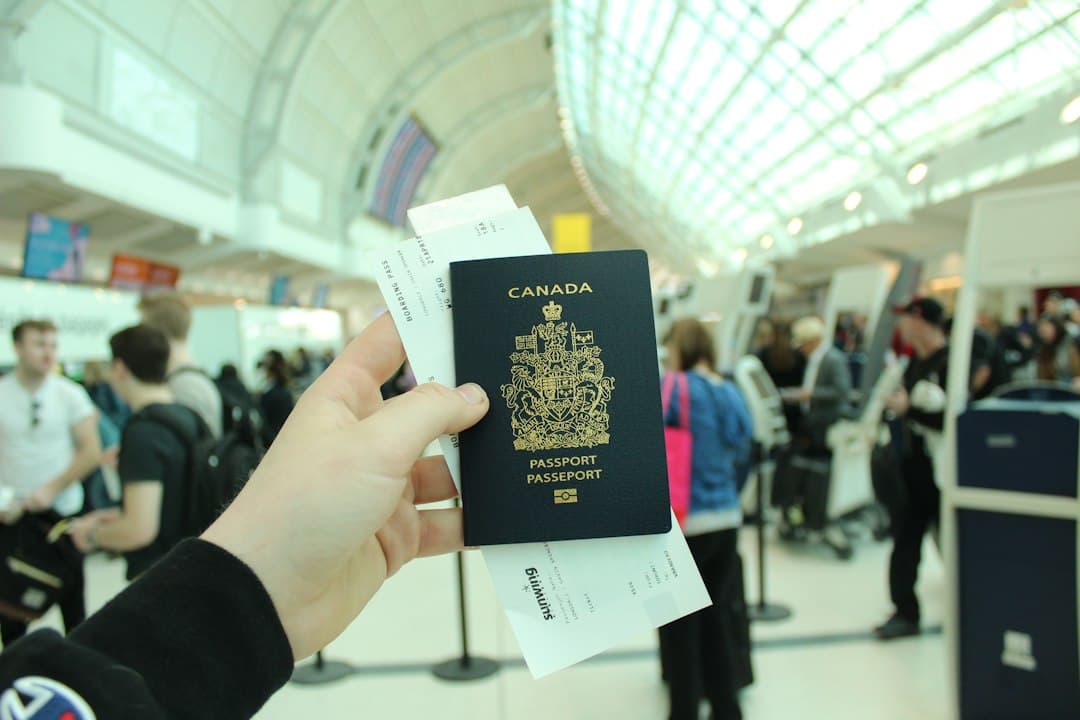
Applications for eTAs, visitor, study, or work visas are submitted through a secure IRCC account (GCKey)[10]. Permanent residence goes through a dedicated portal[10]. Biometrics (fingerprints and photo) are required for most applications, with a fee[10]. At the border, the CBSA verifies documents and issues the physical work or study permit if the application is approved in principle[10].
To extend a visitor stay beyond the initial period, file an online visitor record application before the expiry date, budgeting for fees, proof of funds, evidence of your ties, and an explanation of your reasons[11]. Documents include your passport, proof of financial solvency, remote work contracts abroad, and ties to your home country; insurance is recommended[11].
Check canada.ca for the consequences of overstaying before any deadline, as well as the official fees in force.
Diplomas and Qualifications
French diplas are not automatically recognized[8]. Canadian professional bodies (engineers, accountants, doctors, lawyers) impose equivalency procedures that are often long and costly[8]. Quebec and France have signed mutual recognition agreements for certain professions, but they remain limited[8]. Timelines vary by field and are not quantified here: don't rely on a standard duration, and ask the relevant body about timelines, costs, and the assessment procedure.
Cost of living and housing by city
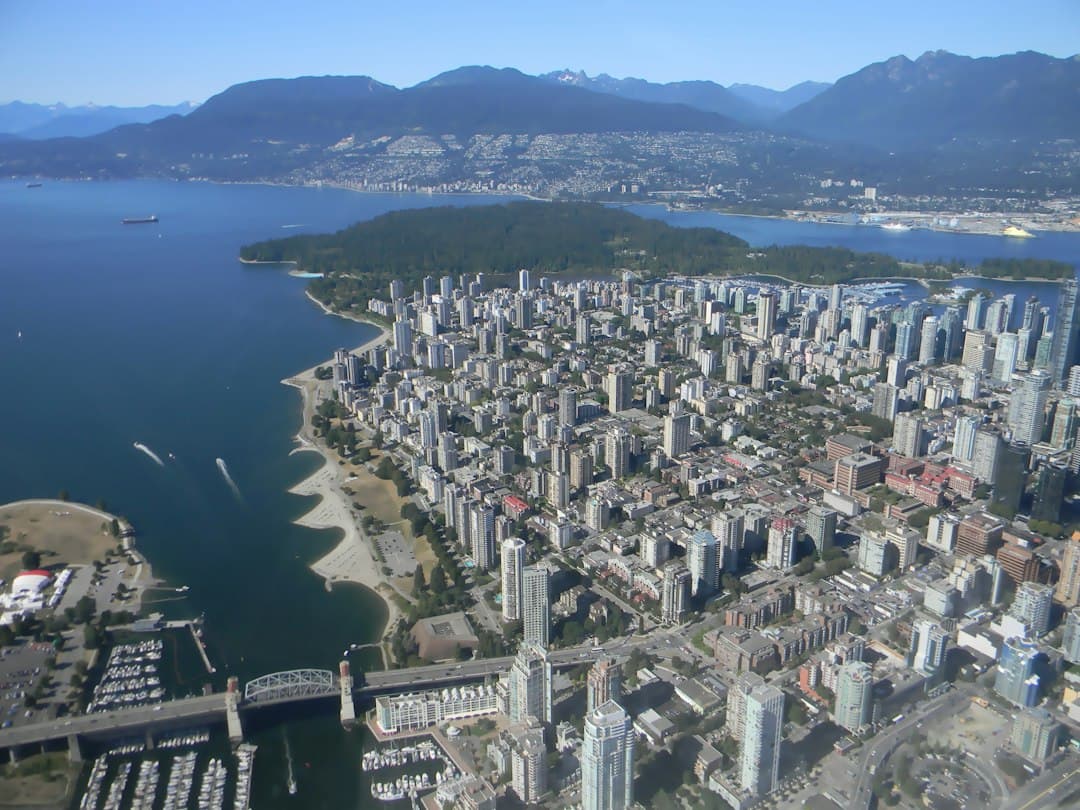
Canada is very large, and the cost of living varies a lot depending on where you live[12]. Large cities like Toronto and Vancouver are where it is highest, especially for housing[12].
Here are the asking rents for a two-bedroom in the second quarter of 2026, according to Statistics Canada:
- All census metropolitan areas combined: $2,130 per month, down 3.6% year over year[13].
- Vancouver: $3,030, Toronto: $2,650, Victoria: $2,640, Halifax: $2,400, the highest in the survey[13].
- Calgary: $1,890 asked[13].
Trends diverge: asking rents fell year over year in Abbotsford–Mission (-6.4%), Calgary (-6.4%), Montreal (-5.2%) and Vancouver (-4.1%), but rose in Thunder Bay (+6.5%), Sherbrooke (+5.7%), Halifax (+5.3%) and Saskatoon (+5.2%)[13].
Pay attention to what the figure measures. Asking rent is the price advertised on major rental platforms; paid rent reflects what current tenants pay, usually under an existing lease[13]. In almost every city where both figures exist, asking rent exceeds paid rent: in Vancouver, the average paid rent is $2,470, and in Toronto it is $2,160[13]. These data are experimental and may be revised[13]. Don't build a budget on rent alone: food, transportation and other expenses must be added.
Montreal compared to other cities
On rent alone, Statistics Canada's figures do not place Montreal among the most expensive cities: it is among the cities where asking rents for a two-bedroom fell 5.2% year over year[13], while Vancouver ($3,030) and Toronto ($2,650) show the highest average asking rents[13]. The exact amount for Montreal is not given here: check Statistics Canada's statistics.
Another distinctive feature: Quebec manages its own selection of skilled workers, with the PSTQ and the CSQ described above[8]. Depending on your profile, this is either an asset (dedicated pathways, a measure that facilitates the work permit[9]) or a constraint (controlled volumes, emphasis on French[8]). As for language, climate, employment or transportation, compare these criteria with your own priorities before choosing.
Checklist before you get started
- Define the status you're aiming for: visitor working remotely for a foreign employer, work permit, or permanent residence.
- If you're targeting Quebec, look up the PSTQ, Arrima and the CSQ; otherwise, check whether Express Entry or a provincial program fits your profile.
- If you're a French speaker, have your French level assessed: NCLC 7 is required for category draws that prioritize French.
- Contact the professional body for your trade to learn the equivalency procedure for your diploma.
- Compare several cities on asking rent and paid rent, then add the other expense categories.
- Before paying an intermediary, verify their status (lawyer, notary, recognized consultant) with their regulatory body.
- Re-check every amount and rule on canada.ca, ircc.canada.ca or quebec.ca just before you submit your application.
- For taxes (Canadian tax residency), don't rely on a general rule: seek advice from a professional.
Sources
- 1.^ abcdeMira Knowledge — IRCC rules are evolving in 2026: exemption from the study cap for certain public master's and doctoral programs, simplified co-op work permit, restrictions on the Start-Up Visa, Express Entry by category with priority for French. Verified on 06/08/2026: official source canada.ca. (accessed June 8, 2026)
- 2.^ abcanada.ca — 2026 Deputy Minister Transition Binder - International Student Program - Canada.ca: “Increase in financial requirements from $10,000 to $20,635, effective January 1, 2024, for study permit applicants, to better reflect the cost of living in Canada and help prevent student vulnerability and exploitation (canada.ca).”; “Financial requirements were raised again to $22,895 on September 1, 2025, and will be adjusted automatically each September 1 based on updates to Statistics Canada's low income threshold (canada.ca).” https://www.canada.ca/fr/immigration-refugies-citoyennete/organisation/transparence/cahiers-transition/sous-ministre-2026/programme-etudiants-etrangers.html (accessed October 15, 2026)
- 3.^ abccanada.ca — How IRCC's application processing system works - Canada.ca: “People seeking permanent residence based on their skills or work experience apply under this category (canada.ca).”; “This category includes Express Entry, federal business immigration programs, and regional economic programs, including the Provincial Nominee Program, the Atlantic Immigration Program, the Rural Community Immigration Pilot, and the Francophone Community Immigration Pilot Program (canada.ca).”; “To manage its program inventories responsibly, IRCC is not accepting new applications under the Start-up Visa Program, except for candidates who obtained a valid commitment from a designated organization in 2025 and have not yet applied (canada.ca).” https://www.canada.ca/fr/immigration-refugies-citoyennete/organisation/rapports-statistiques/statistiques-donnees-ouvertes/statistiques-immigration/systeme-traitement-demandes.html (accessed October 15, 2026)
Show 10 more sourcesShow less
- 4.^ abcdequebec.ca — Immigration fraud and its consequences for your immigration project | Gouvernement du Québec: “Make sure the representative is a lawyer who is a member of the Barreau du Québec, a notary who is a member of the Chambre des notaires du Québec, an immigration consultant recognized by the Ministry, or a person holding a special authorization issued by the Barreau du Québec or the Chambre des notaires du Québec (quebec.ca).”; “All fees charged by the Government of Québec for processing an application are posted online. Make sure they match the information provided by the paid immigration representative you are working with (quebec.ca).”; “Refuse any payment request from representatives who are not registered in the Québec Register of Immigration Consultants (RQCI), the Barreau du Québec, or the Chambre des notaires du Québec (quebec.ca).” https://www.quebec.ca/immigration/prevention-fraude (accessed October 15, 2026)
- 5.^ abcdefcanada.ca — Fraud targeting newcomers - Canada.ca: “IRCC will never threaten to deport you over unpaid fees (canada.ca).”; “Do not provide information such as your Unique Client Identifier (UCI) or your file number. An organization's phone number may look real without being real (canada.ca).”; “You may receive a call or email saying your computer is infected with a virus. The caller will offer to remove it and will try to obtain your passwords and other private information (canada.ca).” https://www.canada.ca/en/immigration-refugees-citizenship/services/protect-fraud/newcomers.html (accessed October 15, 2026)
- 6.^Mira Knowledge — Open work permits do not require a job offer. Verified: official source canada.ca. https://www.canada.ca/en/immigration-refugees-citizenship/services/work-canada.html
- 7.^Mira Knowledge — Employer-specific work permits require a job offer. Verified: official source canada.ca. https://www.canada.ca/en/immigration-refugees-citizenship/services/work-canada.html
- 8.^ abcdefghiapp.expatriation.io — Living in Canada: immigration, salaries by province, culture (2026) · EXPATRIATION.IO: “Since 2026, Express Entry has held draws by category that favor French-language proficiency: the points thresholds (CRS) are noticeably lower than in general draws, subject to a assessed French level (NCLC 7) (app.expatriation.io).”; “To settle in Québec, the route runs through the Programme de sélection des travailleurs qualifiés (PSTQ), via an expression of interest in Arrima, then obtaining the Certificat de sélection du Québec (CSQ) before federal permanent residence (app.expatriation.io).”; “Québec maintains controlled admission volumes and emphasizes French; the Programme de l'expérience québécoise (PEQ), abolished on November 19, 2025, reopens temporarily from July 2, 2026 to July 2, 2028 (app.expatriation.io).” https://app.expatriation.io/fr/culture/countries/canada (accessed October 15, 2026)
- 9.^ abcanada.ca — Temporary public policy to facilitate obtaining a work permit for prospective Québec permanent residence applicants and their spouses and common-law partners - Canada.ca: “Pursuant to section 25.2 of the Act, this policy will facilitate access to an employer-specific work permit under the IMP for eligible foreign workers from Québec who have been invited to apply for permanent residence in that province and have submitted a permanent selection application to the province under the PSTQ (canada.ca).” https://www.canada.ca/fr/immigration-refugies-citoyennete/organisation/mandat/politiques-directives-operationnelles-ententes-accords/politiques-interet-public/permis-travail-rp-quebec-2026-2.html (accessed October 15, 2026)
- 10.^ abcdMira Knowledge — Applications for eTA, visitor, study, or work are made through a secure IRCC account (CléGC); permanent residence goes through the dedicated portal. Verified on 06/08/2026: official source canada.ca. https://www.canada.ca/en/immigration-refugees-citizenship/services/application.html (accessed June 8, 2026)
- 11.^ abMira Knowledge — To extend beyond the initial period (typically up to 6 months), you must apply online for a visitor record before it expires, with fees, proof of funds, ties, and an explanation of the reason. Verified on 06/08/2026: official source canada.ca. https://www.canada.ca/en/immigration-refugees-citizenship/services/visit-canada/extend-stay.html (accessed June 8, 2026)
- 12.^ abcanada.ca — Welcome to Canada: Deciding where you want to live before your arrival - Canada.ca: “Canada is a very large country. As a result, the cost of living can vary greatly depending on where you choose to live (canada.ca).”; “Large cities such as Toronto and Vancouver are where the cost of living is highest, especially when it comes to housing (canada.ca).” https://www.canada.ca/fr/immigration-refugies-citoyennete/services/immigrer-canada/mesures-ukraine/etablissement/bienvenue-canada/decider-ou.html (accessed October 15, 2026)
- 13.^ abcdefghiwww150.statcan.gc.ca — The Daily — Quarterly rental market statistics, second quarter of 2026: “The average asking rent for a two-bedroom apartment across all combined census metropolitan areas was $2,130 per month in the second quarter of 2026, down 3.6% from the second quarter of 2025 (Statistics Canada).”; “Average monthly asking rents were highest in Vancouver ($3,030), Toronto ($2,650), Victoria ($2,640) and Halifax ($2,400) (Statistics Canada).”; “Although asking rents for two-bedroom apartments decreased year over year in many census metropolitan areas, such as Abbotsford–Mission (-6.4%), Calgary (-6.4%), Montreal (-5.2%) and Vancouver (-4.1%), they increased in others, such as Thunder Bay (+6.5%), Sherbrooke (+5.7%), Halifax (+5.3%) and Saskatoon (+5.2%) (Statistics Canada).” https://www150.statcan.gc.ca/n1/daily-quotidien/260909/dq260909c-fra.htm (accessed October 15, 2026)