India is capping the commercial margin on 137 anticancer drugs starting November 9. If you are being treated in India or are accompanying a loved one, this article explains what the measure provides, what still needs to be confirmed about prices, and how to check the official price of a medication. You will also learn which questions to ask your doctor, your pharmacy, and your insurer, and which risks to avoid if you buy online.
What India Has Decided: A 30% Cap on 137 Anticancer Drugs
India has decided to cap the commercial profit margins on 137 types of anticancer drugs[1]. The measure takes effect on November 9[1]; according to another outlet, it will be fully in force on that date[2].
In practical terms, the commercial margin on the drugs concerned will be capped at 30% of the maximum selling price, excluding value-added tax (VAT)[1]. The decision was announced in a statement from the National Pharmaceutical Pricing Authority, a body under the Ministry of Chemicals and Fertilizers[1].
The stated goal is to reduce the financial burden of treatment for patients, especially those who need expensive medications over long periods[1].
Which Medications Are Affected
The list includes various immunotherapy drugs used for more than 20 types of cancer[1]. It also covers medications for breast, prostate, colorectal, ovarian, and cervical cancers[1].
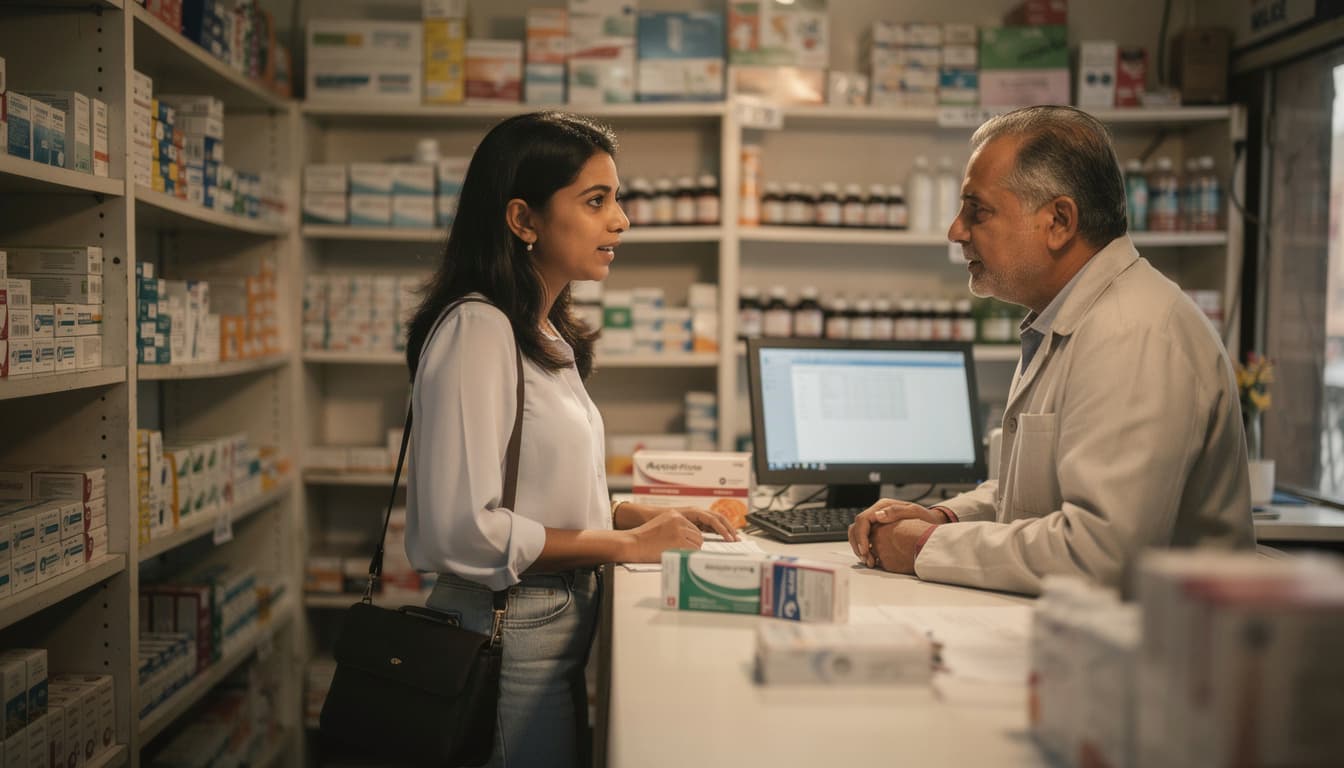
To find out whether your treatment is part of the list, the simplest approach is to ask your oncologist or your pharmacy directly, giving the exact name of the molecule and the brand prescribed.
Effect on Prices: What Has Been Announced and What Remains to Be Confirmed
The media mention a reduction in the maximum retail price of up to 70%[1]. Another outlet refers to a cut in the maximum selling price "up to 70%"[2]. This is an announced maximum: it does not apply to every product, and no precise reduction can be expected in advance for your treatment.
Manufacturers will have to calculate and announce the new price within seven days of the regulation being published[1]. It is this new price, specific to each medication, that will allow you to measure the real effect on your bill.
Access to Treatment: Supply and Display Requirements
To avoid shortages after the price adjustments, authorities require manufacturers to maintain their current levels of production and supply[1].
On the retail side, hospitals, medical establishments, and pharmacies must display and apply the new prices; state-level drug regulators will oversee their implementation[1]. You can therefore ask to see the displayed price for your medication.
Checking a Price: The Official Tools
Citizens can check medication prices through the Pharma Sahi Daam app and the website of the National Pharmaceutical Pricing Authority[1]. Compare the price quoted at the pharmacy or hospital with the one these tools show.
A Precedent: The 2019 Cap
This is not the first time India has applied this measure. In 2019, the country imposed capped margins on 42 types of anticancer drugs[1]. According to Indian government data, the maximum selling prices of 526 brands of controlled medicines subsequently fell by up to 90%[1].
Pitfalls, Scams, and Points of Vigilance
When prices fall and expensive medications remain in high demand, the temptation to buy outside a identified channel grows. Counterfeit medicines do exist: the World Health Organization (WHO) estimates that more than 50% of counterfeit medicines come from India and China[3].
Buying online is the riskiest option. The WHO estimates that 50% of medicines sold online by illegal sites (which hide their physical address, wrongly claim to be able to sell prescription drugs, etc.) are fake[3]. The presence of “pharmacies” on the web gives a false sense of security[3].
- Buy your treatment from a pharmacy or hospital you can identify in person.
- Be wary of any site that hides its address or offers prescription medicines without a prescription.
- Compare the requested price with the official price, available through the Pharma Sahi Daam app or the website of the national pricing agency[1].
Steps, in order
- Ask your doctor whether the medicines in your treatment are among the 137 affected.
- Ask your pharmacy or hospital for the price displayed after November 9, then compare it with the official price.
- Check with your health insurance about coverage for your treatment in India: the measure concerns commercial margins and says nothing about reimbursement.
- Keep your purchases within an identified channel and avoid online sellers whose address is not visible.
This article presents the measure and its key reference points. It does not detail the named list of medicines or how your bill is calculated: for that, rely on the official prices and on your doctor's advice.
Sources
- 1.^ abcdefghijklmnovietnam.vn — India adjusts prices of 137 types of cancer medicines, with reductions of up to 70%: “India has decided to cap the commercial profit margins of 137 types of anticancer medicines, aiming to reduce the maximum retail price of these medicines by up to 70%, thereby easing the financial burden of treatment for patients.”; “The new Indian policy, effective from November 9, aims to reduce the financial burden of medical treatment for patients, especially those who need expensive medicines over long periods.”; “According to a statement from the National Pharmaceutical Pricing Authority of India, an agency under the Ministry of Chemicals and Fertilizers, the commercial margin on the medicines concerned will be capped at 30% of the maximum selling price, excluding value-added tax (VAT).” https://www.vietnam.vn/fr/an-do-dieu-chinh-gia-137-loai-thuoc-ung-thu-muc-giam-co-the-len-toi-70 (accessed November 4, 2026)
- 2.^ abfrancais.medscape.com — World in brief: 1 death from the Shamonda virus in France, 2 Ebola vaccine candidates, India lowers the price of anticancer drugs: “This measure, which will take full effect on November 9, will reduce the maximum selling price of these treatments by up to 70%, considerably easing the long-term financial burden on patients.” https://francais.medscape.com/viewarticle/monde-bref-1-mort-du-virus-shamonda-france-2-2026a10015a3 (accessed November 4, 2026)
- 3.^ abcareion24.news — The stakes in the fight against fake medicines - Page 2: “The World Health Organization estimates that more than 50% of counterfeit medicines come from India and China.”; “The WHO estimates that 50% of medicines sold online by illegal sites (which hide their physical address, wrongly claim to be able to sell prescription drugs, etc.) are fake.”; “The presence of pharmacies on the web gives a false sense of security.” https://www.areion24.news/2021/05/31/les-enjeux-de-la-lutte-contre-les-faux-medicaments/2/ (accessed November 4, 2026)