You live in Kenya, plan to travel there, or move between the DRC, Uganda, and Kenya? This guide shows you where to find official health guidelines and how to verify their dates. It covers what we know about controls at western borders, questions to ask your insurer, and checks to make before you leave. It doesn't replace medical advice or official statements from authorities, which take priority over everything here.
What Official Pages Say, and When
All information in this article comes from pages published between May and September 2026, and the situation may have changed since. Before making any decision, check the latest statement from Kenya's Ministry of Health and verify its date.
On May 22, 2026, Kenya's Ministry of Health announced strengthened preparedness in response to the regional Ebola outbreak caused by the Bundibugyo strain[1]. These measures followed a decision by the World Health Organization (WHO): it had declared the outbreak in Uganda and the Democratic Republic of the Congo a public health emergency of international concern[1].
On July 2, 2026, the Ministry indicated that Kenya maintained heightened preparedness with no confirmed cases[2]. A more recent page from the WHO Regional Office for Africa clarifies that Kenya has recorded no cases of Ebola caused by the Bundibugyo virus[3]. The same page notes that transmission has not stopped in the DRC[3]. It adds that the outbreak in Uganda was declared over on August 26, 2026[3].
If you read other information, especially news of a case on Kenyan soil, look for confirmation in a dated statement from the Ministry of Health or the WHO. A forwarded message, screenshot, or social media post is not enough.
Where to Follow Official Guidelines
A few sources are enough. Save their addresses now, before you need them.
- Kenya's Ministry of Health (health.go.ke) publishes national statements, like those from May 22 and July 2, 2026 mentioned here.
- The Kenya National Public Health Institute (KNPHI) coordinates the response within the national incident management system, fully activated[1].
- The WHO Regional Office for Africa (afro.who.int) provides regional context, especially on the DRC and Uganda.
- TravelHealthPro, the UK's NaTHNaC website, publishes alerts for travelers. It advises monitoring the "News" and "Outbreaks" sections of its country page[4].
For the same country page, NaTHNaC also flags an active mpox clade I outbreak in Kenya, based on a check from June 1, 2026[4]. These two alerts are separate: read each one with its date.
A simple way to date information: note the date at the top of each statement, then compare it to today's date. A page from May describes the situation in May, not today's.
Routes Between the DRC and Kenya: What May Change
According to the Ministry, screening of travelers has been strengthened at entry points considered high-risk[1]. KNPHI has also identified 25 high-risk counties where preparedness is intensified[2].
By road, the route from the DRC crosses Uganda. Busia sits on the Northern Corridor, the trade route that runs from Mombasa to Uganda, Rwanda, Burundi, South Sudan, and the DRC[3]. More than 3,000 people cross the border there each day[3]. Three posts are priority entry points: the one-stop border posts at Busia and Malaba in Busia County, and Lwakhakha in Bungoma County[3].
In designated referral hospitals and at borders, isolation and holding facilities have been activated for rapid containment if needed[1].
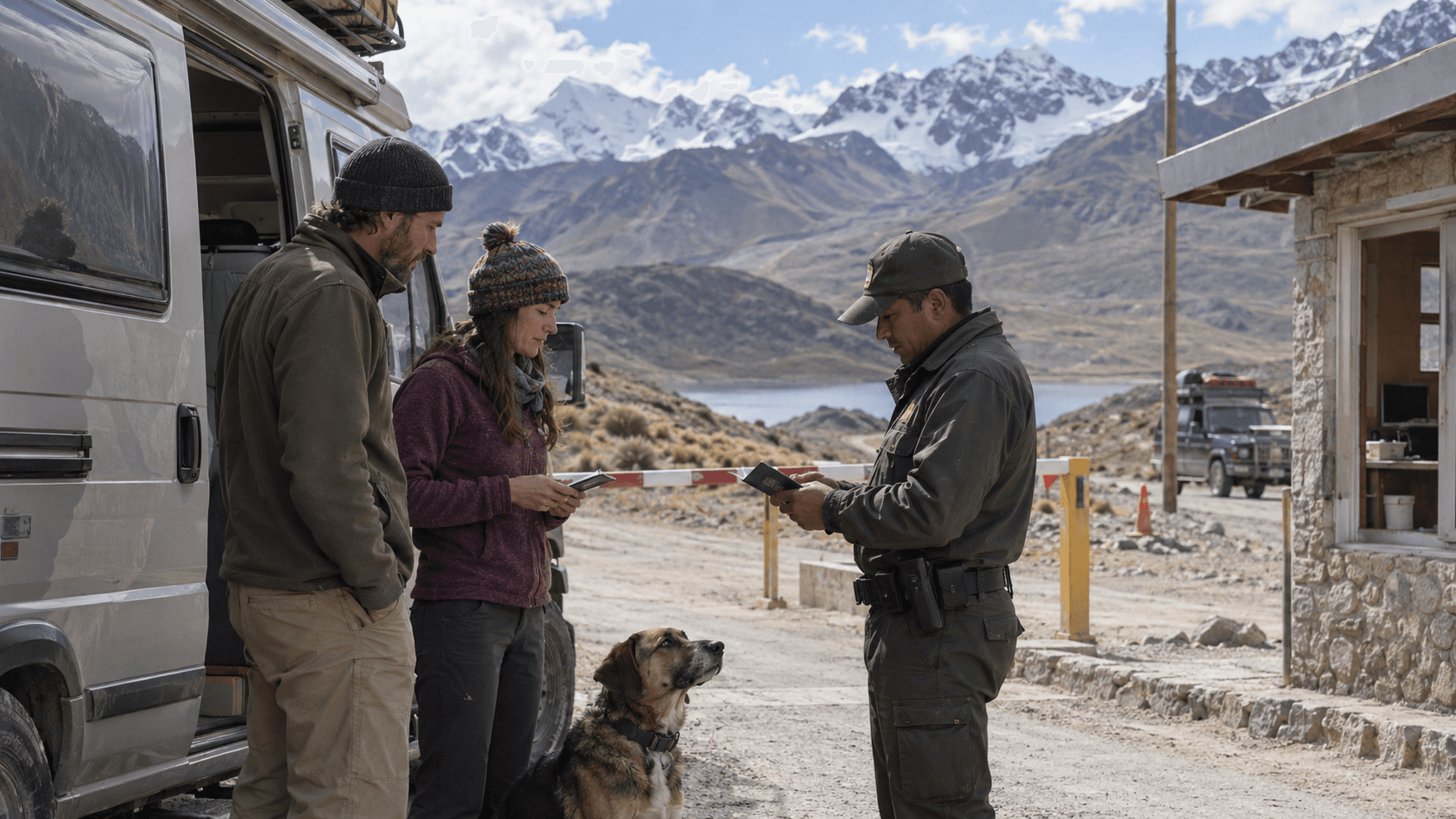
Our sources don't specify the conditions that apply to travelers today: health forms, questionnaires, temperature checks, quarantine, or entry restrictions. Before traveling DRC–Kenya, ask these questions at Kenya's embassy in your departure country and check the Ministry of Health's latest statements. Also allow extra time in your schedule: a border check can slow down a crossing.
Health Insurance: What to Check
Our sources don't cover insurance contracts or healthcare costs in Kenya. The points below are questions to ask your insurer in writing—not answers.
- Are hospital stays in Kenya covered? With or without upfront payment? At which facilities?
- Does your contract cover medical evacuation and repatriation? Up to what limit?
- Does your contract exclude epidemics, public health emergencies declared by the WHO, or areas your government advises against?
- If you're placed in isolation or quarantine, are accommodation costs and ticket changes covered?
- What assistance number can you call 24/7, and from which country?
Get a written response: an email from your insurer will serve as proof if a dispute arises.
If You Have Symptoms: Who to Contact
At borders, local staff have been trained to recognize Ebola signs and symptoms, apply suspect case definitions, and report suspected cases and their contacts[3]. Health personnel at borders are therefore part of the detection system.
Our sources don't provide an Ebola hotline or official reporting procedure for travelers. Before you go, search for this information on health.go.ke and contact the KNPHI, then save it to your phone.
If you develop a fever or other concerning symptom, call a health facility before visiting, then contact your assistance provider. Also reach out to your consulate—they can guide you. Your insurer will tell you which facilities their contracts cover.

Pitfalls, Scams, and Red Flags
Rumors and Misinformation
Border training at Busia included a risk communication component focused on combating misinformation[3]. Be wary of unsourced messages and testing or treatment offers that don't come through an official health facility. Trust only dated statements from the Ministry and the WHO.
Screening Isn't the Same at All Hours
At the single Busia border post, screening of small traders runs from 8 am to 6 pm[3]. Nighttime screening remains a gap due to staffing shortages[3]. Training participants recommended 24/7 screening at Busia[3]. Don't assume the health status of a crossing based on the absence of screening when you cross.
An Incomplete System
On July 2, 2026, Kenya's Ebola preparedness score was 66%[2]. The Health Minister identified critical gaps in case management, infection prevention, and rapid response deployment[2]. Keep this in mind if you plan to seek care outside major cities: check with your insurer before you go.
Guidelines Change Without Notice
A rule that applied last week may have changed. Check official statements the day before departure, then again while in transit.
Don't Bypass Any Screening
Don't try to avoid a screening post or hide a symptom. Border training covered reporting suspected cases and their contacts[3].
Lasting Checklist for Any Health Alert
- Identify the country's official health websites and the TravelHealthPro country page as soon as you arrive.
- Keep your insurance contract, assistance number, consulate contact details, and local emergency numbers offline.
- Register with your country's consular service, if available.
- Book flexible tickets and plan a backup itinerary.
- Note the date of each guideline you follow.
- For personal decisions (departure, vaccines, health status), consult a doctor or travel medicine clinic.
Sources
- 1.^ abcdehealth.go.ke — MoH Scales Up Ebola Surveillance and Border Response Measures | Ministry of Health: "Nairobi, May 22, 2026 – Kenya has strengthened its national preparedness and emergency response measures following the regional Ebola virus disease outbreak, Bundibugyo strain"; "These efforts follow the World Health Organization (WHO) declaring the Ebola outbreak in Uganda and the Democratic Republic of the Congo a public health emergency of international concern"; "Under KNPHI coordination, within the fully activated national incident management system, the ministry has enhanced traveler screening at high-risk entry points and activated emergency response structures across the country." https://www.health.go.ke/moh-scales-ebola-surveillance-and-border-response-measures (accessed October 6, 2026)
- 2.^ abcdhealth.go.ke — Kenya Strengthens Ebola Preparedness Through Enhanced Coordination with Partners | Ministry of Health: "Kenya maintains enhanced preparedness against the regional Bundibugyo Ebola virus disease outbreak, reaffirming that preparedness remains its best protection against emerging health threats, despite having no confirmed cases."; "KNPHI, through its incident management system, has identified 25 high-risk counties for intensified preparedness activities, technical assistance, and resource allocation."; "Kenya's Ebola preparedness score reached 66%." https://www.health.go.ke/kenya-strengthens-ebola-preparedness-through-enhanced-coordination-partners (accessed October 6, 2026)
- 3.^ abcdefghijklafro.who.int — Kenya strengthens Ebola readiness at its busiest land border | WHO | Regional Office for Africa: "Kenya has recorded no cases of Bundibugyo Ebola virus disease. But transmission in the Democratic Republic of the Congo has not stopped"; "The outbreak in Uganda was declared over on August 26, 2026"; "Busia sits on the Northern Corridor, the trade route running from Mombasa, through Uganda, to Rwanda, Burundi, South Sudan, and the DRC. More than 3,000 people cross there daily." https://www.afro.who.int/countries/kenya/news/kenya-strengthens-ebola-readiness-its-busiest-land-border (accessed October 6, 2026)
- 4.^ abMira Knowledge — NaTHNaC reports an mpox clade I outbreak in Kenya and advises you to follow the "News" and "Outbreaks" sections on its country page. Verified 06/01/2026: official source travelhealthpro.org.uk. https://travelhealthpro.org.uk/country/117/kenya (accessed June 1, 2026)