Argentina offers an official framework for foreign remote workers: a transitional digital nomad residence. This article explains who can apply for it, what it allows and forbids, when you become a tax resident, and how to organize your arrival, housing, budget, and travel. It also flags the pitfalls to avoid before you leave.
The Essentials at a Glance
- The transitional digital nomad residence lasts 180 days and can be extended for an equal period, for services performed remotely for people or companies based abroad[1].
- It is reserved for citizens of countries exempt from a tourist visa, including French nationals[2].
- It does not allow you to work for Argentine clients or to obtain a DNI[3].
- It does not count toward permanent residence[4].
- The application requires, among other things, an Argentine criminal record certificate for applicants over 16, and any foreign document must be apostilled or legalized[1].
- Under Argentine law, a foreigner becomes a tax resident with permanent residence or after 12 months in the country under temporary authorizations[5].
- The public healthcare system is free, including emergency care for foreigners, but it is very uneven outside the capital[6]; full free access is mainly intended for residents[7].
- In pesos, prices rise every month: inflation reached 33.5% over twelve months as of August 2026[7].
Why Argentina, and What This Article Covers
Argentina has an official legal framework for foreign remote workers[8]. This article follows the order in which each topic comes up: residence permit, status for working, taxation, healthcare, arrival, housing, budget, connectivity, cities, transportation, and social life.
Immigration rules change over time. Before starting any procedure, review the official page of the Dirección Nacional de Migraciones (DNM), which itself states that it may request documents beyond those on its list[1].
Visas and the Right to Stay: The Routes In
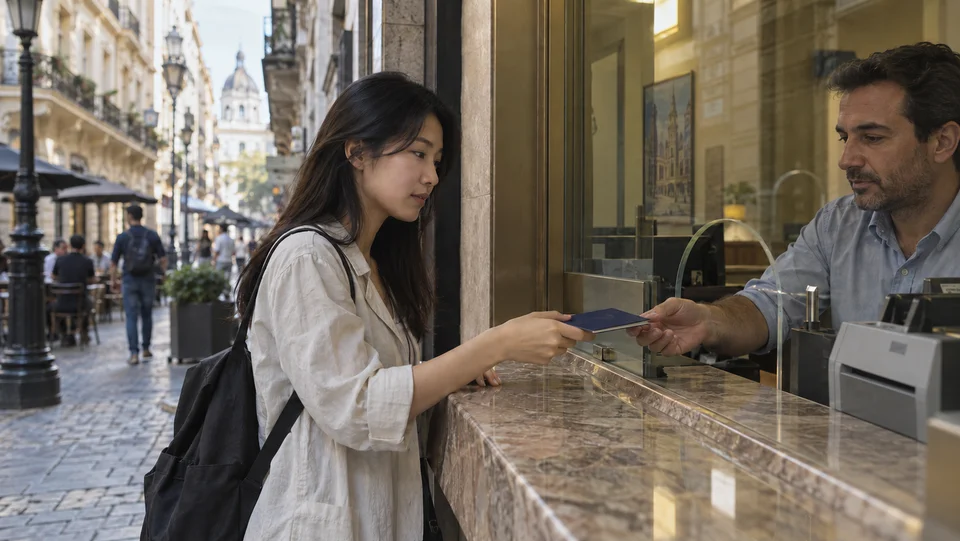
The transitional digital nomad residence is a 180-day residence, extendable for an equal period, granted to those who come to work remotely for people or companies based abroad[1].
It is open only to nationalities that do not need a visa to enter as tourists[1]; French nationals are among them[2]. If your nationality requires a tourist visa, this route is closed to you: you will then need to go through a temporary residence category[4].
This residence suits a stay of one year at most. It does not count toward permanent residence: to settle long-term, you generally need a temporary category such as rentista or pensionado from the start, since only temporary residence builds the three years required for permanent residence[4]. Time spent under the nomad residence is capped at 360 days[4].
As for costs, budget about 200 USD in total, including the migration tax and consular fees[9]; the exact amount should be confirmed with the DNM at the time of filing[10].
Assembling Your Application File
The file essentially includes your passport, a signed application describing your activity, proof of your remote work for a foreign employer or clients, health insurance covering the stay, a proof of address, and an Argentine criminal record certificate, required for applicants over 16[1][11].
Any document issued abroad must be apostilled or legalized, and any document in a foreign language must be translated into Spanish by a sworn public translator[1][12]. Submitted documents must be originals[1].
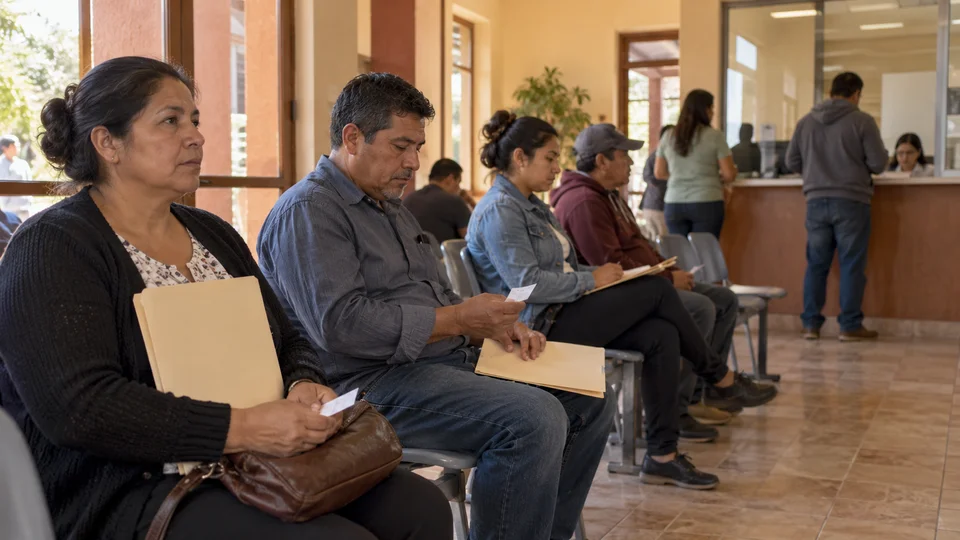
The regulations set no minimum income figure: applicants must prove regular, verifiable foreign income[4]. Filing is done in person, not through the RaDEX system: in Argentina, you go to the DNM office or branch that covers your area[1].
Status for Working: Foreign Employee or Freelancer
The nomad regime covers remote work for an employer or clients established abroad. It does not allow you to work for Argentine clients, nor to obtain a DNI[3]. It therefore does not allow you to register as a monotributista to invoice in Argentina[3].
If you want to invoice Argentine clients, you need another residence, then registration as a self-employed worker: the monotributo is the simplified regime of the tax administration (ARCA) for individuals working for themselves, and it requires a CUIT, a clave fiscal, and a residence permit that authorizes the activity[3]. Local salaried employment requires a temporary residence under an employment contract, sponsored by the Argentine employer[13].
Good news for freelancers who work for clients abroad from Argentina: a monotributista can export services, meaning they provide in Argentina a service whose economic use takes place abroad. The transaction is invoiced with an E-type invoice[3].
Taxation and Tax Residence
The central criterion of Argentine law is not the 183-day rule, which belongs to tax treaties: a foreigner who obtains permanent residence, or who stays twelve months through successive temporary authorizations, is in principle considered a tax resident[2][5].
A tax resident is taxed on worldwide income, with a progressive scale from 5% to 35% in 2025[14]. Before the 12-month threshold, only income from Argentine sources is taxed[13].
A nomad on the transitional residence, capped at 360 days, generally stays below this threshold[4], but the count depends on your situation[14]: keep track of your stay dates and have your case checked before staying any longer.
If you are a French tax resident, France considers you as such as long as your home, your main stay, your main activity, or the center of your economic interests remain there (article 4 B of the CGI); in case of dual claims, the Franco-Argentine tax treaty decides[5]. A remote-work visa says nothing about your taxes[14]. Tax rules depend on your personal situation: get advice before departing.
Health and Insurance
The public system is free, including emergency care for foreigners, but it is very uneven and overwhelmed outside the capital[6]. Waiting times can be long[15].
Many expats take out a prepaga, a private health insurance plan, to avoid waiting times; its premiums are revised regularly[7]. An international health insurance policy priced in euros, with repatriation coverage, is an option worth comparing[6].
For nomad residence, medical insurance covering the length of your stay is part of the application documents[11].
Arrival Procedures: ID, Address, Bank, Phone
After admission, registration with the DNM and RENAPER generally gives access to the foreigner's DNI, and the tax administration issues the CUIT or CUIL, the tax identification number[16]. With nomad residence, however, the DNI is not accessible[3].
On banking, a tax number alone is generally not enough to open an account at a traditional bank: banks want an Argentine identity card; a few open accounts for non-residents in branches, with proof of address and source of funds, under varying conditions[17]. Short-stay nomads should therefore check with their home bank how to manage their finances on site.
Transfers between local accounts settle in real time and free of charge for individuals[17]. On mobile, eSIMs work, so you don't have to look for a SIM card on arrival[14].
Housing
For a stay of a few months, a furnished rental billed monthly is the common option, often offered in dollars in Buenos Aires[4]. Building charges (expensas) are added to the rent[7].
The main pitfall is currency: fixing a rent in pesos without an indexation clause can make your budget drift within a few months. Negotiating in dollars for the entire stay, in writing, is standard practice for temporary rentals[18]. Before signing, find out about the deposit and the flexibility of the lease[19], and avoid paying large sums in advance without having verified the landlord's reliability[15].
Cost of Living by City
In Buenos Aires, expect roughly €1,150 to €1,650 per month, excluding insurance and coworking[7]. The cost of living varies noticeably from one city to another, and San Juan is among the least expensive cities: your choice of city affects your budget[19]. These are rough orders of magnitude, not official prices.
Inflation remains high: 1.7% in August 2026, or 33.5% over twelve months[7]. Since April 2025, a floating band regime applies to the peso[20], and capital controls have been largely lifted for individuals: the blue rate was around 1% above the official rate on October 7, 2026[7]. Your foreign card goes through the Visa or Mastercard rate, not the parallel market[7].
Internet
The median fixed-line speed exceeds 200 Mb/s in 2026[4], and the connection is solid in Buenos Aires as well as in the major provincial cities[21].
Buenos Aires offers the widest choice of coworking spaces, with smaller scenes in the other major cities[4]. Mobile coverage is good in the city but more limited in remote areas[22]: test the speed before renting and keep an eSIM as a backup.
Cities and Regions
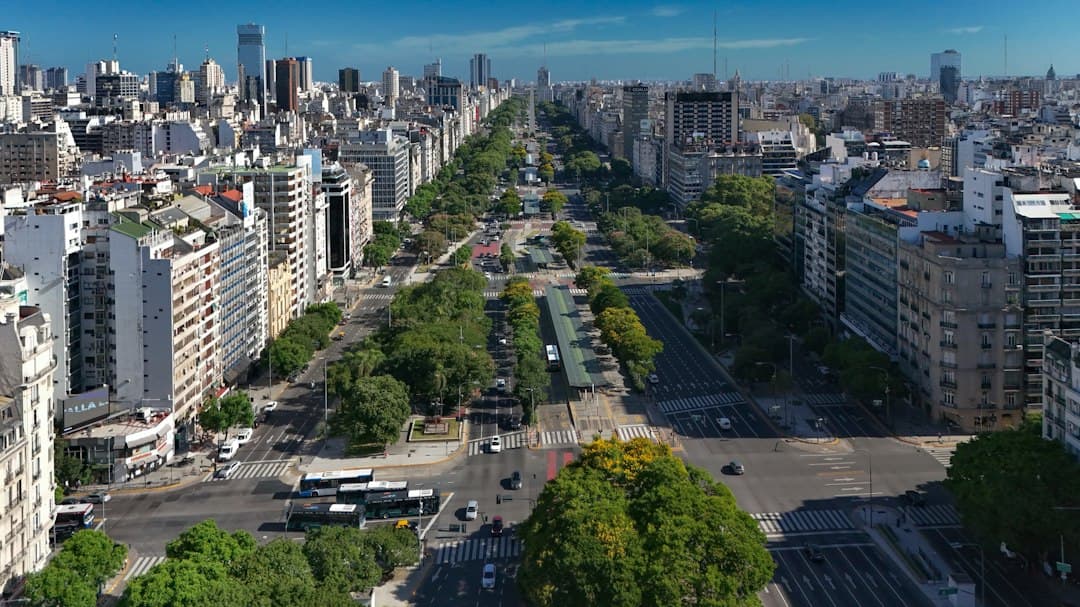
Buenos Aires remains the main home base for digital nomads[8]. The community is growing fast there, with many French, Spanish, and Italian residents[18].
Mendoza is a mid-sized, sunny city set against the Andes foothills, calmer and less expensive than Buenos Aires, with a smaller nomad community[23]. Córdoba offers a middle-ground profile[8].
Transportation
In Buenos Aires, the SUBE card is essential for paying for buses, subways, and trains[24]. Other cities have adopted the same system, including Bariloche, Mendoza, and Ushuaia[24]. To get around the city, public transit, a radio taxi, or a rideshare is best, since parking downtown is practically impossible[25].
The intercity rail network is practically nonexistent: buses or combis serve the main cities[25]. Domestic flights from the capital are frequent, while flights between provincial cities are rarer[25].
To rent a car, your French driver's license and passport, in original form, are required[24].
Language, Integration, and Community
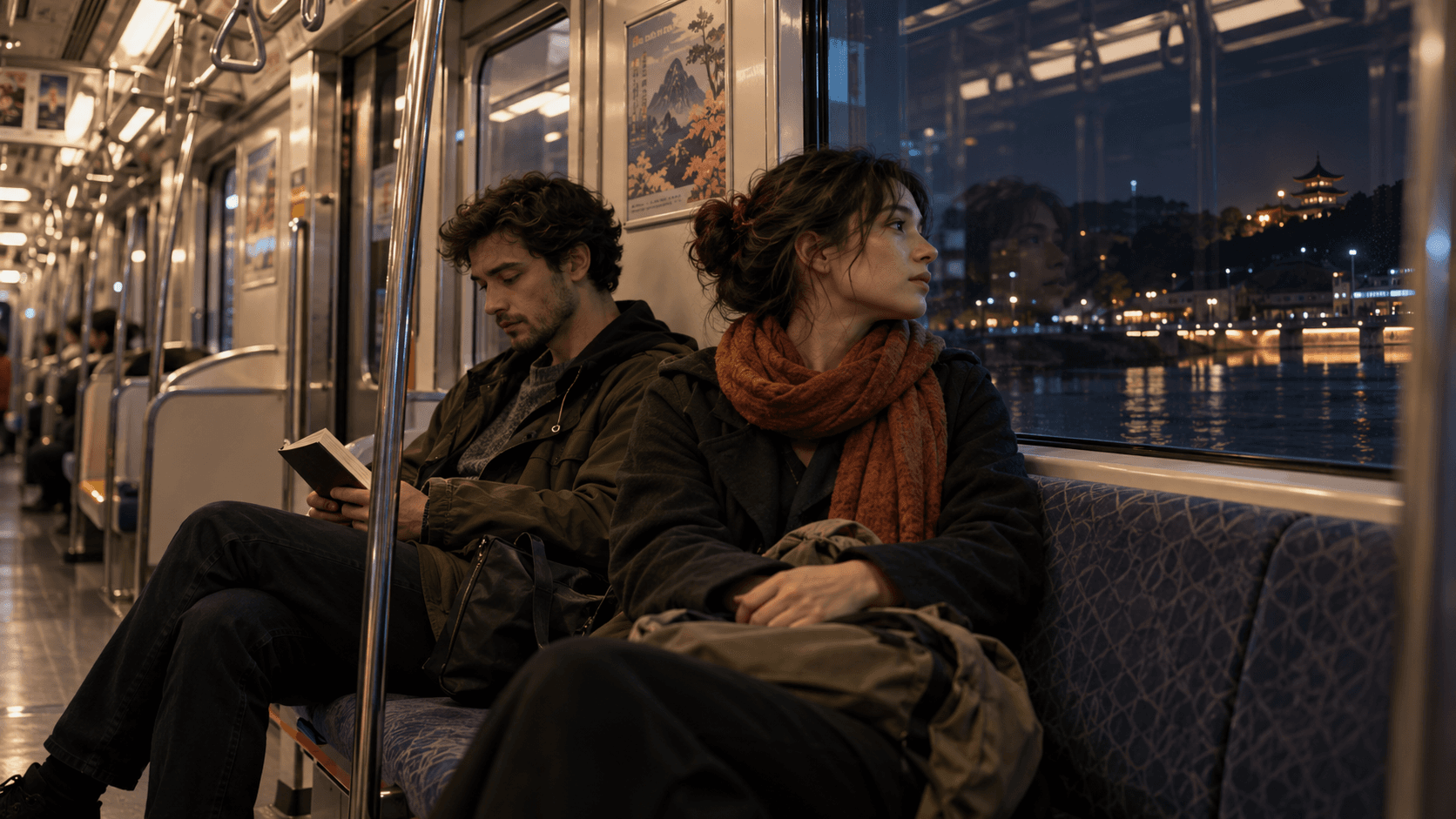
English remains limited outside the business and tourist areas of Buenos Aires: Rioplatense Spanish, with its accent and its “vos,” is essential in daily life[14]. Locals are welcoming, especially in Buenos Aires, and speaking Spanish speeds up your adaptation[26].
Tango classes, Spanish lessons, and Sunday asados are the best entry points[18]. Expats also connect through meetups, language exchanges, and sports[26]. In Mendoza, people meet through sports and wine tastings; local integration is easier there than in Buenos Aires, as long as you speak Spanish[23].
Pitfalls, Scams, and Points of Caution
Procedures and Paperwork
- The digital nomad residence does not allow you to work for Argentine clients or open a monotributo[3]: do not accept a local assignment under this status.
- Common mistakes cost more than the fees: non-resident documents without an apostille or a translation by a translator registered in Argentina, and applications without a tax number[27].
- A large transfer from abroad without proof of the source of funds may lead the bank to ask for explanations and freeze the money[27]. Keep statements, contracts, and receipts.
- Don't confuse a digital nomad visa with tax residence: a remote-work visa says nothing about your taxes[14].
Money, Housing, and Scams
- A rent in pesos without an indexation clause can drift with inflation; negotiate the currency in writing[18].
- The most common banking scams: phishing by SMS or WhatsApp impersonating banks, fake QR codes used to redirect payments, and skimming at ATMs[28].
- The “cuento del tío”: a fake bank agent who asks for your access codes over the phone[28]. Never share a code, no matter who is calling.
Car Rental
Travelers report that rental companies sometimes charge an extra fee for unclear reasons upon return, or demand payment for a new tire after an act of vandalism, even though the renters were not responsible and had filed a police report[24]. Read the contract and the guarantees before signing.
Steps, in Order
- Check your eligibility on the official page: nationality exempt from a tourist visa, and work performed for clients abroad[1].
- Gather your file: Argentine criminal record, proof of activity, medical insurance, apostilles and translations[1][11].
- Enter Argentina regularly, then file your application in person with the DNM[12][16].
- Request your provisional tax ID (CUIT) for your procedures[3].
- Get health insurance, choose a furnished home with a rent agreed in writing, and test your internet connection[18].
- Keep track of the time limit: 180 days, extendable once[1], and the 12-month threshold for tax residence[5].
These benchmarks help you see whether the digital nomad residence suits you and prepare your move. They do not replace the details of each step, from the file to the tax ID, nor a budget set out item by item, nor the choice of a city and neighborhood. To really settle in, these are the points you need to explore further.
Sources
- 1.^ abcdefghijklargentina.gob.ar — Obtener una residencia transitoria como Nómada Digital | Argentina.gob.ar: “Residence for 180 days, extendable for an equivalent period, for those who enter the national territory to provide remote services by computer, telecommunications or similar means, to individuals or legal entities domiciled abroad.” ; “Open only to foreign nationals from countries that do not require a visa to enter as tourists.” ; “Argentine criminal record certificate issued by the National Recidivism Registry (required only for those over 16 years old).” https://www.argentina.gob.ar/servicio/obtener-una-residencia-transitoria-como-nomada-digital (accessed October 19, 2026)
- 2.^ abcculture.expatriation.io — Vivre et travailler en Argentine : guide Buenos Aires · EXPATRIATION.IO: “The digital nomad transitional residence is open only to nationals exempt from a tourist visa, including French citizens.” ; “The central criterion of domestic law is not the 183-day rule, which is specific to tax treaties: a foreigner who obtains permanent residence, or who stays twelve months through successive temporary authorizations, is in principle considered a tax resident.” https://culture.expatriation.io/pays/argentine (accessed October 19, 2026)
- 3.^ abcdefghvivreenargentine.fr — Monotributo en Argentine : catégories et cotisation 2026: “The digital nomad transitional residence (DNM disposition 758/2022) covers remote work for an employer or clients established abroad. It does not allow you to work for Argentine clients or obtain the DNI.” ; “It therefore does not allow you to open a monotributo to invoice within Argentina.” ; “The monotributo is the simplified regime of the ARCA (formerly AFIP) for individuals who work for themselves. You need a CUIT, a clave fiscal and a residence permit that allows you to carry on an activity.” https://vivreenargentine.fr/finances/monotributo (accessed October 19, 2026)
Show 25 more sourcesShow less
- 4.^ abcdefghistampednomad.com — Argentina for Digital Nomads 2026: Visas, Costs & Cities | Stamped Nomad: “The nomad residence suits a stay of one year at most. It does not count toward permanent residence and does not allow paid local work.” ; “Those who want to settle usually need from the outset a temporary category such as rentista or pensionado, since only temporary residence builds the three years needed for permanent residence.” ; “Nationals who need a tourist visa for Argentina cannot use the nomad route at all; their options are the temporary categories, filed through a Permiso de Ingreso and a consular visa.” https://www.stampednomad.com/guides/argentina (accessed October 19, 2026)
- 5.^ abcdexpat-llc.com — Résidence Argentine 2026 : visa rentista, nationalité, fiscalité: “Under the income tax law, as explained by the tax administration (ARCA), a foreigner becomes an Argentine tax resident once they obtain permanent residence, or after 12 months in the country with temporary authorizations.” ; “France considers you a tax resident as long as your home, main residence, main activity or the center of your economic interests remain there (article 4 B of the CGI).” ; “In case of dual claims, the French-Argentine tax treaty decides.” https://expat-llc.com/guides/residence/argentine (accessed October 19, 2026)
- 6.^ abcexpatriatecare.com — Assurance santé expatrié Argentine 2026 : guide complet, prix et obligations: “The public system is free, including emergency care for foreigners, but it is very uneven and overloaded outside the capital.” ; “Local prepagas revise their premiums several times a year: international health insurance priced in euros is essential for peace of mind, with protected coverage caps and repatriation to France.” https://expatriatecare.com/blog/assurance-sante-argentine-2026-guide/ (accessed October 19, 2026)
- 7.^ abcdefghvivreenargentine.fr — Coût de la vie en Argentine 2026 : prix réels et budgets: “The public system is free, including for resident foreigners, but many expats take out a prepaga (private health insurance) to avoid waiting times.” ; “In pesos, prices rise every month: INDEC measured 1.7% inflation in August 2026, or 33.5% over twelve months and 21.3% since January.” ; “€1,150 to €1,650 (about ARS 1.95 to 2.8 million), excluding insurance and coworking.” https://vivreenargentine.fr/expatriation/cout-de-la-vie (accessed October 19, 2026)
- 8.^ abcexpat.com — Working Remotely from Argentina - Argentina Guide - Expat.com: “Argentina has an official legal framework for foreign remote workers.” ; “Buenos Aires remains the main base for digital nomads, with Palermo as the reference neighborhood.” ; “Prices in Argentine pesos may change quickly due to the local economic context; it is advisable to check prices directly with the spaces before any booking.” https://www.expat.com/fr/guide/amerique-du-sud/argentine/38113-travailler-a-distance-en-argentine.html (accessed October 19, 2026)
- 9.^Mira Knowledge — Fees for the Argentine Transitory Residence Visa total about 200 USD, namely 120 USD in migration tax and 80 USD in consular fees. Verified on 06/09/2026: official source migraciones.gob.ar. https://www.migraciones.gob.ar/radex/inicio-pasos-permiso.html (accessed June 9, 2026)
- 10.^argentina.gob.ar — ORIGINAL TEXT - Disposición 758/2022 - DIRECCION NACIONAL DE MIGRACIONES | Argentina.gob.ar: “The granting of a transitory residence is authorized, for a maximum period of 180 days, in accordance with article 24, paragraph h, of Law 25.871 and Regulatory Decree 616 of May 3, 2010.” ; “The service fee for this procedure is provided for in article 1, paragraph f, point III, of Decree 231/09, as amended by Decree 285/21.” https://www.argentina.gob.ar/normativa/nacional/disposici%C3%B3n-758-2022-364601/texto (accessed October 19, 2026)
- 11.^ abcMira Knowledge — The file includes a valid passport, a CV, a signed application, proof of remote work with at least one reference, a certificate of residence, medical insurance covering the stay, and an Argentine criminal record check. Verified on 06/08/2026: official source argentina.gob.ar. https://www.argentina.gob.ar/servicio/obtener-una-residencia-transitoria-como-nomada-digital (accessed June 8, 2026)
- 12.^ abargentina.gob.ar — Obtain a transitory residence as a Digital Nomad | Argentina.gob.ar: “Any documentation in a foreign language must be translated into Spanish by a national public translator and legalized by the Translators' Association.” ; “The procedure is completed in person (not through the Radex system).” ; “Application signed by the applicant, stating their personal details and the independent activity or activities they will carry out.” https://www.argentina.gob.ar/node/408747 (accessed October 19, 2026)
- 13.^ abevisa-card.com — Argentina Expatriation Guide 2026: Live, Work, Retire: “Before reaching the 12-month threshold, only income from Argentine sources is taxed.” ; “Taking a local job requires a temporary residence under an employment contract, sponsored by the Argentine employer and filed with Migraciones.” ; “Most expats and nomads take out private prepaga health coverage (OSDE, Swiss Medical and Galeno are the main providers).” https://www.evisa-card.com/fr/expat-guide-argentina (accessed October 19, 2026)
- 14.^ abcdefxn--lexpatri-i1a.fr — Remote Work in Argentina: visa, taxes, connectivity: “Progressive income tax (Impuesto a las Ganancias) on the worldwide income of tax residents.” ; “Rates from 5% to 35% in 2025, with personal and family allowances.” ; “A remote work visa says nothing about your taxes, and that is the most common mistake.” https://xn--lexpatri-i1a.fr/destinations/argentine/teletravail (accessed October 19, 2026)
- 15.^ abvoyage-argentine.info — Argentina: is immigration easy? Guide and tips! : “The public system is free and accessible to all residents, but waiting times can be long.” ; “Avoid paying large sums in advance without first verifying the reliability of the landlord.” https://www.voyage-argentine.info/immigrer-en-argentine-demarches-et-conseils-pour-s-installer/ (accessed October 19, 2026)
- 16.^ abMira Knowledge — For digital nomad residence, the application is filed with the DNM on site after a regular entry; once admitted, you register with the DNM and RENAPER, and with the tax authority for the CUIT or CUIL. Verified on 06/08/2026: official source migraciones.gob.ar. (accessed June 8, 2026)
- 17.^ abmurblz.com — Argentine bank details in 2026: keys and aliases explained: “Since 2021, Argentina has applied the Transfers 3.0 system: all transfers between bank and virtual keys settle in real time, day and night, free of charge for individuals.” ; “But a tax number alone is generally not enough to open an account at a traditional bank: banks want an Argentine national ID card.” ; “A few banks open accounts for non-residents at a branch, with proof of address and proof of the origin of funds.” https://murblz.com/fr/blog/coordonnees-bancaires-argentine-2026 (accessed October 19, 2026)
- 18.^ abcdeledigitalnomad.com — Living in Buenos Aires while working remotely: the complete guide (2026): “Setting rent in pesos without an indexation clause, or worse, with an unfavorable clause.” ; “Negotiating in dollars for the entire stay, in writing, is standard practice for temporary rentals.” ; “Palermo Soho and Hollywood for cafés, restaurants and safety: that is the default choice for nomads, at €500–900 for a furnished apartment.” https://ledigitalnomad.com/s-expatrier/buenos-aires/ (accessed October 19, 2026)
- 19.^ abcitycost.org — Cost of Living in Argentina - Prices & Expenses. Oct 2026 | CityCost: “Tip: ask landlords about deposit practices and lease flexibility before you sign.” ; “In Buenos Aires (the capital), plan on about €1,473 per month, while San Juan offers the lowest costs at €792: the city you choose has a real impact on your budget.” https://citycost.org/argentina/ (accessed October 19, 2026)
- 20.^Mira Knowledge — Since April 2025, Argentina has applied a currency band regime for the Argentine peso, as part of an agreement with the IMF. Verified on June 11, 2026: official source bcra.gob.ar. https://www.bcra.gob.ar/ (accessed June 11, 2026)
- 21.^earthsims.com — Internet in Argentina 2026: Guide for Travelers | Earth SIMs: “Internet in Argentina is excellent in Buenos Aires (50 to 300 Mb/s fiber) and solid in Mendoza, Córdoba, and Rosario.” ; “Buenos Aires benefits from aggressive fiber rollout by Telecentro, Fibertel, and Movistar.” https://www.earthsims.com/country/argentina-internet-guide/ (accessed October 19, 2026)
- 22.^argentina.travel — Visit Argentina - Como ter Internet na Argentina: Guia para turistas estrangeiros e nômades digitais: “Movistar offers good 4G coverage in the main cities (Buenos Aires and provincial capitals) and urban areas.” https://www.argentina.travel/pt/novidades/como-ter-internet-na-argentina-guia-para-turistas-estrangeiros-e-nomades-digitais (accessed October 19, 2026)
- 23.^ abledigitalnomad.com — Settling in Mendoza: Real Budget, Neighborhoods, Wi-Fi (2026): “Plan on €420-580 per month for a furnished rental leased by the month.” ; “Mendoza is Argentina's best-kept secret for digital nomads: a mid-sized, sunny, green city backed by the Andes, with wine and mountains right at hand and a budget that drops below €1,000 per month.” ; “The pace is noticeably calmer than in Buenos Aires, which is either an advantage or a limitation depending on your temperament. The digital nomad community is small.” https://ledigitalnomad.com/s-expatrier/mendoza/ (accessed October 19, 2026)
- 24.^ abcdpvtistes.net — Transportation in Argentina (Bus, Plane, Train, Car...): “In Buenos Aires, you absolutely must get a SUBE card to pay for your bus, subway, or train fares.” ; “Your SUBE card also lets you get around Bariloche, Mendoza, and Ushuaia, for example.” ; “To rent a car, your French driver's license and your passport (originals) are required.” https://pvtistes.net/dossiers/le-transport-en-argentine/ (accessed October 19, 2026)
- 25.^ abcdiplomatie.gouv.fr — Argentina - Useful Information | France Diplomatie: “To get around the city, public transit (bus, train, subway), a radio taxi, or a ride-hailing service is preferable, as parking downtown is practically impossible.” ; “The intercity rail network is practically nonexistent. It has been replaced by buses or combis serving the country's main cities.” ; “The main airline for domestic flights is the national carrier Aerolíneas Argentinas.” https://www.diplomatie.gouv.fr/fr/information-par-pays/argentine/conseils-aux-voyageurs-informations-utiles (accessed October 19, 2026)
- 26.^ abnestfainder.ai — Settling in Argentina | NestFainder: “Argentina is welcoming to foreigners, especially in Buenos Aires, with friendly locals who make integration easier.” ; “Mastering Spanish speeds up your adaptation.” ; “Expats take part in meetups, language exchanges, and sports.” https://www.nestfainder.ai/fr/country/argentina/guides/social-integration (accessed October 19, 2026)
- 27.^ abmurblz.com — Argentine account numbers: format and sending money: “General Resolution 5803/2025 of the tax authority removed, for individuals, starting March 2, 2026, the former identification number intended for people without a tax number, and replaced it with the tax identification number.” ; “Mistakes cost more than any fees: non-resident documents without an apostille or translation by a translator registered in Argentina, an application without a tax number, a large transfer from abroad without proof of the origin of funds, after which the bank asks for explanations and freezes the money.” ; “Whatever the route, keep statements, contracts and receipts: an Argentine bank or the tax authority may ask where the money came from.” https://murblz.com/fr/blog/numeros-compte-argentine-format-virements (accessed October 19, 2026)
- 28.^ abMira Knowledge — The main banking scams in Argentina are SMS or WhatsApp phishing impersonating banks, fake QR codes used to divert Mercado Pago payments, and skimming at ATMs. Verified on June 11, 2026: official source bcra.gob.ar. https://www.bcra.gob.ar/ (accessed June 11, 2026)