Are you thinking about working remotely from Sri Lanka for a month or longer? This article helps you choose your visa, cope with power cuts, get a local SIM and a backup connection, find a suitable place to work, and ride a scooter with the right license. Figures and procedures change, so confirm them with the authorities before you leave.
Visa and length of stay: set the framework before you go
Sri Lanka launched a digital nomad visa in February 2026, classified as a residence visa. It is designed for foreign professionals who want to live and work remotely from the country while serving clients or companies based abroad[1]. Applicants must work for a foreign company, be freelancers, or own a business not registered in Sri Lanka[1].
According to the Department of Immigration, the visa application costs USD 500 per person[1]; the official fee schedule cited by one guide states USD 500 per year[2]. The sources do not specify whether these fees are cumulative, so check the exact amount on the official page. The visa also requires an income of at least USD 2,000 per month[2]. This income must be documented, and it increases by USD 500 per dependent beyond two[1]. You will also need health insurance, accommodation for the length of your stay, and a clean criminal record from your country of origin[1].
The application is submitted online to the Residence Visa Division of the Department of Immigration; if the application is accepted, the visa is affixed to your passport[1]. It is renewable each year, but after the first year you must provide proof of Sri Lankan tax registration[1]. Any change of employer, income, or dependents must be reported to the Department within 30 days[1].
For a shorter stay, the tourist ETA gives you 30 days from arrival, with double entry[2]. You can then extend in stages with the Department of Immigration, online or in person in Battaramulla (Colombo): up to day 90 for USD 100, up to day 180 for USD 150 more, then up to day 270 for USD 200 more (rates for most Western nationalities)[2].
Confirm the amounts on the official website: several blogs circulate incorrect figures for the digital nomad visa, and the government page is the authoritative source[2].
Power: outages and backup solutions
The 2022-2024 economic crisis weighed on the country's internet infrastructure, and the power cuts of that period hurt network reliability[3]. The power grid has since moved past the 2022 crisis, but it still has fragile days[2]. Outside the cities, outages remain a common part of daily life[4].
For work that requires concentration, choose a base that advertises its backup power, not just the speed of its Wi-Fi[2]. Spaces aimed at nomads usually run a backup generator or solar system[2]. Before booking accommodation or a coworking desk, ask in writing:
- how long the backup power lasts;
- which devices are covered (router, desk outlets, air conditioning or fan);
- any extra charge for backup electricity.
A place that calls itself "outage-free" commits to nothing until these points are written down. Also bring your own gear: a power bank and a fast charger to get through an outage. Motorcyclists can even carry a bidirectional fast charger that draws power from the bike while they ride[4].
Internet: networks, local SIM and backup connection
The mobile market has four operators: Dialog (Axiata, the market leader), Mobitel (state-owned), Hutch (merged with Etisalat), and Airtel[5]. Dialog offers the best 4G coverage, and 4G reaches about 90% of the population[5]. 5G is currently in the testing phase in Colombo[5].
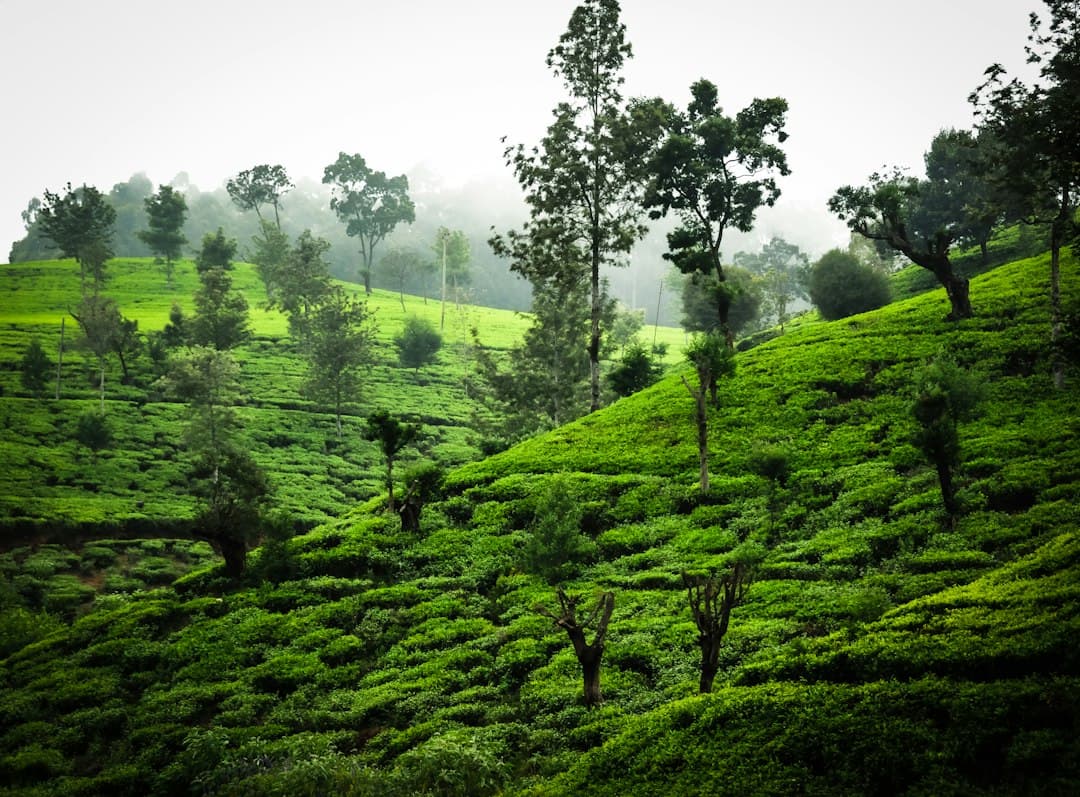
In the cities, fiber optic covers urban areas, while rural areas rely on mobile 4G[3]. Mobile coverage is limited in rural areas and on tea plantations[5]: if your work depends on a good connection, factor this into your choice of region. On the south coast, Dialog and SLT fiber covers the tourist strip[2].
Buying a local SIM
Buying a prepaid SIM requires a passport[6]. The cards are sold at Colombo airport (Bandaranaike) and in Dialog and Mobitel shops[6]. A Dialog tourist plan with 20 to 30 GB over 30 days costs about LKR 1,500 to 3,000, or roughly $5 to $10 USD[6].
Reference costs
- 50 Mbps fiber: about LKR 3,000 to 5,000 per month ($10 to $17 USD)[7].
- 10 to 30 GB mobile plan: about LKR 1,000 to 2,500 per month ($3 to $8 USD)[7].
Plan for a Backup Option
The simplest approach is to back up your fiber with a mobile plan: the landline can go down with the power, and mobile takes over. Starlink has been available in Sri Lanka since July 2025, for about €39 per month plus equipment; some villas and colivings use it as a backup[2]. If your work involves a lot of calls, choose accommodation with a generator or Starlink[2].
Coworking and Work Bases
The south coast (Weligama, Ahangama, Hiriketiya) is the heart of the country for digital nomads: surf bays, specialty cafés, and a string of coworking spaces and colivings along about thirty kilometers of coastline[2]. Weligama is the liveliest and most beginner-friendly, Ahangama is the intermediate zone and is growing fast, with the best café scene, and Hiriketiya is a small horseshoe bay surrounded by jungle, for a slower pace[2]. The season runs from December to April[2].

Colombo is the convenient city option: real infrastructure, real coworking spaces, private hospitals, and the Immigration Department[2]. It often serves as a stopover. The digital nomad visa also includes, among its benefits, access to coworking spaces and the ability to open a personal bank account in Sri Lanka[1].
Scooters: The License You Need to Ride Legally
A foreign driver's license or an international driving permit alone is not enough to drive in Sri Lanka[4]. Foreign drivers and motorcyclists must hold a locally issued permit: either a Recognition Permit from the Automobile Association of Ceylon (AAC), or a temporary driving permit from the Department of Motor Traffic (DMT). Both procedures changed in 2025[4]. The local permit must be held in addition to your original license[4].
Route 1: The DMT Temporary Permit
Since August 2025, the DMT has operated a counter open 24 hours a day in the arrivals hall of Bandaranaike International Airport, which turns what used to be a day in Colombo into a stop of 15 to 40 minutes[4]. The alternative is the DMT office in Werahera, during business hours[4]. You must present:
- your original license, held for at least one year[4];
- a certified English translation if the license is not in English[4];
- your passport with a valid visa or entry authorization[4];
- photos and Sri Lankan rupees in cash: bank cards are not accepted[4].
This temporary permit is issued for periods of one month, up to five months at most, and covers cars, motorcycles, and scooters[4].
Route 2: The AAC Recognition Permit
The AAC issues this permit from its Colombo office on weekday mornings, usually within a few hours[4]. Since March 30, 2025, it has issued it only to holders of a valid international driving permit: a national license alone no longer works through this route[4]. If you plan to go through the AAC, get your international permit before you leave[4].
On the Road
Sri Lanka drives on the left[4]. Intercity buses effectively have priority, overtake on blind bends, and wait for oncoming traffic to clear: it is better to yield early than to argue[4]. Tuk-tuks stop without warning, dogs sleep on the hot asphalt, and mountain roads have loose gravel on the outside of bends[4].
Pitfalls, Scams, and Points of Caution
- Renting a scooter without a local permit: this is the most commonly overlooked requirement in the country, partly because many rental shops hand over a scooter without asking anything[4]. The fact that the renter asks for nothing does not make you compliant: the local permit is still required[4].
- Tuk-tuk: neither the international driving permit nor the Recognition Permit covers driving a three-wheeler, and Sri Lankan police publicly stated at the end of 2025 that tourists who drive a tuk-tuk are doing so illegally[4]. The legal route is a separate DMT permit, with a written test on the road code and practical training[4].
- Accommodation or coworking "without outages": the network still has fragile days[2]. Ask what is covered in case of an outage, and keep the answer in writing.
- Rural areas and tea plantations: mobile coverage is limited there[5]. Check it before settling in to work.
- Incorrect visa figures: several blogs are circulating false amounts for the digital nomad visa (a income threshold of USD 1,500, a 5-year version). The official fee schedule states USD 500 per year and USD 2,000 per month[2].
If you have a dispute with an electricity provider
Electricity providers are the Ceylon Electricity Board (CEB) and the Lanka Electricity Company (LECO), depending on your area[8]. If you are not satisfied with the service, first contact the provider; if it does not respond in time or you remain dissatisfied, you can refer the matter to the Public Utilities Commission of Sri Lanka (PUCSL)[9]. Its service is free, independent, and impartial[9].
Checklist before you leave
- Arrive with a local SIM or an eSIM, and a backup mobile plan in addition to fiber.
- Choose your base based on two criteria: the announced backup power and the 4G coverage in the area.
- Start the local permit process upon arrival, at the airport counter, before renting a scooter; if you go through the AAC, bring your international permit.
- Bring cash in rupees for the permit, as cards are not accepted.
- Check the visa amounts and conditions on the official page of the Department of Immigration.
- Keep invoices and written exchanges with your host or workspace, useful in case of a claim.
Sources
- 1.^ abcdefghicnbc.com — Sri Lanka launched a new digital nomad visa: How to apply: "The visa is designed to attract foreign professionals who want to live and work remotely from Sri Lanka while serving clients or companies based outside the country." ; "Being employed by a company based in another country, being a freelancer, or owning an unregistered business in Sri Lanka." ; "Applicants must pay USD 500 per person to apply for the visa, according to the Department of Immigration and Emigration." https://www.cnbc.com/2026/02/12/sri-lanka-digital-nomad-visa.html (accessed October 23, 2026)
- 2.^ abcdefghijklmnopqguide.genki.world — Sri Lanka for Digital Nomads: Visa, Costs & Top Bases (2026) • Genki Guide for Digital Nomads: "The official fee schedule states USD 500 per year and USD 2,000 per month; rely on the government page." ; "Length of stay: the tourist ETA gives 30 days from arrival, with double entry." ; "You can extend in stages with the Department of Immigration (online or in person at Battaramulla, Colombo): up to day 90 for USD 100, up to day 180 for an additional USD 150, up to day 270 for an additional USD 200 (rates for most Western nationalities)." https://guide.genki.world/sri-lanka/ (accessed October 23, 2026)
- 3.^ abMira Knowledge — Sri Lanka's internet infrastructure was affected by the 2022-2024 economic crisis. Verified on 06/11/2026: 2 concordant sources (trc.gov.lk, en.wikipedia.org). https://www.trc.gov.lk (accessed June 11, 2026)
Show 6 more sourcesShow less
- 4.^ abcdefghijklmnopqrstuvjadomoto.com — Riding Sri Lanka, Permits and the Hill Country Roads: "A foreign driving license or an international driving permit alone is not valid for driving in Sri Lanka." ; "Sri Lanka requires foreign drivers and riders to hold a locally issued permit — either a Recognition Permit from the Automobile Association of Ceylon, or a temporary driving permit from the Department of Motor Traffic — and both routes changed in 2025." ; "You need either a temporary driving permit from the Department of Motor Traffic, or a Recognition Permit from the Automobile Association of Ceylon, to be held together with your original license." https://www.jadomoto.com/blogs/guides/sri-lanka-motorcycle-guide (accessed October 23, 2026)
- 5.^ abcdeMira Knowledge — Sri Lanka's mobile market has four operators: Dialog (Axiata, leader), Mobitel (state-owned), Hutch (merged with Etisalat), and Airtel. Verified on 06/11/2026: 2 concordant sources (gsma.com, en.wikipedia.org). https://www.gsma.com (accessed June 11, 2026)
- 6.^ abcMira Knowledge — Buying a prepaid SIM in Sri Lanka requires a passport. Verified on 06/11/2026: 2 concordant sources (mobitel.lk, dialog.lk, dialog.lk). https://www.mobitel.lk (accessed June 11, 2026)
- 7.^ abMira Knowledge — A 50 Mbps fiber plan costs approximately LKR 3,000 to 5,000 per month (USD 10 to 17). Verified on 06/11/2026: 2 concordant sources (dialog.lk, dialog.lk, mobitel.lk). https://dialog.lk/ (accessed June 11, 2026)
- 8.^pucsl.gov.lk — Consumer Rights | PUCSL: "Service provider means the Ceylon Electricity Board (CEB) or Lanka Electricity Company (Pvt) Ltd (LECO), as the case may be, licensed to distribute and supply electricity." https://www.pucsl.gov.lk/electricity/consumer/complaints/consumer-rights/ (accessed October 23, 2026)
- 9.^ abpucsl.gov.lk — Complaints | PUCSL: “If you are not satisfied with the service provided by the licensee, and you remain dissatisfied after informing them or if they fail to respond in time, you may file a complaint with the Public Utilities Commission of Sri Lanka.”; “The Public Utilities Commission of Sri Lanka will provide you with a free, independent and impartial service.” https://www.pucsl.gov.lk/electricity/consumer/complaints/ (accessed October 23, 2026)