
The PVT is the visa for young people who want to spend up to one year abroad for tourism and cultural purposes, with the possibility of working locally to supplement their finances. This article explains what the program covers, who can apply, and in which countries. You will also learn which conditions to check before submitting your application, what the visa does not allow, and which pitfalls to avoid.
The PVT explained: what it is and what it is called
Programme Vacances-Travail (PVT), Permis Vacances-Travail, Visa Vacances-Travail or Working Holiday Visa: these terms all refer to the same thing[1]. The principle: the visa gives young travelers the opportunity to stay in a partner country for tourism and cultural purposes, while having the possibility to work there[2].
Work is a means, not an end: it serves to supplement one's financial resources on site[3], and it must not be the main reason for leaving[2].
The framework of the program is set, on a reciprocal basis, by a bilateral agreement that France concludes with each partner country or territory[3]. The precise conditions therefore depend on each agreement[2]. This is why the rules of one country cannot simply be transposed to another.
Who can leave: age, passport, resources
For a French citizen, the program is open to those aged 18 to 30, and up to 35 for Argentina, Australia and Canada[3]. The general conditions listed by the French administration are as follows:
- be aged 18 to 30 years inclusive on the date the application is submitted (35 for Australia, Canada and Argentina)[3];
- hold a valid French passport[3];
- have a return ticket or sufficient resources to buy one[3];
- have, at the start of the stay, the resources necessary to support oneself[3];
- not have already benefited from the program in the country concerned[3].
The minimum amount of resources is set each year by the signatory states[3] and varies by country[2]. A medical certificate and a clean criminal record certificate are also required, each country possibly having its own health criteria[2]. Depending on the case, a letter of motivation, or even a CV, may be added to the file[3].
Which countries can you go to?
France has concluded a bilateral agreement with fifteen countries or territories: Argentina, Australia, Brazil, Canada, Chile, Colombia, South Korea, Ecuador, Hong Kong, Japan, Mexico, New Zealand, Peru, Taiwan and Uruguay[3].
Each agreement sets its own rules. The texts are published and available, and the embassies of the countries concerned detail their conditions on their websites[3].

For Colombia, for example, a French citizen submits the application entirely online on the official portal of the Cancillería. The visa is free there under the 2026 procedure[4].
Length of stay, authorized work and what the visa does not allow
The visa issued is a temporary long-stay visa with multiple entries, valid for one year[3]. The PVT holder may remain in the country for the entire validity period of the visa, generally set at one year[2].
The length of stay must not exceed one year, unless a specific arrangement applies, and there is no possibility of extension[3]. In principle, it is not possible to change status during the stay[3]. Holders of a working holiday visa for Brazil[5], Japan[6] or South Korea[7] can neither extend their stay beyond the authorized period nor apply for a residence permit on another ground.
Some specific arrangements exist. In Australia, holders of a first visa who have worked at least three months in certain regions and economic sectors may apply for a second visa, then a third year with six months of work in those sectors[3]. For Canada, a 24-month duration is possible in certain specific cases[8].
On the work side, the length of employment with a single employer may be limited[3].
Making your application: where, how, with which documents
The application is made to the diplomatic or consular representation in France of the host country. Australia is the exception: applications are made online on the website of the Australian Department of Home Affairs[3]. Since January 1, 2023, applications for Chile also go through the website of the Chilean Migration Service[3].
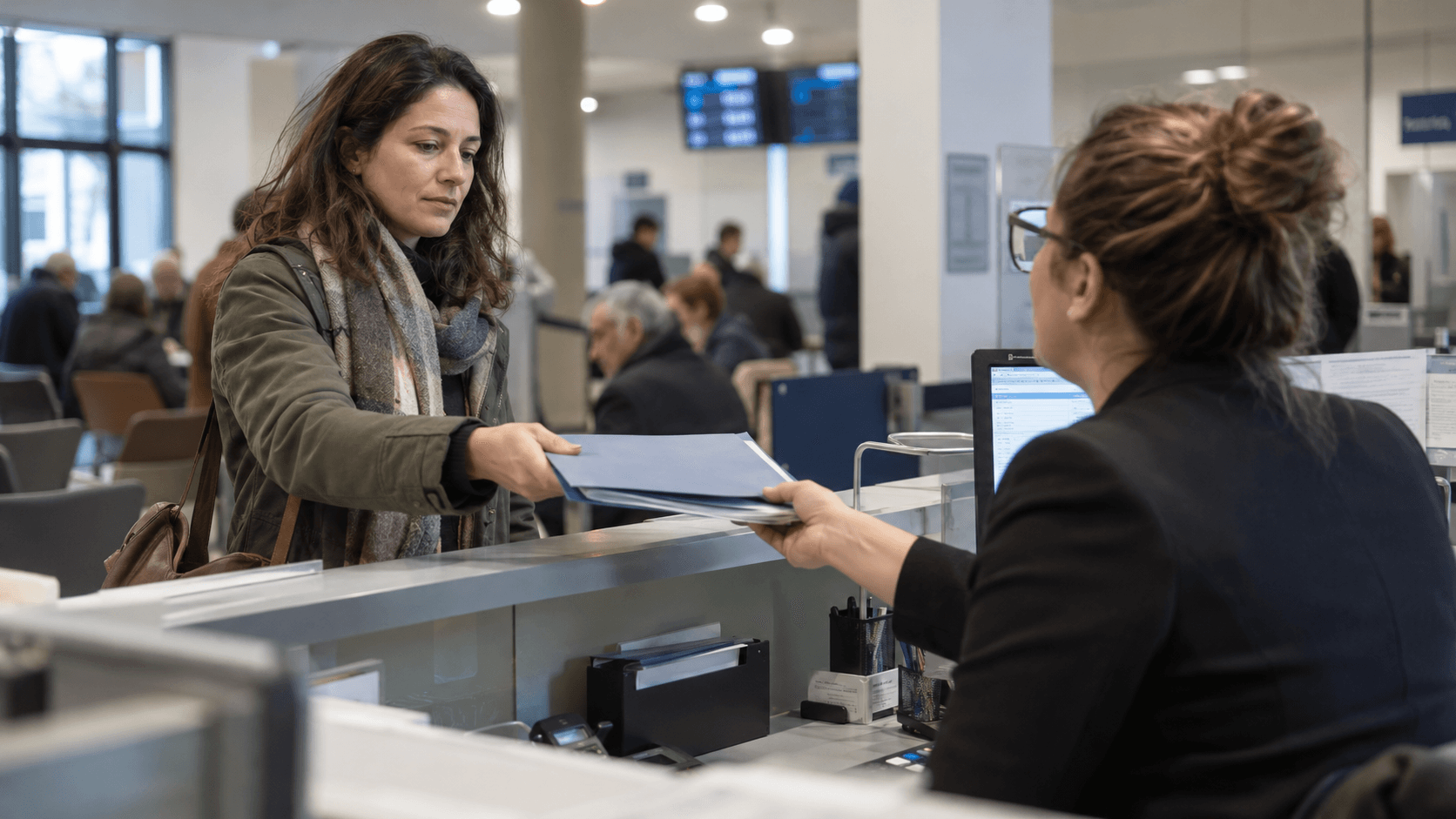
Each application comes with a list of documents and a form to fill out[9]. Depending on the country, you may also be asked for a letter of motivation, or even a CV, as well as proof of private insurance[9].
For Colombia, the letter of motivation must state that you meet the eligibility conditions, in particular that you have never held a working holiday visa in that country[4].
The rule differs from country to country: for some, the application must be made from your country of nationality, with a few exceptions[1]. Check with the embassy of the target country before planning to apply from abroad.
Insurance, health and taxation
Private insurance covering all risks related to illness, maternity, disability, hospitalization and repatriation, for the entire length of the stay, is required[3]. A young person on a working holiday is not eligible for the health insurance of the country they travel to, even if they work there[2].
Read the contract clauses carefully: it must cover the full range of costs that may be incurred, and not act as a “supplementary” cover[2].
On taxation, Australia serves as an example. The first 45,000 AUD of income from Australian sources earned by a working holiday visa holder is taxed at 15%[10], and income above that is taxed at the ordinary rates[11]. A working holiday maker is not entitled to Medicare benefits, but must still pay the “Medicare Levy,” of roughly 1.5 to 2% of their income[2]. Taxation varies from one country to another: check the rules of your destination before leaving.
Pitfalls to avoid and points to watch
- Quotas: for most countries, the number of visas granted each year is limited[2]. Only Australia and New Zealand have none[3]. If a country's quota is reached, you must wait for the next year's quota to open before submitting your application[1].
- The activation deadline: once the working holiday visa is obtained, you have a more or less long period to leave (1, 3, 6 or 12 months depending on the country). An application filed too early may cause you to lose your working holiday visa[1].
- Insurance: it is required by French official texts; according to pvtistes.net, Japan is the exception (insurance not mandatory but strongly recommended)[1], so check with the embassy. In most cases, it is requested when the application is filed, and without this proof the working holiday visa is refused[1].
- Canada: the authorities issue a visa corresponding to the length of the insurance subscription. You must therefore insure yourself for the entire length of the stay[2].
- Only one participation: apart from Australia, under conditions, it is not possible to benefit from several working holiday periods in the same state[2]. A poorly prepared or refused application can therefore be costly.
- Refusal: working holiday applications may be refused[9].
Preparing your departure: steps in order
- Check the list of partner countries and the bilateral agreement of the country you are interested in[3].
- Check your age, the validity of your passport and the minimum amount of funds required for that country[3].
- See whether the country applies a quota and what the deadline is to activate the visa before choosing your dates[1].
- Take out private insurance covering illness, hospitalization and repatriation for the entire length of the stay, without a “supplementary” clause[2].
- File the application with the embassy or consulate of the country in France, or online depending on the country[3].
- To build your project, the official portal Discover the World gathers information and ideas for going abroad[9].
This article provides general benchmarks. Required funds, quotas, fees and precise procedures are specific to each country: you should look further, with the embassy or consulate of the target country, before committing.
Sources
- 1.^ abcdefgpvtistes.net — Working Holiday Visa (WHV) / Programme Vacances-Travail (PVT): “Programme Vacances-Travail (PVT), Permis Vacances-Travail, Visa Vacances-Travail or Working Holiday Visa: all of these terms refer to the same thing!” ; “For other countries, you must apply from your country of nationality. There are a few exceptions.” ; “If the quota for the country you wish to visit is full, you must wait for the next year's quota to open before submitting your application.” https://pvtistes.net/le-pvt (accessed November 2, 2026)
- 2.^ abcdefghijklmcleiss.fr — You are going abroad under a working holiday program (PVT): “The Working Holiday Program is a visa or permit giving young people aged 18 to 30, wishing to travel for tourism and cultural purposes, the opportunity to stay in one of the partner countries while also having the possibility to work there.” ; “Work must not, however, be the main reason for the trip.” ; “The precise conditions to meet in order to benefit from a PVT are set by each agreement with a partner state.” https://www.cleiss.fr/particuliers/partir/pvt/index.html (accessed November 2, 2026)
- 3.^ abcdefghijklmnopqrstuvwxdiplomatie.gouv.fr — Working Holiday Program (PVT) | France Diplomatie: “wishing to live abroad, for a maximum of one year, for tourism and cultural purposes in one of the partner countries, while having the possibility of working on site to supplement their financial resources.” ; “The framework of this program is defined, on a reciprocal basis, by a bilateral agreement that France has concluded with fifteen countries or territories.” ; “The Working Holiday Programs are aimed at young people aged 18 to 30 (35 for Argentina, Australia and Canada).” https://www.diplomatie.gouv.fr/fr/services-aux-francaises-et-aux-francais/preparer-son-expatriation/programme-vacances-travail-pvt (accessed November 2, 2026)
Show 8 more sourcesShow less
- 4.^ abMira Knowledge — French citizens apply for the working holiday visa for Colombia entirely online via the official portal of the Cancillería; the visa itself is free of charge (2026 procedure). Verified on 08/08/2026: 2 consistent sources (cancilleria.gov.co, pvtistes.net). https://tramitesmre.cancilleria.gov.co/tramites/enlinea/solicitarVisa.xhtml (accessed August 8, 2026)
- 5.^Mira Knowledge — Holders of a working holiday visa for Brazil may neither extend their stay beyond the authorized duration nor apply for a residence permit for another purpose. Verified: official source service-public.gouv.fr. https://www.service-public.gouv.fr/particuliers/vosdroits/F16162
- 6.^Mira Knowledge — Holders of a working holiday visa for Japan may neither extend their stay beyond the authorized duration nor apply for a residence permit for another purpose. Verified: official source service-public.gouv.fr. https://www.service-public.gouv.fr/particuliers/vosdroits/F16162
- 7.^Mira Knowledge — Holders of a working holiday visa for South Korea may neither extend their stay beyond the authorized duration nor apply for a residence permit for another purpose. Verified: official source service-public.gouv.fr. https://www.service-public.gouv.fr/particuliers/vosdroits/F16162
- 8.^Mira Knowledge — The working holiday visa for Canada allows a stay of 24 months in certain specific cases. Verified: official source service-public.gouv.fr. https://www.service-public.gouv.fr/particuliers/vosdroits/F16162
- 9.^ abcddecouvrirlemonde.jeunes.gouv.fr — Working holiday program | Découvrir le monde: “For each application, a list of documents to provide will be requested, along with a form to fill out.” ; “Provide a cover letter, and possibly a curriculum vitae.” ; “Prove that you hold private insurance covering all risks related to illness, maternity, disability, hospitalization and repatriation for the entire duration of the stay.” https://www.decouvrirlemonde.jeunes.gouv.fr/programme-vacances-travail-72 (accessed November 2, 2026)
- 10.^Mira Knowledge — The first 45,000 AUD of Australian-source income of a working holiday visa holder is taxed at 15%. Verified: official source taxsummaries.pwc.com. https://taxsummaries.pwc.com/australia/individual/taxes-on-personal-income
- 11.^Mira Knowledge — Income of a working holiday visa holder in Australia above 45,000 AUD is taxed at ordinary rates. Verified: official source taxsummaries.pwc.com. https://taxsummaries.pwc.com/australia/individual/taxes-on-personal-income



