
A freight train derailed near Sejong, and conventional trains were suspended between Cheonan and Daejeon. This incident shows what can happen at any time on the Korean rail network. Here you will learn how to tell KTX trains from conventional trains, where to check the real status of a train, how to get a ticket refunded or exchanged, and when a delay compensation is due.
What happened, in one sentence
On the morning of the 21st, a freight train derailed near Sojeongni station in Sejong, on the Gyeongbu line: conventional trains were suspended between Cheonan and Daejeon[1]. Meanwhile, the KTX kept running normally on its dedicated high-speed lines[2]. The situation changes from one hour to the next: it is the mechanics of this kind of disruption, more than the incident itself, that will be useful to you.
KTX and conventional trains: why the KTX can keep running
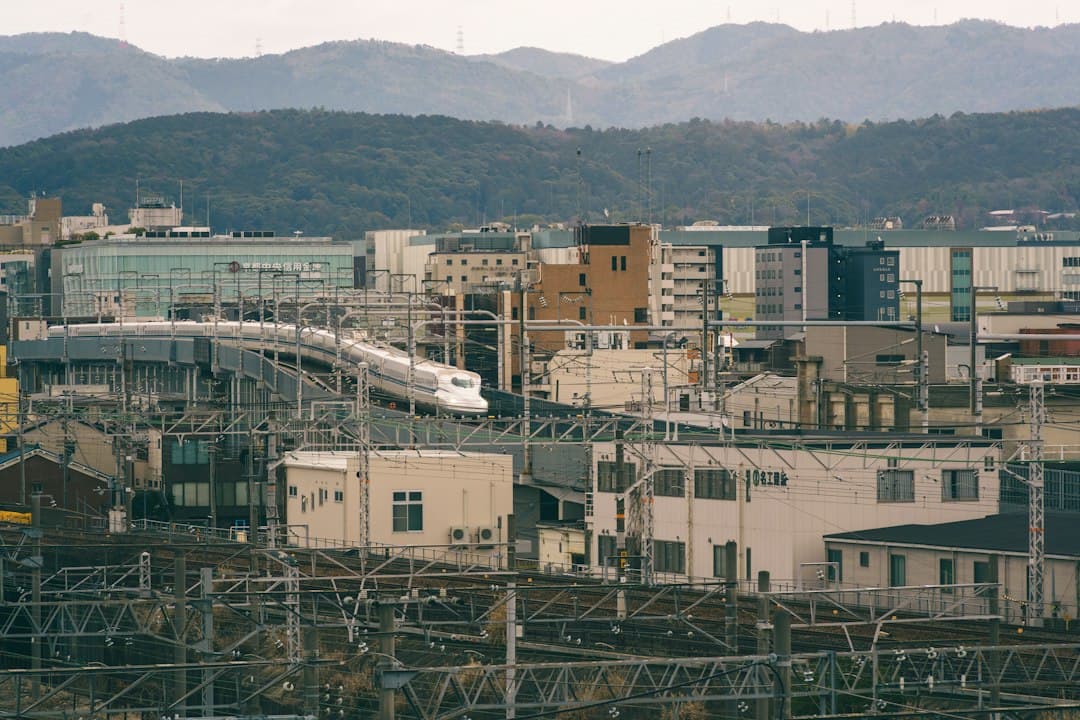
The KTX runs on dedicated high-speed lines, separate from the conventional line[1]. That is why an incident on the conventional Gyeongbu line does not stop the KTX: it does not use the same tracks.
Other conventional lines can also remain normal while one is cut: during this incident, conventional trains on the Chungbuk and Janghang lines were running normally[1]. A disruption therefore rarely affects the whole network at once, and the same journey can sometimes be made on another service.
Where to check the network status
The operator asks you to check train status in advance via the mobile app, the announcements in stations and on board, and the rail customer center[1]. Service information is also available on the KORAIL website and in the "Korail+" and "Korail Subway Talk" apps[3].
A simple reflex: a train that does not appear in a search on the app or website is a suspended train, and the list of suspended trains can be downloaded from the notices section of the website[4].
Individual notifications are sent by SMS three times (3 days before, the day before, and on the day of travel), but they are hard to receive without a Korean phone number. Log in to the app, turn on push notifications, and check for yourself the day before and on the day of departure[4]. Operations can be adjusted, so the check closest to departure is the one that counts[2].
When a line is cut: what the operator plans
On the suspended section, KORAIL has set up buses between the Cheonan, Jochiwon, Daejeon and Seodaejeon stations. Travelers board them, then switch at each station to waiting trains to reach their destination[1].
Some conventional trains also run partial round trips: between Seoul or Yongsan and Cheonan on one side, and between Daejeon or Seodaejeon and Busan, Gwangju or Mokpo on the other[1]. The arrangement may still be adjusted[2]: plan for a bus transfer and extra travel time rather than a direct trip.
Changing or refunding a ticket
For the strike action announced for the 23rd, KORAIL indicated that travelers would pay no penalty for a ticket refund or exchange[3]. According to a source focused on strikes, the ticket for a canceled train is refunded in full and automatically[5]. For another type of cancellation, check with KORAIL. So do not cancel on your own out of caution: first check in the app whether your train is still running.
Keep the train number, the date, the ticket and the proof of payment: they will be needed for any later request.
Delays, compensation and connections
A delay compensation payment is made when a train is at least 20 minutes late due to a cause attributable to KORAIL[6]. The payment method determines the process: for a ticket paid by bank card, the refund is automatic; for a cash payment, you must submit a request within one year, on the KORAIL website, in its app, or at a station ticket office[6].
According to the detailed scale published by an economic news outlet, the compensation is 12.5% of the ticket price for a delay of 20 to 40 minutes, and 25% for 40 minutes to 1 hour[6]. Beyond that, the scales have changed: an announcement from August 2026 raises the longer brackets to 50% (60 to under 90 minutes), 75% (90 to under 120 minutes), and 100% from 120 minutes onward[7]. Some older pages still show 50% for any delay of at least one hour[7].
Two limits to be aware of. First, the compensation is not a guarantee of travel: a delayed ticket does not automatically become a seat on another train, and compensation for a delay does not by itself rearrange your next booking[7]. For a flight, bus, or hotel booked separately, contact its operator directly as soon as your new arrival time threatens its deadline, and present KORAIL's proof of delay[7].
Second, a ticket bought after being informed of an existing delay, and explicitly accepting that delay, may be excluded from compensation[8].
Points to watch
- Don't count on information SMS messages: they are hard to receive without a Korean number. Check yourself in the app, with push notifications turned on, the day before and the day of departure[4].
- Delay scales differ across pages: in case of disagreement, rely on the operator's most recent announcement and have the scale applicable to your travel date confirmed[8].
- A ticket bought while already aware of the delay, and explicitly accepting it, may be excluded from compensation[8].
- A delay compensation payment guarantees neither a seat on the next train nor a refund for a separately made booking[7].
Plan B and strikes
When the conventional line is cut, the KTX, which runs on its own dedicated line, may remain available[2]: first check whether it serves your route. If you have an important commitment, such as a job interview, the operator also invites you to consider another mode of transport[3].
For rail and subway strikes, see our article “Getting Around South Korea: Map, Subway, Train, and Strikes to Anticipate” (se-deplacer-coree-du-sud-greve-ferroviaire).
Checklist before and during a train journey
- The day before and the day of departure, look up your train in the Korail+ app: if it doesn't appear in the search, it has been suspended[4].
- Turn on the app's push notifications rather than relying on SMS[4].
- Don't cancel before checking the train's status; a canceled train is refunded automatically[5].
- Keep your train number, date, ticket, and proof of payment[7].
- If a delay threatens a connection booked separately, notify its operator without delay[7].
- Paid in cash: remember to request the delay compensation within one year[6].
- For a journey of more than a few hours, check whether the KTX also serves your destination[2].
- This article covers the essentials: to truly settle in South Korea, the details of transport budgets, passes, and administrative procedures require going further.
Sources
- 1.^ abcdefnews.sbs.co.kr — Korail Implements Bus Shuttle Service Between Cheonan, Jochiwon, Daejeon, and Seodaejeon: “Conventional train services have been suspended due to the derailment of a freight train at Sojeongni Station on the Gyeongbu Line, and Korail is deploying buses to provide replacement connections.”; “Currently, high-speed trains (KTX) are running normally on the dedicated high-speed lines.”; “Conventional trains on the Chungbuk and Janghang lines are also running normally.” https://news.sbs.co.kr/english/article.do?news_id=N1008856871 (accessed November 21, 2026)
- 2.^ abcdeen.nocutnews.co.kr — Train Derailment Prompts Korail to Offer Bus Transport on Cheonan-Jochiwon-Daejeon, Seodaejeon Route - NOCUTNEWS: “High-speed trains (KTX) are currently running normally on dedicated high-speed lines.”; “We may further adjust train operations. Passengers planning to travel by train should check the operating status in advance via the mobile app, station and onboard announcements, and the rail customer center.” https://en.nocutnews.co.kr/news/6610507 (accessed November 21, 2026)
- 3.^ abcen.fnnews.com — Railway Union to Begin Work-to-Rule Action on the 23rd... Korail Enters Emergency Transport Mode - First-Class Business Newspaper Financial News: “Service information is available on the KORAIL website and in the Korail+ and Korail Subway Talk mobile apps.”; “Passengers will not be charged any penalty for refunding or exchanging tickets during the union action.”; “Passengers with important commitments, such as university written exams or job interviews, have also been advised to consider other means of transport.” https://en.fnnews.com/news/202611201726214158 (accessed November 21, 2026)
Show 5 more sourcesShow less
- 4.^ abcdelacha.co.kr — If Trains or Buses Go on Strike in Korea — What Stops, What Keeps Running, and What Happens to Your Ticket: “Korail has officially stated that trains that do not appear in a search are suspended, and that the list of suspended trains can be downloaded from the notices section of the website.”; “Individual notifications are sent by text message three times (3 days before, the day before, and the day of travel), but they are hard to receive without a Korean phone number. Log in to the app, turn on push notifications, and check for yourself the day before and the day of departure.” https://lacha.co.kr/korea-guide/en/korea-transport-strike-guide/ (accessed November 21, 2026)
- 5.^ abhantabi.org — Seoul Subway and KTX Strike 2026: Dates and What to Do: “No. Tickets for cancelled trains are refunded in full and automatically.” https://hantabi.org/en/korea/articles/korea-transport-strike (accessed November 21, 2026)
- 6.^ abcdbiz.chosun.com — Korail pays 674 million won for Seosomun collapse delays, seeks Seoul recourse - CHOSUNBIZ: “Delay compensation is paid to passengers when a train is at least 20 minutes late for a cause attributable to KORAIL.”; “For tickets paid by bank card, the refund is automatic. For cash payments, passengers must submit their request directly on the KORAIL website, in its mobile app, or at a station ticket office within one year.”; “For delays of 20 to 40 minutes, KORAIL compensates passengers at 12.5% of the ticket price; for 40 minutes to 1 hour, 25%; and for one hour or more, 50%.” https://biz.chosun.com/en/en-policy/2026/06/15/7ZITPXX3DZGV5D4RLP26A7QTWA/ (accessed November 21, 2026)
- 7.^ abcdefgbeforekorea.com — KTX Delay Compensation and Missed Connection Steps: “Keep the train number, the date, the booked stations, the ticket number, and the operator's actual delay notice.”; “A KORAIL announcement from August 2026 updates the long-delay brackets: 50% for 60 to under 90 minutes, 75% for 90 to under 120 minutes, and 100% from 120 minutes onward.”; “The old FAQ still shows 50% for any delay of at least one hour.” https://beforekorea.com/ktx-delay-compensation-next-connection/ (accessed November 21, 2026)
- 8.^ abcnewinkorea.com — KTX Delay Compensation in Korea: Refund Rules for 2026 | New In Korea: “There is another important exception: a ticket bought after the traveler has been informed of an existing delay, and which explicitly accepts that delay, may be excluded from compensation.”; “When sources diverge, check the operator's most recent announcement and confirm the scale that applies to your travel date.” https://newinkorea.com/en/travel/ktx-delay-compensation-korea (accessed November 21, 2026)