In Bali, religious life is part of everyday life, and those who stay for a long time are watched closely. This article helps you know how to dress and behave in temples and ceremonies, which customs to respect day to day, and which language to use in different situations. For visas, housing, and cost of living, see the guides "Settling in Bali" and "Living in Bali."
Why Cultural Expectations Matter in Bali
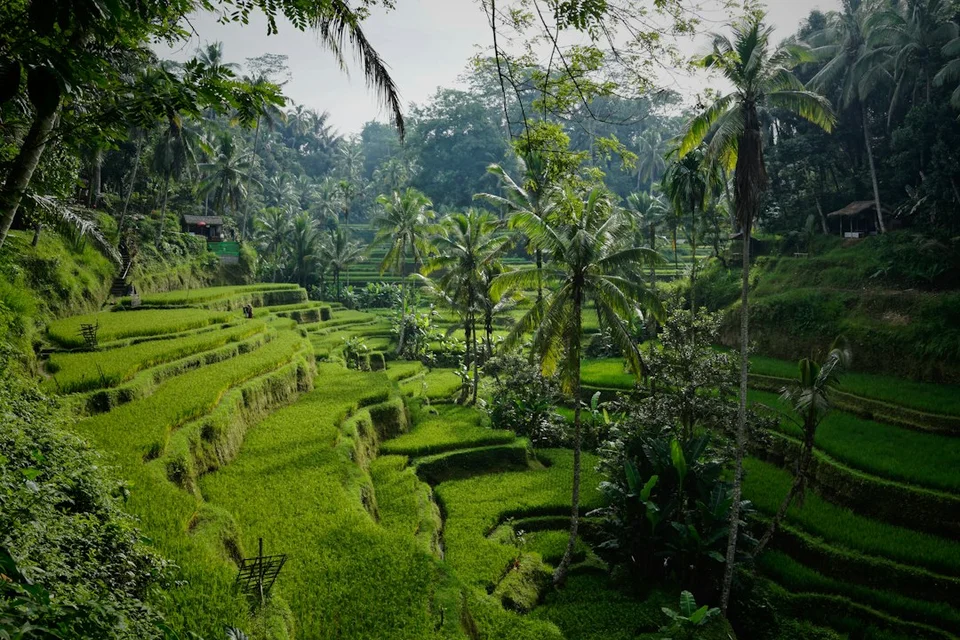
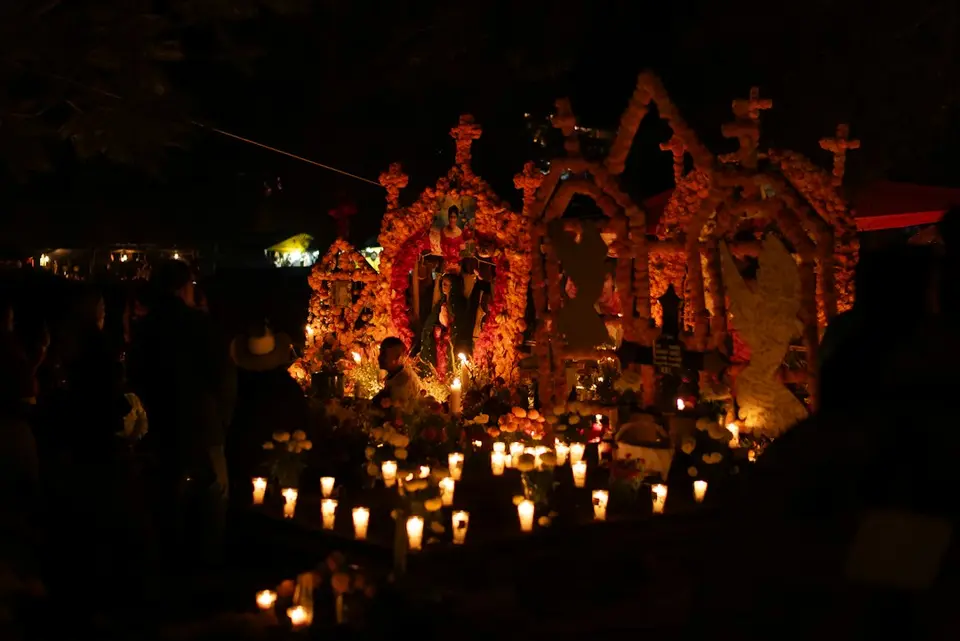
Most people in Bali are Hindu, so the island's culture and way of life differ noticeably from those of its Muslim neighbors[1]. Rituals are still practiced every day: Bali is not just a backdrop for photographs, but a space of living religious practice[2].
In recent years, viral posts have shown tourists "misbehaving in Bali," which prompted the governor to respond firmly and ask the administration and law enforcement for stricter action[1]. These images do not represent the majority of visitors, but they have gained visibility on social media[1].
Balinese authorities put it simply: visitors are welcome, but not on any terms[3]. These rules aim to preserve what makes the island special: a living culture and rites that are still practiced[3].
The good news: a visitor who respects local culture and follows a few simple rules quickly earns the affection and respect of Balinese people[1].
Dress and Behavior: Temples, Ceremonies, and Public Spaces
Dress modestly and respectfully at sacred sites, tourist attractions, and public places[1]. At sacred sites, but also in restaurants, shops, and on the street, behave politely[1].
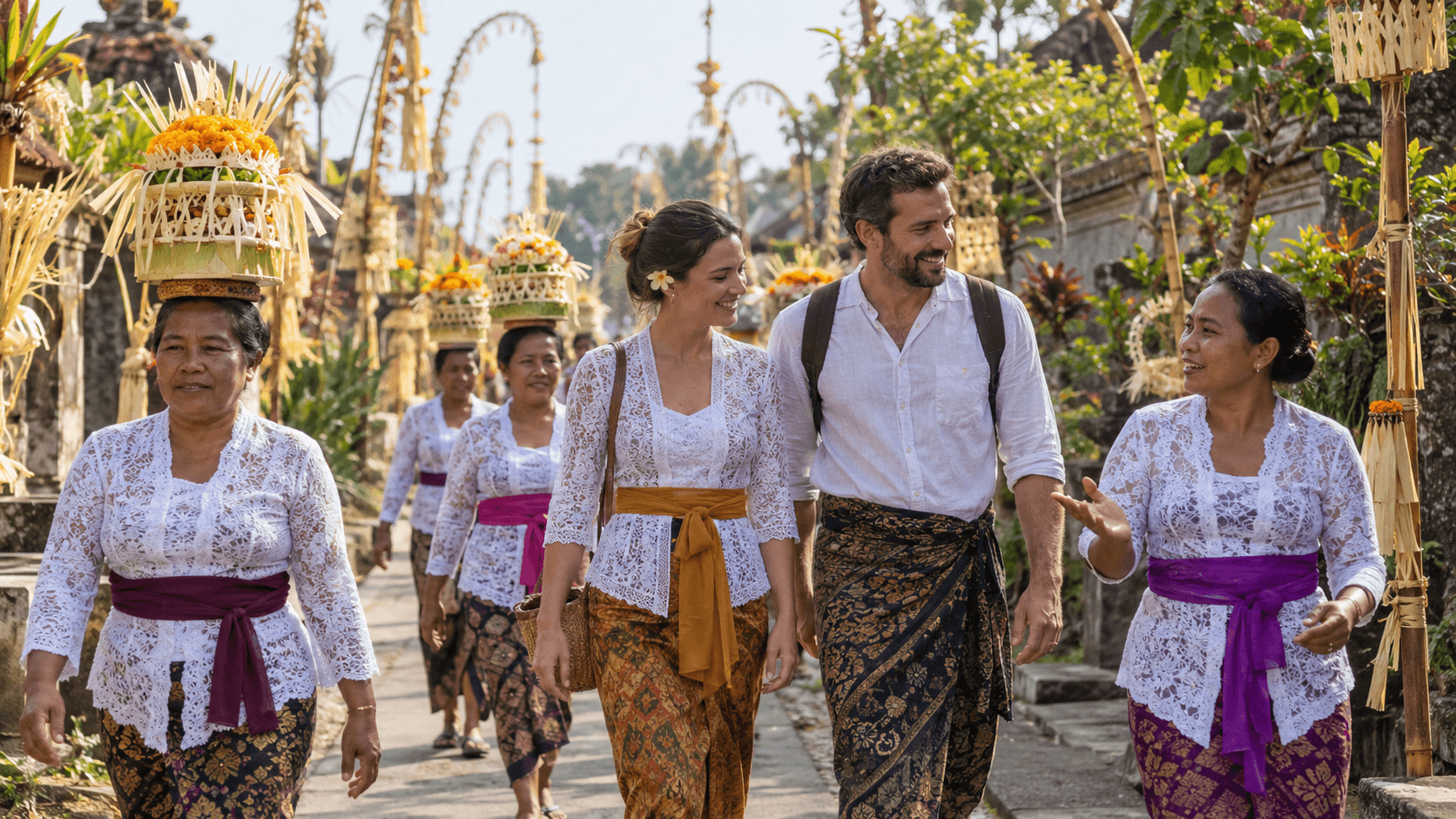
To enter a temple or attend a ceremony, you must wear at least a sarong that fully covers your legs and, ideally, your shoulders (no tank tops)[1]. You can borrow or rent one at the temple entrance[1], or buy one at one of the many shops nearby for US$5 to $10 and keep it as a souvenir[1].
During a ceremony, here are the basic rules:
- Don't walk between worshippers, the priest, or the altars: stay behind them instead[1].
- No flash inside the temple; photos are generally allowed[1].
- Don't touch temples, sacred trees, or religious statues, and don't climb on them[3].
- Respect the sacred character of temples, sacred statues (pratimas), and religious symbols[1].
For certain special ceremonies you are invited to, such as the cremation of a family member, you are expected to wear full religious attire: a sarong with a selendang sash and an udeng headpiece[1].
Everyday Customs and Habits
Bali is probably the Indonesian island where Indonesians themselves feel most free in terms of dress: young Balinese women often wear shorts and clothing considered "sexy"[1]. This freedom does not apply to places of worship, where the attire described above is required, nor to rites or ceremonies, where conduct rules remain strict[4].
Displays of affection remain rare in public.
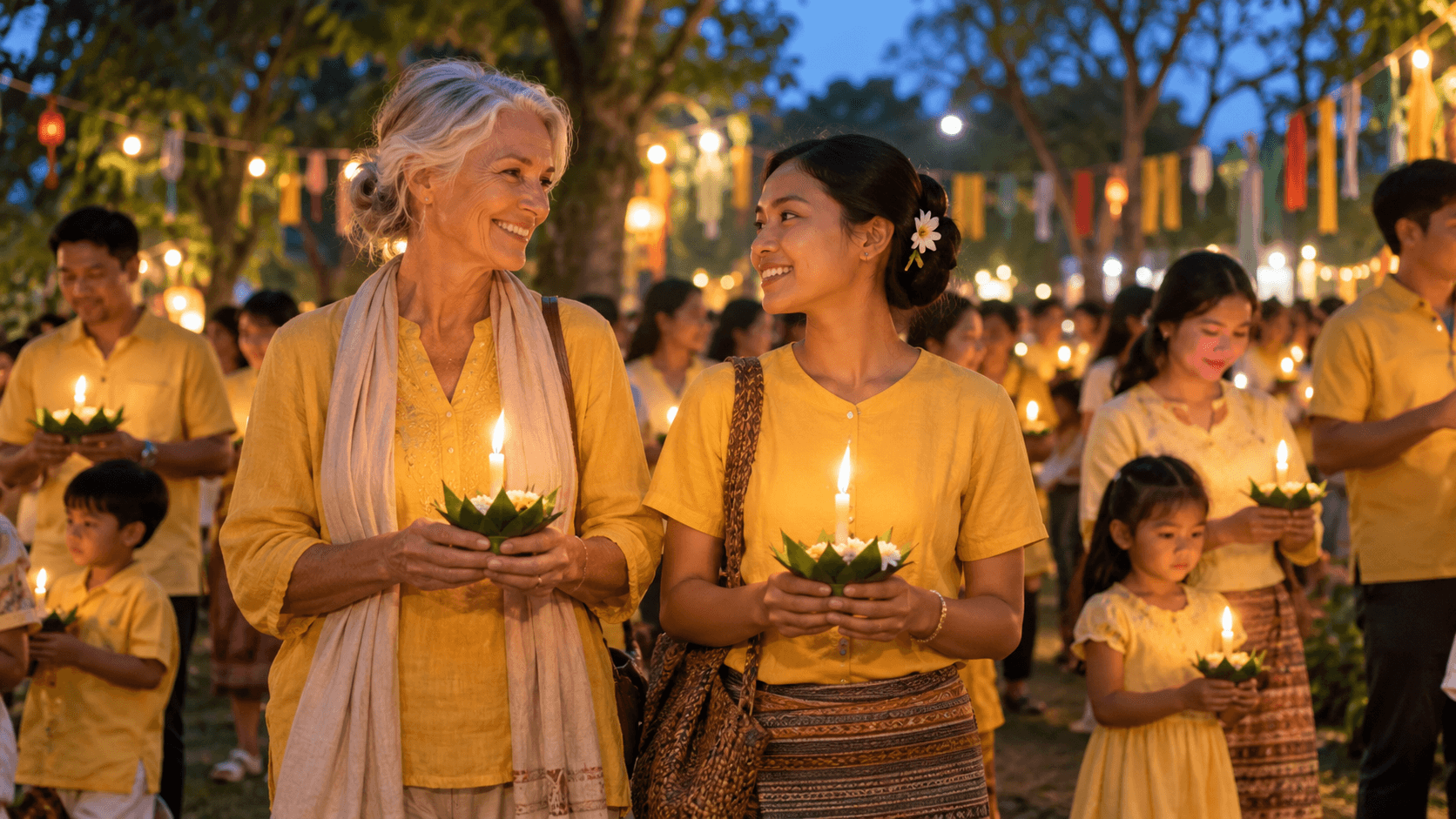
Religious ceremonies are not tourist attractions: visitors are often welcome there, as long as they follow a few simple rules[1]. Finally, avoid any inappropriate or offensive behavior, including online[3].
Relations with Balinese People and Long Stays
When you stay for a long time, you become more visible: digital nomads and other long-term residents don't just pass by the attractions, they use the roads, shops, cafés, coworking spaces, and residential neighborhoods every day[2]. More information and adaptation is therefore expected of them[2].
Local authorities in Canggu, Ubud, Seminyak and other tourist areas talk about steering tourism better rather than slowing it down[2]. In that context, the simplest approach is to behave like an attentive neighbor: learn the rules of the place, respect the rituals you come across, and adapt rather than waiting for others to adapt to you.
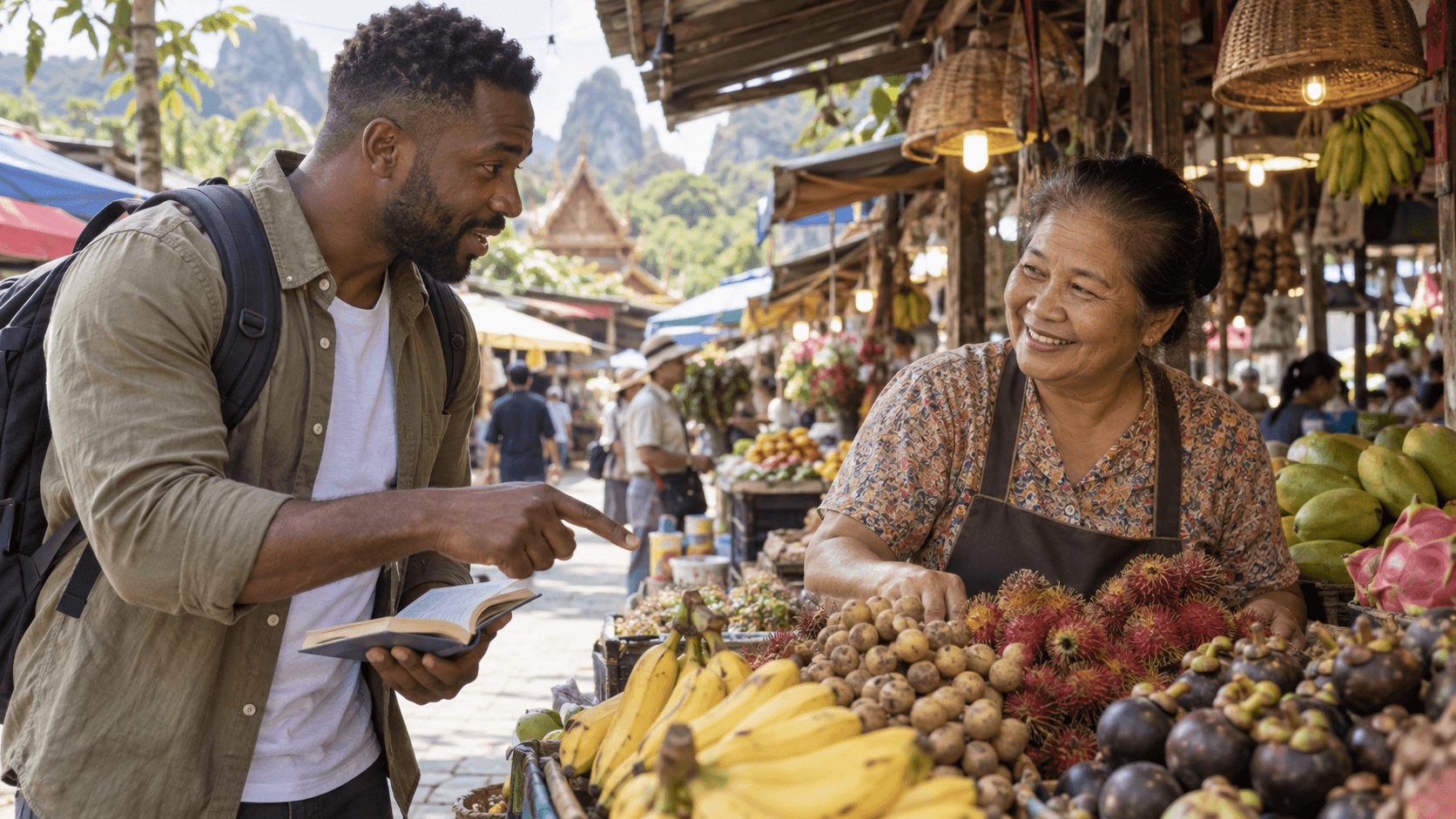
A small effort goes a long way: if you speak even a little Indonesian, Balinese people will welcome you warmly, and a few kind words can take you far[1].

Which language to speak: Indonesian, Balinese, English
Three languages coexist in Bali, and each has its place.
- Indonesian (Bahasa Indonesia) is the official language, based on Malay; it is used for official communication, in schools, and in the media[5].
- Balinese is the dominant ethnic language on the island[5].
- English holds a dominant position in tourist hubs such as Seminyak, where it serves the needs of tourism[5].
You can see it in public spaces: the signs at Badung market are in Indonesian, Balinese and English[5]. The local language is preserved through the use of Balinese script, while English makes the place accessible to international visitors[5].
Balinese is organized into three levels inherited from the former caste system: depending on the social position of the person you are speaking to, you use high, middle or low Balinese[5]. The key takeaway: the way you speak depends on who you're talking to. In practice, speaking Indonesian, even a little, is already very well received[1].
Pitfalls, Scams and Things to Watch For
- Fine: inappropriate dress or improper behavior in a sacred place can cost up to 5 million Indonesian rupiah (about €290)[3].
- Expulsion: filming provocative videos in a temple or disrupting a religious ceremony can lead to immediate deportation[3].
- Nyepi: during this holiday, any outings in public space are prohibited and must be strictly observed; failure to comply can result in deportation or, in the most serious cases, a prison sentence[4].
- Work: working or running a commercial activity without authorization is prohibited[3].
- Guides: the code of conduct requires certified guides for any cultural or nature visit[3].
- Tourist levy: all foreign travelers must pay 150,000 rupiah (about €9), payable online on the Love Bali website or at the airport; this is not optional, and failure to pay may result in denied access to certain sites[3].
- Privacy: a new criminal code took effect in January 2026; it penalizes adultery (up to one year in prison) and "cohabitation outside marriage" (up to 6 months in prison), but these provisions can only be invoked upon complaint from close family (spouse, parents, children)[6].
Checklist Before You Leave
- Bring or plan for a sarong covering your legs, and ideally your shoulders.
- Prepare full attire (sarong, selendang, udeng) if you are invited to a family ceremony.
- Learn a few Indonesian words: it is the language expected from an attentive visitor.
- Note the dates of Nyepi before booking your travel.
- Pay the tourist levy online or at the airport.
Sources
- 1.^ abcdefghijklmnopqbali.com — Bali Visitors Guide & Bali Tourist Behaviour Guidelines: "The majority of Bali's residents are Hindu, so the island's culture and way of life are quite different from those of its Muslim neighbors." "Recently, alarming viral posts have shown tourists behaving badly in Bali, prompting Bali's governor to react firmly and push the administration and law enforcement toward stricter action." "While these posts do not represent the majority of visitors, they have increased their visibility on social media." https://bali.com/bali/travel-guide/practical-tips-must-know/etiquette-how-to-behave/ (accessed October 20, 2026)
- 2.^ abcdkarlobag.eu — Bali imposes stricter rules on digital nomads: “Bali is not just a backdrop for photographs, but a space of living religious practice.”; “People who come for longer stays, especially digital nomads, are even more visible because they don't only move through tourist attractions, but use local roads, shops, cafés, coworking spaces and residential neighborhoods every day.”; “That is why a higher level of information and adaptation is expected from them.” https://karlobag.eu/fr/voyages/bali-introduit-des-regles-plus-strictes-pour-les-nomades-numeriques-visa-impot-e-xrei4/ (accessed October 20, 2026)
- 3.^ abcdefghinacel.fr — New Regulations in Bali: What Travelers Need to Know: “Balinese authorities are clear: visitors are welcome, but not on just any terms.”; “While these rules may seem strict, they are part of a preservation logic. For residents, it has become necessary to set a framework to protect what makes the island special: a living culture, rites that are still practiced, and fragile nature.”; “Do not touch or climb temples, sacred trees, or religious statues.” https://www.nacel.fr/sejour-linguistique/actualites/bali-nouvelles-regles (accessed October 20, 2026)
Show 3 more sourcesShow less
- 4.^ abdiplomatie.gouv.fr — Indonesia - Useful Information | France Diplomatie: “These rules of conduct are applied less strictly in Jakarta and Bali, except when religious practices or ceremonies are involved.”; “In particular, Nyepi, the Balinese Day of Silence, during which all movement in public spaces is prohibited, must be strictly observed. Failure to comply may result in a deportation order or, in more serious cases, prison sentences.” https://www.diplomatie.gouv.fr/fr/information-par-pays/indonesie/conseils-aux-voyageurs-informations-utiles (accessed October 20, 2026)
- 5.^ abcdefuni-potsdam.de — News from UP - University of Potsdam: “Bahasa Indonesia, based on Malay, is the country’s official language. It is used for official communication, in schools, and in the media.”; “Most Indonesians also speak their own ethnic language, with Balinese dominant on the island of Bali.”; “In tourist centers such as Seminyak, the dominant role of English is striking: it meets the needs of tourism and reflects the international environment.” https://www.uni-potsdam.de/de/nachrichten/detail/2025-10-08-unterwegs-auf-bali-tag-2-sprachliche-diversitaet-zwischen-lokalen-maerkten-und-reisfeld (accessed October 20, 2026)
- 6.^diplomatie.gouv.fr — Indonesia - Travel Advice - Latest News and Alerts - Page 1 of 1 - France Diplomatie: “A new penal code entered into force in Indonesia in January 2026. It contains provisions on morality, penalizing adultery (up to one year in prison) and cohabitation outside marriage (up to 6 months in prison).”; “These can only be invoked through a complaint filed by a close family member of one of the persons concerned (spouse, parents, children).” https://www.diplomatie.gouv.fr/fr/information-par-pays/Indon%C3%A9sie/dernieres-minutes-et-alertes (accessed October 20, 2026)