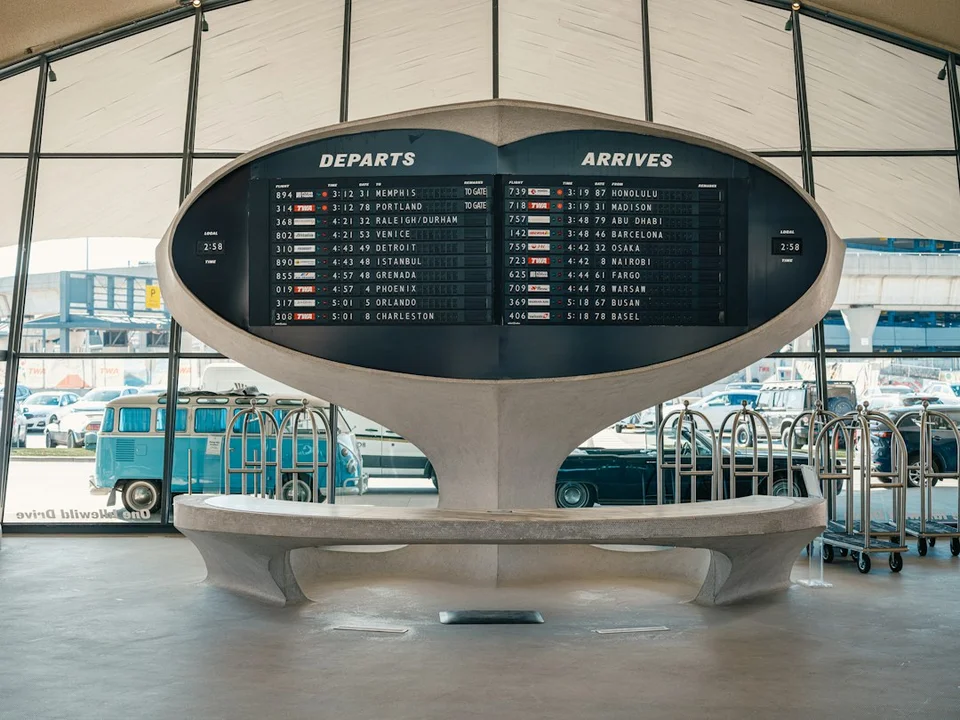
Before choosing a country, you need to understand what governs your stay: how long you can stay without a visa, how that time is now monitored, the status under which you work, and how taxes and social protection connect to your place of residence. This article gives you these reference points for the Schengen Area and a few national examples, so you know what to check before booking a one-way ticket.
Staying in Europe Without a Visa: The 90/180-Day Rule
For a short stay in the Schengen Area, the limit to keep in mind is 90 days within any 180-day period. What has changed is how it is checked: the Entry/Exit System (EES) automatically calculates this quota based on the entries and exits recorded[1].
In practice, an overstay can now be detected systematically in all Schengen countries[1]. Counting your days roughly or relying on an unclear stamp no longer protects you: registration is biometric and replaces the passport stamp[2].
If you are aiming for an installation of several months, this limit is your starting point: beyond it, you will need a long-term right of stay, covered below.
Entering the Schengen Area: EES and ETIAS
The EES registers non-European travelers at the external borders of the Schengen Area: fingerprints and facial image[2]. Its rollout began gradually on October 12, 2025, and it has been fully operational since April 10, 2026[3].
For you, the practical effect is mainly a matter of time at the border checkpoint: the first entry takes longer, because biometric registration happens at that point; on later crossings, the data already stored is reused[4].
The ETIAS is a separate process: a pre-travel authorization for nationals of visa-exempt third countries. It is not yet in service; its launch is planned for late 2026, after the EES[5]. It will cost €20, free for those under 18 and over 70[6].
Finally, keep proof of your means of subsistence and accommodation on hand: the exact requirements vary by country, so check with the authorities of the country of entry.
Visas and Long-Term Right of Stay
To stay long-term and work, the logic changes: for a non-European, the right to work depends on the residence permit of the host country[7]. The goal is therefore to choose a residence pathway, not to chain short stays together.
The EU Blue Card is one example, but it is not designed for every remote worker: check that you meet its eligibility conditions. A German consular portal, for instance, lets you apply for the visa online[8].
Working Legally: The Self-Employed Status in Portugal as an Example
Portugal clearly illustrates the link between residence and activity. A legally resident foreigner can register as a self-employed worker (trabalhador independente) by declaring the start of their activity on the Portal das Finanças. This registration then allows them to issue electronic invoices, the “recibos verdes”[7].
For nationals from outside the EU and the European Economic Area, a residence permit that authorizes self-employment is also required: the D2 visa for a local activity, or the D8 visa to work with foreign clients[7].
Taxes and Tax Residence
Your place of living also determines where you pay tax. Take Ireland as an example: a stay of more than 183 days in a tax year establishes Irish tax residence, with taxation on worldwide income[9].
The income tax scale there is progressive: 20% (standard rate) up to about €42,000, then 40% beyond that (2026 thresholds, adjusted every year)[9]. Bilateral tax treaties can prevent double taxation[9].
Every country has its own rules: before you settle, check the residence criterion and the tax scale with the tax administration of the country you are targeting. For a personal situation, individualized tax advice is still preferable.
Social Security and Contributions
For a remote worker posted by an employer from another EU Member State, the A1 certificate lets you stay affiliated with the social security system of your country of origin[10].
For non-EU citizens, there is no standard social security agreement; the situation depends on the country and the applicable agreements, so check with the relevant authorities. In Latvia, for example, private health insurance with minimum coverage of €42,600 is required[10].
Contributions vary widely from one country to another. In Romania, an employee pays 25% for social insurance (pension) and 10% for health insurance, i.e. 35% in total, while the employer pays only 2.25% for work insurance under normal conditions[11]. For self-employed workers, the 25% pension contribution is only due if annual net income reaches at least 12 times the gross minimum wage (48,600 RON in 2026)[11].
Key Points to Watch Before You Leave
- Exceeding 90 days in any 180 will no longer go unnoticed: the EES calculates the quota automatically based on your entries and exits[1].
- At the border, you may be asked to prove you have sufficient means of subsistence for the length of your stay[12] and proof of your accommodation[13]: keep them accessible before you leave.
- A non-compliant ID photo can complicate a visa application. Format, color, and background requirements vary depending on the consular representation. Check the format required by the country where you file your application.
Checklist Before Choosing Your Country
- Note your entry and exit dates so you do not exceed the short-stay quota.
- Allow time for biometric registration at your first entry into the Schengen Area.
- If you plan a long stay, identify the residence permit that authorizes you to work in the host country.
- Look into the tax residence criteria and the tax brackets of your target country.
- Clarify your social protection: an A1 certificate if you are posted from the EU; otherwise, check the country's requirements (private health insurance may be required, as in Latvia).
This article provides common benchmarks; it does not detail step-by-step procedures, a line-by-line budget, or how to choose a city. Settling in for real requires going further, country by country.
Sources
- 1.^ abcMira Knowledge — The EES automatically calculates the 90-days-in-180 short-stay limit based on recorded entries and exits, which makes overstays systematically detectable in all Schengen countries. Verified August 20, 2026: official source travel-europe.europa.eu. https://travel-europe.europa.eu/ees_en (accessed August 20, 2026)
- 2.^ abMira Knowledge — The EES registers non-European travelers biometrically (fingerprints and facial image) at the external borders of the Schengen Area, replacing the passport stamp. Verified August 20, 2026: official source travel-europe.europa.eu. https://travel-europe.europa.eu/ees_en (accessed August 20, 2026)
- 3.^Mira Knowledge — The EES began its phased rollout at the external Schengen borders on October 12, 2025, and has been fully operational since April 10, 2026. Verified August 20, 2026: official source travel-europe.europa.eu. https://travel-europe.europa.eu/ees_en (accessed August 20, 2026)
Show 12 more sourcesShow less
- 4.^Mira Knowledge — The first entry under the EES takes longer at the border (biometric registration); subsequent crossings reuse the stored biometric data. Verified August 20, 2026: official source travel-europe.europa.eu. https://travel-europe.europa.eu/ees_en (accessed August 20, 2026)
- 5.^Mira Knowledge — ETIAS is a pre-travel authorization for visa-exempt third-country nationals traveling to the Schengen Area; as of August 2026 it is not yet in service: its launch is planned for late 2026, after the EES. Verified August 20, 2026: official source travel-europe.europa.eu. https://travel-europe.europa.eu/etias_en (accessed August 20, 2026)
- 6.^Mira Knowledge — The ETIAS application fee is €20 (up from the initially planned €7); applications are free for those under 18 and over 70. Verified August 20, 2026: official source travel-europe.europa.eu. https://travel-europe.europa.eu/etias_en (accessed August 20, 2026)
- 7.^ abcMira Knowledge — In Portugal, a legally resident foreigner can register as a self-employed worker by declaring the activity on the Portal das Finanças, which allows issuing electronic invoices (recibos verdes); non-EU/EEA nationals must hold a residence permit authorizing self-employment (D2 visa for local activity, D8 visa for foreign clients). Verified June 13, 2026: 2 concordant sources (home-affairs.ec.europa.eu, worktugal.com). https://home-affairs.ec.europa.eu/policies/migration-and-asylum/eu-immigration-portal/self-employed-worker-portugal_en (accessed June 13, 2026)
- 8.^Mira Knowledge — The consular services portal lets you apply online for the EU Blue Card visa. Verified: official source digital.diplo.de. https://digital.diplo.de/
- 9.^ abcMira Knowledge — Staying more than 183 days within a fiscal year establishes Irish tax residence, which means being taxed on your worldwide income. The rates are progressive: 20% up to roughly €42,000 and 40% above that (2026 thresholds, adjusted annually). Verified June 9, 2026: official source revenue.ie. https://www.revenue.ie/en/home.aspx (accessed June 9, 2026)
- 10.^ abMira Knowledge — For intra-EU remote workers posted by an employer in another Member State, an A1 certificate lets you keep your social security coverage in your home country. For non-EU nationals, there is no standard agreement, and private health insurance with minimum coverage of €42,600 is required (Latvia). Verified June 9, 2026: official source vid.gov.lv. https://www.vid.gov.lv (accessed June 9, 2026)
- 11.^ abMira Knowledge — In Romania, employees pay 25% for social insurance (pension) and 10% for health insurance, for a total of 35%, while the employer pays 2.25% for work insurance. For self-employed people, the 25% pension contribution is due only if net annual income reaches at least 12 times the gross minimum wage (48,600 RON in 2026). Verified June 11, 2026: two consistent sources (anaf.ro, taxsummaries.pwc.com). https://www.anaf.ro/ (accessed June 11, 2026)
- 12.^Mira Knowledge — Visitors must be able to present, at border checks, proof of their means of subsistence for the duration of their stay. Verified: official source ambacongo-us.org.
- 13.^Mira Knowledge — Visitors must be able to present, at border checks, proof of their accommodation arrangements. Verified: official source ambacongo-us.org.
- 14.Mira Knowledge — ID photos must measure 51 mm × 51 mm. Verified: official source ambacongo-us.org.
- 15.Mira Knowledge — ID photos must be in color, against a white background. Verified: official source ambacongo-us.org.