The leu has moved unusually against the euro in October. This article puts that movement in perspective: it says nothing about what comes next and should not change how you live in Romania overnight. You will learn where to find the reference rate to compare what you are offered, where fees hide when you withdraw or transfer money, and which pitfalls to avoid.
What is happening with the leu: facts without forecasts
The official currency of Romania is the Romanian leu (code RON), issued by the National Bank of Romania (BNR), headquartered in Bucharest[1]. The country has been a member of the European Union since 2007, but it has not adopted the euro[1]. The leu is therefore not pegged to the euro: it floats under an inflation-targeting regime[1], which means its exchange rate varies.
The leu has also not joined the European exchange rate mechanism ERM II[2]. The RON/EUR rate fluctuates: it can move from one period to the next. It is a observed fact, not a trend that can be extended into a forecast: no one can say in which direction the rate will go next.
To check where the rate stands, there is an official reference: the euro/leu reference rate is published daily on the European Central Bank's website[2]. It is the benchmark to keep in mind when judging any currency offer.
What this changes (or doesn't) for your budget
The exchange rate is only one part of what a conversion really costs you: the rate applied to you and the added fees matter just as much. If you earn in euros, your spending in lei is converted at a rate that changes from day to day. If you are paid in lei, the opposite applies to expenses priced in euros, such as a subscription or a plane ticket.
On the context side, the BNR decided on November 12, 2026 to keep its key interest rate at 6.50% per year[3]. In its statement, it cites among the influences on inflation a higher euro/leu exchange rate, along with rising fuel and energy prices[3]. These are background elements, not an indication of how the rate will evolve.
Paying, withdrawing, exchanging: where the fees hide
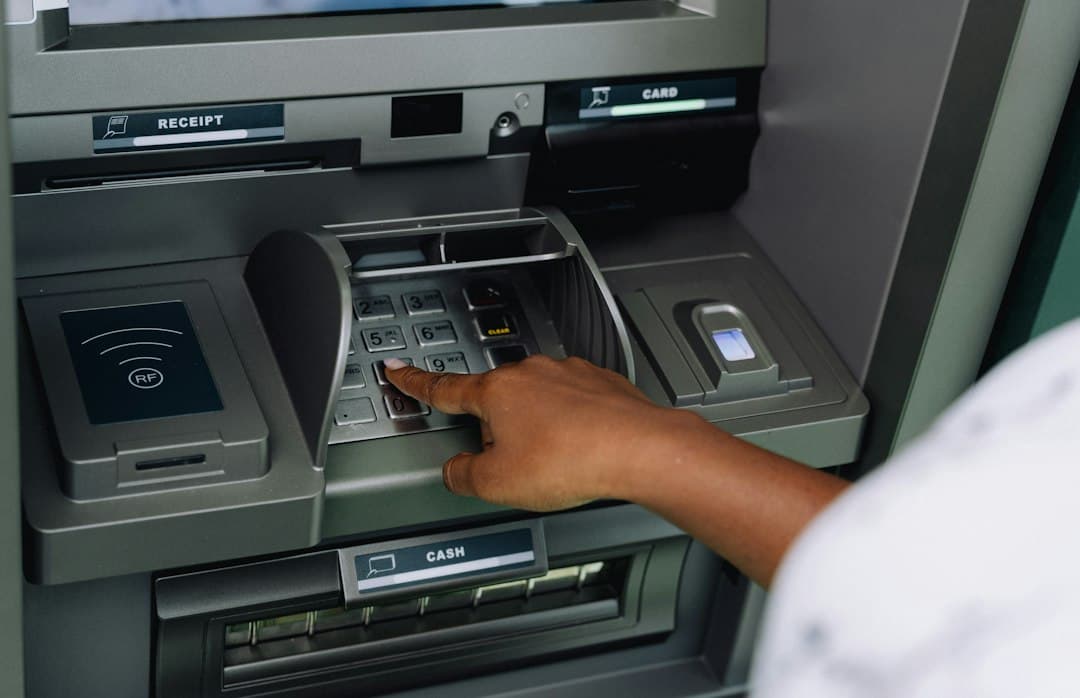
With a foreign card, the withdrawal fees charged by the Romanian bank that owns the ATM are added to any fees your issuing bank charges[4]. Two layers of fees can therefore stack on a single withdrawal.
The maximum withdrawal amount per transaction is generally between 1,500 and 3,000 RON[4]. ATMs accept Visa and Mastercard; American Express is less common[4]. ATMs from the major banks (BCR, BRD, ING, Raiffeisen) are numerous in urban areas[4].
On the payment side, Romania has one of the highest rates of cash use in the European Union, especially in rural areas, at markets and in small towns[5]. Card payments are growing in Bucharest, Cluj and Timișoara, but the cash habit remains strong[5]. Outside the big cities, keep some cash on hand for markets and small shops.
Euro transfers and a local account
Romania participates in the Single Euro Payments Area (SEPA). A euro-denominated transfer between Romania and another SEPA country is processed like a domestic payment, with a standard delay of one business day and fees identical to those of a domestic transfer[6]. Romanian IBANs start with RO[6]. If your counterpart is paid in euros, this channel avoids a currency conversion.
A non-resident, whether an EU national or not, can open an account with Romanian banks (BCR, BRD, ING, Raiffeisen, etc.)[7]. The documents usually required include a valid passport and, for non-EU residents, proof of address or proof of residence status[7]. Online account opening is rare for non-residents[7].
At the European level, a 2019 regulation amends the rules on certain fees for cross-border payments within the Union and on currency conversion charges[8].
Pitfalls, scams and points of vigilance
- Stacked ATM fees: those charged by the Romanian bank that owns the ATM are added to those of your own bank[4].
- The fake bank advisor (vishing): the fraudster poses as a bank employee[9].
- Fake investment sites promising abnormally high returns[9].
- Phishing text messages and emails pretending to come from Romanian banks[9].
- The IBAN scam (transfer fraud)[9].
The National Bank of Romania (BNR) warns against unregulated trading platforms[9].
Our Practical Tips
- Compare the final amount you receive with the ECB euro/leu reference rate, not just the fee displayed[2].
- For a payment to a recipient paid in euros, favor a euro SEPA transfer, processed like a domestic transfer[6].
- Before a withdrawal, check the fees charged by your issuing bank: those of the ATM operator are added on top[4].
- Keep some cash for markets and small shops outside the big cities[5].
This article gives you the essential benchmarks. It does not detail each bank's or exchange service's fee schedule, nor walk you through opening an account step by step: to really settle in, these points require going further.
Sources
- 1.^ abcMira Knowledge — Romania's official currency is the Romanian leu (RON), issued by the National Bank of Romania, headquartered in Bucharest. Verified on 06/11/2026: official source bnr.ro. https://www.bnr.ro/1075-leul-romanesc (accessed June 11, 2026)
- 2.^ abceconomy-finance.ec.europa.eu — Romania and the euro - Economy and Finance - European Commission: “Romania is not yet part of the euro area. The leu has not yet joined the exchange rate mechanism (ERM II).”; “The current reference exchange rate between the euro and the leu can be consulted on the European Central Bank website (updated daily).” https://economy-finance.ec.europa.eu/euro/eu-countries-and-euro/romania-and-euro_en (accessed November 15, 2026)
- 3.^ abagerpres.ro — BNR keeps monetary policy rate at 6.50pct per annum - AGERPRES: “The BNR board decided at its meeting of November 12, 2026 to keep the key policy rate at 6.50% per annum.”; “According to the BNR, opposing influences came from the indirect effects of higher fuel and energy prices, as well as from the higher EUR/RON exchange rate.” https://agerpres.ro/english/2026/11/12/bnr-keeps-monetary-policy-rate-at-6-50pct-per-annum--1612814 (accessed November 15, 2026)
Show 6 more sourcesShow less
- 4.^ abcdefMira Knowledge — For foreign cards, the withdrawal fees charged by the Romanian bank that owns the ATM are added to any fees charged by the issuing bank. Verified on 06/11/2026: official source bnr.ro. https://www.bnr.ro/2644-plati-si-numerar (accessed June 11, 2026)
- 5.^ abcMira Knowledge — Romania has one of the highest rates of cash usage in the EU, especially in rural areas, at markets and in small towns. Verified on 06/11/2026: official source bnr.ro. https://www.bnr.ro/2644-plati-si-numerar (accessed June 11, 2026)
- 6.^ abcMira Knowledge — Euro transfers between Romania and other SEPA countries are processed as domestic payments, within one business day, at the fee of a domestic transfer; Romanian IBANs begin with RO. Verified on 06/11/2026: official source bnr.ro. https://www.bnr.ro/2181-zona-unica-de-plati-in-euro-sepa (accessed June 11, 2026)
- 7.^ abcMira Knowledge — A non-resident, whether an EU national or not, can open an account with Romanian banks. Verified on 06/11/2026: official source bnr.ro. https://www.bnr.ro/2783-index-de-reglementari-bnr (accessed June 11, 2026)
- 8.^op.europa.eu — Regulation (EU) 2019/518 of the European Parliament and of the Council of 19 March 2019 amending Regulation (EC) No 924/2009 as regards certain charges on cross-border payments in the Union and charges for currency conversion (Text with EEA relevance): “Regulation (EU) 2019/518 of the European Parliament and of the Council of 19 March 2019 amending Regulation (EC) No 924/2009 as regards certain charges on cross-border payments in the Union and charges for currency conversion.” https://op.europa.eu/en/publication-detail/-/publication/d3dc1178-51eb-11e9-a8ed-01aa75ed71a1/language-ro (accessed November 15, 2026)
- 9.^ abcdeMira Knowledge — The main financial scams reported in Romania are the fake bank advisor (vishing), fake investment sites with abnormally high returns, phishing by text message or email impersonating Romanian banks, and IBAN scams. Verified on 06/11/2026: official source bnr.ro. https://www.bnr.ro/2172-fraude (accessed June 11, 2026)