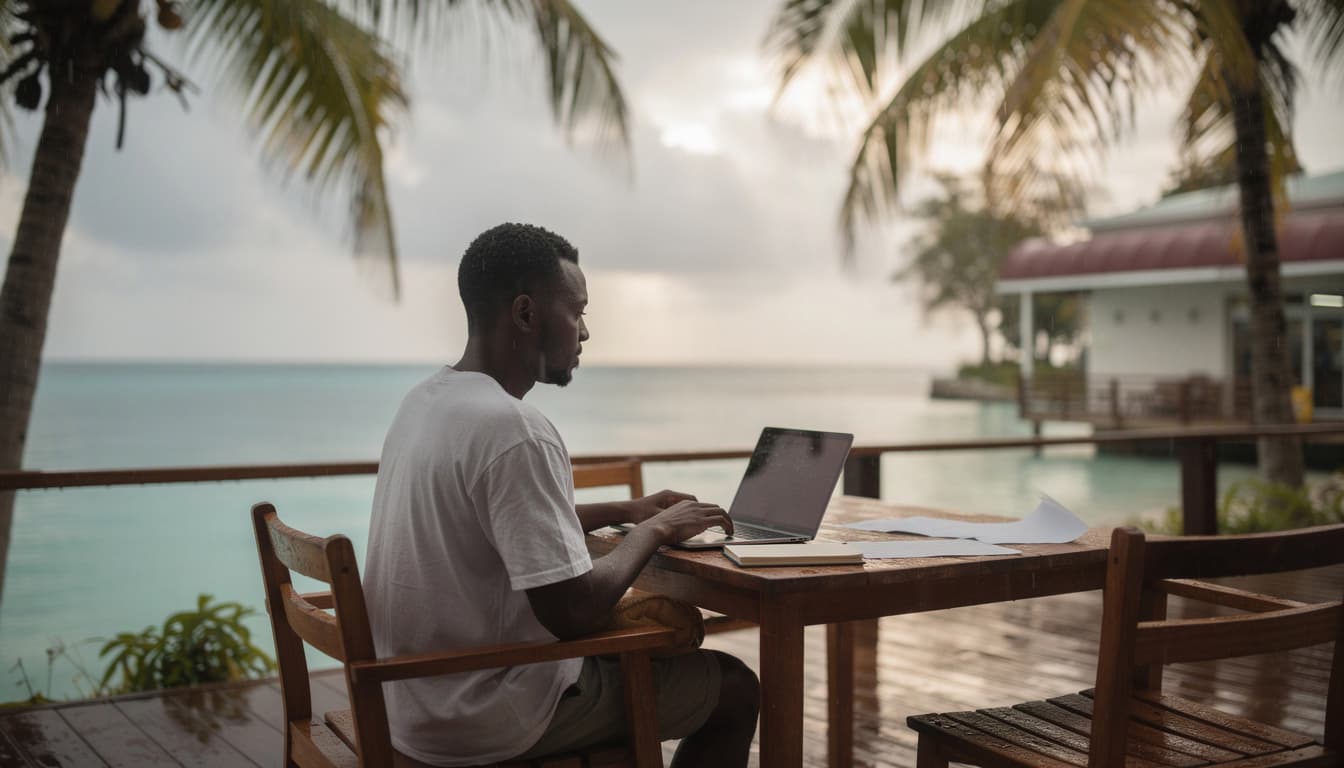
Working in banking or finance from abroad means distinguishing three levels: what the industry practices, what your employer accepts, and what the host country tolerates or requires. This article starts with data on remote work in finance, then reviews short stays, the example of the Spanish remote work visa, and the tax and social protection points to check before you leave.
What the Numbers Show: Remote Work in Finance
In France, INSEE reports that remote work is most common in finance, information and communication, and among managers[1]. Finance is therefore one of the sectors where it is most widespread.
The dominant model is not full-time remote work. Work is essentially hybrid, combining on-site presence with an average of 1.9 remote days per week[1].
The gap between companies is partly explained by agreements: the average number of days actually worked remotely rises with the maximum allowed by the company agreement[1]. These figures describe France: they say nothing about remote work in other countries.

Who Decides: The Right to Remote Work and Employer Approval
Remote work is not a right you activate on your own. It can be formalized individually through an agreement between the employer and the employee[1], which requires the consent of both parties.
In practice, whether you can work remotely depends on what your company provides and on the nature of your role; in banking and finance, check with your employer about the rules specific to your function. Working remotely from the country where you live and working remotely from abroad are two separate requests: the second requires your employer's approval, which does not automatically follow from a home-based remote work agreement.
Working Abroad: Short Stays and the Grey Zone
In some countries, on a short-stay status (visa exemption, tourist visa, temporary visa), public texts neither explicitly authorize nor prohibit remote work for an employer or clients based exclusively abroad; rules vary from country to country.
Cape Verde illustrates this: it is a common grey zone among digital nomads, practiced for short periods[2]. In Madagascar, public texts on the e-visa, visa on arrival and entry visas are just as silent[3].
In Iran, with no visa dedicated to digital nomads, remote work for a foreign employer on a short visitor visa is tolerated in practice but not regulated; international sanctions complicate payments and daily life, and before any plan you should consult official travel advice, and you should consult official travel advice before any plan[4]. Tolerance in fact does not mean a right.
In Cape Verde, the limit is clear: any income-generating activity for a Cape Verdean entity or with local pay requires an appropriate work or residence permit, with a risk of entry refusal[2]. In Madagascar, the same rule targets a Malagasy entity and local pay[3]. In Iran, no paid activity for a local employer is possible without a work permit[4].

Remote Work Visas: The Spanish Example
Some countries have created a dedicated visa. Spain offers one, with specific numerical conditions. The minimum income required in 2026 is 200% of the interprofessional minimum wage (SMI), i.e. €1,221 × 2 = €2,442 per month for the main applicant[5].
- Main applicant: €2,442 per month[5].
- First family member: 75% of the SMI, i.e. €916[5].
- Each additional family member: 25% of the SMI, i.e. €305[5].
This visa does not authorize significant local paid activity, except up to 20% for self-employed workers[6]. Strict proof of means and of foreign-based activity is required[6].

Taxes and Social Security When You Leave
Staying more than 183 days in a country often makes you a tax resident of that country[6]. This rule varies from one country to another, so check it for the country where you plan to live.
If France is involved, all the bilateral tax treaties it has signed can be viewed on the impots.gouv.fr website, under "International," then "International Conventions"[7]. They show how the treaty between your home country and your host country divides taxation.
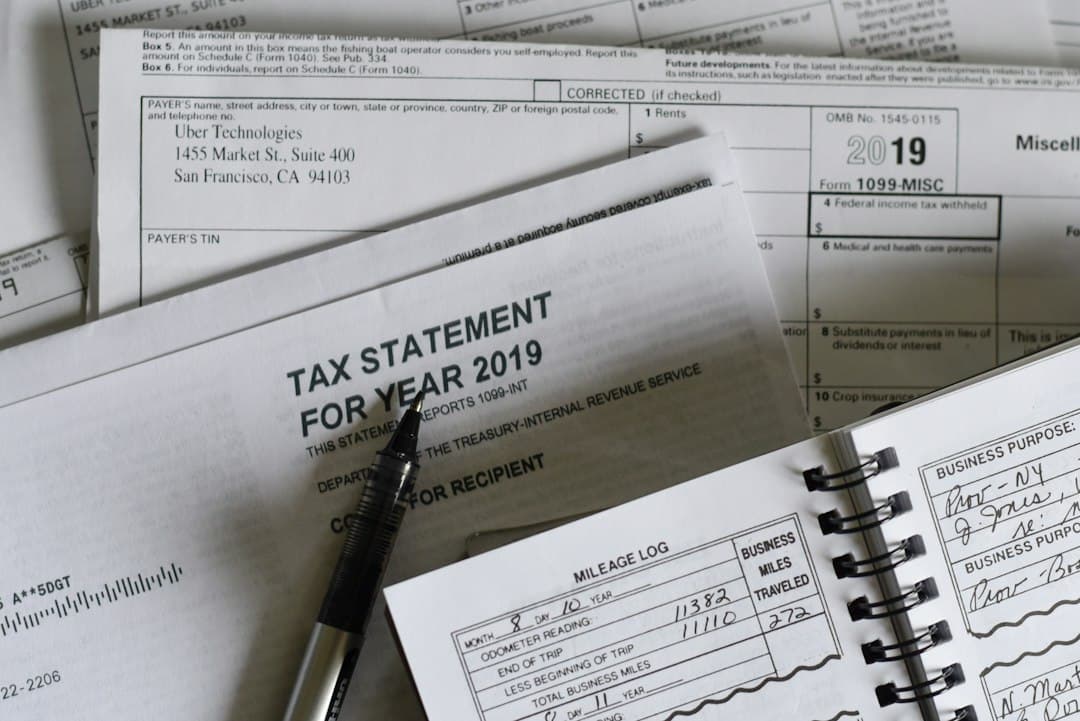
For social security coverage, check your situation with an A1 certificate or equivalent[6]. International social security agreements may also provide for the temporary posting of workers: Argentina, for example, lists the temporary transfer of workers under an international convention among its benefits[8]. In every case, taxes and social security should be settled before you leave, not after.
Points to Watch
- Short-stay gray area: in Cape Verde, paid local work without the appropriate permit can lead to denial of entry[2]. In Iran, remote work on a short-term visitor visa is tolerated in practice but not regulated, international sanctions complicate payments, and you should consult the official travel advice before making any plans[4].
- Remote work visa: approval is not guaranteed, and thresholds and rules change with the annual SMI (minimum wage reference)[6]. The amount of €2,442 applies for 2026[5].
- Required proof: you must strictly demonstrate sufficient financial means and a foreign activity[6].
- Tax residence and social security: beyond 183 days, you are often a tax resident; health coverage should be verified with an A1 or equivalent[6].
Checklist Before You Leave
- Get your employer's written approval to work from abroad, in addition to any remote work agreement you already have.
- Check that your entry status covers the planned duration; if not, see whether the country offers a digital nomad visa.
- If you are targeting Spain, compare your income with the €2,442 monthly threshold and prepare proof of your foreign activity[5][6].
- Review the tax treaty between your home country and your host country[7].
- Confirm your social security coverage (A1 or equivalent)[6].
This article covers the essentials: the details of visa procedures, taxation, and your employer's status require further research before you can truly settle in.
Sources
- 1.^ abcdinsee.fr — Remote Work and On-Site Work: Hybrid Work, Now Established in Companies - Insee Analyses - 105: "Remote work is most common in finance, information and communication, and among managers." "Work organization is essentially hybrid, combining physical presence with an average of 1.9 remote days per week." "The average number of days actually worked remotely rises with the maximum allowed under the company agreement." https://www.insee.fr/fr/statistiques/8379375 (accessed November 9, 2026)
- 2.^ abcMira Knowledge — Remote work for an employer or clients based exclusively abroad is neither explicitly permitted nor prohibited by short-stay visa rules; it is a common gray area, practiced over short periods. Verified on June 8, 2026: official source portalconsular.mnec.gov.cv. https://portalconsular.mnec.gov.cv/fr/vistos (accessed June 8, 2026)
- 3.^ abMira Knowledge — In Madagascar, remote work for an employer or clients based exclusively abroad is neither explicitly permitted nor prohibited by short-stay rules (e-visa, visa on arrival, entry visas) in public texts. Verified on June 9, 2026: official source diplomatie.gov.mg. (accessed June 9, 2026)
Show 5 more sourcesShow less
- 4.^ abcMira Knowledge — In the absence of a dedicated digital nomad visa, remote work for a foreign employer on a short-term visitor visa is tolerated in practice but not regulated. Verified on June 9, 2026: official source evisa.mfa.ir. https://evisa.mfa.ir/ (accessed June 9, 2026)
- 5.^ abcdefMira Knowledge — In 2026, the minimum income required for the Spanish remote work visa is 200% of the SMI, i.e., €2,442 per month for the main applicant, 75% of the SMI (€916) for the first family member, and 25% (€305) for each additional family member. Verified on June 8, 2026: official source exteriores.gob.es. https://www.exteriores.gob.es/Consulados/houston/en/ServiciosConsulares/Paginas/Consular/TELEWORK-Visa-(Digital-Nomad-Visa (accessed June 8, 2026)
- 6.^ abcdefghiMira Knowledge — The remote-work visa does not allow significant paid local activity, except up to 20% for self-employed workers. Verified on 06/08/2026, official source: exteriores.gob.es. (accessed June 8, 2026)
- 7.^ abMira Knowledge — All bilateral tax treaties signed by France are available on the impots.gouv.fr website, under the "International" section, then "International agreements." Verified, official source: impots.gouv.fr. https://www.impots.gouv.fr/particulier/ce-qui-est-impose-en-france
- 8.^Mira Knowledge — Among the benefits of international social security agreements is the temporary transfer of workers under an international convention. Verified, official source: anses.gob.ar. https://www.anses.gob.ar/jubilaciones-y-pensiones/regimenes-jubilatorios/como-obtener-mi-jubilacion/prestaciones-por-convenio-internacional



