A one- to two-week stay in Bali takes preparation before you leave: the entry form, your passport, the travel dates, the area where you will stay, and how you will get around. This article helps you frame these points and spot the classic pitfalls of the island, from currency exchange to the Nyepi holiday. You will learn the order in which to take care of things so that your trip runs smoothly, with no unpleasant surprises.
Before you book: entry formalities
Before you travel, you must complete the All Indonesia Arrival Card, a mandatory digital arrival declaration that covers immigration, customs and health[1]. Do not confuse it with a visa: it does not replace visa requirements[1].
Visa rules and how to apply for them change over time. The information website of the Bali Hotels Association indicates an update to the entry conditions dated September 23, 2025[2]. Check the current situation with the Indonesian immigration authorities before you book.
Flights to Bali: a single international airport
The island has only one international airport: Ngurah Rai (DPS), near Kuta[3]. Whatever your airline or connection, you will land in the same place, in the south of the island, and that is where you will continue to your first stop.
If airspace disruptions occur, some flight times may be affected: the information website of the Bali hotel association advises contacting your airline directly before heading to the airport[2]. Make this a habit whenever the news reports disruptions in the region.
Choosing the right period: weather and rainy season
French authorities recommend, where possible, avoiding sea crossings, especially during the rainy season and tropical storms (January to March)[4]. This is the period during which they recommend avoiding sea crossings where possible[4].
For forecasts, the local reference is the Meteorology, Climatology and Geophysics Agency (BMKG) in Denpasar[1]. Check it a few days before departure, and weigh your chosen period against flight prices and accommodation availability before you book.
Where to stay by area
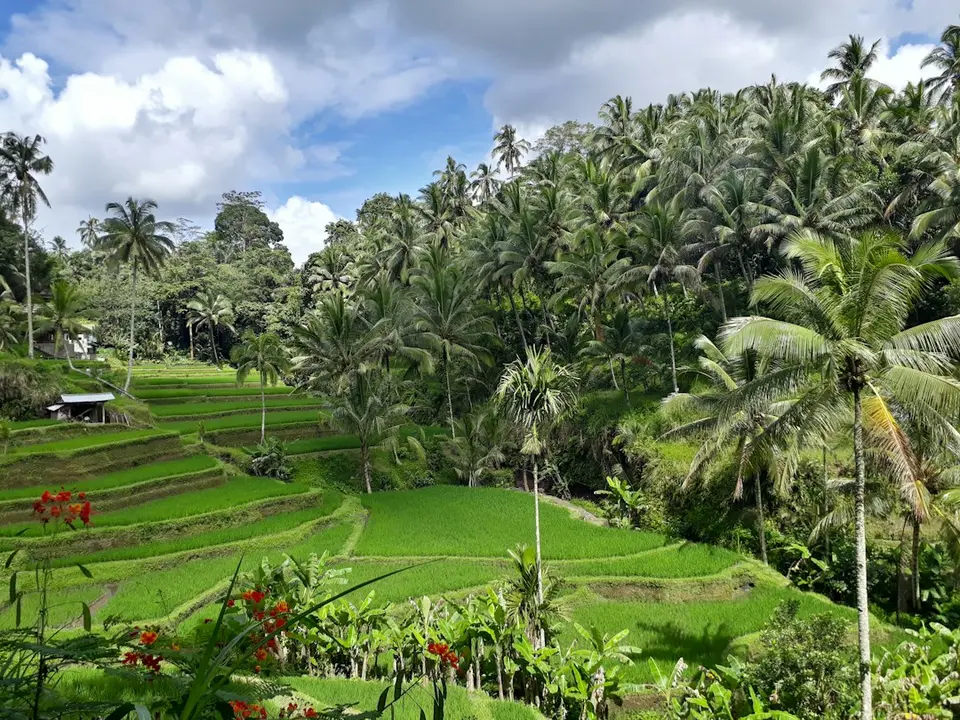
The main areas to compare are Ubud, Seminyak, Canggu, Uluwatu and Nusa Dua[3]. Each has a different atmosphere: rice fields and culture in Ubud, beach life and nightlife in Seminyak, surfing and a relaxed vibe in Canggu and Uluwatu, a quiet stay in Nusa Dua. Decide first on the atmosphere you want, then choose the area.
Before confirming a booking, look at the final price shown once taxes and service fees are added, so you can compare two accommodations on an equal basis.
Planning your itinerary and spreading out your nights
Over one to two weeks, it is best to limit the number of stops: two or three bases are enough, since each change of accommodation costs half a day of travel. For example, combine a beach area with a more inland area such as Ubud, then divide your nights according to how much time you want to spend in each place.
If you plan an excursion to another island, keep in mind that French authorities advise against sea crossings wherever possible during the rainy season and tropical storms (January to March)[4]. They also report insufficient safety conditions on many passenger transport boats[4].
If your stay falls during Nyepi, plan not to travel that day (see the next section).
Getting around on the island
The options vary: scooters, ride-hailing apps such as Grab or Gojek, private drivers, shuttles and speedboats[3]. Taxis are plentiful and inexpensive; it is strongly recommended to choose a reputable company and a vehicle fitted with a meter[4]. You can also book a vehicle with a driver through a mobile app[4].
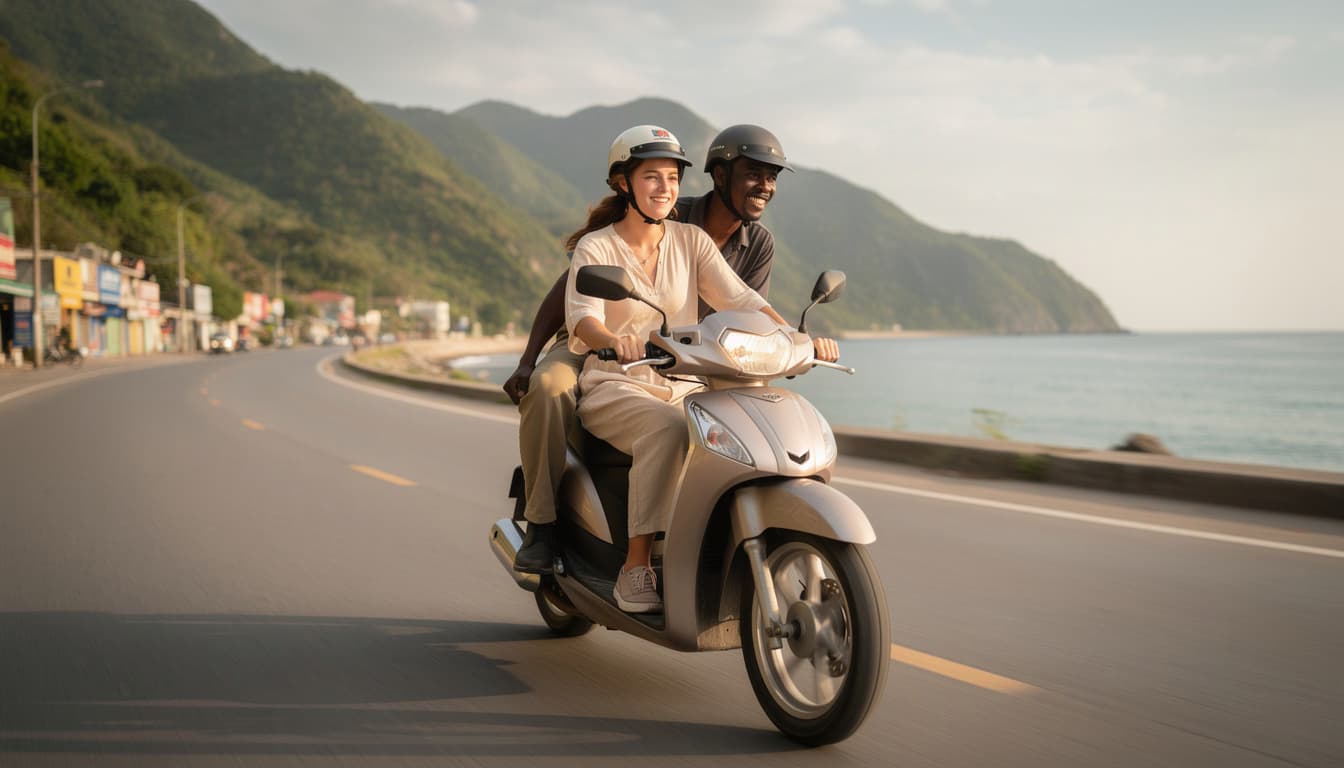
For two-wheelers, French authorities recommend avoiding them[4]. If you ride anyway, you need a valid French driving license accompanied by an International Driving Permit, to be requested in France before departure[4]. Motorized two-wheelers in circulation in Indonesia generally have an engine capacity of 150 cm³, for which an International Driving Permit is mandatory[4].
Pitfalls, Scams, and Points of Caution
- Bank cards: scams have been reported, including at ATMs; the utmost caution is required[4].
- Cash and ATMs: many everyday transactions are made in cash, and ATMs are easy to find in major cities; take your precautions for stays in rural areas or smaller towns[4].
- Exchanging US dollars: most Indonesian banks, travel agencies, and hotels will only exchange US dollars issued since 2003, with a serial number beginning with the letter F or later; damaged bills are refused or discounted[4].
- Nyepi: during this festival in Bali, all movement in public spaces is prohibited, including for visitors; it is best to plan for this day in advance[4]. Non-compliance may result in deportation from the country or, in cases deemed more serious, imprisonment[4].
- Drugs: possession is severely punished, starting from 0.2 g, and carries prison sentences of several months to several years, along with a very heavy fine[4]. Checks can take place at any time and in any location, including at home if reported[4].
- Dress: appropriate attire is recommended; these rules are interpreted less strictly in Bali, except where religious practices or ceremonies are involved[4]. At temples, cover up and respect ceremonies and offerings[3].
- Domestic flights: some local airlines remain a safety concern; prioritize those with the best-established reputations[4].
Steps, in Order
- Choose your timing with the rainy season in mind, then book your flight to Ngurah Rai.
- Check visa and entry requirements with Indonesian immigration authorities, and verify that your passport is valid.
- Complete the All Indonesia Arrival Card before arrival, making sure you are using an official website.
- Choose two or three areas to stay in and compare the final price of each accommodation.
- If you plan to ride a two-wheeler, apply for an International Driving Permit in France before departure.
- Plan your means of payment: cash, and checking your dollar bills.
- Check whether your stay overlaps with Nyepi and plan for that day on site.
This article covers the essentials for framing a trip. To settle in for longer, you will need to go further into the details of visas and their extension, a line-by-line budget, and the precise choice of neighborhood.
Sources
- 1.^ abcwelcomebacktobali.com — All Indonesia Arrival Card | Welcome Back To Bali: “The new All Indonesia Arrival Card is not a visa. It is a mandatory digital entry declaration (immigration, customs, health) that does not replace visa requirements.”; “Meteorology, Climatology and Geophysics Agency (BBMKG) in Denpasar.” https://www.welcomebacktobali.com/blog/official-sites-useful-links (accessed November 24, 2026)
- 2.^ abwelcomebacktobali.com — Bali's one-stop trusted information source: “Last updated on visa conditions and how to apply to enter Bali, as of September 23, 2025.”; “Travelers planning to fly to or from Bali are advised to check directly with their airline before heading to the airport, as current airspace conditions are disrupting some flight schedules.” https://www.welcomebacktobali.com/ (accessed November 24, 2026)
- 3.^ abcdvisitbali.com — Bali Travel Guide — Plan Your Trip to Bali, Indonesia: “Ngurah Rai International (DPS), near Kuta: the only international airport.”; “Ubud, Seminyak, Canggu, Uluwatu, Nusa Dua and all major areas compared.”; “Scooters, Grab/Gojek, private drivers, shuttles and fast boats.” https://visitbali.com/travel-guide (accessed November 24, 2026)
- 4.^ abcdefghijklmnopqrdiplomatie.gouv.fr — Indonesia - Useful Information | France Diplomatie: “It is recommended, where possible, to avoid this mode of transport, especially during the rainy season and tropical storms (January–March).”; “These accidents highlight the insufficient safety conditions of this mode of transport in Indonesia: many buildings are dilapidated, and some companies routinely accept more passengers than the recommended load, etc.”; “For taxi trips (numerous and inexpensive), it is strongly recommended to use reputable companies and to choose vehicles equipped with a meter.” https://www.diplomatie.gouv.fr/fr/information-par-pays/indonesie/conseils-aux-voyageurs-informations-utiles (accessed November 24, 2026)