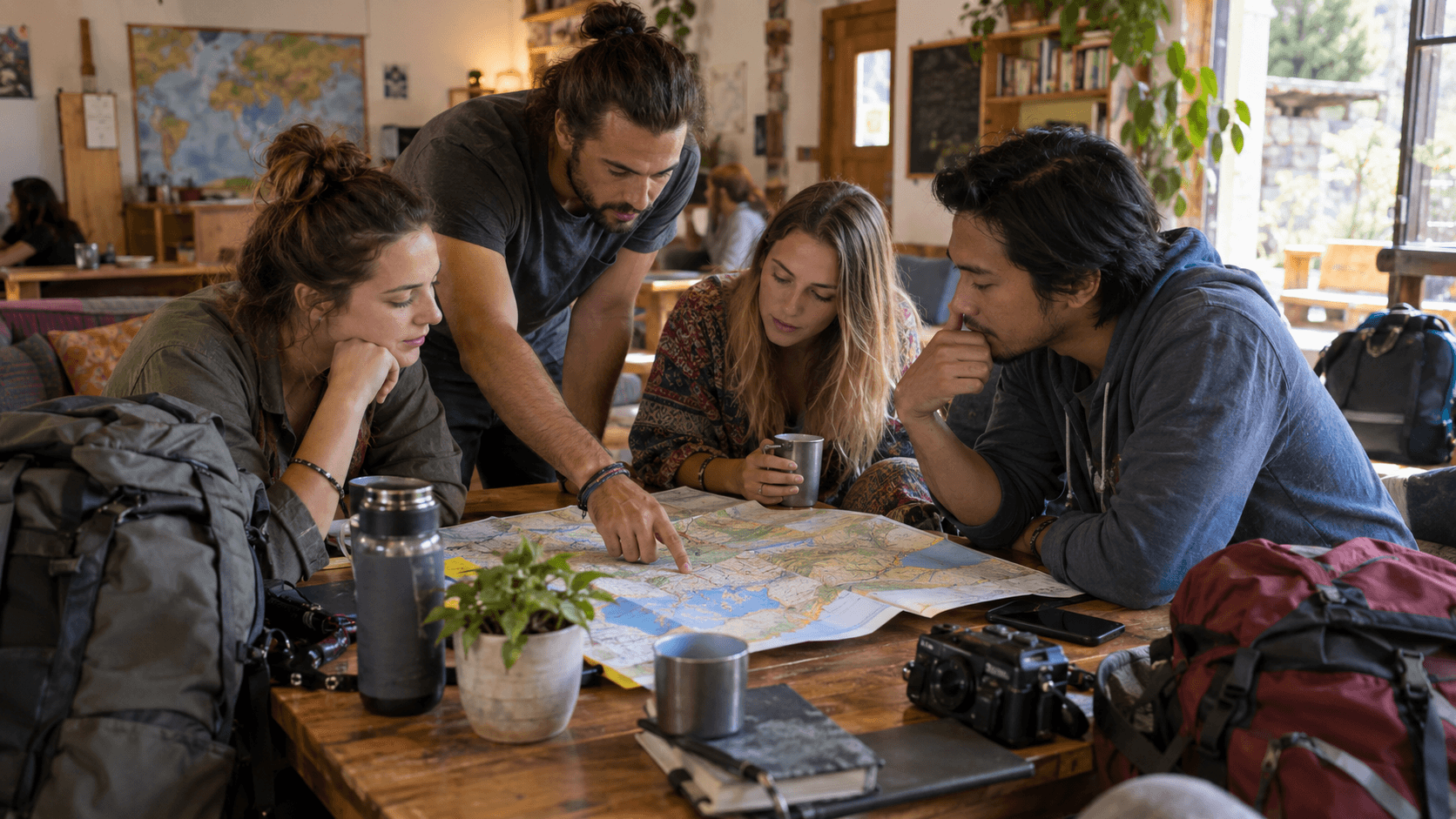
Arriving alone in a city means having to rebuild a social circle from scratch. This article reviews what surveys say about meeting people while traveling, the activities that bring people together (classes, volunteering, hostels, platforms), how to avoid limiting yourself to the expat community, and the points to watch out for. It stays cautious: the figures describe averages, not guarantees.
What the Surveys Say: Travel Makes Connection Easier, but Not for Everyone
A study by the travel platform WeRoad, based on 5,000 people in Spain, Italy, France, Germany, and the United Kingdom, concludes that 45% of respondents believe traveling is the best way to make new friends, rather than work or university[1]. Eight in ten respondents say they are more open to others when they travel[1], and 66% report having formed a genuine bond with another person during a trip[1].
For expats, the InterNations Expat Insider 2025 survey draws on more than 10,000 expats from 172 nationalities[2]. Results reported by one media outlet vary widely from country to country: in one of the top-ranked countries, 58% of expats say making local friends has been effortless; in Norway, 67% describe it as a major challenge[3].
These figures are self-reported averages, published by commercial players (a travel platform, an expat network). They indicate trends. They say nothing about what you will experience in your city, and a gap between countries says nothing about your personal case.
Clubs, Classes, and Volunteering: Bet on Repetition Rather Than Nightlife Venues
Each activity creates its own opportunities for contact.
- Any class: you can make friends among fellow students and travelers[4].
- Volunteering: it lets you immerse yourself in local culture and build ties with people who care deeply about a cause[4].
- The same café or restaurant: if you stay in a city for a while and keep coming back, the staff eventually recognize you, which opens the door to conversation and local tips[4].
A concrete example: if you stay several months in a city, a weekly class puts you in front of the same people week after week, something a one-off evening out does not.

Apps, Meetup, InterNations: What They Really Offer
Almost everyone arriving in a new city struggles to meet new people, and organizations like Meetup and InterNations emerged to address this[4]. Expat communities now combine online formats with in-person meetups[5].
In terms of actual usage, only 9% of WeRoad survey respondents say they use dating apps and social networks to socialize, while 72% want more offline social experiences and face-to-face moments of connection[1]. In other words, these respondents mostly say they want in-person meetings, and rarely rely on apps to socialize.
Check each service's terms before you sign up.
Language Exchanges, Hostels, and Accommodation That Encourage Connection
If you stay more than two weeks in a country, language classes are a way to immerse yourself, learn expressions useful in daily life, and meet other students[4]. If you are considering a language exchange service, check each service's rules on its own website.
Hostels, often cheaper than hotels, put you in touch with many open-minded travelers, through shared moments like breakfast in the common room or group activities[4]. Guided tours and group outings also create natural opportunities to talk, including exploring the neighborhood together[4].
Beyond the Expat Community: Tapping Your Network and Local Residents
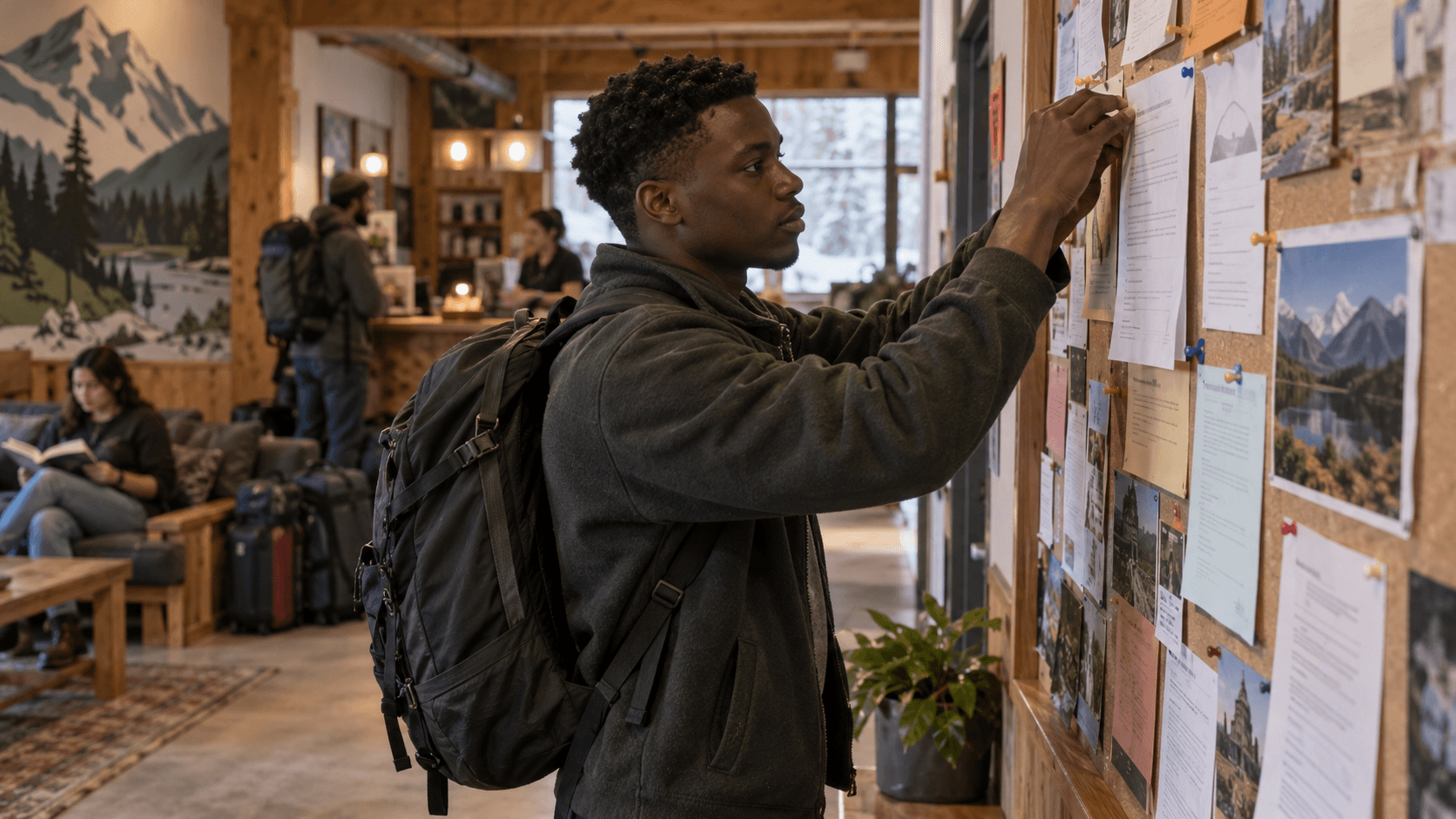
A first lever is your own network: writing to friends, or friends of friends, who have recently visited the destination can get you tips and an introduction to local friends, over a coffee or a guided tour[4].
A second is not to rely only on the expat community. It offers emotional and practical support: its members share local customs and recommend reliable service providers[5]. But locals still need to be met elsewhere, and the difficulty varies: in Germany, according to the expats surveyed, 32% say they do not feel welcome, and many cite very tight-knit social circles as an obstacle[3]. For example, a language course or local volunteer work puts you in contact with residents, which an event reserved for expats does not.
Keeping Friendships Alive as They Evolve Over Time
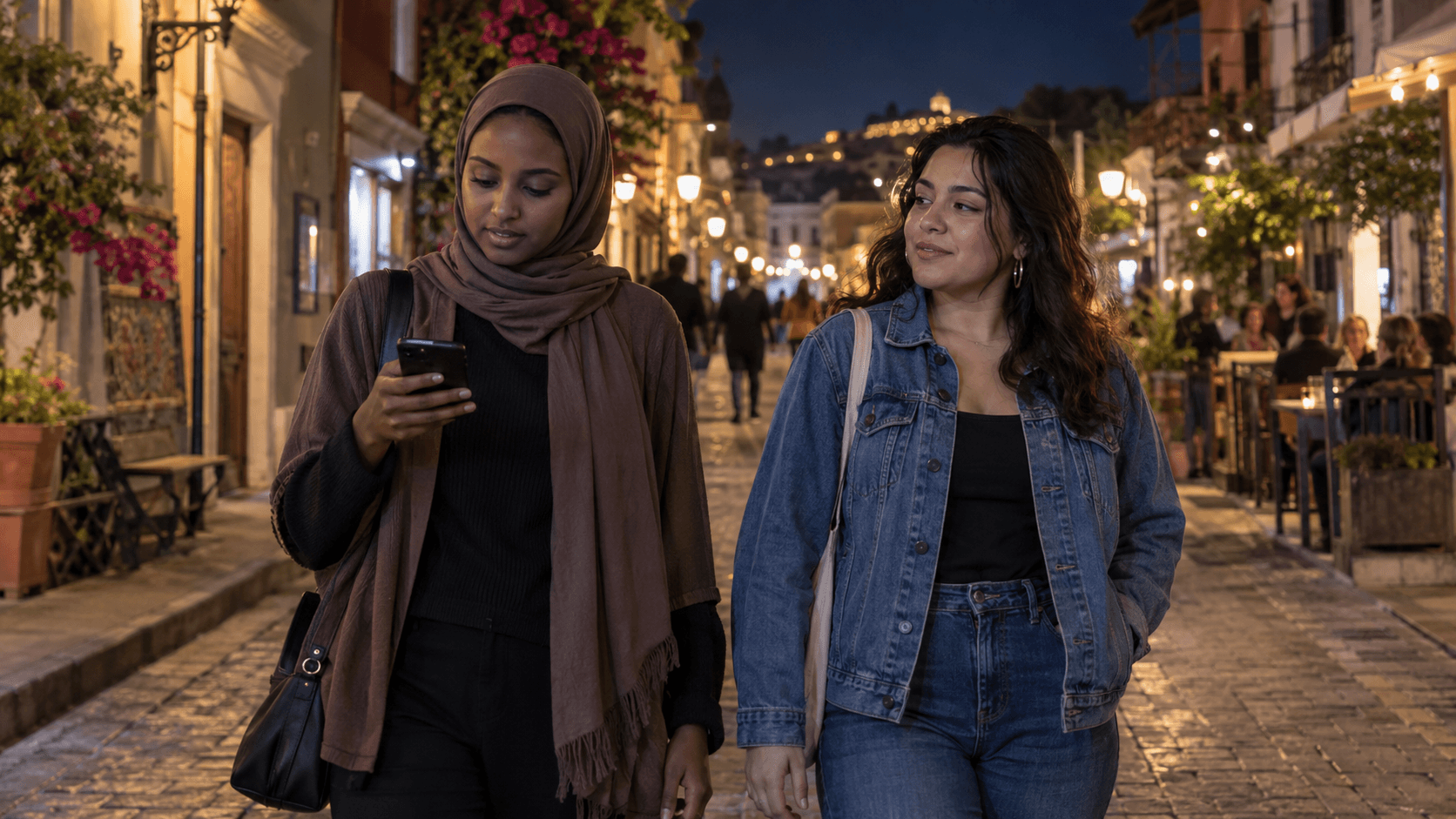
Bonds formed while traveling are common: 66% of respondents in the WeRoad study say they have formed an authentic connection with another person while traveling[1].
Pitfalls, Scams, and Points of Caution
We have not found any reliable source documenting a specific scam linked to meetups, friendship platforms, language exchanges, or homestays. We therefore do not describe any as an established fact. For any payment, fee, or cancellation policy, read the terms of the service in question and, for a consumer question, check an official source such as the DGCCRF.
- In case of a serious problem, you can call the Centre de crise et de soutien emergency line at +33 1 53 59 11 00 (non-premium call)[6].
- If your passport or identity card is lost or stolen, first report it to the local police; the French embassy or consulate can then issue a laissez-passer or a temporary passport, a paid procedure that takes time[6].
Also keep in mind the scope of the figures cited above: they come from self-reported surveys published by commercial platforms or reported by a media outlet[1][2][3], so they are averages not to be turned into a general rule.
Checklist for Your First Few Weeks
- Consider favoring an activity that recurs every week (a class, volunteering) rather than piling up one-off outings: it's an approach to test, not a proven result.
- Return to the same places so you become a familiar face.
- Use platforms to find in-person meetups, and read the terms of each one before signing up.
- Let your circle know: a friend of a friend on site can open doors.
- Complement the expat community with contacts among local residents.
- Note the Centre de crise number and keep digital copies of your identity documents.
Sources
- 1.^ abcdeffr.euronews.com — Traveling, one of the best ways to make new friends | Euronews: “According to this data, 45% believe that traveling is the best way to make new friends, rather than in traditional places like work or university.”; “Eight in ten respondents say they feel more receptive to others when traveling, while 58% consider making new acquaintances an essential part of the experience.”; “And this attitude pays off: 66% say they have formed an authentic connection with another person during a trip.” https://fr.euronews.com/voyages/2026/06/29/voyager-lun-des-meilleurs-moyens-de-se-faire-de-nouveaux-amis (accessed October 13, 2026)
- 2.^ abcontent.internations.org — Expat Insider 2025 - InterNations: “This year, more than 10,000 expats representing 172 nationalities told us about their lives abroad in one of the largest surveys of its kind.” https://content.internations.org/expat-insider/2025 (accessed October 13, 2026)
- 3.^ abctravelandtourworld.com — Why Are Costa Rica, Mexico, and the Philippines Considered the Best for Expats, While Kuwait and Norway Present Social Hurdles? - Travel And Tour World : “58% of expats said making local friends was effortless, and many cited the genuine kindness of locals as a key factor in their social success.” ; “Norway also ranks poorly: 67% of expats say making local friends is a significant challenge.” ; “Germany, another European country, ranks second-to-last on the list: 32% of expats say they do not feel welcome. Many cite Germans’ tight-knit social circles as an obstacle to forming meaningful connections.” https://www.travelandtourworld.com/news/article/why-are-costa-rica-mexico-and-the-philippines-considered-the-best-for-expats-while-kuwait-and-norway-present-social-hurdles/ (accessed October 13, 2026)
Show 3 more sourcesShow less
- 4.^ abcdefghef.fr — 10 conseils pour se faire des amis en voyage ‹ EF GO Blog | EF Blog France : “Whichever course you choose, you’ll be able to make friends among fellow students and travelers – it’s like school, but a little more fun, since you’re abroad.” ; “Not only will this help you improve the world and show your gratitude to your adopted community, it will also immerse you in the local culture and connect you with people who care deeply about a great cause.” ; “If you stay in one city for a while and keep going to the same café or restaurant, the staff will eventually recognize you. That’s a great opportunity to start a conversation or get tips on what to do and see.” https://www.ef.fr/blog/language/10-conseils-pour-se-faire-des-amis-en-voyage/ (accessed October 13, 2026)
- 5.^ abfreightamigo.com — Expat Communities: Definition and Relocation Guide 2026 : “Members share information about local customs, recommend reliable service providers, and offer emotional support during difficult transitions.” ; “It is a dynamic support system that evolves with global migration, with hybrid models that blend virtual connections and in-person meetups.” https://www.freightamigo.com/en/blog/international-relocation/expat-communities-what-is-an-expat-community-and-how-to-thrive-abroad-with-expert-logistics-support/ (accessed October 13, 2026)
- 6.^ abdiplomatie.gouv.fr — Voyage | France Diplomatie : “In case of a serious problem, you can also call the emergency line of the Crisis and Support Center at: +33 1.53.59.11.00 (no surcharge).” ; “If your passport or national identity card is lost or stolen while abroad, you must first report it to the local police. The French embassy or consulate can then issue a laissez-passer or a temporary passport. Note that this procedure is fee-based and takes time.” ; “Keep copies of your identity documents on your service-public.fr account. This portal lets you create, in just a few clicks, a free and confidential personal storage space, accessible online 24/7.” https://www.diplomatie.gouv.fr/en/services/faq/voyage (accessed October 13, 2026)