In Brazil, distances are long and surprises are common: bad weather, delays, pickpockets, lost luggage. This article helps you choose the right mode of transport for the distance, understand your rights with an airline or a road carrier, and keep some flexibility with a plan B. For real-time traffic updates, always check with the airline, the metro operator, or the relevant road authority.
Choosing your mode of transport based on distance
For medium and long distances, French authorities recommend choosing air travel over road travel: air transport offers satisfactory safety conditions[1]. They also advise against traveling at night or during bad weather[2].
On the road, the network is decent near major cities, but many unpaved stretches are dangerous during the rainy season[1]. Away from the main highways, state roads and municipal roads in rural areas are often poorly maintained[3].
In the Amazon, river transport is an option for getting around the country. Accidents happen regularly, including on passenger routes, so choose licensed operators[1].
Metro and buses in the city: leave some margin
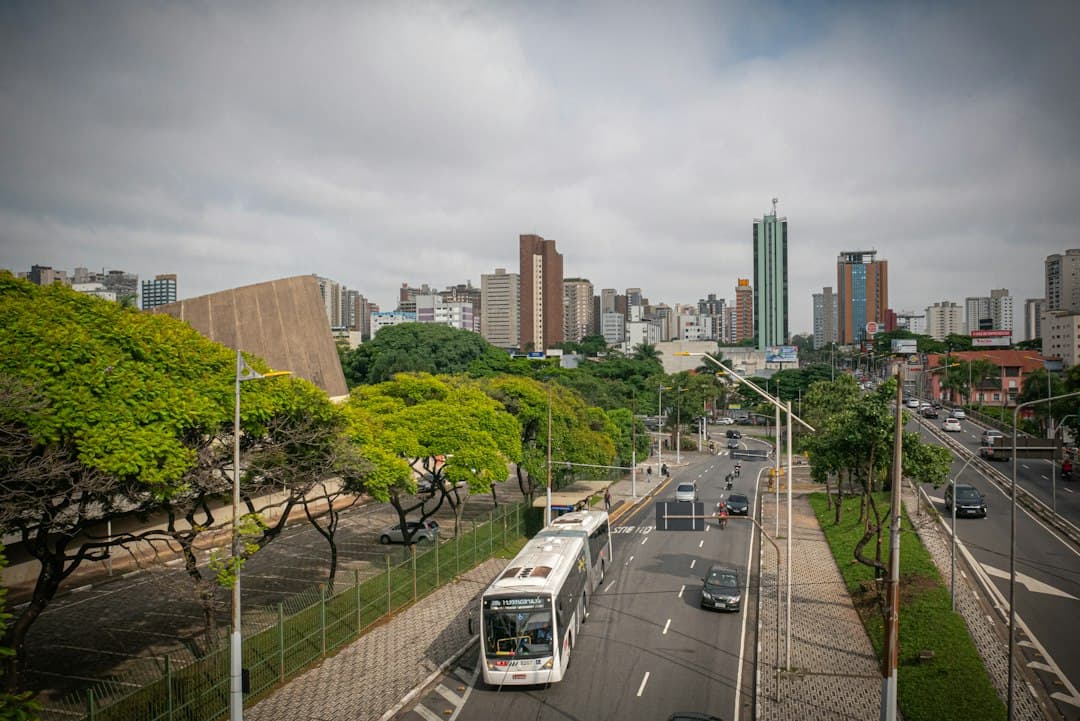
Public transport can be very crowded at rush hour, and pickpocketing is common in bus and metro stations[3]. Allow extra time for your journeys and keep your belongings in front of you. At night, Canadian authorities recommend extreme caution on public transport[3].
The bus network is more extensive than the metro, but less secure[2]. In the Northeast, French authorities also report that drivers often drive dangerously (excessive speed, sudden stops and starts, many accidents)[2]. In Recife, they write that the metro should be "avoided" because of the frequent thefts and assaults committed there[2].
Taxis and ride-hailing: check before you get in
- Registered taxis can be recognized by their red license plates and have a meter that sets the legal fare[3].
- If you use a ride-hailing or carpooling app, check the driver's identity and the license plate before getting into the car[3].
- Shopping centers and airports often have their own registered taxis[3].
Flights: buffers, delays, and cancellations
Delays, cancellations, and interruptions can happen anywhere in the world: technical issues, weather, air traffic[4]. In Brazil, some airports shut down during bad weather, such as Santos Dumont in Rio de Janeiro[1]. If your flight departs from such an airport, build some flexibility into your schedule.
Brazil's civil aviation agency (ANAC) sets out what airlines must do. Delays, cancellations, and interruptions must be communicated immediately, and airlines must keep passengers informed every 30 minutes of the scheduled departure time for delayed flights[4]. Material assistance begins at a 1-hour delay, including a means of communication (internet, phone, etc.)[4].
After a 4-hour delay, or in the event of a cancellation or service interruption, the airline must offer you a choice: rebooking on another flight, a full refund, or rebooking by another mode of transport (a bus, for example)[4]. Rebooking is free and must take place at the earliest opportunity, on your airline or another one[4].
In case of denied boarding, if no volunteers come forward after negotiation, the airline must immediately pay each affected passenger compensation of 250 SDR for a domestic flight or 500 SDR for an international flight[4]. The SDR (special drawing right) is a unit of the International Monetary Fund whose value changes every day; its conversion into the national currency is published on the website of the Central Bank of Brazil[4]. The airline must also offer rebooking, a full refund, or another mode of transport[4].
Baggage: limits, losses, and claims
You are entitled to one carry-on bag of up to 10 kg at no extra charge. The airline may, however, set limits on height, width, and length, and excess weight or dimensions may be charged[5]. Weigh and measure your bags at home to avoid unpleasant surprises at the airport, and label each one with your name, address, and contact details[6].
Avoid putting valuables in the hold (jewelry, cash, electronic devices): ideally, keep them in your bag or backpack under the seat. If you still need to check valuables, you can declare their value to the airline at check-in; in case of theft or loss, the airline must then compensate you based on the declared value[5].
If a bag is lost or does not arrive, notify the airline as soon as you notice, preferably in the arrivals hall[6]. To make a claim, you must present the checked-baggage receipt[5]. A bag may be considered lost for up to 7 days (domestic flights) or 21 days (international flights); after that period, the airline must compensate you within 7 days[6]. If you are far from home, you can also request reimbursement of your emergency expenses while you are without your belongings; the airline must pay within 7 days of receiving the supporting documents[5].
Intercity buses: passenger rights and procedures
Before you leave, check the carrier, the date, the departure time, the route, and the boarding and drop-off points, and keep your ticket or booking information as well as the contact details of the person in charge of transport[7].
When departure is more than one hour late compared to the scheduled time on your ticket, ANTT regulations provide several options. You can exchange your ticket free of charge for an equivalent service with the same carrier, if the new departure takes place within three hours of the original schedule, or obtain, at the carrier's expense, a new ticket with another carrier under the same conditions. You can also request a full and immediate refund of your ticket[8].
If you choose not to continue your trip, you are entitled to an immediate refund of the ticket amount[8].
As for luggage, the free allowance for checked bags is 30 kg in total, with a maximum volume of 300 cubic decimeters and a maximum dimension of one meter per piece, at no charge[8]. Keep the checked-baggage receipt[7].
Scams, traps, and points to watch out for
- Snatch theft: most occur when people are taking photos or videos, or when ordering a ride-hailing car or taxi. Take your phone out as little as possible, or do so in a safe place (a shop, a restaurant)[2].
- GPS: navigation systems do not account for route safety and may direct you toward risky areas[2]. Tourists have been killed after accidentally entering certain neighborhoods on foot or while driving by following GPS directions[3].
- Express kidnappings: criminals may abduct a victim for several hours and force them to withdraw cash from an ATM or make transfers through their mobile apps[3]. To secure transactions, Brazil's Central Bank has set a 1,000 reais (about 180 euros) limit during the most criminal time window, from 8 pm to 6 am[2].
- Bank cards: fraud, including card cloning, is common; always keep your card in sight[2].
- Last day at the beach: many thefts are reported involving tourists who go to the beach one last time with their luggage before catching their flight[2].
- Motorcycle taxis: their use is not recommended due to the increased risk of accidents. If you take one, book it through a ride-hailing app rather than hailing it on the street, and check that the license plate matches the one shown in the app[2].
Plan B and recourse: who to contact
Before you leave, make sure you are properly insured: French authorities consider this essential for travel to Brazil[1].
- Road accident: it is advisable to file a police report (a "boletim de ocorrência") at the nearest police station within 48 hours[1].
- Dispute with an airline: report the problem to the airline, then contact ANAC at 163 (toll-free from anywhere in the country, every day from 8 am to 8 pm)[6].
- Bus: in case of delay or incident, notify the carrier and keep your baggage receipt, your ticket, and the boarding record; contact ANTT if in doubt[7].
These guidelines cover the essentials to help you get around without unpleasant surprises. They do not detail the fares and rules specific to each city's metro, nor airline assistance item by item: for these points, contact the operator or the airline concerned directly.
Sources
- 1.^ abcdefdiplomatie.gouv.fr — Brazil - Practical Information | France Diplomatie: “For long and medium distances, air transport should be preferred over ground transport. It offers satisfactory safety conditions.”; “The road network is adequate around major cities, but many unpaved stretches are dangerous during the rainy season.”; “River transport can be an option for travelling within Brazil, particularly in the Amazon region. Accidents occur regularly, including on passenger transport routes. Approved operators should be preferred.” https://www.diplomatie.gouv.fr/fr/information-par-pays/bresil/conseils-aux-voyageurs-informations-utiles (accessed November 8, 2026)
- 2.^ abcdefghijdiplomatie.gouv.fr — Brazil - Security | France Diplomatie: “Therefore, avoid travelling at night or during bad weather, and prefer air transport for long distances.”; “The bus network is more extensive, but less secure.”; “Buses present a similar risk, compounded by often dangerous driving by drivers (excessive speed, sudden stops and starts, numerous recorded accidents).” https://www.diplomatie.gouv.fr/fr/information-par-pays/bresil/conseils-aux-voyageurs-securite (accessed November 8, 2026)
- 3.^ abcdefghvoyage.gc.ca — Travel advice for Brazil: “Regional roads are generally adequate, but state and municipal roads in rural areas are often poorly maintained.”; “Public transit can be very crowded during rush hour, and pickpocketing is common at bus and metro stations.”; “Be extremely cautious when using public transit at night.” https://voyage.gc.ca/destinations/bresil (accessed November 8, 2026)
Show 5 more sourcesShow less
- 4.^ abcdefghgov.br — Flight change, delay and cancellation — National Civil Aviation Agency (Anac): “Delays, cancellations and flight interruptions are situations that can occur in air transport anywhere in the world, for several reasons: technical problems, weather, air traffic, among others.”; “Delays, cancellations and service interruptions must be reported immediately by airlines, which must keep passengers informed every 30 minutes of the scheduled departure time of delayed flights.”; “From a one-hour delay onward: means of communication (internet, telephone, etc.).” https://www.gov.br/anac/en/topics/passengers/flight-change-delay-and-cancellation (accessed November 8, 2026)
- 5.^ abcdgov.br — Baggage — National Civil Aviation Agency (Anac): “Passengers have the right to carry up to 10 kg of carry-on baggage at no additional cost. The airline may set height, width and length limits. If carry-on baggage exceeds 10 kg or the dimensions set by the carrier, excess baggage fees may apply.”; “If the passenger wishes to transport valuables in the hold, they may declare their value to the airline at check-in. The airline may then inspect the contents of the bags and charge a surcharge based on the declared value. In case of theft or loss, the airline must compensate the passenger according to the declared value.”; “To file a claim, you must present the baggage check-in receipt.” https://www.gov.br/anac/pt-br/assuntos/passageiros/bagagem (accessed November 8, 2026)
- 6.^ abcdgov.br — Baggage — National Civil Aviation Agency (Anac): “Weigh and measure your bags at home to avoid surprises and fees at the airport.”; “Label your bags: include your name, address and contact details on every bag so they can be easily identified.”; “Contact the airline to report the problem as soon as you notice it, preferably in the arrivals hall.” https://www.gov.br/anac/en/topics/passengers/baggage (accessed November 8, 2026)
- 7.^ abcgov.br — Travelers — National Land Transportation Agency (ANTT): “Check the carrier, the date, the schedule, the route, and the boarding and drop-off points.”; “Inform the carrier of what happened and keep your baggage receipt, ticket and handling record.”; “Keep your ticket or booking information and the contact details of the transport provider.” https://www.gov.br/antt/pt-br/assuntos/passageiros/passageiros-2026/viajantes (accessed November 8, 2026)
- 8.^ abcgov.br — Passenger Rights and Duties — National Land Transportation Agency (ANTT): “In case of departure more than one hour later than the time shown on the ticket, or in the situations provided for in items III and V of Article 178 of ANTT Resolution No. 6,033/2023, the passenger is entitled to: ”; “Replace the ticket, at no additional cost, with another ticket for an equivalent service with the same carrier, in the same or a higher seat class, provided the new trip takes place within three hours of the originally scheduled time.”; “Acquire, at the carrier's expense, a new ticket for an equivalent service, in the same or a higher seat class, from another carrier, provided the new trip takes place within three hours of the originally scheduled time.” https://www.gov.br/antt/pt-br/assuntos/passageiros/direitos-e-deveres-dos-passageiros (accessed November 8, 2026)