In Brazil, a high benchmark interest rate, inflation to keep an eye on, and a floating currency all weigh on the budget of anyone living on income earned in a foreign currency. This article helps you read official indicators without taking them as promises, understand what high rates change for you, and exchange, withdraw, and pay in reais while knowing the rules and the points to watch.
What uncertainty concretely changes for a budget in Brazil
From the standpoint of your budget, the Brazilian context comes down to three words: slowing growth, inflation to watch, and high interest rates.
On the activity side, growth slowed to 2.3% in 2025, after 3.4% in 2024, and it is expected to keep decelerating in 2026, to 1.6-1.8%[1]. The IMF, for its part, projects growth of 2.4% in 2026[2]: the institutions do not agree, and these figures are orders of magnitude rather than promises.
On the price side, inflation fell back to 4.26% at the end of 2025, within the target range of 3% +/- 1.5%[1]. The IMF nonetheless expects it to rise again in the short term before converging on the 3% target by mid-2028[3].
On the rate side, the monetary policy committee of the Central Bank of Brazil decided to keep the Selic benchmark rate at 13.75% at its meeting of November 3 and 4, 2026[4]. This pause comes against a backdrop of deteriorating inflation expectations and uncertainty about the economic and fiscal outlook[4].
Projections for the benchmark rate vary across institutions. Markets anticipate a rate of 12.25% by the end of 2026[1], while the IMF's tables show a projection of 9.3% for the end of 2026[2]. For your budget, the consequence is simple: do not build it on a single scenario.
The real and your foreign-currency income: why you should plan a margin
If you are paid in euros or dollars and spend in reais, your expenses depend on the rate at which you convert. Brazil operates a flexible exchange rate regime, which the IMF, together with adequate reserves, counts among the country's shock absorbers[2]. Flexible means the rate moves: the value in reais of one month's salary can differ from that of the following month.
Among the downside risks to the country's outlook, the IMF cites an escalation of geopolitical tensions, stronger inflation, tighter financial conditions, weaker global demand, trade tensions, and a fiscal effort weaker than expected[2]. All of these factors make the future uncertain, without making it possible to predict the direction of the real.
In practical terms, two habits help:
- calculate your monthly budget using a cautious conversion rate, less favorable than the rate of the day, rather than the current rate;
- keep a foreign-currency cushion to absorb a month when the real appreciates or an unexpected expense comes up.
High interest rates: what they change for credit and savings
The Selic benchmark rate was raised to 15% between June 2025 and March 2026, and its effects continue to weigh on credit, consumption, and investment[1]. It was then lowered to 14.75% in March 2026[1], and set at 13.75% in November 2026[4].
When it was lowered to 14.75% in March 2026, the rate still exceeded 10% in real terms, one of the highest levels in the world[1]. For a resident, a high benchmark rate means local credit is expensive. This tension also shows up in the numbers: household consumption grew by only 1.3% in 2025, slowed by restrictive monetary policy[1]. The IMF, moreover, calls for continued vigilance regarding household credit risks[3].
Another contextual fact: with rates rising, the cost of Brazil's public debt reached 7.9% of GDP in 2025[1].
Converting, exchanging, and moving your money
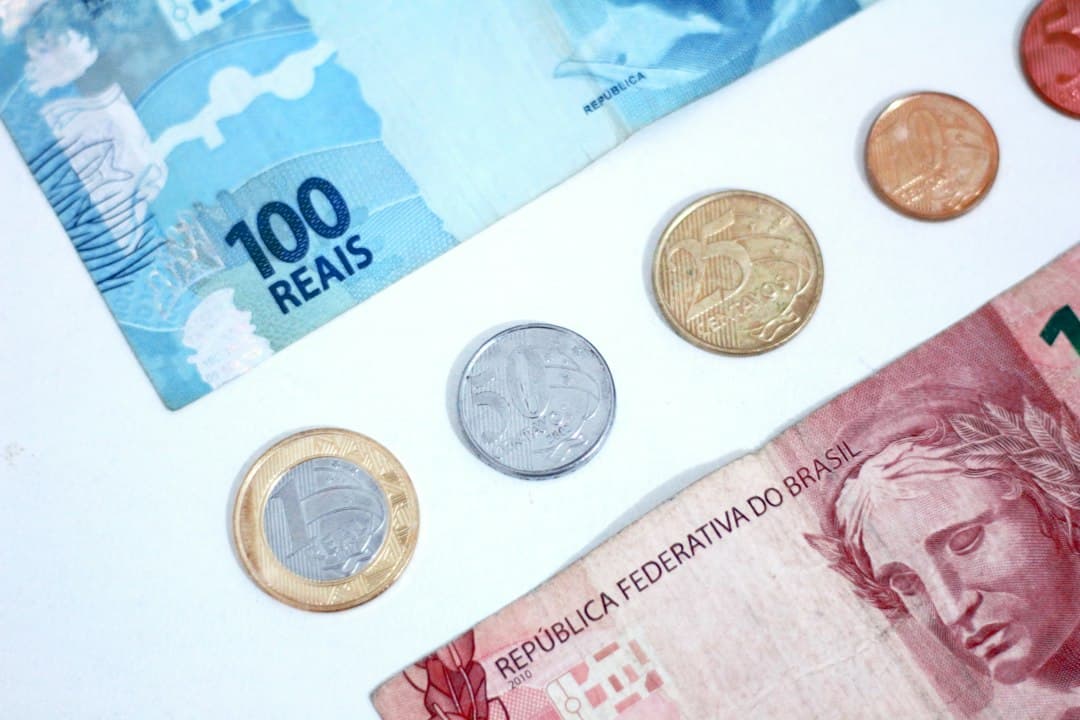
The Central Bank of Brazil reminds that the only currency legally accepted in the country is the real[5]. You can obtain some at banks and currency exchange offices[5].
When it's time to exchange, look at the Effective Total Value (VET, Valor Efetivo Total). In addition to the exchange rate, it includes all of the transaction's fees, commissions, and taxes, which lets you compare the real price charged by institutions[5].
For cash exchange, an identity document is enough to buy up to US$3,000 (or the equivalent in another currency); beyond that, you must justify the purpose of the purchase[5].
Cash you carry follows a separate rule. There is no maximum amount when entering or leaving the country, but above R$10,000 (or the equivalent in another currency), you must file the electronic declaration of valuables with the Receita Federal, Brazil's tax authority[5].
Paying day to day: cards and digital banks
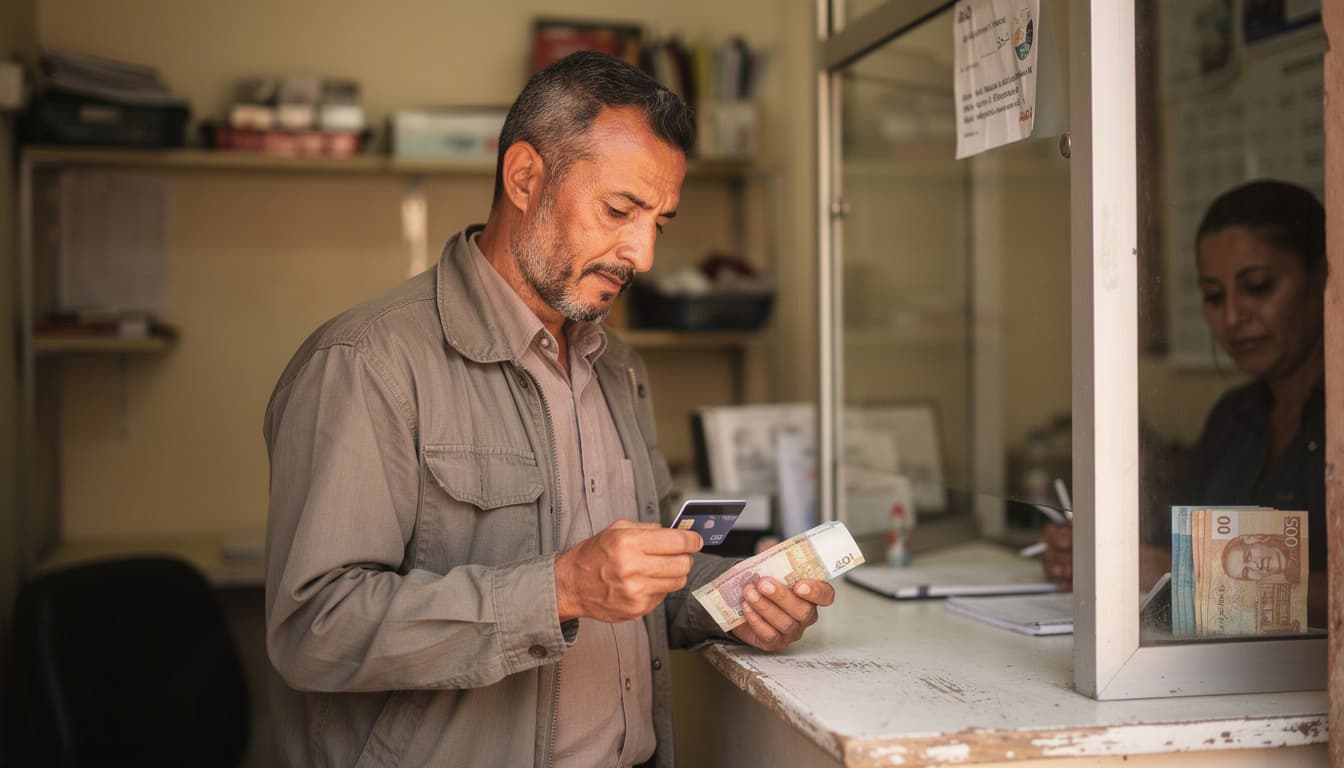
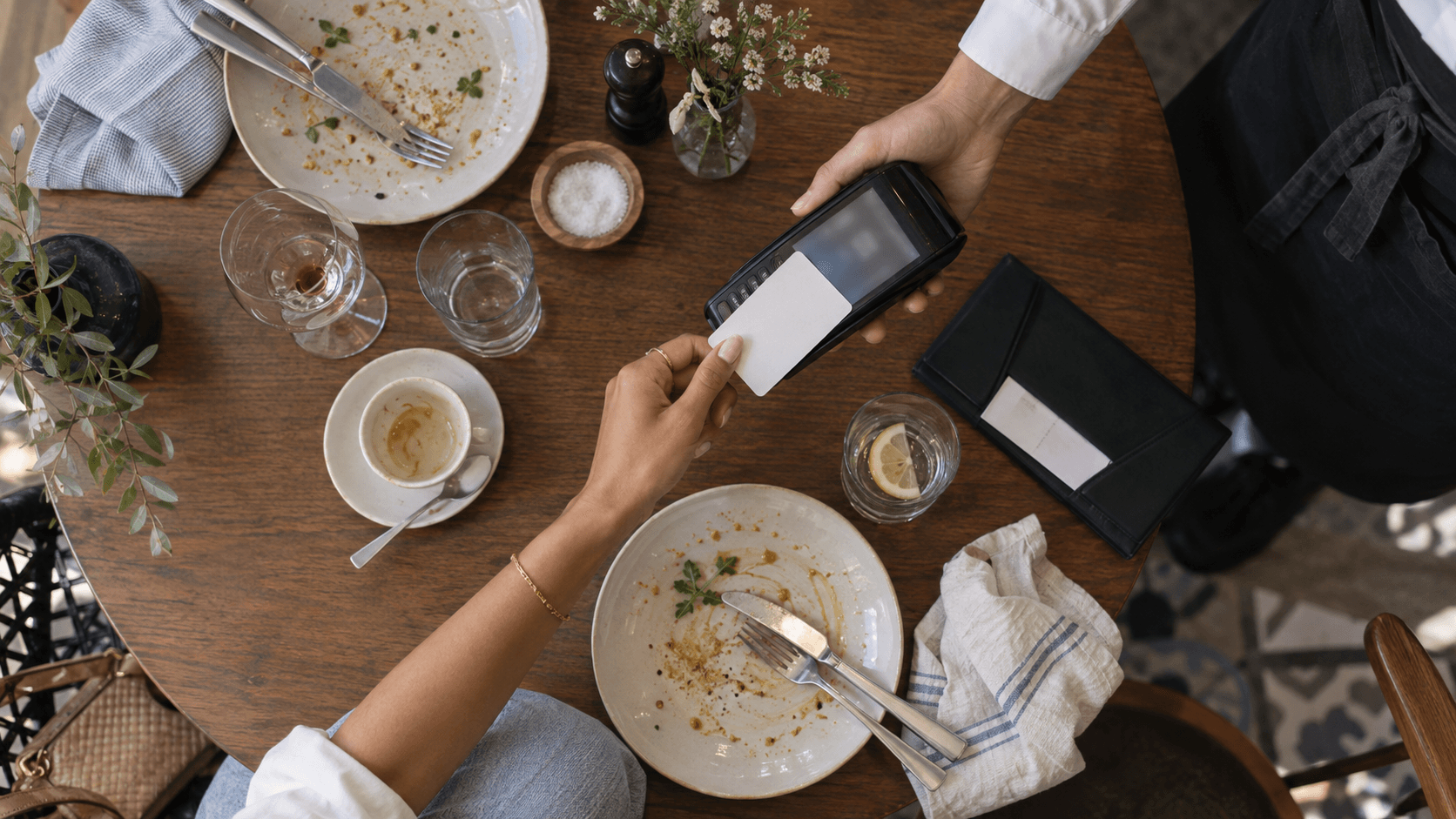
You can pay for your purchases with a credit, debit, or prepaid card issued by major international financial networks at most Brazilian establishments[5]. According to Brazil's Ministry of Foreign Affairs, most hotels and shops accept international credit cards[6].
Opening hours matter when you plan withdrawals and errands: banks generally open from 10:00 am to 4:30 pm, Monday to Friday, with slight regional variations[6].
Among banks, Nubank is Brazil's and Latin America's largest digital bank, with more than 90 million customers in 2024[7]. It offers a free payment account and a no-fee credit card, terms that may change[7].
Banco Inter, C6 Bank, PicPay, and Neon are among the other major digital banks. Banking concentration remains high: Itaú, Banco do Brasil, Bradesco, Caixa, and Santander hold more than 80% of the banking system's assets[7].
Pitfalls, scams, and points to watch
- Only exchange money at institutions authorized by the Central Bank of Brazil: they operate under Brazilian law, which lets you turn to the authorities if a problem arises[5].
- Always keep the receipt for your currency exchange[5].
- Don't rely on the displayed rate alone: ask for the VET, which includes all of the transaction's fees and taxes[5].
- For an exchange above R$10,000, use a bank transfer or a check: cash alone is not enough[5].
- If you carry cash above R$10,000 (or the equivalent), the electronic declaration to the Receita Federal is mandatory[5].
- Don't build your whole budget on a single scenario: projections for policy rates and growth differ from one institution to another[2][1].
Checklist for a solid budget
- Convert your income at a prudent rate and keep a reserve in foreign currency.
- Compare exchange offers on the VET and keep every receipt.
- Use institutions authorized by the Central Bank of Brazil.
- Avoid local credit while rates remain high.
- Review your budget when new official figures are published.
This article covers the essentials for protecting your budget. To truly settle in, you still need to break down the cost of living item by item (housing, groceries, transport), choose your bank or account, and follow the steps one by one.
Sources
- 1.^ abcdefghitresor.economie.gouv.fr — Indicators and economic outlook - BRAZIL | Directorate General of the Treasury: “Economic growth slowed to 2.3% in 2025, after 3.4% in 2024, and is expected to keep decelerating in 2026 to 1.6–1.8%.”; “Inflation fell back to 4.26% at the end of 2025, returning to the target range (3% +/- 1.5%).”; “Markets nonetheless anticipate a continuation of the cycle, with a rate of 12.25% by the end of 2026.” https://www.tresor.economie.gouv.fr/Pays/BR/indicateurs-et-conjoncture (accessed November 12, 2026)
- 2.^ abcdeimf.org — IMF Executive Board Concludes 2026 Article IV Consultation with Brazil: “Growth is projected to reach 2.4% in 2026, before slowing in 2027 and then recovering to about 2.5% in the medium term.”; “Selic policy rate, end of period: 11.8 (2023), 15.0 (2024), 14.0 (2025), 9.3 (2026), 6.8 (2027), 7.2 (2028).”; “The flexible exchange rate regime and adequate international reserves remain important shock absorbers.” https://www.imf.org/en/news/articles/2026/07/23/pr26257-brazil-imf-executive-board-concludes-2026-article-iv-consultation (accessed November 12, 2026)
- 3.^ abimf.org — IMF Staff Completes 2026 Article IV Visit to Brazil : “The IMF expects inflation to rise in the short term before converging to the 3% target by mid-2028.” ; “Continued vigilance is warranted, particularly with respect to household credit risks.” https://www.imf.org/en/news/articles/2026/06/01/pr26179-brazil-imf-staff-completes-2026-article-iv (accessed November 12, 2026)
Show 4 more sourcesShow less
- 4.^ abctresor.economie.gouv.fr — Brazil - Economic Briefs: Week of November 2, 2026 | Direction générale du Trésor : “At its meeting on November 3 and 4, 2026, the Monetary Policy Committee (Copom) of the Central Bank of Brazil (BCB) decided to keep the Selic benchmark rate at 13.75%.” ; “This pause comes amid deteriorating inflation expectations and uncertainty about the economic and fiscal outlook.” https://www.tresor.economie.gouv.fr/Articles/2026/11/05/bresil-breves-economiques-semaine-du-2-novembre-2026 (accessed November 12, 2026)
- 5.^ abcdefghijkbcb.gov.br — Dinheiro Brasileiro : “The only legally accepted currency in Brazil is the Brazilian real (R$).” ; “You can get reais at banks and currency exchange offices.” ; “When exchanging money, check the Total Effective Value (Valor Efetivo Total - VET), which, in addition to the exchange rate, includes all fees, commissions and taxes related to the transaction. This lets you compare the real price charged by institutions.” https://www.bcb.gov.br/dinheirobrasileiro/en/informacoes-sobre-cambio.html (accessed November 12, 2026)
- 6.^ abgov.br — Tips for Travellers — Ministério das Relações Exteriores : “Most hotels and shops accept foreign currency and international credit cards.” ; “Banks are open from 10:00 am to 4:30 pm, Monday to Friday, in most regions of the country, with slight regional variations.” https://www.gov.br/mre/pt-br/consulado-washington/consulate-general-of-brazil-in-washington-dc/tips-for-travellers (accessed November 12, 2026)
- 7.^ abcMira Knowledge — Nubank is Brazil's largest digital bank, with more than 90 million customers, and offers a free account and a no-fee card; the top five banks hold more than 80% of banking assets. Verified on June 11, 2026: official source bcb.gov.br. https://www.bcb.gov.br/ (accessed June 11, 2026)