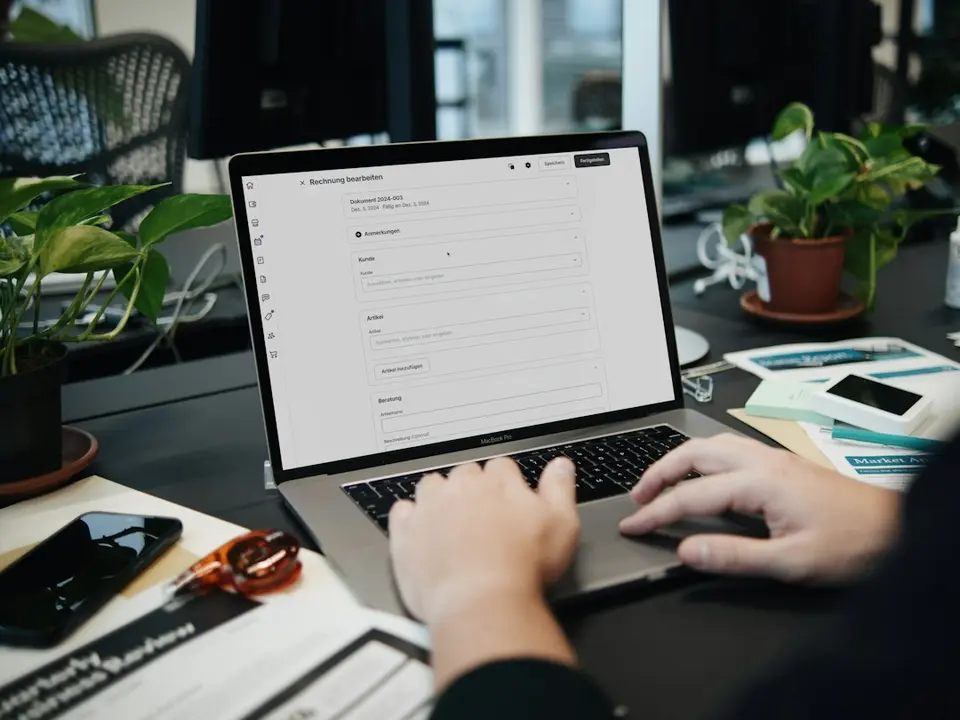
You're starting out as a freelancer with a laptop, wherever you choose to set up. This article helps you define an offer people can actually buy, collect your first reviews, raise your rates step by step, and spot the pitfalls that catch beginners. The status and cap rules cited here are those of the French micro-entrepreneur regime.
Choose a sellable offer before choosing a platform
Before signing up anywhere, you need to know what you're selling. To start freelancing, first define your offer, your target clients and your positioning so you stand out in the market[1]. In other words: who you serve, what you bring them, and what sets you apart from others.
A simple test is to state your offer in one sentence: who you help, what result you aim for, and through which service. For example: "I help small shops set up an online booking site in two weeks." That precision speaks far more than "versatile freelancer," which forces the client to guess what you can actually do.
For each starter offer, also set a scope, a timeline and a price. A bounded offer is easy to compare, sells faster, and limits misunderstandings once the job is underway.
Platforms: what they're really for at the start
Signing up on freelance platforms gives you visibility and helps you land your first clients, but you still need to keep prospecting[2]. Their role at the start is therefore twofold: making you visible and helping you build references and reviews. They replace neither your network nor direct prospecting.
Direct prospecting means spotting a concrete difficulty at a company and offering a precise improvement. Building your visibility (network, platforms, direct prospecting) helps secure your first missions[1]. A well-defined offer makes this approach much easier: you know what to propose and to whom.
First reviews, first clients: getting started
On platforms, a positive review weighs more for a less experienced freelancer than for an experienced one[3]. That makes it a startup asset: your priority at the beginning is to collect your first reviews, not to maximize each mission.
The effect of reputation isn't linear. The gains are strongest when you move from "few or no reviews" to a moderate reputation, then they taper off once reputation is already high[3]. Your first reviews are therefore the ones that pay off the most.
Early on, accepting a lower first price or smaller missions to earn reviews can work as an investment[3]. Provided you keep it to a limited phase, with a clear goal (a number of reviews), and remember that this starting base is not your sustainable rate.
Raising your rates in stages
Your pay is freely set: you decide your rates[1]. Freelancers most often work on hourly rates, day rates or fixed fees[1]. A fixed fee suits an offer with a fixed scope.
To calculate a viable rate, keep in mind that revenue is not your take-home pay: you need to account for expenses, notably social contributions[1]. Under the micro-entrepreneur regime, expenses can't be deducted from revenue: contributions and income tax apply to total revenue, not to your profit[1]. So start from what you actually want to earn, then work back up to the rate to display.
Once you've collected your first reviews, the reputation you've built is your lever for raising prices: the reputation gain is strongest precisely on those first reviews[3]. Proceed in stages: raise the rate on your new proposals first, then re-evaluate your existing clients' rates as missions go on and your profile strengthens.
Combining a full-time job with freelance work
A freelancer is free to work with several clients at once, unless an exclusivity clause prevents it[2]. If you're still employed, check your employment contract before you launch[1].
Salary portage is another route: a hybrid status halfway between employment and self-employment[2].
Your profession matters too. In data and analytics, for example, the employer's regional policy is the constraint for a remote employee. It disappears with freelancing, but it turns into a personal tax risk: it is up to you to check your tax situation according to your country of residence[4].
Securing Your Regular Clients
Even when you have clients, keep prospecting[2]: that is what smooths out the gaps between two missions.
With each client, keep up a clear and regular dialogue to avoid misunderstandings. A project management tool, such as Trello or Asana, helps you track tasks and deadlines[2]. Each well-run mission also becomes social proof and, with a bit of initiative on your part, a recommendation.
Pitfalls, Scams, and Points of Caution
- The micro-entrepreneur ceiling: for service provision (BIC and BNC) and liberal professions, the threshold is €83,600 in revenue excluding VAT[5]. This threshold applies over two consecutive years: the regime no longer applies in year N if the threshold is exceeded in both N−1 and N−2[5]. These thresholds have been revalued for 2026, 2027, and 2028[6].
- Unemployment: the micro-social regime does not allow you to receive allowances paid by France Travail[5]. If you are registered in France, this is a point to examine before switching to self-employment.
- Income: the lack of a fixed salary makes income variable, and the freelancer manages their own social coverage[2].
- Online tutoring: live classes must fit the students' time zones (an English class with Asia falls very early or very late from Europe), and platforms require a stable connection and a quiet environment[7].
- Content creation: filming and production are light, but uploading is heavy and frequent, and a reliable connection is essential[8].
Steps, in Order
- Define your offer in one sentence, with a scope, a timeframe, and a price.
- Choose your status and complete the formalities; if you are an employee, review your employment contract first.
- Sign up on platforms and start direct prospecting in parallel.
- Aim for your first reviews, even if that means starting with a lower price or smaller missions.
- Raise your rates in stages as your reputation grows.
- Maintain your regular clients while continuing to prospect.
- Track your revenue against your regime's ceiling.
This article covers the essentials to get started. It does not detail the step-by-step registration process, the tax rules for those working from abroad, or how to choose a platform: these points require going further before you truly settle in.
Sources
- 1.^ abcdefglegalstart.fr — Becoming a Freelancer: The 2026 Guide: “To get started as a freelancer, you should first clearly define your offer, your target, and your positioning in order to stand out in the market.” “Building your visibility (network, platforms, direct prospecting) helps secure your first missions.” “Freelance pay is freely set by the self-employed worker; they set their own rates.” https://www.legalstart.fr/devenir-travailleur-independant/freelance (accessed November 17, 2026)
- 2.^ abcdefopenwork.fr — Freelancing: The Complete Guide to Getting Started: “Signing up on these platforms gives you visibility and helps you find your first clients, but you must keep prospecting.” “A freelancer is free to work with several clients simultaneously, unless an exclusivity clause prevents it.” “Employee leasing (portage salarial) is a hybrid status halfway between employment and self-employment.” https://www.openwork.fr/le-guide-du-freelance (accessed November 17, 2026)
- 3.^ abcdMira Knowledge — On platforms, a positive review matters far more for a less experienced freelancer than for an experienced one. Verified 06/26/2026: 2 consistent sources (academic.body-of-work, academic.body-of-work, practitioner.framework). (accessed June 26, 2026)
Show 5 more sourcesShow less
- 4.^Mira Knowledge — The employer's regional policy is the employee's constraint; it disappears with freelancing and turns into a personal tax risk. Verified 09/16/2026: 3 consistent sources (gemini.google.com, perplexity.ai, hello-mira.com). https://gemini.google.com/share/d/1hP85gxeUJ7EHJcOAoQrp87bepJ8zShA7 (accessed September 16, 2026)
- 5.^ abcentreprendre.service-public.gouv.fr — Micro-social regime | Service Public Entreprendre: “For service provision activities (BIC and BNC) and liberal professions: the threshold is €83,600 (this threshold includes long-term furnished rentals).” “The micro-entrepreneur regime therefore does not apply in year N if this threshold is exceeded two consecutive years, in N−1 and N−2.” “The micro-social regime does not allow you to receive unemployment allowances paid by France Travail (formerly Pôle emploi).” https://entreprendre.service-public.gouv.fr/vosdroits/F37353?lang=en (accessed November 17, 2026)
- 6.^entreprendre.service-public.gouv.fr — Taxation -What are the new thresholds for micro-company? | Service Public Entreprendre: “So, for the years 2026, 2027 and 2028, the thresholds for the micro-entreprise scheme are as follows:” https://entreprendre.service-public.gouv.fr/actualites/A18813?lang=en (accessed November 17, 2026)
- 7.^Mira Knowledge — Live classes run on students' time zones (English as a foreign language for Asia falls very early or very late in Europe); the platforms require a stable connection and a quiet environment. Verified on 09/16/2026: 2 concordant sources (perplexity.ai, hello-mira.com, hello-mira.com). https://www.perplexity.ai/search/840d8429-1de2-4d2a-892b-401b7a485927 (accessed September 16, 2026)
- 8.^Mira Knowledge — Filming and production are lightweight, but uploading is heavy and regular; the work is digital nomad by nature, provided you have a reliable connection. Verified on 09/16/2026: 2 concordant sources (hello-mira.com, perplexity.ai, hello-mira.com). https://www.perplexity.ai/search/840d8429-1de2-4d2a-892b-401b7a485927 (accessed September 16, 2026)