Since November 6, 2026, merchants in Ecuador are no longer allowed to charge more for a purchase paid by card. You will learn which cards are concerned, what the rule changes for your purchases, how to spot a surcharge on a receipt, and how to file a claim if you are charged anyway.
What Changes: Same Price by Card and in Cash
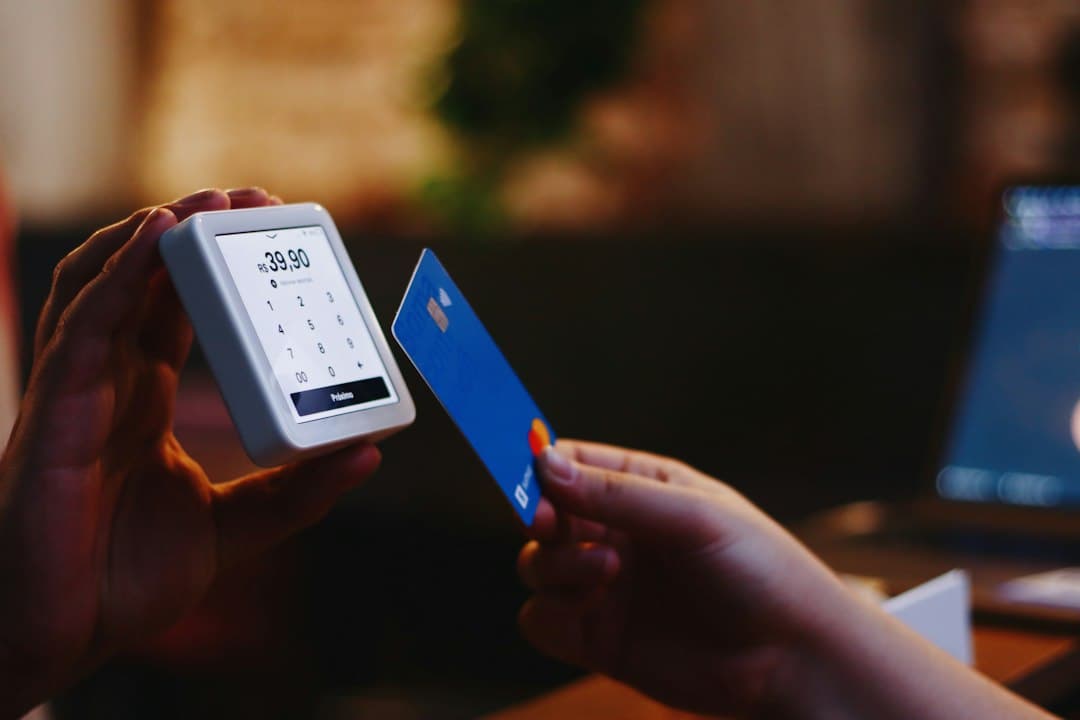
The Junta de Política y Regulación Financiera y Monetaria (JPRFM) issued resolution JPRFM-2026-048-T, which prohibits merchants from applying surcharges for a payment by credit, debit or prepaid card[1]. In practice, a merchant must keep the same price whether you pay by card or in cash[2].
The rule also applies to offers: promotions, discounts and rebates must remain identical for both payment methods[3]. A merchant therefore cannot display a promotional price reserved for those paying in cash while charging more to those paying by card[4].
Which Cards Are Concerned
The resolution covers payments by credit, debit or prepaid card[1]. It is therefore not limited to credit cards: the debit card that many travelers use every day is also within its scope[2].
Since When, and What the Six-Month Period Means
The rule has been in force since its adoption on November 6, 2026[5]. It does, however, provide a six-month period for the Superintendencia de Bancos, the Superintendencia de Economía Popular y Solidaria and the Banco Central del Ecuador to adjust their regulations and platforms[6].
This period does not suspend the rule: the framework already applies, even though the secondary regulation detailing implementation is still to come[4].
Who Pays the Commission?
When you pay by card, the merchant owes a commission to its bank: 4.02% for a credit card and 2% for a debit card[7]. According to the Superintendencia de Bancos, this commission must be borne by the merchant, which cannot pass it on to the cardholder[7].
Local economists warn that bank commissions will remain a cost for merchants. Businesses with the thinnest margins could build it into the final price of their products if financial operators' fees do not fall[3]. A displayed price higher than before is therefore not necessarily a disguised surcharge: what is prohibited is a price that differs depending on the payment method.
Pitfalls, Scams and Points of Vigilance
- Do not assume the rule is applied everywhere: users report that surcharges continue to be charged in Ecuador[4]. Local economists mention merchants charging 8% or 10% more for a card payment[3].
- Compare the receipt total with the displayed price, and keep the invoice or proof of payment: it is the document that allows you to file a claim[4].
- For gas stations, the Junta approves cost rates, and the gas station rate has been authorized for years: it is the cost of using the payment terminal, not a surcharge added on top of it. Check on site what applies to card payment[4].
- The claim procedures are not yet detailed, so the steps may be less clear for now[4].
How to Claim if a Merchant Applies a Surcharge
The recommendation is to keep the invoice or proof of payment and ask the merchant to refund the amount collected in excess[4]. Without a satisfactory response, contact the financial institution or the competent consumer protection bodies[4].
The routes mentioned are the customer ombudsman of the financial institution, the Defensoría del Pueblo and the competent superintendencies[4]. The Superintendencia de Bancos specifies that the Defensoría del Pueblo can handle complaints from any consumer, national or foreign[7].
Other Useful Changes for Cardholders
- Physical cards must be issued without visible sensitive information[2]. The card number, expiration date, and CVV are only printed if the customer requests them, at no charge[6].
- You must receive free, real-time alerts through at least two independent electronic channels[5]. These notifications let you block the card[6].
- Card issuers must keep support channels open 24 hours a day, 7 days a week[6].
- Some companies may offer new card-related services, provided they obtain authorization from the Banco Central del Ecuador[2].
What to Keep in Mind at the Checkout
- Compare the displayed price with the amount charged before you confirm the payment.
- Keep your receipt or proof of purchase: it is the basis for any complaint.
- If you are charged an extra fee, first ask the merchant for a refund, then contact the financial institution concerned or consumer protection agencies.
- This article gives you the essentials of the rule. Detailed complaint procedures depend on regulations that Ecuadorian authorities have yet to publish, so please double-check them before starting a claim.
Sources
- 1.^ abelcomercio.com — Businesses can't charge surcharges for payments with debit or credit cards - El Comercio: “The Junta de Política y Regulación Financiera y Monetaria (JPRFM) issued resolution No. JPRFM-2026-048-T, which prohibits commercial establishments from applying surcharges for the use of these electronic means.” “Consumers who pay by credit, debit, or prepaid card have new terms for their purchases in Ecuador.” https://www.elcomercio.com/actualidad/negocios/negocios-no-pueden-cobrar-recargos-pagos-tarjetas-debito-credito/ (accessed November 17, 2026)
- 2.^ abcdmetroecuador.com.ec — New rules for credit and debit cards in Ecuador: surcharges prohibited – Metro Ecuador: “It also establishes that merchants must keep the same prices for card and cash payments.” “Payments by credit, debit, and prepaid card in Ecuador will have new rules.” “The JPRFM has provided that physical cards must be issued without information considered sensitive, such as:” https://www.metroecuador.com.ec/noticias/2026/11/07/nuevas-reglas-para-tarjetas-de-credito-y-debito-en-ecuador-prohiben-recargos-por-pagar-con-tarjeta/ (accessed November 17, 2026)
- 3.^ abcdiariocorreo.com.ec — Diario Correo | El diario de todos: “The Junta de Política y Regulación Financiera y Monetaria approved provisions requiring commercial establishments to maintain the same price for cash and card payments, including promotions, discounts, and rebates.” “In this situation, establishments with the thinnest profit margins could pass these fees on to the final price of their products if financial operators do not reduce the rates they charge.” “According to the specialist, some establishments apply surcharges of 8% and 10% for card payments, while he identifies average bank commissions of 2% for debit and 4% for credit.” https://diariocorreo.com.ec/141262/ciudad/expertos-advierten-posible-alza-de-precios-por-nuevas-reglas-para-pagos-con-tarjetas (accessed November 17, 2026)
Show 4 more sourcesShow less
- 4.^ abcdefghielcomercio.com — Guide: how to claim extra card charges; does the new rule apply? - El Comercio: “The provision also covers promotions, rebates, and discounts. This means an establishment cannot offer a promotional price to those who pay in cash and charge more to those who use a credit or debit card.” “Despite this deadline, the regulatory framework is already applicable. Secondary regulation by the superintendencies is still needed to govern how it works.” “The new regulation strengthens the ban on charging more for card payments, but users say surcharges continue in Ecuador.” https://www.elcomercio.com/actualidad/negocios/guia-como-reclamar-pagos-extras-en-tarjetas-se-aplica-la-nueva-norma/ (accessed November 17, 2026)
- 5.^ abeltelegrafo.com.ec — El Telégrafo - Credit and debit cards in Ecuador: five changes you should know: “Resolution No. JPRFM-2026-048-T took effect on November 6, 2026, the date of its adoption, according to its final provision.” “The new regulation provides that users receive free, real-time alerts through at least two independent electronic channels.” https://www.eltelegrafo.com.ec/noticias/nacionales/210/tarjetas-credito-debito-ecuador-cinco-cambios-2026 (accessed November 17, 2026)
- 6.^ abcdelmercurio.com.ec — Same price by card as in cash, among the new rules to apply in Ecuador - Diario El Mercurio: “The rule has been in force since its adoption, but the Superintendencia de Bancos, the Superintendencia de Economía Popular y Solidaria, and the Banco Central del Ecuador (BCE) have six months to adjust their regulations and enforce it.” “This data will only be printed if the customer requests it, at no cost.” “These notifications must allow the card to be blocked and will carry no cost.” https://elmercurio.com.ec/economia/2026/11/08/precio-tarjeta-contado-pagar-igual-ecuador/ (accessed November 17, 2026)
- 7.^ abcsuperbancos.gob.ec — Statement by the SB on payments made by credit or debit card - Superintendencia de Bancos: “If the buyer uses their card, the merchant is required to pay the bank a commission of 4.02% if the payment was made by credit card, or 2% if it was made by debit card.”; “It should be noted that this commission must be borne by the business establishment, which may not pass it on to the buyer (the cardholder).”; “The Defensoría del Pueblo is responsible for hearing and ruling on complaints and claims filed by any consumer, national or foreign, whose rights have been violated (art. 80).” https://www.superbancos.gob.ec/bancos/pronunciamiento-de-la-sb-frente-a-pagos-realizados-con-tarjeta-de-credito-o-debito/ (accessed November 17, 2026)