
When your income changes from month to month, a conventional budget doesn't hold up. This article shows you how to start from a income floor rather than your best month, organize your accounts so you spend a stable figure, track your cash flow every week, and absorb a client who pays late. It focuses on day-to-day management, not on preparing for departure.
Start from your reliable minimum income, not your best month
The first adjustment changes everything: instead of building your budget on your highest month or on your average, take your lowest regular monthly income, or a cautious estimate[1]. If your earnings vary widely and you can't settle on a figure, use the amount you know you can count on[1].
This choice protects you during lean months and leaves room during generous ones[1]. The average, by contrast, remains risky: very few months actually land on it.
In the example from a budgeting guide for nomads, six months of income produce an average of $3,383 and a floor of $2,200; budgeting on the average would have left the budget in deficit three months out of six, since three months fell below that amount[2].
If you have less than six months of history, estimate a low month, then correct that figure after a few actual payments[2].
Another basic rule: only budget money you have already received. Planning around expected payments means building on dollars that don't exist yet; the exercise feels controlling, but the feeling is false and fleeting, and it is especially risky when income is irregular[3].
Two accounts to smooth out irregular income
Separating your accounts gives structure to income that fluctuates[1]. The principle: all incoming money first lands in a receiving account[2]. A fixed "salary" equal to your income floor is then transferred to your spending account once or twice a month[2].
Your spending thus follows a stable figure, even when client payments arrive late or come in small amounts[2]. The receiving account also acts as a buffer: you no longer spend each payment as it arrives[1].
The safety cushion: where to start
For irregular income, an emergency fund of 3 to 6 months is ideal, but you start with one month of minimum expenses, held in the receiving account[1]. Other references go further: one summary cites nine months for freelancers or anyone with irregular income[2].
Size this cushion based on your expenses, not your income[4]. There is no universal number: it depends on your fixed monthly costs, how irregular your income is, and whether you have dependents or debts[4]. And every high-income month feeds this fund first[1].

Tracking: tools, frequency and stable categories
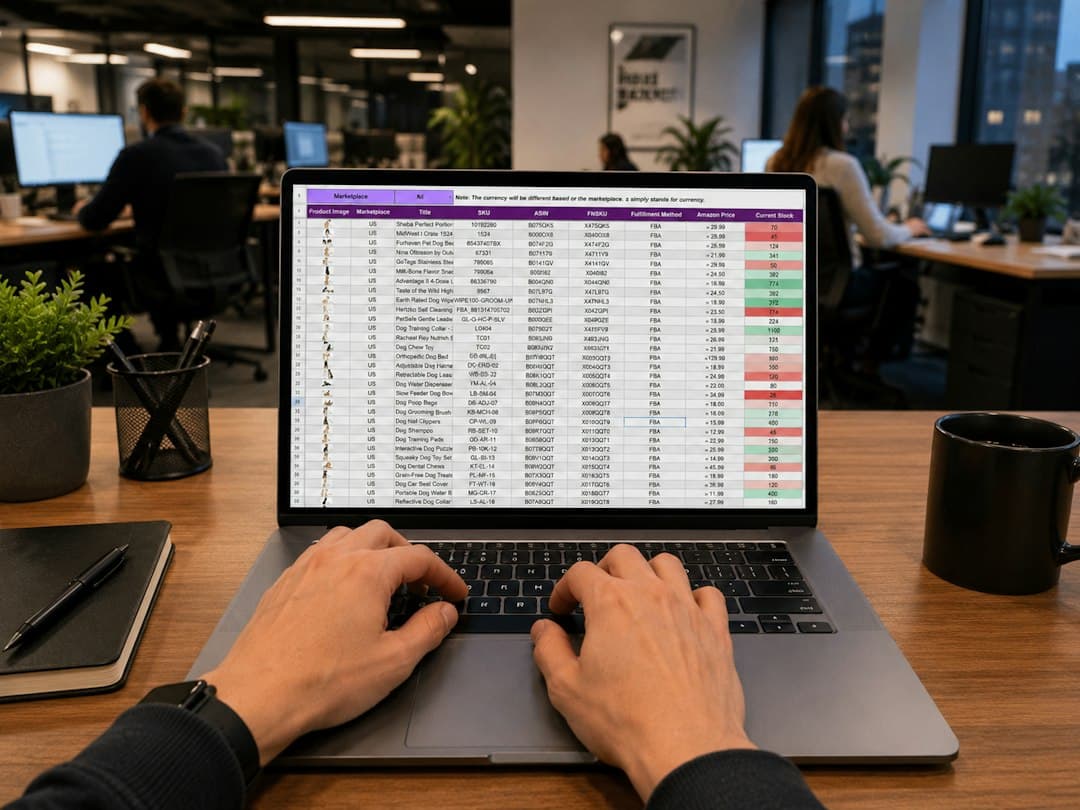
A spreadsheet or a simple app is enough, as long as you keep the same categories from one month to the next[4]. Without that, you cannot compare your months with each other.
Check your income and expenses every week, because irregular income changes faster than a salary[2]. A quick look at the receiving account and your funds is enough[2]. Once a month, recalculate your income floor from the last six months[2].
When you travel, each move adds transport, deposits and setup fees that fall between two payments[4]. Set aside separate lines for housing, insurance, mobile data, coworking or visas[4].
Also watch out for expenses that are not monthly. Insurance billed every four weeks, for example, amounts to 13 payments a year, not 12: budgeted flat over 12 months, it leaves the year about $63 short in the SafetyWing example at $62.72 per period (rate taken from the source, to be verified on the insurer's website)[2].
What to do with the good months
Decide in advance how to split your surplus. Once your base budget is covered each month, divide the rest into percentages[1]. Anything above your base budget is “extra” income, meant for savings or your goals[1].
Good months also help you get through lean months. In one YNAB example, income varies from month to month, with some months noticeably weaker than others: the plan is built on a base of about $5,000 and, in March at $8,700, the remaining $3,700 is carried over to the April plan, giving you a head start on the following month[3].
Also fund separate pots for irregular expenses: flights, visas, equipment[2]. For an annual or semi-annual expense, divide the total by the number of months left before it is due: $750 of insurance due in three months means setting aside $250 each month, then $125 per month over the following six months[3].
Emergencies, late payments, and losing a client
A late payment is a cash flow problem, not a surprise[4]. Build a cushion, invoice with clear terms, track outstanding payments every week, and cut your flexible spending first before touching rent or visa money[4].
If a main client leaves, treat the next 30 days as an emergency triage: list the remaining work, the expected payment dates, and your minimum expenses[4].

Why we don't save, and what helps
Beyond material constraints, a cognitive mechanism makes saving hard with irregular income: present bias, meaning the tendency to overvalue an immediate reward compared with a larger future gain.
We end up spending the months of plenty instead of setting them aside for the lean months, even when we say we want to protect ourselves[5].
The documented remedy doesn't rely on willpower alone, but on commitment devices set up in advance, such as a separate, less accessible account[5]. Fixing the rule for allocating your good months in advance means you won't have to renegotiate it at the moment you're about to spend.
Pitfalls and things to watch
- Taxes: they are generally not withheld at source on freelance or “gig economy” income[1]. Without a dedicated reserve, the tax bill arrives without warning; the U.S. Internal Revenue Service (IRS) estimator is cited as an example for calculating how much to set aside, and each country has its own rules[1].
- Delayed costs: each move adds transport, deposits, and setup fees that arrive between two payments[4], and visa or extension fees can add to them depending on the case[4].
- Income forecasting: budgeting on expected payments gives an illusory and risky sense of control when income is irregular[3].
- The average: a budget based on the average leaves the below-average months in the red, since few months land exactly on the average[2].
Checklist: steering your finances in five moves
- Calculate your floor from your last six months, or estimate a low month if you lack history[2].
- Open a receiving account and a spending account, and pay yourself a fixed salary equal to the floor[2].
- Build a first month of minimum expenses, then aim for 3 to 6 months[1].
- Review your cash flow every week, using the same categories from one month to the next[2][4].
- Fix in advance how you'll split your good months and set aside funds for irregular expenses[1][2].
This article focuses on steering your finances and handling emergencies. To go further, you'll then need to look at your starting budget, your country's tax rules, and the costs of each destination.
Sources
- 1.^ abcdefghijklmndbf.nebraska.gov — How to Budget Effectively with an Irregular Income | Nebraska Banking and Finance: “Instead of budgeting from your highest month or from an average, use your lowest regular monthly income (or a conservative estimate).”; “If your income varies widely and you can't settle on a single figure, keep the monthly amount you know you can count on.”; “This protects you during low-income months and naturally creates a cushion during high-income months.” https://ndbf.nebraska.gov/how-budget-effectively-irregular-income (accessed November 23, 2026)
- 2.^ abcdefghijklmnopflybibe.com — How to Budget as a Digital Nomad With Variable Income: “Someone with less than six months of history can estimate a low month and adjust it after a few actual payments.”; “In the sample, no month equaled $3,383, and three fell below it. The average sits $1,183 above the floor: a budget built on it would run short three months out of six.”; “The average stays risky, because few months land on it.” https://flybibe.com/how-to-budget-as-a-digital-nomad-with-a-variable-income/ (accessed November 23, 2026)
- 3.^ abcdynab.com — Irregular Income | YNAB: “When you forecast, you plan with dollars that don't really exist, at least not yet.”; “It gives a momentary sense of control, but it's false and fleeting. And it's especially risky with irregular income.”; “Build your plan on a base of about $5,000. Imagine it's March and you've earned $8,700. You would assign $5,000 to the categories in your March spending plan. Once finished, you'd have $3,700 left over.” https://www.ynab.com/guide/irregular-income (accessed November 23, 2026)
Show 2 more sourcesShow less
- 4.^ abcdefghijkslowtropics.com — How to Manage Irregular Freelance Income as a Digital Nomad: “Use a spreadsheet or a simple app, but keep stable categories from one month to the next.”; “Every move adds transportation costs, deposits, and setup expenses that fall between two payments.”; “You still owe rent, health coverage, coworking or mobile data, and sometimes visa extension fees.” https://www.slowtropics.com/nomad-life/finance/manage-irregular-freelance-income/ (accessed November 23, 2026)
- 5.^ abMira Knowledge — Present bias, the tendency to overvalue immediate rewards, leads people to spend months of abundance instead of setting them aside for lean months, even when they want to protect themselves. Verified on June 26, 2026: 2 concordant sources (academic.named-researcher, academic.named-researcher, academic.named-researcher). (accessed June 26, 2026)