Settling in Italy to work remotely follows a different path depending on whether you are an EU citizen or not. This article covers the topics in the order you will meet them: visa or free movement, the status needed to work, taxes, healthcare, arrival procedures, housing, budget, connectivity and transport. You will know which steps to start before you leave, which to complete in your first few days, and where mistakes cost you time or money.
The Essentials at a Glance
- EU citizen: no work permit is needed to work in another EU country, and self-employed people never need one[1].
- Non-EU citizen: a national type D visa for “digital nomads / remote workers” has existed since the decree of February 29, 2024[2].
- The residence permit is valid for one year and can be renewed[3].
- After entering with a type D visa, the residence permit application is filed at the Questura within 8 working days[4].
- The codice fiscale is issued with the residence permit to digital nomads and remote workers[2]; it can also be requested before arrival through the consulate[5].
- The digital nomad visa does not automatically give access to the 50% impatriate tax regime[6].
- You are a tax resident if, for more than 183 days in the year, you have your residence or domicile in Italy[7]; you are then taxed on your worldwide income[8].
- A lease of more than 30 days must be registered with the Agenzia delle Entrate within 30 days[9].
Overview: Which Path Applies to Your Nationality?
If you are a citizen of the European Union, you generally do not need a work permit to work in another EU country, and self-employed workers never need one[1]. Swiss nationals can also live and work freely in the EU thanks to the EU-Switzerland agreement on the free movement of persons[1].
If you are a national of a non-EU country, the route designed for remote work is the national type D visa for “digital nomads and remote workers.” The interministerial decree entered into force after its publication in the Italian Official Journal (decree of February 29, 2024, Gazzetta Ufficiale no. 79 of April 4, 2024)[2]. These entries take place outside the quotas of the flussi decree[2].
Visa and Right of Residence
The visa concerns non-EU nationals carrying out highly qualified work within the meaning of Article 27-quater of Legislative Decree 286/1998[10]. To prove it, you need a higher education diploma of at least three years, or an equivalent professional qualification[10]. Without a diploma, professional experience may be enough: five years in a sector requiring technical or specialized knowledge, or three years in information and communication technologies[11].
The Requirements to Meet
- At least 6 months of experience in the activity carried out as a digital nomad or remote worker: previous contracts for employees, engagement letters, work assignments or invoices for self-employed workers[11].
- Health insurance covering medical care and hospitalization, valid on Italian territory and for the duration of the stay[10]. The coverage amount generally required is at least €30,000, repatriation included[3].
- Suitable accommodation in Italy: a duly registered lease or, failing that, a property title[10].
- An annual income from lawful sources of at least three times the exemption threshold for healthcare co-payments[11]. The exact amount in euros varies depending on the references consulted: confirm it with the competent consulate before preparing your file[12].
The Procedure
National visa applications are made through the portal vistoperitalia.esteri.it and at the competent Italian consulates or embassies, often by appointment[4]. According to the Paris consulate, processing can take up to 30 days for remote workers and 120 days for digital nomads, and an incomplete application may be refused or cause delays[10].
After Entering Italy
Once you have entered on a national visa, you must apply for a residence permit at the Questura within 8 working days of arrival[13]. This obligation applies even if the visa is valid for less than 90 days[10]. Bring the documents presented for the visa and validated by the consulate[11]. You can start working as soon as the permit has been applied for[11].
The permit carries the mention "digital nomad" or "remote worker," lasts one year, and is renewed each year as long as the conditions still apply: minimum income, continued highly qualified activity, health insurance[11]. Family members may join through family reunification[3]; they receive a family-reasons permit that authorizes them to work, with the same duration as the worker's permit[11].
Work status: remote employee or self-employed
The difference comes down to your status. A "remote worker" performs dependent or collaborative work: you must present an employment contract or a binding offer[2]. A "digital nomad" is a self-employed worker[2]; your experience is shown through engagement letters, work or service assignments, or invoices[11].
The codice fiscale is issued at the same time as the residence permit, and digital nomads must also open a partita IVA[2]. As for social protection, if there is no bilateral social security agreement with your home country, the Italian social insurance and welfare system applies[2]. Italy has concluded such agreements with certain states, which allow their nationals to remain within their own social security system while working in Italy[11].
One more thing to know: the Ministry of the Interior considers these permits not convertible into other types of permits, although the question has not been formally settled[11]. On the other hand, after five years of legal residence, they allow you to apply for the EU long-term residence permit[11].
Taxation and Tax Residence
Italy considers you a tax resident if, for most of the tax year (more than 183 days), you have your residence within the meaning of the civil code or your domicile there[7]. You are then taxed on your worldwide income, including foreign-source income; a double taxation treaty between Italy and your home country generally prevents you from paying tax twice on the same income[8].
Don't count days alone: the 183-day threshold is only one criterion, since residence or domicile can be enough to make you a resident[7].
Impatriate Regime and Flat Tax
The digital nomad visa does not automatically give access to the 50% tax regime for impatriate workers: this benefit requires a separate application and follows its own eligibility criteria[6]. The regime lasts five years from the transfer of tax residence to Italy[14]. To benefit from it, you must commit to remaining a tax resident in Italy for at least four years, not having been one during the three preceding tax periods, and carrying out your work mainly in Italy[14].
If taxation weighs on your decision, speak with a commercialista before you arrive, not after[6].

Health and Insurance
To obtain the visa, you must prove insurance covering medical care and hospitalization in Italy[10], with at least €30,000 in coverage, repatriation included[3].
Once settled, the Servizio Sanitario Nazionale (SSN) provides basic care to all residents[15]. Enrollment is mandatory and free for non-EU residents holding a work-related permit and their dependents[16]; if your digital nomad or remote worker permit falls into this category, check with your local ASL.
The public system can have very long waits for specialist consultations or non-urgent procedures; private care is faster but much more expensive, which is why supplementary insurance is worth considering[15].
Arrival steps: tax code, address, bank account, phone
The Codice Fiscale
This tax identification number is essential for any administrative procedure, from the rental contract to opening a bank account. You can get it from the Agenzia delle Entrate or through the Italian consulate before you arrive[5]; digital nomads and remote workers also receive it with their residence permit[2].
EU citizens: the iscrizione anagrafica
As an EU citizen, you have no formalities during your first three months. Once that period is over, you register your residence with the anagrafe of your municipality[17]. Your address declaration must be made within 20 days of moving in. If you're unsure when the deadline starts, check with the anagrafe[9]. This registration is a prerequisite for accessing the public healthcare system[5].
Bank Account
According to one setup guide, if you earn a salary in Italy, you need an Italian bank account, along with your codice fiscale[6].
Phone and eSIM
For your phone, an eSIM installed before you leave connects you as soon as you land, but without a local number and often for data only. You'll need a compatible, unlocked device[18].
Housing
The standard long-term lease is the "4+4" contract at market rent: four years, automatically renewed for four more[9]. For newcomers, shorter contracts exist: the transitional contract (1 to 18 months) and the student lease (6 to 36 months)[9]. In Rome and Milan, the contratto transitorio is the legal format best suited to digital nomads[19].
Upfront costs are high: a security deposit of two to three months' rent, plus about one month's rent and VAT if you go through an agency[9].
Contracts longer than 30 days must be registered with the Agenzia delle Entrate within 30 days. The registration tax is split equally between landlord and tenant[9]. This registered lease is also your proof of main residence for your residence permit application[5].
Your residence declaration with the anagrafe must be made within 20 days of moving in[9].
Cost of Living
A comfortable monthly budget ranges from about €1,500 in southern cities to over €2,800 in Milan, including rent, food, coworking, and transport[20]. These figures come from private websites, so treat them as rough benchmarks.
Prices also vary by season. During fashion weeks and the Salone del Mobile, Milan gets packed and short-term rentals skyrocket[19].
Internet, Mobile, and Coworking
Mobile networks and fiber in major cities make it easy to work: in the nPerf 2025 barometer, average 5G speeds range from 76 to 211 Mbit/s depending on the carrier[18].
A coworking desk typically costs €80 to €250 per month depending on the city, and day passes let you try a space before committing[20].

Cities and Regions
Milan is the professional choice, but you need to plan ahead for housing. Expect a deposit of two to three months' rent, and make sure everything is written into the contract[19].
Florence and Bologna offer a calmer setting with lower expenses than Milan[21]. Naples and the other southern cities have the lowest cost of living among the major urban areas, often 40 to 50% below Milan[20].
Transportation
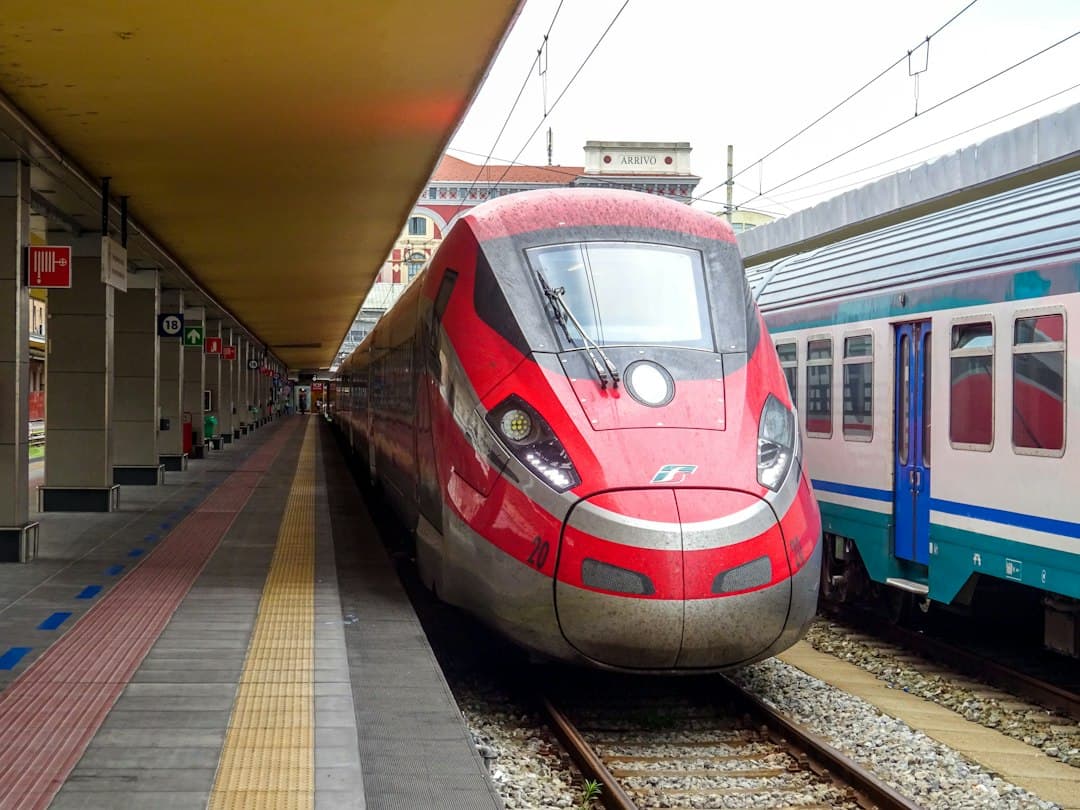
To travel between Milan, Bologna, Florence, Rome, and Naples, high-speed rail is often the simplest option[22]. Booking your seat on Intercity and Frecce lines a few days in advance is essential[23]. The Trenitalia and Italo apps make booking easy[22].
In the city, validating urban tickets, strikes, ZTL zones, and seasonal schedules all require attention[22]. Bus and tram tickets are bought at an authorized retailer and validated on board[22].
Pitfalls, Scams and Watch-Outs
- Remote work on a Schengen visitor status: working for a foreign employer or client during a short stay is a risky gray area, with the risk of denied entry, a fine, or a ban if you are checked[24].
- Visa income threshold: the amounts cited vary from one source to another, so don't rely on a single figure and confirm with the consulate[12].
- Digital nomad visa and impatriates: the 50% tax benefit requires a separate application[6].
- Tax residence: the 183-day threshold is not the only criterion; a residence or domicile in Italy is enough to make you a tax resident[7].
- 8 working-day deadline: it starts running on entry, even with a visa of less than 90 days[10].
- Stay monitoring: the European Entry/Exit System (EES), fully operational since April 10, 2026[25], automatically calculates the 90-days-in-180 rule from recorded entries and exits, which makes overstays detectable across the entire Schengen Area[26].
- Lease: everything must appear in the contract, because Italian informality works against foreigners when it's time to leave[19]. Also register the contract within 30 days[9].
- Foreign documents: for a diploma obtained outside the EU, you need a Declaration of Value or a Declaration of Comparability from CIMEA[27]. Documents issued outside the EU must be legalized by the Italian embassy or consulate, or apostilled, and accompanied by a certified translation into Italian[27].
- Invoicing Italian clients: with a digital nomad visa, invoicing Italian clients is reported as not permitted, as these routes are reserved for income from foreign sources[16].
Language, Integration and Community
In Milan, English is widely spoken in the international business world, but learning Italian remains strongly recommended for administrative procedures, housing and social integration, in every city without exception[21]. Aim for basic conversational Italian within the first few months: that's what will take you out of the expat bubble.
Steps, in Order
- Check your situation: EU citizen, non-EU national eligible for a D visa, or short stay without remote work.
- If you are a non-EU national: gather legalized or apostilled and translated diplomas, proof of 6 months of experience, proof of income, health insurance and housing, then submit your application at the consulate[10].
- Obtain your codice fiscale and secure housing with a registered lease[5].
- On arrival, if you are a non-EU national: Questura within 8 working days[4]. If you are an EU citizen: iscrizione anagrafica if staying beyond three months[17].
- Open a bank account, take out a mobile line, register with the ASL or keep your private insurance[5].
- Consult a commercialista about tax residence, the impatriate regime and the partita IVA[6].
These benchmarks are enough to choose your path and prepare your departure. They do not replace the detail of each procedure, form by form, nor a budget established item by item and city by city, nor the choice of a neighborhood: to truly settle in, these are the points where you need to go further.
Frequently Asked Questions
Does a European citizen need a visa to work remotely in Italy?
No, no work permit is needed to work in another EU country[1]. See the nationality section for details.
What is the difference between a digital nomad and a remote worker?
A digital nomad is self-employed; a remote worker is an employee or collaborator[2].
Does the visa give access to the impatriate tax regime?
No, not automatically: see the taxation section[6].
When should I register with the health system?
After registering your residence, with the local ASL, to obtain your family doctor and your health card[5].
Sources
- 1.^ abcdMira Knowledge — EU citizens generally do not need a work permit to work in another EU country, self-employed people never need one, and Swiss nationals can live and work freely in the EU under the EU-Switzerland agreement. Verified on 10/11/2026: official source europa.eu. https://europa.eu/youreurope/citizens/work/work-abroad/work-permits/index_en.htm (accessed October 11, 2026)
- 2.^ abcdefghijintegrazionemigranti.gov.it — News detail: “This sets the framework for entries of digital nomads and remote workers, which the Consolidated Immigration Act (Legislative Decree 286/1998, Article 27, paragraph 1, letter q bis) already places outside the flussi decree quotas.”; “Digital nomads and remote workers will receive the codice fiscale together with their residence permit. Digital nomads will also need to open a partita IVA.”; “If there are no bilateral social security agreements with the country of origin, Italian social security and insurance regulations will apply.” https://integrazionemigranti.gov.it/it-it/Ricerca-news/Dettaglio-news/id/3736/Nomadi-digitali-e-lavoratori-da-remoto-ecco-le-regole (accessed October 19, 2026)
- 3.^ abcdMira Knowledge — The visa is usually issued for an initial period of up to 1 year, renewable under certain conditions; family members may be included through family reunification procedures. Verified 06/08/2026: official source vistoperitalia.esteri.it. https://vistoperitalia.esteri.it/ (accessed June 8, 2026)
Show 24 more sourcesShow less
- 4.^ abcMira Knowledge — Applications for a national type D visa are made through the vistoperitalia.esteri.it portal and at the relevant Italian consulates or embassies, often by appointment. Verified 06/08/2026: official source vistoperitalia.esteri.it. https://vistoperitalia.esteri.it/ (accessed June 8, 2026)
- 5.^ abcdefgberoomie.app — Registration Guide in Italy: Guide for Expats | BeRoomie: “This tax identification number is essential for any administrative procedure, from signing a rental contract to opening a bank account.”; “You can obtain it from the Agenzia delle Entrate or through the Italian consulate before your arrival.”; “The Iscrizione Anagrafica is a prerequisite for registering with the Italian public health system and obtaining your health card (Tessera Sanitaria).” https://beroomie.app/fr/guides/country/italy/registration-guide (accessed October 19, 2026)
- 6.^ abcdefghello-mira.com — Remote Work in Italy: Visa, Taxes, Where to Live | Hello Mira: “A common misconception: the Digital Nomad visa does not automatically give you access to the 50% impatriate tax regime. That benefit requires a separate application and has its own eligibility criteria. Talk to a commercialista before you arrive, not after. (migaku.com, cited by Hello Mira)”; “If you work in Italy, you are required to open an Italian bank account to receive your salary. The codice fiscale is mandatory for this.”; “Although the required documents may vary from bank to bank, a copy of your passport and proof of residence (utility bill or rental contract) may also be needed.” (accessed October 19, 2026)
- 7.^ abcdsettli.io — Moving to Italy: digital nomad checklist: “Italy considers you a tax resident if, for most of the tax period (more than 183 days), you have your residence within the meaning of the civil code, your domicilio.”; “High earners also have the option of the flat tax for new residents: a substitute tax of €300,000 per tax period on foreign-source income, reduced to €50,000 for each covered family member, under strict conditions (non-residence for at least nine of the ten preceding tax periods, favorable interpello).” https://settli.io/fr/guides/italy/it-digital-nomad-relocation-overview (accessed October 19, 2026)
- 8.^ aballerenitalie.com — Becoming a Digital Nomad in Italy: Life, Taxes and Visa: “Yes, once you are a tax resident in Italy (more than 183 days on site), you are taxed on your entire worldwide income, including foreign-source income. The double taxation treaty generally protects you from paying tax twice on the same income.” https://www.allerenitalie.com/vivre-en-italie/nomade-digital-italie (accessed October 19, 2026)
- 9.^ abcdefghliving-abroad.org — Finding Housing in Italy: “The standard long-term lease in Italy is the 4+4 free-market contract, which runs for four years and renews automatically for another four years.”; “Shorter transitional contracts (1 to 18 months) and student contracts (6 to 36 months) are available for newcomers.”; “Upfront costs are high: a security deposit (commonly two to three months' rent) plus agency fees of about one month's rent plus 22% VAT, so you should budget several months' rent before moving in.” https://www.living-abroad.org/fr/pays/italie/logement/ (accessed October 19, 2026)
- 10.^ abcdefghiconsparigi.esteri.it — Visa for “Digital Nomads” and “Remote Workers” – Italian Consulate General in Paris: “You must have suitable accommodation in Italy: you can present a duly registered apartment rental contract or, failing that, a property deed for a real estate asset.”; “The residence permit must be requested directly from the Questura of the province where the foreign national is located within eight working days of entering the territory, even if the visa is valid for less than 90 days.”; “You must have health insurance covering medical care and hospitalization, valid throughout the national territory and for the duration of your stay.” https://consparigi.esteri.it/it/servizi-consolari-e-visti/servizi-per-il-cittadino-straniero/visti/visto-per-nomadi-digitali-e-lavoratori-da-remoto/ (accessed October 19, 2026)
- 11.^ abcdefghijkintegrazionemigranti.gov.it — News detail: “A lawful annual income of at least three times the threshold that grants exemption from healthcare co-payments.”; “You must hold a university degree or, failing that, 5 years of work experience in a sector requiring technical or specialized knowledge (3 years in the information and communication technology sector).”; “Proven experience of at least 6 months of work as a digital nomad or remote worker. Remote workers present their previous employment contracts; digital nomads may demonstrate this through engagement letters, work or service assignments and/or invoices.” https://integrazionemigranti.gov.it/en-gb/Ricerca-news/Dettaglio-news/id/3835/Who-are-the-digital-nomads-How-can-they-enter-Italy- (accessed October 19, 2026)
- 12.^ abMira Knowledge — The applicant must prove an annual income of at least three times the minimum threshold for exemption from healthcare cost-sharing; the exact 2026 figure should be confirmed with the relevant consulate. Verified 06/08/2026: official source esteri.it. (accessed June 8, 2026)
- 13.^conslosangeles.esteri.it — Digital Nomad / Remote Worker Visa – Italian Consulate General in Los Angeles: “Once you have entered Italy on a national visa, including the Digital Nomad or Remote Worker visa, you must go to your local Questura and apply for a residence permit within the first eight working days after your arrival.” https://conslosangeles.esteri.it/it/servizi-consolari-e-visti/servizi-per-il-cittadino-straniero/visti/visa-type/digital-nomad-remote-worker-visa/ (accessed October 19, 2026)
- 14.^ abcms.law — Digital nomads: the rules for working in Italy: “The favorable tax regime lasts five years, starting from the moment the worker transfers their tax residence to Italy.”; “To benefit from the advantages, workers must commit to remaining tax residents in Italy for at least four years, not having been tax residents during the three tax periods preceding their transfer, and carrying out their work mainly in Italy.” https://cms.law/en/ita/publication/digital-nomads-the-rules-for-working-in-italy (accessed October 19, 2026)
- 15.^ abinternational-sante.com — Expat health insurance in Italy: “The National Health Service (SSN) provides basic care to all residents.”; “Once registered, the expat receives a health card giving access to general practitioners, hospital treatment and prescriptions, with very few additional costs; certain services and medications may require a co-payment.”; “It is not uncommon to wait several months for a procedure such as cataract surgery.” https://www.international-sante.com/assurance-expatrie/pays/italie/ (accessed October 19, 2026)
- 16.^ abevisa-card.com — Italy Expatriation Guide 2026: Digital Nomad Visa & Taxation: “Registration with the SSN is mandatory and free for non-EU residents holding a work-related permit and their dependents.”; “They may opt for a flat tax of 7% on all their foreign-source income (not just pension income) for 9 years.” https://www.evisa-card.com/fr/expat-guide-italy (accessed October 19, 2026)
- 17.^ absettli.io — Moving to Italy: EU/EEA worker checklist: “Register your residence with your municipality's anagrafe once three months have passed since your arrival: as an EU citizen, you have no formalities before that.” https://settli.io/fr/guides/italy/it-eu-worker-relocation-overview (accessed October 19, 2026)
- 18.^ absimsima.io — eSIM Italy and SIM card — Mobile internet from €3.49 | Simsima: “Yes, turn off data roaming on your usual line during your stay in Italy: installing an eSIM does not prevent it from connecting abroad, and your carrier may then charge you.”; “In the 2025 nPerf barometer, the average download speed reached 211 Mbit/s on 5G with Vodafone, 140 Mbit/s with TIM, 139 Mbit/s with WindTre and 76 Mbit/s with iliad.”; “An eSIM for Italy has its limits: you need a compatible, unlocked phone, it does not give you a local number, and installing it requires an internet connection.” https://simsima.io/fr/esim/esim-italy (accessed October 19, 2026)
- 19.^ abcdledigitalnomad.com — Living in Milan while working remotely: the complete guide (2026): “In Rome and Milan, the contratto transitorio (1 to 18 months) is the perfect legal format for digital nomads.”; “Deposit: 2 to 3 months. Everything must be in the contract: Italian informality works against foreigners when it's time to leave.”; “Idealista.it and Immobiliare.it for the market, Spotahome and Facebook groups for temporary furnished rentals.” https://ledigitalnomad.com/s-expatrier/milan/ (accessed October 19, 2026)
- 20.^ abcitalytaxiservice.com — Cost of Living in Italy for Digital Nomads (2026) | Italy Taxi Service: “A comfortable monthly budget ranges from about €1,500 in southern cities to over €2,800 in Milan, including rent, food, coworking and transport.”; “Groceries cost about €250 to €350 per month for those who mostly cook at home, regardless of the city: supermarket prices vary less by region than rents do.”; “A monthly public transport pass costs €35 to €50 in most Italian cities.” https://www.italytaxiservice.com/blog/cost-of-living-italy-digital-nomad (accessed October 19, 2026)
- 21.^ abopenshores.co — The Best Cities in Italy to Immigrate to in 2026: “Florence and Bologna offer a calmer quality of life with lower costs than Milan, while remaining well connected for business travel.”; “In Milan, English is widely spoken in the international business world. That said, learning Italian is still strongly recommended for everyday administrative procedures, housing and social integration, in every city without exception.” https://www.openshores.co/blog/les-meilleures-villes-de-italie-pour-immigrer (accessed October 19, 2026)
- 22.^ abcdlemagvoyage.fr — Italy: how to get around, transport, apps and passes: “To connect Milan, Bologna, Florence, Rome and Naples, high-speed rail is often the simplest solution.”; “The Trenitalia and Italo apps make booking easy, but validating urban tickets, strikes, ZTLs and seasonal timetables require particular vigilance.”; “Bus and tram tickets must be purchased from an authorized sales point and validated on board.” https://www.lemagvoyage.fr/italie/se-deplacer-italie/ (accessed October 19, 2026)
- 23.^marcovasco.fr — Stay in Italy | Marco Vasco: “It is essential to book your seat on Intercity and Frecce lines a few days in advance.” https://www.marcovasco.fr/europe/italie/guide/sejour/ (accessed October 19, 2026)
- 24.^Mira Knowledge — Getting paid for remote work by a foreign employer or client while on a short-stay Schengen visitor status is a risky gray area: you may be refused entry, fined, or banned if you are checked. Verified on 08/06/2026, official source: vistoperitalia.esteri.it. (accessed June 8, 2026)
- 25.^Mira Knowledge — The EES began its gradual rollout at the external Schengen borders on October 12, 2025, and became fully operational on April 10, 2026. Verified on 08/20/2026, official source: travel-europe.europa.eu. https://travel-europe.europa.eu/ees_en (accessed August 20, 2026)
- 26.^Mira Knowledge — The EES automatically calculates the 90-days-in-any-180-days limit based on recorded entries and exits, which means overstays are systematically detectable in all Schengen countries. Verified on 08/20/2026, official source: travel-europe.europa.eu. https://travel-europe.europa.eu/ees_en (accessed August 20, 2026)
- 27.^ abconsparigi.esteri.it — Visa for “digital nomads” and “remote workers” – Consulate General of Italy in Paris: “If the diploma was obtained in a non-EU country, it must be accompanied by a Declaration of Value or, failing that, a Declaration of Comparability issued by CIMEA.”; “The documentation must be presented as an authentic copy (or certified true copy), legalized by the Italian embassy or consulate in the issuing country or apostilled by the competent authorities, and accompanied by a certified translation into Italian of the original text.” https://consparigi.esteri.it/fr/servizi-consolari-e-visti/servizi-per-il-cittadino-straniero/visti/visto-per-nomadi-digitali-e-lavoratori-da-remoto/ (accessed October 19, 2026)