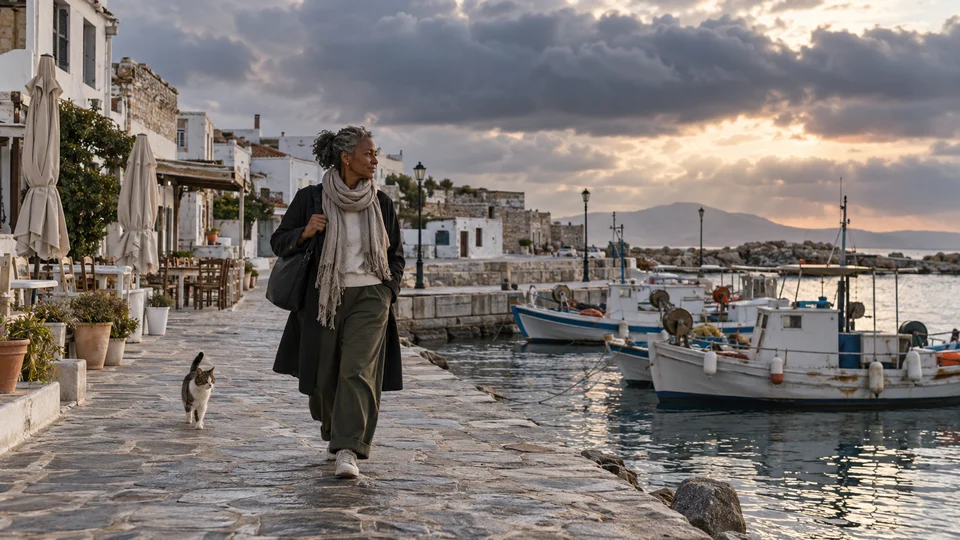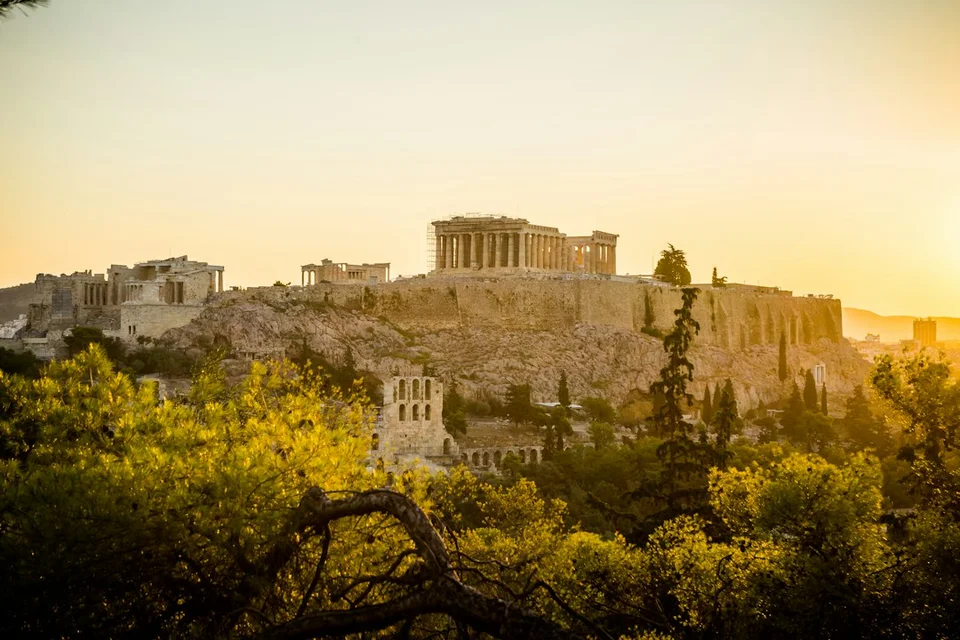
Wintering remotely on a Greek island takes planning like a life project, not a holiday trip. This article helps you tell apart the islands that stay alive out of season from those that empty out, understand which residence status applies to your nationality, find a long-term rental without falling into traps, and stay connected.
Traps, Scams and Points of Vigilance
The first trap is rental fraud. In Greece, fake listings on Xe.gr and Facebook are common: a flat at a very attractive price, a landlord who claims to be abroad, and a deposit demanded by bank transfer or Western Union before any viewing[1]. Don't send any money before you have visited the flat and verified the landlord's identity.
Second point: a holiday rental must carry a registration number. Properties offered for short-term rental must be registered with the AADE and the Ministry of Tourism with a mandatory number, and a listing without this number is a warning sign[2].
Third point: sea connections. Routes that rely on small local ferries, such as Ios–Kythnos or Paros–Donoussa, are the most likely to be suspended or reduced in winter[3]. Don't count on one of them for an important appointment or a medical treatment.
Last trap, tax-related: you read everywhere that the digital nomad visa can be combined with a 50% tax reduction. This reduction under article 5C was written for people who transfer their tax residence and take up employment or an activity on site, which the nomad status prohibits[4]. The tax benefit has historically required employment or activity income with Greek source, whereas the visa excludes Greek clients[5]. Beyond 183 days in a calendar year, you in principle become a Greek tax resident[4], taxable on worldwide income at up to 44%, unless you opt for a special regime[5].
Which Islands Stay Alive in Winter
It all depends on the size of the island. The large islands, Crete, Corfu, Rhodes and, to a lesser extent, Santorini, have a resident population large enough to keep services running all year round[3]. You will find open supermarkets, pharmacies and tavernas, and transport that works. The tourist offer shrinks, but these islands do not close[3].
Crete is the warmest part of Greece in winter[3]. Its towns, Heraklion, Chania and Rethymno, function fully all year round[3]. Rhodes is one of the warmest Greek islands in December and January, with average temperatures around 13 to 16 °C, and the town of Rhodes keeps enough year-round residents to stay lively in February[3].
In the Cyclades, Syros (Ermoupoli), the administrative capital of the archipelago, offers the most stable residential rental market and services available all year round[6]. The island has public services, a hospital and higher education institutions[6]. Naxos and Paros have small permanent communities, and part of the accommodation stays open there[3]. Naxos, for example, has a local population large enough for year-round services[3]. Santorini keeps only a core of hotels and restaurants open, mainly for visitors who come voluntarily out of season[3].
Conversely, the small Cycladic islands such as Ios, Folegandros or Koufonisia largely close from late October to April: most hotels, restaurants and excursion operators stop their activity and connections become sparse[3]. Some, like Milos, keep a permanent residential fabric: check on site what remains open. For a stay of several months, it is better to aim for an island with a permanent population.
Ferries and Connections: What Continues, What Stops
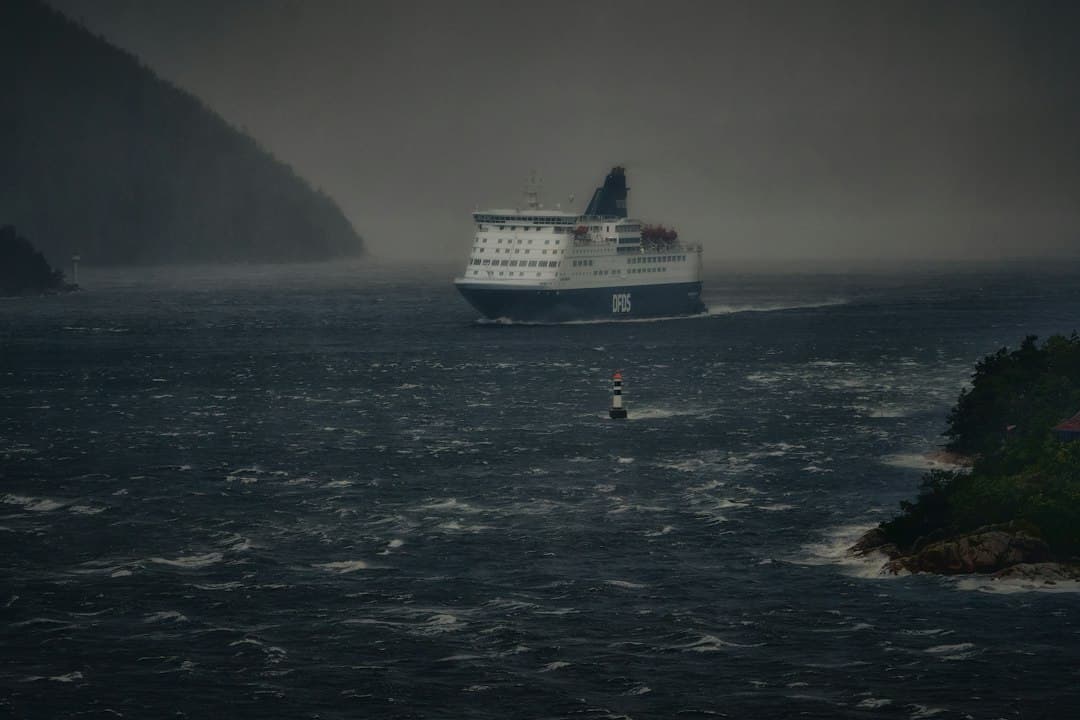
The main lines, Piraeus–Crete, Piraeus–Rhodes and Piraeus–Corfu, operate all year round, but less often[3]. The overnight Heraklion–Piraeus connection runs all winter[3].
Ferries do not sail in strong winds, and the Aegean Sea is much rougher in winter than in summer: allow a margin in any itinerary that depends on a crossing[3]. Check winter timetables before fixing an appointment or a trip; Ferryscanner brings together the availability of all operators[3].
On very small islands, the high cost of transport and limited public services are among the major difficulties faced by local communities[7].
Residence Status for Winter
If you hold an EU or EEA passport, you can come work in Greece without a digital nomad visa, for as long as you wish, with registration formalities on site, and the question of tax residence beyond 183 days[4]. For other nationalities, the source indicates a 90-day stay as a visitor, followed by the digital nomad visa; check your specific situation (nationality, other visa types) with the Greek consulate[4].
This national type D visa is for people who work remotely for employers or clients based outside Greece; you cannot work for a Greek company or operate a business registered in Greece[4]. You must demonstrate a net monthly income of at least €3,500, increased by 20% for a spouse or partner and by 15% per dependent child[4]. The visa is valid for twelve months[4].
Recent update: under law 5275/2026, the type D visa must be obtained from a Greek consulate abroad before departure; arriving as a tourist and converting the status on site is no longer permitted[8]. Allow one to three months for the entire process[5]. For tax questions beyond 183 days, consulting a Greek accountant before a long stay is a good investment[4].
Finding and Negotiating a Long-Term Rental Off-Season
The islands with a permanent residential base, Syros, Naxos, Paros, Milos and Tinos, offer more accessible long-term rental options[6]. To search, go through local agencies, specialized platforms and local word of mouth; Greek-language listings on national sites such as Spitogatos or XE.gr also offer a wide choice[6], but watch out for fake listings, which are common on XE.gr[1].
The most affordable islands for a residential rental are Andros, Folegandros, Serifos, Kea (Tzia) and Sifnos (note: Folegandros is among the small islands that largely shut down in winter), where tourist pressure is lower and off-season rents remain moderate[6]. Off-season rents vary considerably from one island to another[6].
Outside the platforms that feature the most expensive properties, for nightly vacation rentals (not long leases), stone houses in inland villages often offer excellent value, for example in Crete, on Naxos or on Ikaria[2]. In Athens, Santorini and Mykonos, the proliferation of short-term rentals has contributed to a significant rise in rents for residents[2]: long-term supply is scarcer and more expensive there.
Lease and Paperwork for Renting
In Greece, a residential lease must be registered electronically on the AADE's Taxisnet platform, and obtaining a Greek tax number (AFM) is a mandatory prerequisite for any signing[6]. Plan to get your AFM before you start looking to sign, especially if you are organizing your search from abroad.
Connectivity and Phone
A host on the island of Tinos advertises Wi-Fi at 29 Mbps: comfortable for calls, screen sharing and everyday cloud work, less suited to uploading raw video all afternoon[4]. Mobile data serves as a safety net: 4G and 5G cover the villages, and tethering has saved more than one video call[4].
If your mobile plan comes from an EU or EEA operator, roaming in Greece is charged at domestic rates, with no extra fees for calls, texts and data[9]. On a stay of several months, a fair use rule applies: the operator may observe, over at least four months, your time spent abroad and your roaming usage, and only identifies a risk of abuse if you have spent more time abroad than at home and used your roaming allowance more than your domestic one[10]. The operator must first warn you, give you at least 14 days to change your usage, and may only charge extra fees if usage continues after that period[11].
Key Points Before You Leave
- Aim for an island with a permanent population (Crete, Rhodes, Corfu, Syros, Naxos, Paros) rather than a small island that shuts down in winter.
- From outside the EU/EEA, if you plan to stay beyond 90 days, obtain the type D visa from the consulate before departure; check your case (nationality, visa type) with the Greek consulate.
- Get your AFM before signing a lease, then have that lease registered on Taxisnet.
- Do not pay any deposit before you have visited the property and verified the landlord.
- Before paying, ask for the heating, insulation, hot water, and the amount of the charges in writing for a property designed for summer.
- Check the winter ferry schedules and allow extra time in case of bad weather.
This article covers the essentials: the step-by-step details of the procedures, the line-by-line budget, and the precise choice of island or village require going further to truly settle in.
Sources
- 1.^ abMira Knowledge — In Greece, rental scams on Xe.gr and Facebook are common: fraudsters offer properties at very attractive prices, claim to be abroad, and ask for a deposit by bank transfer or Western Union before any visit. Verified on 06/01/2026. (accessed June 1, 2026)
- 2.^ abchellenica.fr — Accommodation in Greece: types, prices, and booking tips: "Properties must be registered with the AADE and the Ministry of Tourism, with a mandatory registry number. A listing without this number is a warning sign you should not ignore." ; "There are some very beautiful stone houses in the inland villages: in Crete, the Peloponnese, Naxos, or Ikaria. The value for money of these accommodations is often excellent, provided you search outside the platforms that favor the most expensive properties." ; "In Athens, Santorini, and Mykonos, the proliferation of short-term rentals has contributed to a significant rise in rents for residents and worsened the housing shortage for seasonal workers." https://hellenica.fr/organiser-son-voyage/hebergement-grece/ (accessed October 27, 2026)
- 3.^ abcdefghijklmngreekferrytravel.com — Greek Islands in Winter: What to Expect and Where to Go: "Routes such as Ios–Kythnos or Paros–Donoussa, which rely on small local ferries, are the most likely to be suspended or reduced in winter." ; "The large islands work differently. Crete, Corfu, Rhodes, and Santorini all have a resident population large enough to keep services running year-round." ; "You will find supermarkets, pharmacies, and local tavernas open, and transport running. Tourist infrastructure shrinks, but these islands do not shut down." https://greekferrytravel.com/greek-islands-in-winter-everything-you-need-to-know (accessed October 27, 2026)
Show 8 more sourcesShow less
- 4.^ abcdefghijmagnalux.gr — Digital nomad in Greece — remote work from Tinos: "The 50% tax exemption under Article 5C was written for those who transfer their tax residence and take up a new job or self-employed activity here — precisely what the nomad status prohibits." ; "Beyond 183 days in a single calendar year, you will in principle become a Greek tax resident, with everything that entails." ; "If you hold an EU or EEA passport, none of this applies to you: come and work from here for as long as you wish." https://magnalux.gr/fr/journal/digital-nomad-tinos/ (accessed October 27, 2026)
- 5.^ abcarrive.now — Greece: Digital Nomad Visa and residence permit. Arrive: "The regulatory inconsistency with Article 5C is real: the visa prohibits Greek clients, while the tax benefit has historically required employment or self-employment income sourced in Greece." ; "Exceeding 183 days makes you a Greek tax resident, taxable on worldwide income at up to 44%, unless you opt for a special regime." ; "Timeline: 1 to 3 months (first the D visa, then the residence permit upon arrival)." https://arrive.now/fr/programs/greece/greece-digital-nomad-visa/ (accessed October 27, 2026)
- 6.^ abcdefgremoters.io — Renting an apartment in the Cyclades: "Syros (Hermoupolis), the administrative capital of the archipelago, offers the most stable residential rental market and services available year-round." ; "Syros, the administrative capital of the Cyclades, stands out for an active rental market throughout the year, supported by the presence of public services, a hospital, and higher education institutions." ; "Islands such as Syros (Hermoupolis), Naxos, Paros, Milos, and Tinos have a more developed permanent residential fabric, with more affordable long-term rental options." https://www.remoters.io/location/cyclades (accessed October 27, 2026)
- 7.^fr.euronews.com — Beyond tourism: small Greek islands seek to keep their residents | Euronews: "Housing shortages, high transport costs, limited public services, and a shrinking population are among the major challenges facing small island communities in Greece." https://fr.euronews.com/2026/10/13/au-dela-du-tourisme-les-petites-iles-grecques-cherchent-a-garder-leurs-habitants (accessed October 27, 2026)
- 8.^worldwatch.global — Greece digital nomad visa: requirements (2026) | World Watch: "Law 5275/2026 eliminates on-site digital nomad applications: all applicants must obtain a national type D visa from a Greek consulate abroad before traveling; entering on a tourist visa or Schengen exemption and converting on site is no longer permitted." https://worldwatch.global/greece/digital-nomad (accessed October 27, 2026)
- 9.^Mira Knowledge — A subscriber of an EU or EEA operator traveling to another EU or EEA country pays no extra fees compared with their domestic rate for calls, texts, and mobile data. Verified on 09/28/2026: 3 consistent sources (eur-lex.europa.eu, europa.eu, arcep.fr). https://eur-lex.europa.eu/eli/reg/2022/612/oj (accessed September 28, 2026)
- 10.^Mira Knowledge — To detect roaming abuse, the operator may monitor, over at least four months, the time spent abroad and roaming consumption relative to domestic consumption. Verified on 09/28/2026: 2 consistent sources (eur-lex.europa.eu, europa.eu, mediation-telecom.org). https://eur-lex.europa.eu/eli/reg_impl/2016/2286/oj (accessed September 28, 2026)
- 11.^Mira Knowledge — The operator must first warn the subscriber of risky behavior; the subscriber has at least 14 days to change their usage, and fees may only be charged if the unreasonable usage continues after that period. Verified on September 28, 2026: 2 concordant sources (eur-lex.europa.eu, europa.eu, mediation-telecom.org). https://eur-lex.europa.eu/eli/reg_impl/2016/2286/oj (accessed September 28, 2026)