You're planning a stay in Portugal and wondering what to sort out before you leave. This article helps you understand how entry into the Schengen Area works, how a short stay is counted, where ETIAS stands, which documents to keep handy, and which authority steps in at each stage. Residence permits, taxes, and banking are handled after you arrive, so see our guide to settling in Portugal.
Portugal and the Schengen Area: What Changes at Entry
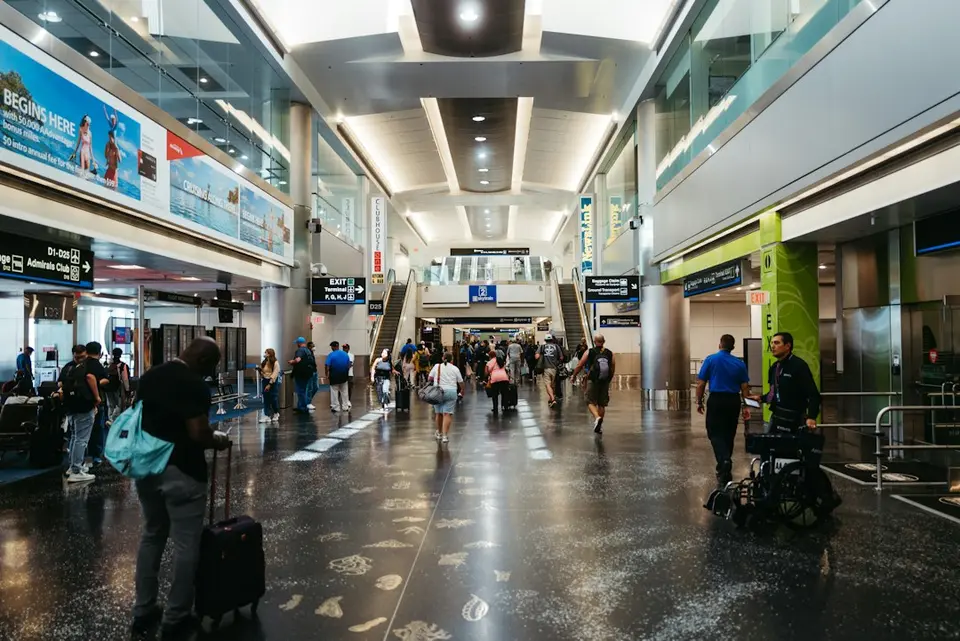
To enter Portugal from outside the European Union, you pass through an external border of the Schengen Area. For a few months now, checks there have changed: the Entry/Exit System, or EES, registers non-European travelers biometrically (fingerprints and facial image) and replaces the passport stamp[1].
The system was rolled out gradually at the external borders of the Schengen Area starting October 12, 2025, and has been fully operational since April 10, 2026[2].
In practice, allow a bit more time at the border on your first entry, while your biometric data is recorded. On later crossings, the data already on file is reused[3].
Short Stays: The 90/180-Day Rule
For a short stay, the 90/180-day rule applies. The EES automatically calculates this entitlement from recorded entries and exits. An overstay therefore becomes systematically detectable in every Schengen country[4].
In practice, a three-month stay in Portugal followed by a few weeks elsewhere in Schengen counts toward the same total: the calculation covers the whole area, not each country separately.
ETIAS: Where the Travel Authorization Stands
ETIAS is a pre-travel authorization for non-European nationals exempt from visas who travel to the Schengen Area. It therefore does not apply to travelers who need a Schengen visa. According to the latest check (August 2026), it is not yet in service: its launch is planned for late 2026, after the EES. Check its status before you travel[5].
The announced fee is €20; the authorization is free for applicants under 18 and over 70[6].
Documents to Prepare for the Application and the Border
At the border, you may be asked to justify your stay. Keep these handy:
- proof of your means of subsistence for the length of your stay[7];
- proof of accommodation[8];
- a passport in good condition and valid; check the validity requirements for your nationality with the competent authorities.
If you attach a passport photo to an application, it must measure 51 mm × 51 mm[9], be in color, and have a white background[10]. These photo requirements do not come from an official Portuguese or Schengen source, so treat them as indicative; check the template required by the consulate where you file your application.
Long Stays: National Visas at a Glance
Beyond short stays, you enter the realm of national visas and residence authorizations, which follow rules separate from Schengen's. For family, family reunification is open to children and young people under 18[11].
A guide published by a coliving provider describes, for people who work remotely, a temporary residence visa that would allow you to stay legally for one year, renewable up to 5 years, followed by eligibility for permanent residence; the suitable visa depends on your situation and income[12]. This is a description published by a coliving provider, not an official page: before taking any step, confirm conditions and thresholds on the official pages of the Portuguese authorities.
Who Does What: Consulate Before Departure, AIMA After Arrival
A national visa must be requested before departure, from the competent consulate. AIMA is Portugal's migration agency; it takes over after arrival, for long stays. Residence permits, taxes, and banking are covered in detail in our guide on settling in after arrival.

Checklist Before You Leave
- Check whether your nationality requires a visa for the Schengen Area or whether you are exempt.
- Count your days: the 90-days-in-180 rule covers the entire Schengen Area.
- Allow extra time at the border for biometric registration on your first entry.
- Gather proof of your means of subsistence and your accommodation documents.
- Check that your passport has enough blank pages.
- For a long stay, find out which national visa fits your situation from the consulate before submitting your application.
This article covers the essentials of entry. Step-by-step procedures for a long stay, income thresholds, and choosing the right type of visa require going further with the Portuguese authorities.
Sources
- 1.^Mira Knowledge — The Entry/Exit System (EES) registers non-European travelers by biometrics (fingerprints and facial image) at the external borders of the Schengen Area, replacing passport stamps. Verified 08/20/2026: official source travel-europe.europa.eu. https://travel-europe.europa.eu/ees_en (accessed August 20, 2026)
- 2.^Mira Knowledge — The EES began its gradual rollout at the external Schengen borders on October 12, 2025, and has been fully operational since April 10, 2026. Verified 08/20/2026: official source travel-europe.europa.eu. https://travel-europe.europa.eu/ees_en (accessed August 20, 2026)
- 3.^Mira Knowledge — The first entry under the EES takes longer at the border (biometric enrollment); subsequent crossings reuse the biometric data already recorded. Verified 08/20/2026: official source travel-europe.europa.eu. https://travel-europe.europa.eu/ees_en (accessed August 20, 2026)
Show 12 more sourcesShow less
- 4.^Mira Knowledge — The EES automatically calculates the short-stay entitlement of 90 days in any 180-day period based on recorded entries and exits, which makes overstays systematically detectable in all Schengen countries. Verified 08/20/2026: official source travel-europe.europa.eu. https://travel-europe.europa.eu/ees_en (accessed August 20, 2026)
- 5.^Mira Knowledge — ETIAS is a pre-travel authorization for non-European nationals exempt from visas who travel to the Schengen Area; as of August 2026, it is not yet in service, with its launch planned for late 2026, after the EES. Verified 08/20/2026: official source travel-europe.europa.eu. https://travel-europe.europa.eu/etias_en (accessed August 20, 2026)
- 6.^Mira Knowledge — The ETIAS application fee is €20; applications are free for those under 18 and over 70. Verified 08/20/2026: official source travel-europe.europa.eu. https://travel-europe.europa.eu/etias_en (accessed August 20, 2026)
- 7.^Mira Knowledge — Visitors must be able to present proof of their means of subsistence for the duration of their stay at border checks. Verified: official source ambacongo-us.org.
- 8.^Mira Knowledge — Visitors must be able to present proof of their accommodation arrangements at border checks. Verified: official source ambacongo-us.org.
- 9.^Mira Knowledge — ID photos must measure 51 mm × 51 mm. Verified: official source ambacongo-us.org.
- 10.^Mira Knowledge — ID photos must be in color, on a white background. Verified: official source ambacongo-us.org.
- 11.^Mira Knowledge — Family reunification is open to children and young people under 18. Verified: official source aima.gov.pt. https://aima.gov.pt/pt
- 12.^outsite.co — Digital Nomad Guide to Portugal: "This will allow you to stay legally for one year, but you will have the option to renew for up to 5 years. After that, you will be eligible for permanent residence." https://www.outsite.co/fr/blog/digital-nomad-guide-to-portugal (accessed October 30, 2026)
- 13.Mira Knowledge — A transit visa valid for less than five days is free of charge. Verified: official source ambacamcaire.com. https://ambacamcaire.com/consular-services/general-info/guidelines-for-visa-applicants/
- 14.Mira Knowledge — A unified electronic visa application cannot be accepted if the passport does not have enough space for border crossing stamps. Verified: official source evisa.kdmid.ru. https://evisa.kdmid.ru/
- 15.Mira Knowledge — AIMA is accelerating its technological transformation. Verified: official source aima.gov.pt. https://aima.gov.pt/pt