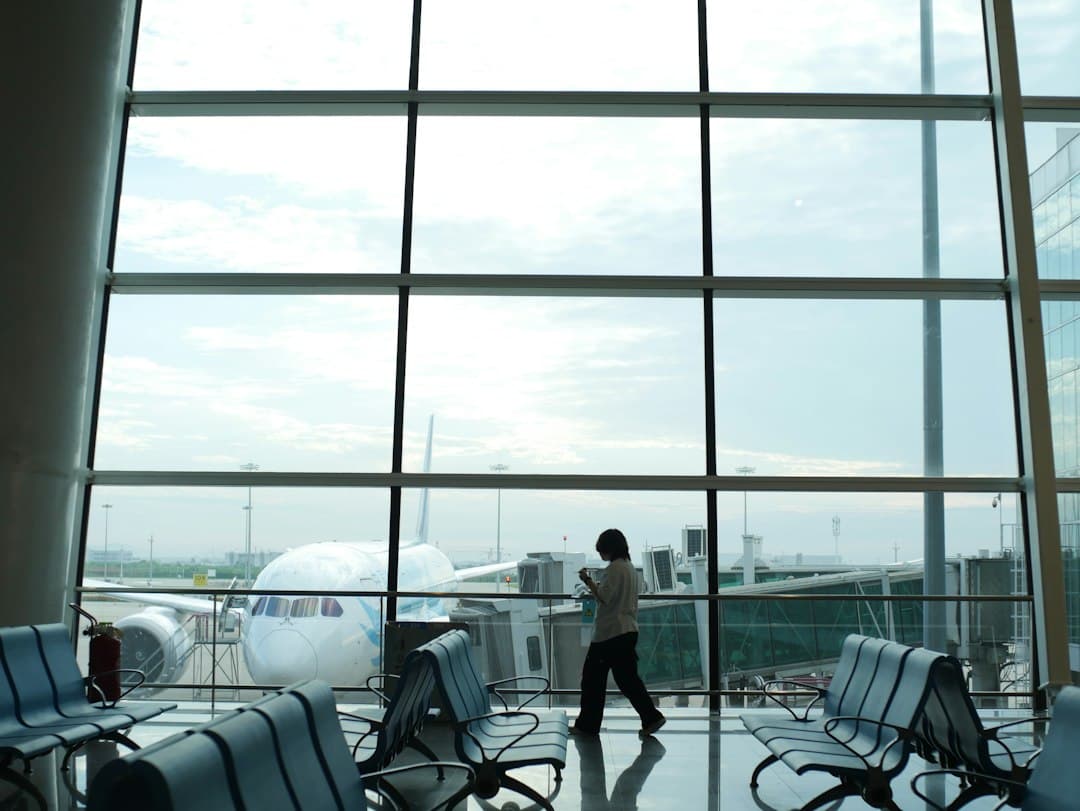
For a departure lasting several weeks or months, it is better to have a phone with a few well-chosen apps than thirty icons you never open. This article helps you first install the official tools for paperwork and safety, then choose what to use for booking, connecting, getting around, and staying organized. You will also learn which connection fees and local habits can end up costing you a lot.
Before You Leave: Official Apps for Paperwork and Safety
Before installing any booking app, start with official sources. If you are leaving from France, the French Ministry for Europe and Foreign Affairs publishes "Travel Advice" that brings together information and recommendations on safety, health, and practical aspects of travel abroad[1]. These country sheets are prepared by the ministry's crisis and support center and are updated regularly[1].
Each sheet includes an Entry/Stay tab: this is where you check the documents required for your destination (identity card, passport, visa)[2]. One point not to miss: outside the European Union, most countries require a passport that remains valid for several months after your planned return date to France[2]. For a long stay, check your passport's expiration date before booking anything.
Keep in mind the limits of this exercise: this advice helps you decide, but it cannot replace information provided directly by the competent authorities of the country concerned[2]. For entry requirements, your final check should therefore be made with the country you are visiting.
Staying Reachable and Alerted: Ariane and Emergency Contacts
If you hold French nationality, Ariane is a free service that lets you register your presence abroad with the ministry and receive security alerts if the situation requires it[1]. The data collected is used only for security messages[1]. The ministry recommends registering regardless of your destination[3]. Travelers of other nationalities generally have an equivalent service through their own foreign ministry.
In case of a serious problem, French citizens can also call the emergency line of the Crisis and Support Center at +33 1 53 59 11 00 (call not subject to surcharge)[2]. Save this number in your phone before you leave, along with the contact details of your country's embassy or consulate at your destination.
A final reflex regarding documents: keep copies of your identity papers in a personal online storage space. For this, the French ministry suggests the service-public.fr account; if you lose your documents or they are stolen, you can download these papers and more easily prove your identity[2].
Flights, Trains, and Accommodation: Booking Apps
For flight tickets, Skyscanner compares offers and offers flexible search: you can search for flights to "Anywhere" from your location or view prices across a whole month to pick the cheapest day[4]. If you are not in a hurry, a price alert notifies you when the fare drops[4].
In Europe, Trainline lets you book train and bus tickets in many countries, without juggling between the websites of local operators[4].
For a place to sleep, Booking lets you reserve accommodation almost anywhere in the world: hotels, guesthouses, apartments, hostels[4]. Airbnb is better suited to longer stays, with equipped kitchens, washing machines, or workspaces, but it is mainly present in wealthier countries[4].
If you travel by van, 4×4, or motorcycle for several months, iOverlander lists thousands of places shared by other travelers: campsites, camping spots, gas stations, garages, water points, showers, border crossings[4].

Getting Connected: Data Plans, eSIMs, and Roaming
Connectivity is the first area where a nasty surprise can lurk. Within the European Union and the European Economic Area, a subscriber of a European operator traveling to another country in the zone pays no surcharge compared with their domestic rate for calls, texts, and mobile data[5].
This regime covers the 27 member states of the EU, Iceland, Liechtenstein and Norway, as well as Ukraine and Moldova since January 1, 2026[6]. Switzerland, the United Kingdom or Turkey are not part of it, even though some operators voluntarily extend it to them[6].
Elsewhere in the world, other agreements exist: since January 1, 2022, postpaid subscribers in Bolivia, Colombia, Ecuador and Peru pay no roaming surcharge in the other countries of the Andean Community[7].
For other destinations, a long-term travel guide considers the best option to still be a French plan that works abroad and/or local SIM cards; those who prefer an eSIM can buy one, for example from Airalo, which offers them for more than 200 countries directly from your phone[4].
Getting Around on the Ground: Ride-Hailing, Taxis and Local Apps
On the ground, the right app depends on the city. A few local examples show how much the situation varies.
- In Mexico City, Uber and Didi are widely used and considered safer than street taxis; Didi is often 10 to 20% cheaper than Uber on the same trips[8].
- In Buenos Aires, the Uber and Cabify apps are recommended to avoid taxi problems[9].
- In Bogotá, the city government has made available an online tool and an app showing the best ways to get around[10].
- In Maputo, Uber and Bolt are not reliably available in Mozambique: there is no meter, and the price is negotiated before departure[11].
- In Chișinău, local apps exist, such as Yandex Taxi or 6916 TAȚI[12].
Before arriving in a city, look up which apps actually work there rather than assuming the ones from your home country will be available.

Pitfalls, Scams and Things to Watch Out For
Mobile Data Charges
For roaming data, the operator applies by default a spending cap of €50 excluding VAT per billing month, unless you have chosen a different cap; it must warn you at 80% and then at 100% of this cap, and beyond that roaming data is blocked unless you expressly request otherwise[13]. According to Arcep, this default cap applies worldwide, but it does not cover voice calls or SMS[13].
In the EU and the EEA, roaming at domestic rates is intended for occasional stays: a long stay abroad may trigger "fair use" checks, but only if you spend more time there than at home and consume more while abroad than at home. The operator may observe, over at least four months, the time spent abroad compared with the country of your subscription, and roaming consumption compared with domestic consumption[14].
The operator must first warn you: you then have at least 14 days to change your usage, and additional charges can only be billed if the non-fair use continues after that period[15].
Unlimited plans and prepaid SIM cards have their own limits. For an unlimited data plan or a very low per-GB price plan, the operator may set a volume usable while roaming at domestic rates; beyond that, a capped surcharge may be billed[16]. For a prepaid SIM card, the volume may be limited to at least the remaining credit excluding VAT divided by the wholesale data ceiling, namely €1.10 excluding VAT per GB in 2026: €11 excluding VAT of credit gives at least 10 GB[17].
Finally, on a boat or a plane, roaming at domestic rates only applies if the phone is connected to a terrestrial mobile network. Via an onboard network relayed by satellite, it is not regulated and may be billed without a cap; turning off roaming or enabling airplane mode avoids these charges[18].
On the Ground: Calls, Taxis, Electricity
Local rules can disable your usual apps. In Oman, VoIP calls (WhatsApp, FaceTime, Skype) are blocked: only calls made through the operators' official apps, such as Omantel WiFi Call or Ooredoo One, are authorized by the regulator[19].
In Buenos Aires, despite an official taximeter, scams persist, especially in tourist areas such as San Telmo and La Boca: tampered meters, counterfeit bills handed back as change, detoured routes[9]. The exchange rate taxis apply for dollars is often unfavorable[9].
Finally, in some countries, the power grid makes remote work difficult. In Madagascar, outages happen every day in Antananarivo, typically lasting 4 to 8 hours a day, and generators are essential[20]. In Zimbabwe, daily load shedding lasts 6 to 12 hours, usually worse during the dry season[21]. In the Democratic Republic of the Congo, outages are nearly constant across most of the country[22]. In these destinations, plan a charging solution and offline work options.

Day to Day: Budget, Luggage, and Trip Planning
A few simple apps can make organizing a long stay easier:
- Trip It scans your inbox for flight and hotel booking emails and groups them into a single itinerary that syncs with your calendar[23].
- PackPoint suggests what to pack based on your destination's climate, the length of your trip, and your planned activities[23].
- Tricount makes settling up in a group easy: you enter the participants and their expenses, and the app shows how to split them[23].
- Santé Voyages provides information on vaccines and health risks for your chosen country, and does not require an internet connection to use[23].
Pre-Departure Checklist
- Check the official country page for your destination, under the Entry/Stay tab.
- Confirm that your passport is valid through your planned return date.
- Sign up for your country's travel alert service and save the emergency numbers.
- Store copies of your ID documents in a personal online storage space.
- Choose your connectivity solution (plan, local SIM, or eSIM) and set your data cap.
- Find out which ride-hailing and transport apps work in each city on your route.
- Plan ways to charge up and work offline in case the power grid is unstable.
This article covers the essentials for setting up your phone. To actually go, you'll still need to dig into each destination's entry and stay requirements, a line-by-line budget, and the mobile plan that fits how long you'll be away.
Sources
- 1.^ abcdru.diplomatie.gouv.fr — Traveling Abroad with Travel Advice and Ariane | France in Russia: “The travel advice, available on the site, brings together information and recommendations on safety, health, and practical aspects of travel abroad.”; “Prepared by the ministry's crisis and support center under an ISO 9001-certified procedure, they are regularly updated.”; “Ariane is a free service that lets our fellow citizens notify the ministry of their presence abroad and receive security alerts if the situation requires it.” https://ru.diplomatie.gouv.fr/fr/vivre-venir (accessed October 24, 2026)
- 2.^ abcdediplomatie.gouv.fr — Travel | France Diplomacy: “Check the travel documents required (national ID card, passport, visa) for entry and stay in your destination country under the Travel Advice section (Entry/Stay tab).”; “Outside the European Union, most countries require a passport valid for several months beyond the planned return date to France.”; “They serve as a travel aid provided by the Ministry for Europe and Foreign Affairs, but they cannot replace information provided directly by the competent authorities of the country concerned.” https://www.diplomatie.gouv.fr/en/services/faq/voyage (accessed October 24, 2026)
- 3.^diplomatie.gouv.fr — Travel Advice | France Diplomacy: “Wherever you're going, sign up for the Fil d'Ariane to receive alerts during your stay.” https://www.diplomatie.gouv.fr/fr/conseils-aux-voyageurs?lang=en (accessed October 24, 2026)
Show 20 more sourcesShow less
- 4.^ abcdefgtourdumondiste.com — The 40 Best Apps for a Long Trip: “Its major strength for long-term travelers: flexible search. You can search for flights to anywhere in the world from your location, or view prices across an entire month to pick the cheapest day.”; “And if you're not in a hurry, you can set a price alert to be notified when fares drop.”; “Traveling in Europe? Trainline lets you book train and bus tickets in many countries, without having to juggle the sometimes outdated websites of local operators.” https://www.tourdumondiste.com/applications (accessed October 24, 2026)
- 5.^Mira Knowledge — A subscriber of an EU or EEA operator traveling to another country in the zone pays no extra fees beyond their domestic rate for calls, SMS, and mobile data. Verified 09/28/2026: 3 consistent sources (eur-lex.europa.eu, europa.eu, arcep.fr). https://eur-lex.europa.eu/eli/reg/2022/612/oj (accessed September 28, 2026)
- 6.^ abMira Knowledge — In 2026, the scheme covers all 27 EU Member States, Iceland, Liechtenstein, and Norway, as well as Ukraine and Moldova since January 1, 2026. Verified on September 28, 2026: 3 consistent sources (eur-lex.europa.eu, arcep.fr, europa.eu). https://eur-lex.europa.eu/eli/dec/2025/2020/oj (accessed September 28, 2026)
- 7.^Mira Knowledge — Since January 1, 2022, postpaid subscribers from Bolivia, Colombia, Ecuador, and Peru pay no roaming surcharge in the other Andean Community countries. Verified on September 28, 2026: official source comunidadandina.org. https://www.comunidadandina.org/notas-de-prensa/desde-el-1-de-enero-de-2022-se-eliminaran-cargos-de-roaming-internacional-en-paises-de-la-comunidad-andina/ (accessed September 28, 2026)
- 8.^Mira Knowledge — Didi is often 10 to 20% cheaper than Uber on the same routes. Both apps are widely used and considered safer than street taxis. Verified on June 11, 2026: 3 consistent sources (stayworkcdmx.com, ride.guru, stayworkcdmx.com). https://stayworkcdmx.com/blog/uber-vs-didi-cdmx/ (accessed June 11, 2026)
- 9.^ abcMira Knowledge — Uber and Cabify apps are recommended to avoid these problems. Verified on June 11, 2026: official source buenosaires.gob.ar. https://buenosaires.gob.ar/gcaba_historico/infraestructura/movilidad/taxis (accessed June 11, 2026)
- 10.^Mira Knowledge — Starting December 10, 2018, the Mobility Secretariat made available an interactive online tool and a mobile app showing the best ways to get around Bogotá. Verified: official source bogota.gov.co. https://bogota.gov.co/mi-ciudad/movilidad/pico-y-placa
- 11.^Mira Knowledge — There is no meter: the price is negotiated before departure. Uber and Bolt are not reliably available in Mozambique. Verified on June 11, 2026: reference source numbeo.com. https://www.numbeo.com/taxi-fare/in/Maputo (accessed June 11, 2026)
- 12.^Mira Knowledge — Local apps: Yandex Taxi, 6916 TAȚI. Verified on June 11, 2026: reference source numbeo.com. https://www.numbeo.com/taxi-fare/in/Chisinau (accessed June 11, 2026)
- 13.^ abMira Knowledge — For roaming data, the operator applies by default a cap of €50 excl. VAT per month, warns the subscriber at 80% and then at 100%, and blocks data beyond that unless the subscriber expressly requests otherwise. Verified on September 28, 2026: 2 consistent sources (arcep.fr, europa.eu, eur-lex.europa.eu). https://www.arcep.fr/la-regulation/grands-dossiers-reseaux-mobiles/litinerance-internationale-roaming/les-tarifs-ditinerance-internationale.html (accessed September 28, 2026)
- 14.^Mira Knowledge — To detect abusive use, the operator may observe, over at least four months, the time spent abroad relative to the subscription's home country and roaming consumption relative to domestic consumption. Verified on September 28, 2026: 2 consistent sources (eur-lex.europa.eu, europa.eu, mediation-telecom.org). https://eur-lex.europa.eu/eli/reg_impl/2016/2286/oj (accessed September 28, 2026)
- 15.^Mira Knowledge — The subscriber has at least 14 days to change their usage; additional fees may only be charged if the unreasonable use continues after this period. Verified on September 28, 2026: 2 consistent sources (eur-lex.europa.eu, europa.eu, mediation-telecom.org). https://eur-lex.europa.eu/eli/reg_impl/2016/2286/oj (accessed September 28, 2026)
- 16.^Mira Knowledge — For unlimited data plans or very low-priced-per-GB plans, the operator may set a volume of data usable while roaming in the EU/EEA at the domestic rate. Verified on September 28, 2026: 2 consistent sources (europa.eu, eur-lex.europa.eu, mediation-telecom.org). https://europa.eu/youreurope/citizens/consumers/internet-telecoms/mobile-roaming-costs/index_fr.htm (accessed September 28, 2026)
- 17.^Mira Knowledge — For a prepaid card, the volume may be limited to at least the remaining credit excl. VAT divided by the wholesale cap (€1.10 excl. VAT per GB in 2026): €11 excl. VAT of credit gives at least 10 GB. Verified on September 28, 2026: 2 consistent sources (eur-lex.europa.eu, europa.eu, mediation-telecom.org). https://eur-lex.europa.eu/eli/reg_impl/2016/2286/oj (accessed September 28, 2026)
- 18.^Mira Knowledge — Via an onboard network relayed by satellite, roaming is not regulated and may be billed without a cap; turning off roaming or enabling airplane mode avoids these charges. Verified on September 28, 2026: 2 consistent sources (europa.eu, arcep.fr). https://europa.eu/youreurope/citizens/consumers/internet-telecoms/mobile-roaming-costs/index_fr.htm (accessed September 28, 2026)
- 19.^Mira Knowledge — VoIP calls (WhatsApp, FaceTime, Skype) are blocked in Oman. Only calls via official apps (Omantel WiFi Call, Ooredoo One) are allowed by the regulator. Verified on June 11, 2026: official source tra.gov.om. https://www.tra.gov.om (accessed June 11, 2026)
- 20.^Mira Knowledge — Daily outages in Antananarivo, typically 4 to 8 hours a day. Generators are essential. Verified on June 11, 2026: official source jirama.mg. https://www.jirama.mg/ (accessed June 11, 2026)
- 21.^Mira Knowledge — Daily load-shedding of 6 to 12 hours, typically worse in the dry season. Generators are essential. Verified on June 11, 2026: official source zesa.co.zw. https://www.zesa.co.zw/ (accessed June 11, 2026)
- 22.^Mira Knowledge — Near-permanent outages across most of the country. Verified on June 11, 2026: official source snel.cd. https://www.snel.cd/ (accessed June 11, 2026)
- 23.^ abcdrtbf.be — 10 useful websites and apps to help you prepare well for your vacation - RTBF Actus: "This app identifies, right within your inbox, your flight and hotel booking emails, then groups them in one place to display all the details of your trip together." ; "All of this information can be synced with your calendar and shared on your social networks." ; "These recommendations are based on the climate and territorial data of your destination, as well as the duration and purpose of your trip and the type of planned activities." https://www.rtbf.be/article/10-sites-et-applications-utiles-pour-bien-preparer-vos-vacances-9007073 (accessed October 24, 2026)