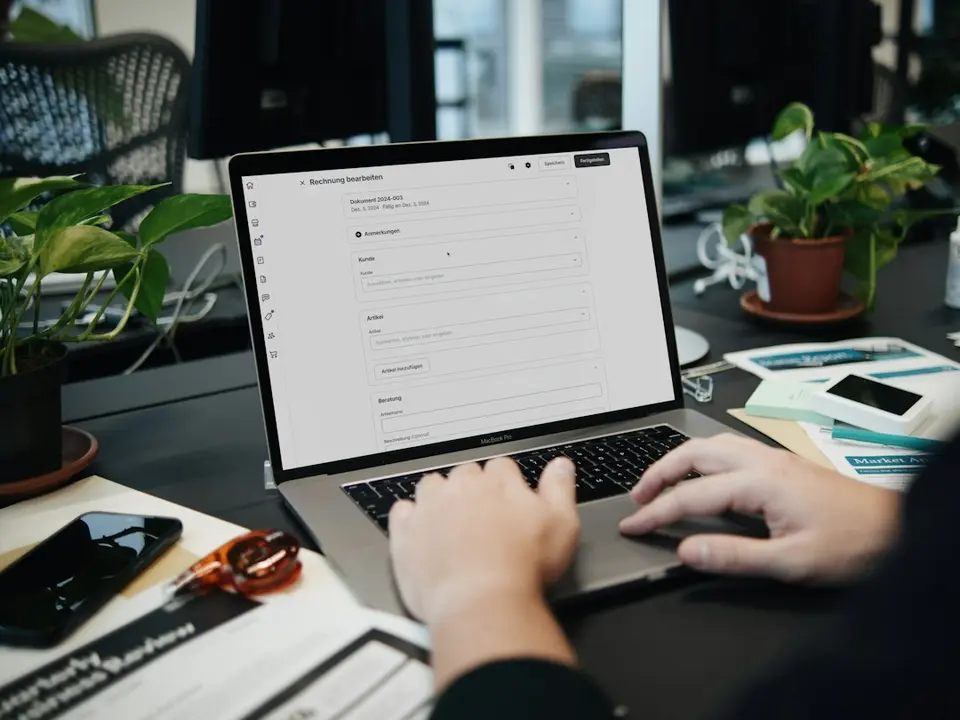
When you look for remote work or a job from abroad, everything happens online: the application, the interview, the contract, your bank details. Scammers know this and slip in. This article helps you recognize a fake offer before you send any document, verify a company and its recruiter, know when a request for a bank details or ID document is normal, and react if you have been caught out.
How the fake job offer scam works
Fake listings are created by fraudsters posing as real recruiters. They usurp a company's name, its address, the identity of an employee or manager, or its business registration number (SIRET)[1]. The goal is twofold: to extract money from victims or to steal personal information, such as bank details or a social security number, to use it fraudulently[2].
These offers look identical to genuine ones, are often very attractive, and even comply with labor law rules (working hours, pay)[2]. So do not count on an offer being "too good" or badly written to spot it.
Two scenarios come up often. In the first, you receive an unsolicited message promising an attractive position, for example a work-from-home job that fits alongside another activity. The fake recruiter dangles the job without ever meeting you and sends documents that look official (employment contract, application form) to seem credible[2]. In the second, the fake listing is posted on a specialized job site[2].
The FBI describes a similar method: scammers first create a fake company website with a domain name that looks similar to the real company's[3]. Candidates are then contacted from email domains that are not the company's, and through video conferencing apps[3].
Warning signs before you reply
- The listing contains spelling mistakes or asks you to reply to a "public" email address[1].
- The message does not come from the company's domain name: a large company always writes from its own domain (example: [email protected] and not [email protected])[1].
- The recruiter contacts you at an unusual hour, or cannot meet you on the grounds that they are abroad[1].
- The interview takes place neither in person nor on a secure video call[3].
- The recruiter contacts you through email domains outside the company and through video conferencing apps[3].
- During the interview, you are offered a different position from the one in the listing[1].
Verifying the offer and the company
Before going any further, run a few simple checks. Confirm the company legally exists by its SIRET number[1]. Then compare the domain name in the recruiter's address with that of the real company: a domain that resembles the genuine one without being identical is a sign of a fake site[3].
To confirm the recruiter's identity, suggest a video call: if meeting in person is impossible, it lets you verify who you are speaking with, especially if the company has a directory whose employee photos you can compare[3].
If doubt remains, do not continue the exchange[1]. Talk to someone you trust or to an employment professional[1].
Fake checks and transfers: the trap of money to send back
The fake employer sends you a check for equipment or other expenses, then asks you to send back whatever is left over[4]. These checks can be counterfeit, and the candidate bears the consequences when the check is rejected[4].
The trap lies in a timing gap: even if the amount of a deposited check appears as credit in your account, the bank, after its checks (stolen check, etc.), has several weeks to validate the transaction or cancel it by debiting your account for the same amount[1]. The money you sent back, meanwhile, is already gone.
- Never buy equipment on the company's behalf[1].
- Never accept a check or wire transfer meant to cover purchases needed to start your job[1].
- Never cash a check that does not come from your employer[1].
What you should never share, and when
Never give a recruiter your bank details, your social security number, or your bank account or card numbers until you have met them in person[1]. Even after meeting, wait until you are actually hired: according to the FBI, legitimate companies request this information only after hiring, for payroll purposes[3]., because according to the FBI, legitimate companies request this information only after hiring[3]. A reputable employer will not ask for it during an interview or by text message[4].
Never pay to land a job, whether for a potential contract or for training required before hiring, and regardless of the payment method: prepaid cards or vouchers, or express international wire transfers[1].
Read every document you receive carefully, and never sign anything unless you know exactly what you are committing to[1]. When you need to send a document, add a watermark stating the purpose of the submission, the date, and the recipient, so it cannot be reused for fraudulent purposes[5].
Traps, scams, and red flags
- An employment contract or a form that looks official proves nothing: fake recruiters send them precisely to appear credible[2].
- Upfront fees (for training or hiring) are requested through methods that are hard to recover, such as prepaid cards or express international wire transfers[1].
- A fake company website with a domain name resembling the real one can accompany fake job postings[3].
- Fake bank messages create a sense of urgency to get you to hand over your data. If a text message worries you, take the time to call your bank directly using a number you already know, such as the one on your bank card[6].
- Data handed over to a fake recruiter exposes you to identity theft: someone could, for example, open an account or a credit line in your name[5].
What to do if you have been caught in a scam
The steps below apply to the French system. If you live in another country, contact the authority that receives complaints and the fraud reporting body in your country of residence.
- Immediately cut off all contact with the fake recruiter, even if they become threatening by message or phone[1].
- Inform your bank if you have shared banking information, and monitor your transactions regularly[1]. For a transfer, ask your bank to block it if it is not too late, or to initiate a fund recall procedure: the outcome is not guaranteed[7].
- If you have shared personal data such as your social security number, notify the relevant agencies (Social Security, France Travail, Health Insurance Fund)[1].
- Keep the evidence: phone numbers, messages, emails[1].
- Notify the company whose identity was used, or the job site that published the listing, with the information you collected (listing reference, company name, fake recruiter's name, contact details)[1].
Reporting the scam and filing a complaint
In France, report the incident to PHAROS, the reporting platform of the Ministry of the Interior (internet-signalement.gouv.fr), then file a complaint at a police station, a gendarmerie brigade, or by writing to the public prosecutor[1]. Filing a complaint will support your future steps if your identity is misused[1]. You can file a complaint for identity theft even without knowing the perpetrator; the statute of limitations is six years[7].
Still in France, you can receive free support from France Victimes, an association, at 116 006, the victim assistance number of the Ministry of Justice, open 7 days a week from 9:00 am to 7:00 pm[1].
The Info Escroqueries platform of the Ministry of the Interior (0 805 805 817, toll-free, Monday to Friday, 9:00 am to 6:30 pm) offers guidance on the steps to take[1]. If you are unsure about your situation, the 17 Cyber tool provides a diagnosis and assistance[7].

Checking whether your identity was used to open an account or a credit line
If you have sent identity documents or banking documents, two free checks exist in France to find out whether your identity was used to open an account or take out a loan[7].
- Check the national file of bank accounts and similar accounts (Ficoba), which lists accounts opened in France, from "your personal space" on impots.gouv.fr, under the "Other services" section[7].
- Check your registration in the Banque de France files. If you are listed for incidents you did not commit, you can file a complaint for identity theft with the Banque de France[7]. If in doubt, the Banque de France can be reached at 3414 about incidents recorded in the central cheque file (FCC) or the file of consumer credit repayment incidents (FICP)[7].
To restore your situation, send a copy of your complaint to each relevant organization: bank, insurer, employer[7]. Also write a sworn statement for your creditors, attached to a copy of the police report[7], and renew the identity documents that were used to limit any further misuse[7].
Checklist before sending a document
- Does the message come from the company's domain, and does the company legally exist (SIRET number for a French company, or the equivalent verification in its country)?
- Have you met the recruiter in person or by video call?
- Are you not being asked for any money, and are no checks being sent to you?
- Does the document you are sending carry a watermark (pattern, date, recipient)?
- Is your banking information requested only after hiring, for payroll?
This article covers the essential reflexes. Fake missions on freelance platforms, fake banking documents, and what to do when you live abroad call for going further.
Sources
- 1.^ abcdefghijklmnopqrstuvwxycybermalveillance.gouv.fr — Fake job listing, what to do? - Assistance for victims of cybermalveillance: "These fake job listings are created by fraudsters who pose as genuine recruiters by usurping a company's name, address, the identity of an employee or manager of the company, or its SIRET number." ; "A large company will therefore always send you a message from its own domain name (example: [email protected] and not [email protected])." ; "Be wary when a recruiter contacts you at an unusual time or if they cannot meet you on the pretext that they are abroad." https://www.cybermalveillance.gouv.fr/tous-nos-contenus/fiches-reflexes/fausses-offres-demploi-creees-par-des-fraudeurs (accessed November 23, 2026)
- 2.^ abcdecybermalveillance.gouv.fr — Employment scams (for individuals) - Assistance for victims of cybermalveillance: "These unsolicited job offers generally have no other purpose than to extract money from their victims or steal personal information (banking details, social security number) for fraudulent use." ; "They appear identical to genuine offers, most often very attractive to candidates, and comply with legal labor regulations (working hours, pay, etc.)." ; "They dangle a position without ever having met the job seeker and send, to reinforce their credibility, documents that look official (employment contract, application form, etc.)." https://www.cybermalveillance.gouv.fr/tous-nos-contenus/actualites/arnaques-a-l-emploi (accessed November 23, 2026)
- 3.^ abcdefghifbi.gov — FBI Warns Cyber Criminals Are Using Fake Job Listings to Target Applicants' Personally Identifiable Information — FBI: "Criminals start by imitating a legitimate company's website by creating a domain name that looks similar to that company's." ; "Supposed employers contact victims from email domains that are not the company's and through teleconferencing applications." ; "Interviews take place neither in person nor through a secure video call." https://www.fbi.gov/contact-us/field-offices/elpaso/news/press-releases/fbi-warns-cyber-criminals-are-using-fake-job-listings-to-target-applicants-personally-identifiable-information (accessed November 23, 2026)
Show 4 more sourcesShow less
- 4.^ abcfox23.com — Job scam warnings: Fake listings can lead to stolen money and personal information: "Another warning sign: an employer who sends a check for equipment or other expenses and asks the candidate to send back the remaining money." ; "According to Keener, these checks can be fake, which leaves the candidate responsible when the check bounces." ; "A legitimate employer should not ask for a social security number or banking information during an interview or by text message." https://fox23.com/news/fox23-investigates/job-scam-warnings-fake-listings-can-lead-to-stolen-money-and-personal-information (accessed November 23, 2026)
- 5.^ abservice-public.gouv.fr — Impersonation | Service Public: "Add to the documents you send a mention (watermark) indicating the reason for sending, the date and the recipient so that they cannot be reused for fraudulent purposes." ; "In case of suspected identity theft, the victim can file a main courante (a non-criminal police log) to report the facts (loss of identity document, sending personal documents to a fake job listing…)." ; "Opening an account and using the bank card or checkbook to make purchases." https://www.service-public.gouv.fr/particuliers/vosdroits/F37944?lang=en&moteur=google&question=Qu_est-ce_que_l_usurpation_d_identit%C3%A9&type_acces=faq (accessed November 23, 2026)
- 6.^fdic.gov — Bank Impersonation Scams and Fake Banks | FDIC.gov: “When you receive a text message that worries you or seems suspicious, take your time and call your bank directly, using a number you know, such as the one printed on your debit or credit card.” https://www.fdic.gov/consumer-resource-center/2025-06/bank-impersonation-scams-and-fake-banks (accessed November 23, 2026)
- 7.^ abcdefghijmasecurite.interieur.gouv.fr — Que faire si vous êtes victime d'une usurpation d'identité ? | Ma Sécurité: “Contact your bank immediately to block the transfer if it is not too late, or to request the return of the funds sent (a procedure known as a recall). Be aware that the outcome is not guaranteed at all.”; “You can file a complaint for identity theft, even if you don't know who the perpetrator is. The statute of limitations is six years.”; “If you have doubts about your situation, use the 17Cyber tool to get a diagnosis and assistance.” https://www.masecurite.interieur.gouv.fr/fr/fiches-pratiques/famille-et-aides-aux-victimes/usurpation-identite-que-faire (accessed November 23, 2026)