
Moving abroad is more than a checklist of procedures: it is a life project, often shared with others. This article helps you clarify your motivations, anticipate the personal difficulties most often reported, think through your ties with loved ones, and identify the status rules that determine whether you can work.
Why People Leave: What Expats Say
According to the Expat Communication 2023 barometer, expatriation is increasingly driven by a desire for personal fulfillment[1]. 71% of respondents left out of a personal wish to live abroad, compared with 29% following an offer from their employer[1]. This difference matters: when you leave on your own initiative, it is also up to you to build your framework, your income, and your network.
The top reason for leaving is the wish for a human or family adventure, cited by 48% of respondents in 2023, a figure that has risen steadily[1]. Professional reasons come only in fourth place: 31% see expatriation as a career step[1].
Money is not ignored, however: 55% of respondents consider financial conditions decisive for leaving[1].
Among digital nomads, one family that chose this lifestyle writes that refocusing on what matters is a good reason to become a digital nomad, whether you are single, a couple, or a family[2].
Career and Personal Balance: What You Need to Accept
The modern nomad seeks harmony between professional life and personal aspirations[2]. This requires concrete trade-offs. If you want to build an independent business while traveling, you will sometimes have to slow down your travel pace to stay focused on your work[2].
There is also no single way to be a nomad: the idea that you must roam the roads with your home on wheels is just one image among many[2]. Everyone can define their own pace and format.
This lifestyle can also fuel your career: you can meet other nomadic entrepreneurs over a drink or at a meetup and create collaborations[2].
The Most Common Difficulties in Expat Life
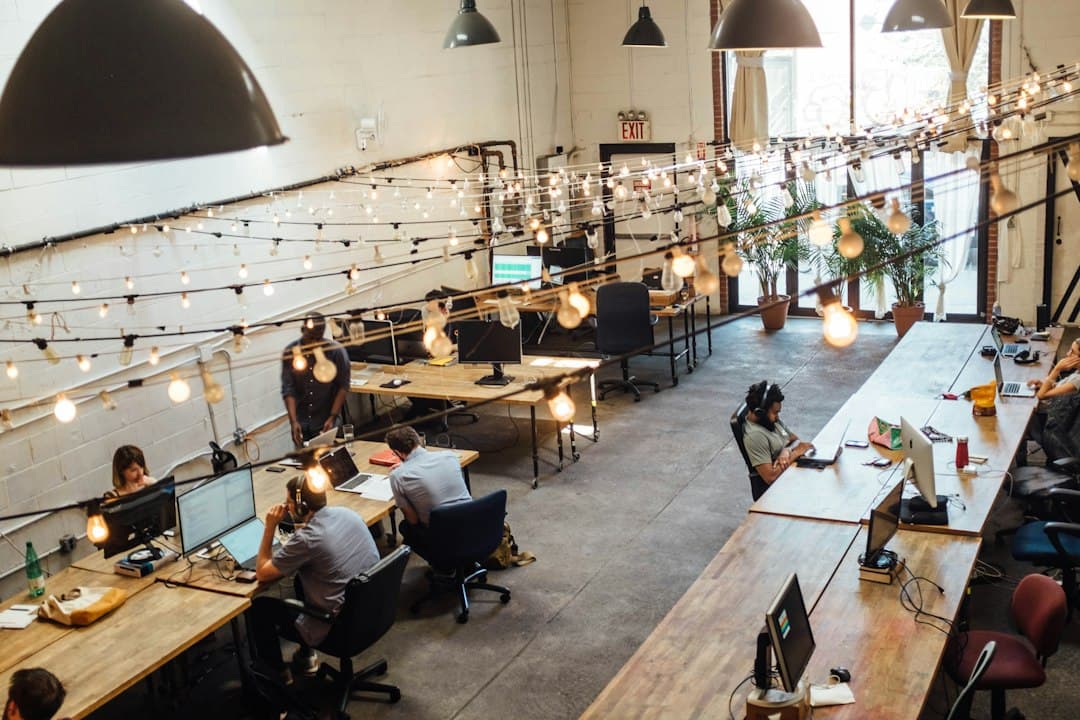
The difficulties people encounter are mostly personal. At the top, nostalgia and missing family (45%)[1]. Next come the language barrier (32%), missing the home country (29%), feelings of loneliness or isolation (26%), and integration difficulties (24%)[1].
On integration, 54% of respondents note that professional relationships are the main way of integrating abroad[1]. If you work alone remotely, this means actively seeking other places to meet people: shared workspaces, events, local communities.
These difficulties do not prevent people from thriving: most respondents feel at home abroad (66% say they have found their place, and 31% feel balanced)[1].
Family and Loved Ones: Staying Connected Across Distance
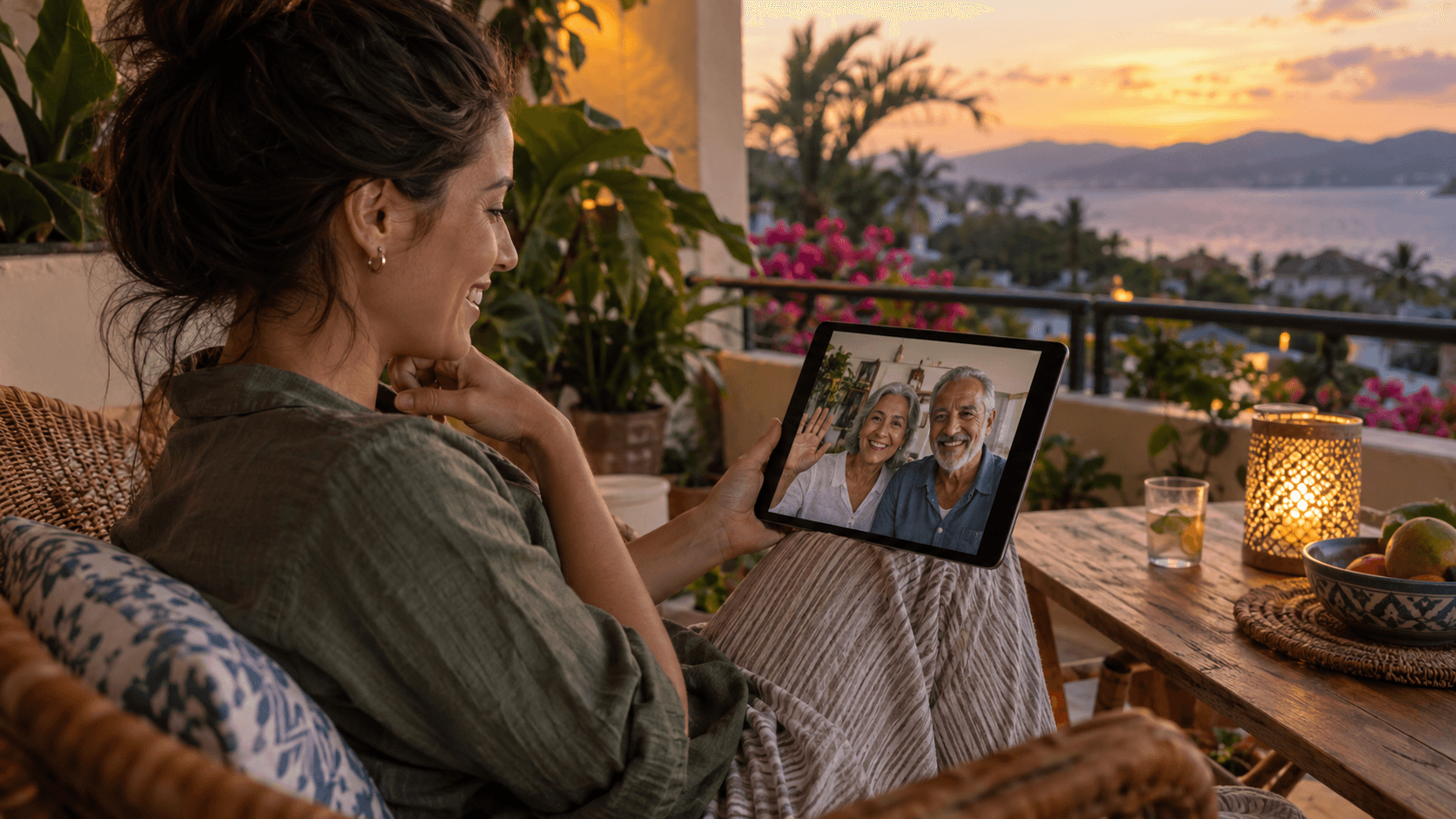
Expats surveyed highlight the impact on family: they report stronger bonds with the loved ones who move with them[1]. For those who stay in another country, they describe a new approach to maintaining the connection[1].
Whether you go alone, as a couple, or as a family, the project should be discussed with everyone involved before departure[2]. Laying out what each person expects from the lifestyle, what they fear, and what they are willing to accept prevents the missing family, the top difficulty cited, from being discovered only once you are there.
Status and the Right to Work: The Framework That Shapes Your Balance
Your life balance also depends on a very concrete point: do you have the right to work where you live? Rules vary from country to country; here are some examples.
- France: visitor status strictly prohibits any professional activity, including paid remote work for an employer or clients abroad; there is no dedicated digital nomad visa[3].
- Malaysia: the digital nomad visa requires remote work performed for entities outside Malaysia, with a minimum income of USD 5,000 per month (or USD 60,000 per year) for non-IT/digital profiles[4].
- Moldova: the permitted activity must be performed exclusively remotely for entities registered outside Moldova; no work for a Moldovan employer is allowed under this status[5].
- Benin: remote work for an employer or clients based exclusively abroad is neither explicitly authorized nor prohibited by short-stay rules; it is a gray area. Any paid activity for a Beninese entity or with local pay, however, requires a professional immigration visa and an appropriate residence permit[6].
The common lesson: the same action, opening your laptop to work, may be allowed, tolerated, or prohibited depending on the country and your status. Check the rules of your target country before building your activity on them.

Points to Watch: Borders and Status
- Schengen Area: the Entry/Exit System (EES) automatically calculates the 90-days-in-180 limit based on recorded entries and exits, which makes overstays systematically detectable in all Schengen countries[7].
- Your first crossing under the EES takes longer at the border, since it includes biometric registration; subsequent crossings reuse the stored data[8].
- Border controls may require proof of sufficient means of subsistence for the length of your stay[9] and of planned accommodation[10]. Keep them within reach.
- France: assuming you are allowed to work remotely under visitor status is risky. Authorities interpret the ban on working in France broadly; prefectures sometimes tolerate certain cases, but without any guarantee, with a risk of refusal or difficult regularization[3].
- Georgia: since March 1, 2026, the vast majority of foreigners without a permanent residence permit must obtain a work activity permit before any paid activity, including freelancing or serving as a company director[11].
Key Points Before You Leave
- Clarify your reason for leaving: personal desire, a couple or family project, or an employer assignment.
- Discuss the project with everyone who is leaving, and plan how to stay connected with those who stay behind.
- Plan a pace of travel that is compatible with your work.
- Think early about settling in: language, meeting people, professional network.
- Check, country by country, which status gives you the right to work before you settle in.
- If you travel within the Schengen Area, track your day count and keep proof of means of subsistence and accommodation.
This article gives you benchmarks to think through your project; it does not detail step-by-step visa procedures, children's schooling, or a line-by-line budget, which require going further depending on your destination.
Sources
- 1.^ abcdefghijkexpatcommunication.com — Expat Communication Barometer 2023 — motivations and realities of expatriation: “Expatriation is increasingly a desire for personal fulfillment.”; “Indeed, 71% of respondents left to fulfill a personal wish to live abroad, and only 29% left following an offer from their employer.”; “The primary reason for expatriation is the desire for a human and/or family adventure, cited by 48% of respondents in 2023, a figure that has been steadily rising. Professional reasons rank only fourth: 31% see expatriation as a career advancement.” https://www.expatcommunication.com/pourquoi-partir-en-expatriation-barometre-resultats-enquete/ (accessed October 30, 2026)
- 2.^ abcdeffamille-nomade-digitale.com — Fulfilling your dreams through a nomadic lifestyle: “Refocusing on what matters is a good reason to become a digital nomad, whether you are single, a couple, or a family.”; “An important point: the modern nomad seeks harmony between professional life and personal aspirations.”; “If your goal is to become an entrepreneur nomad, you will sometimes have to slow down your pace of travel in order to focus on your business.” https://www.famille-nomade-digitale.com/realiser-ses-reves-grace-a-un-mode-de-vie-nomade/ (accessed October 30, 2026)
- 3.^ abMira Knowledge — Visitor status explicitly prohibits any professional activity in France, including paid remote work for an employer or clients abroad; there is no dedicated digital nomad visa in France. Verified on 06/08/2026: official source service-public.fr. https://www.service-public.fr/particuliers/vosdroits/F2231 (accessed June 8, 2026)
Show 8 more sourcesShow less
- 4.^Mira Knowledge — Applicants must carry out professional work remotely for entities outside Malaysia; the minimum income is USD 5,000 per month (or USD 60,000 per year) for non-IT/digital profiles. Verified on 06/08/2026: official source mdec.my. https://mdec.my/derantau (accessed June 8, 2026)
- 5.^Mira Knowledge — Authorized professional activity must be carried out exclusively remotely, only for entities registered outside Moldova; no work for a Moldovan employer is permitted under this status. Verified on 06/08/2026: official source invest.gov.md. (accessed June 8, 2026)
- 6.^Mira Knowledge — Remote work for an employer or clients based exclusively abroad is neither explicitly authorized nor prohibited under short-stay statuses; any paid activity for a Beninese entity or with local pay requires a professional immigration visa and an appropriate residence card. Verified on 06/09/2026: two consistent sources (dei.gouv.bj, evisa.bj). https://www.dei.gouv.bj (accessed June 9, 2026)
- 7.^Mira Knowledge — The EES automatically calculates the 90-days-in-180 stay limit based on recorded entries and exits, which makes overstays systematically detectable in all Schengen countries. Verified on 08/20/2026: official source travel-europe.europa.eu. https://travel-europe.europa.eu/ees_en (accessed August 20, 2026)
- 8.^Mira Knowledge — The first entry under the EES takes longer at the border (biometric registration); subsequent crossings reuse the stored biometric data. Verified on 08/20/2026: official source travel-europe.europa.eu. https://travel-europe.europa.eu/ees_en (accessed August 20, 2026)
- 9.^Mira Knowledge — Visitors must be able to present proof of their means of subsistence for the duration of their stay at border controls. Verified: official source ambacongo-us.org.
- 10.^Mira Knowledge — Visitors must be able to present proof of their accommodation at border controls. Verified: official source ambacongo-us.org.
- 11.^Mira Knowledge — As of March 1, 2026, the vast majority of foreigners without a permanent residence permit must obtain a work activity permit before any paid activity in Georgia, including freelancing or serving as a company director. Verified on 06/13/2026: two consistent sources (ge.usembassy.gov, nomosgeorgia.com). https://ge.usembassy.gov/new-work-permit-rules-for-foreign-nationals-in-georgia-starting-march-1/ (accessed June 13, 2026)