The Netherlands has no visa designed for digital nomads: everything depends on your nationality, your professional status and where you actually live. This article helps you understand which rules apply to your situation, the order in which to complete your arrival steps, and the pitfalls to avoid, especially around housing and health insurance.
The Essentials at a Glance
- The Netherlands has no digital nomad visa; the situation depends on your nationality and professional status[1].
- Citizens of the EU, the EEA and Switzerland have the right to stay and work in the Netherlands; from 4 months, they must register as residents[1].
- A visitor from outside the EU follows the Schengen rule: 90 days maximum in any 180-day period, and a visa is not a work permit[1].
- Anyone living or working in the Netherlands must take out Dutch health insurance within four months of settling there[2].
- The BSN number, obtained by registering with the municipality within 5 days of arrival for stays longer than 4 months, is required to work, open a bank account or get insured[3].
- Basic insurance costs on average between €150 and €200 per month, with a mandatory annual deductible of at least €385[4].
- In major cities, the housing market is very tight, and misleading or fraudulent online listings are regularly reported[2].
- The Netherlands is more expensive than the European average, mainly because of rent[5].
Netherlands and Remote Work: What You Need to Know Before You Leave
There is no Dutch digital nomad visa[1]. Stays involving remote work paid from abroad must therefore fit into the existing categories: self-employed, with an essential interest for the Dutch economy and a business plan, or highly skilled worker recruited through a sponsor[6].
Four topics stand out, and they are not settled together: the right to stay, the right to work, taxation and social security. A visa, for example, is not a work permit[1]. Two scenarios apply: a short stay, or a lasting move. Depending on whether you are an EU citizen or not, the rules differ.
Visa and Right to Stay
If You Are a Citizen of the EU, EEA or Switzerland
You have the right to stay and work in the Netherlands. If you stay 4 months or more, you must register as a resident[1]; if your stay lasts exactly 4 months, check with your municipality. No visa or work permit is required, but you must hold a valid passport or identity document[7].
If You Come From Outside the EU
For a short stay, the Schengen rule applies: 90 days maximum in any 180-day period, even if you do not need to apply for a visa before traveling[1]. These stays are now monitored: the Entry/Exit System (EES) automatically calculates the 90-in-180-day limit based on recorded entries and exits, which makes overstays detectable across all Schengen countries[8].
The ETIAS travel authorization, intended for non-EU nationals exempt from visas, was not yet in service as of August 2026; its launch was then planned for late 2026, after the EES. Check the official EU website to see whether it has become mandatory before you leave[9].
Beyond 90 days, you need a residence permit[1]. Applications for a provisional residence permit (MVV) and a permit often go through a recognized sponsor, via the IND portals; the decision takes about 90 days. If it is positive, you collect the MVV at the Dutch consulate, then enter the Netherlands[10]. A self-employed person coming from outside the EU needs a long-stay visa (MVV)[7].
After arrival, registering with the municipality gives you access to the BSN and the IND residence card (within 5 days or the required deadline)[10].
Work Status: Employee of a Foreign Company or Self-Employed
EU Citizens
EU citizens generally do not need a work permit to work in another EU country, and self-employed workers never need one[11]. If your activity constitutes a business in the Netherlands, you must register with the KVK Chamber of Commerce, which requires a physical Dutch address: a P.O. box is not accepted, but a virtual office or a postal address can offer solutions[12].
Outside the EU
There is no dedicated route for remote work paid solely by a foreign employer or client: you must qualify as self-employed (essential interest for the Netherlands and a business plan) or as a highly skilled worker with a Dutch sponsor[13]. Even if your company is registered in your home country and you only work for clients abroad, you must meet the residence requirements, such as those for the self-employed residence permit[1]. This permit is issued by the IND and is aimed at those who want to start a business or work as a freelance artist[14].
Employed by a foreign employer
For a French or EU citizen, freedom of movement allows remote work for a foreign employer, but taxation and social security apply based on habitual residence; if that residence is in the Netherlands, your situation must be regularized (A1 certificate or change of regime)[13].
Taxation and tax residence
Tax rules vary from country to country and depending on your client; get advice from a tax specialist or accountant on your specific situation before you move[1]. You may have to file tax returns in two countries without paying tax twice on the same income: tax treaties exist to prevent double taxation[12].
If you are an employee and a French tax resident, employed by a Dutch company, the French-Dutch tax treaty assigns the right to tax to the place where the work is performed[15]. For social security, the framework agreement on cross-border telework, in force since July 1, 2023, may allow you to keep the legislation of the employer's state when telework in the state of residence represents at least 25% and strictly less than 50% of working time[15]. This arrangement requires an application and compliance with its conditions[15].
Health and insurance
Every person, including minors, who lives or works in the Netherlands must take out, with the insurer of their choice, health insurance covering their medical costs[2]. This obligation applies even if you are already insured in your home country[3]. You have four months from the time you settle in to do so[2].
Basic insurance costs on average between €150 and €200 per month depending on the insurer and the deductible chosen[4]. Dutch authorities set a mandatory annual deductible of at least €385[4]. The general practitioner (huisarts) is the entry point to the healthcare system, and the consultation is covered at 100% with no deductible[16].
Arrival steps: BSN, address, DigiD, phone
If you stay more than 4 months, register with the municipality of your place of residence within 5 days of your arrival[3]. This registration gives you your BSN, which you need to work, open a bank account, take out health insurance or apply for benefits[3]. If you stay less than 4 months without a fixed address, you can apply for a non-resident BSN[2].
DigiD, the digital identity for public services, can be requested free of charge with your BSN, a registered address and a phone number; allow up to 5 business days to receive the activation letter[17].
On the phone side, keeping your Dutch number (nummerbehoud) is free[18].
Housing
The influx of newcomers and limited housing supply create strong pressure on the housing market in the main cities: plan your move well in advance[2]. Budget for a security deposit of up to two months' rent[19].
Since July 1, 2023, an agency acting on behalf of the landlord may not charge the tenant any brokerage or agency fees; this cost falls on the landlord[19]. Treat any request for "agency" or "contract" fees as a red flag[19]. Also check that the home allows you to register with the municipality, since that registration is what gives you access to a BSN[19].
Cost of living, internet and coworking
The cost of living in the Netherlands is 24.7% higher than the European average, rent included, mainly because of housing in urban areas such as Amsterdam and Rotterdam[5]. A third-party site cites €1,200 to €1,500 per month for shared housing, and €2,000 to €2,500 for a one-bedroom private apartment outside the city center[5].
Amsterdam is a very popular place for coworking spaces suited to the digital nomad lifestyle[20].
Cities, Regions and Transportation
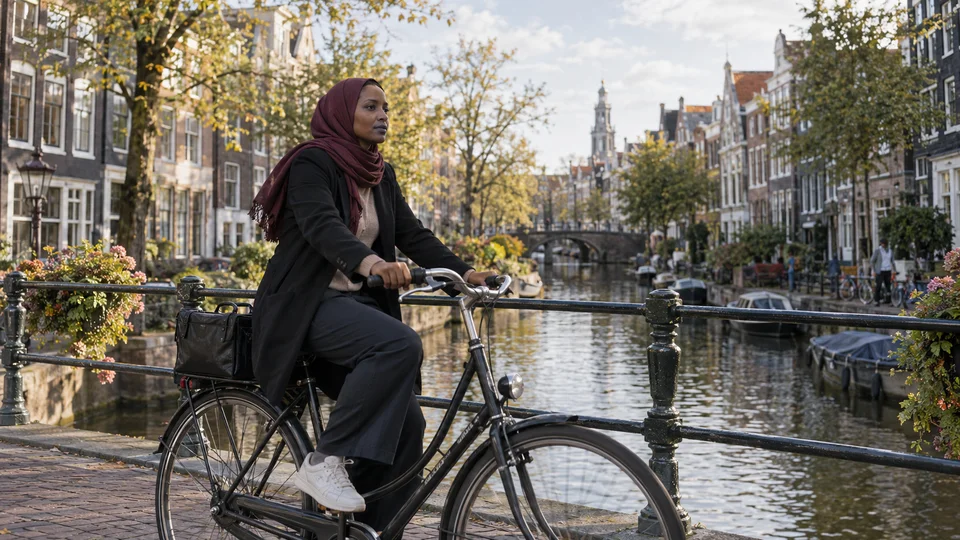
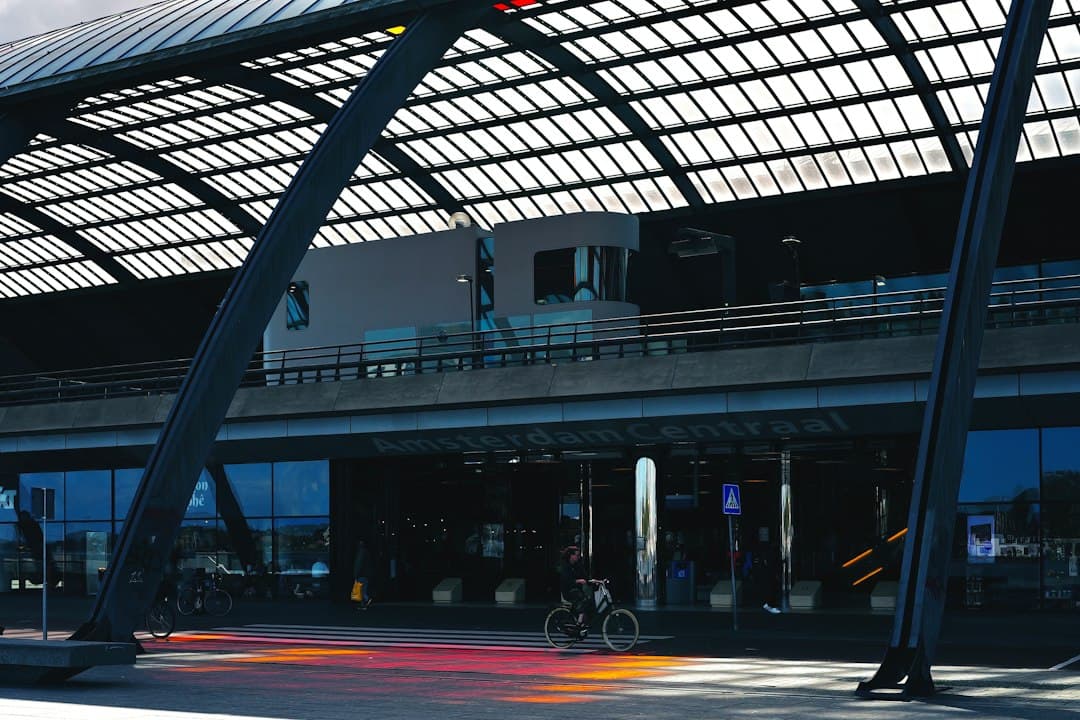
Each city has its own character: Amsterdam attracts you with its professional opportunities, Maastricht is a quieter medieval town, The Hague appeals to multilingual international profiles with its international organizations, and Rotterdam suits modernists[21]. In the Netherlands, the bicycle is king[21].
When it comes to trains, the network is good, but its density makes trains fairly slow and prone to frequent delays; there are no domestic flights[22]. Several cities have also introduced environmental zones for vehicles: if you drive, check the restrictions before entering the city center[22].
Language and Integration
The inburgering, the civic integration program, is required by law for certain newcomers[23]. It applies to certain arrivals who are neither nationals of the EU, the EEA, nor Switzerland[23]. If you are an EU citizen, you are generally not subject to this requirement.
Pitfalls, Scams and Things to Watch For
- A landlord who refuses registration at the address can prevent you from obtaining the BSN: not all landlords will allow it[19].
- Rental websites: the Dutch consumer protection authority, the ACM, has received many consumer complaints; listings are no longer available or were never rentable, and some situations look like fraud[24].
- Cases of misleading or fraudulent online housing offers are regularly reported[2].
- Agency fees illegally charged to tenants are still observed in practice[19].
- Outside the EU, a short-stay visa is not a work permit: you may not work for Dutch clients or look for a job in the Netherlands[1]. On a short stay, occasional remote work is tolerated, but extended remote work is risky: refusal, overstaying, and tax or social security problems[13].
- Taxes and social security apply as soon as your habitual residence is in the Netherlands, even if your employer is abroad[13].
- Not taking out health insurance can expose you to significant financial penalties[2].
- Entry or stay may be refused in case of non-compliance with Dutch legislation, for example tax rules[2].
- In case of a traffic violation, the police frequently require immediate payment of the fine; without cash, they will escort the offender to an ATM[22].
Steps, in Order
- Determine your right to stay based on your nationality: EU, EEA or Switzerland on one hand, non-EU on the other[1].
- Choose your professional status (employee of a foreign employer or self-employed) and check taxes and social security with an advisor[1].
- Find accommodation that allows registration with the municipality[19].
- If you stay more than 4 months, register with the municipality within 5 days of your arrival to obtain the BSN[3].
- Take out basic health insurance within four months of settling in[2].
- Apply for your DigiD with your BSN and a registered address[17].
- If your activity constitutes a business in the Netherlands, register it with the KVK using a Dutch address[12].
This article gives you the essentials to make a decision and avoid mistakes. To truly settle in, you will need to go further: step-by-step procedures, detailed taxation, a line-by-line budget and choosing your neighborhood.
Sources
- 1.^ abcdefghijklmbusiness.gov.nl — Become a digital nomad: a step-by-step plan | Business.gov.nl: “The Netherlands does not have a digital nomad visa.” ; “Non-EU visitors must follow the Schengen visa rules, which means a maximum stay of 90 days in any 180-day period.” ; “A visa is not a work permit either. You may not work for Dutch clients or look for work in the Netherlands.” https://business.gov.nl/starting-your-business/starting-situations/become-a-digital-nomad-a-step-by-step-plan/ (accessed October 20, 2026)
- 2.^ abcdefghijnl.diplomatie.gouv.fr — Settling in the Netherlands | France in the Netherlands: “Everyone, including minors, who lives or works in the Netherlands must be insured under the Health Insurance Act (ZVW) and must take out, with the insurer of their choice, insurance covering their healthcare costs.” ; “People settling in the Netherlands must take out health insurance within four months of their arrival.” ; “Failing to take out health insurance may expose you to significant financial penalties.” https://nl.diplomatie.gouv.fr/fr/vivre-ou-venir-aux-pays-bas/sinstaller-aux-pays-bas (accessed October 20, 2026)
- 3.^ abcdeuwv.nl — Working in the Netherlands | UWV: “You must take out Dutch health insurance, even if you are already insured in your country of origin.” ; “Are you staying in the Netherlands for more than 4 months? If so, register with the municipality where you are staying within 5 days of your arrival.” ; “You need this number to work, open a bank account, take out health insurance or apply for benefits.” https://www.uwv.nl/nl/languages/travailler-aux-pays-bas?dmn=1A (accessed October 20, 2026)
Show 21 more sourcesShow less
- 4.^ abcexpat.com — Expat Guide to the Netherlands: Essentials for Your Move - Expat.com: “Basic insurance costs an average of €150 to €200 per month, depending on the insurer and the deductible level you choose.” ; “Dutch authorities set a mandatory annual deductible of at least €385, which all insured persons must pay.” https://www.expat.com/fr/guide/europe/pays-bas/ (accessed October 20, 2026)
- 5.^ abcnestfainder.ai — Cost of Living in the Netherlands — Full Analysis | NestFainder: “The Netherlands offers a high quality of life, with an overall cost of living (rent included) 24.7% higher than the European average, mainly due to high housing prices in urban areas such as Amsterdam and Rotterdam.” ; “€1,200 to €1,500 (shared housing, local markets, cycling and public transport).” ; “€2,000 to €2,500 (private one-bedroom apartment outside the center, a mix of home cooking and occasional restaurant meals, gym and streaming).” https://www.nestfainder.ai/fr/country/netherlands/guides/cost-of-living (accessed October 20, 2026)
- 6.^Mira Knowledge — The Netherlands has no visa dedicated to digital nomads; paid remote work performed from abroad must fit within existing categories: self-employed with essential interest for the Netherlands and a business plan, or highly skilled migrant through a sponsor. Verified on 06/08/2026: official source ind.nl. (accessed June 8, 2026)
- 7.^ abgovernment.nl — As a foreign self-employed person, can I work in the Netherlands? | Government.nl: “If you come to the Netherlands as a self-employed person, you will need a long-stay visa (MVV).” ; “You can work in the Netherlands without a visa, residence permit or work permit if you come from one of the following countries:” ; “However, you will need a valid passport or identity document.” https://www.government.nl/documents/question-and-answer/foreign-citizens-working-in-the-netherlands/as-a-foreign-self-employed-person-can-i-work-in-the-netherlands (accessed October 20, 2026)
- 8.^Mira Knowledge — The EES automatically calculates the 90-days-in-180 stay limit based on recorded entries and exits, which makes overstays systematically detectable in all Schengen countries. Verified on 08/20/2026: official source travel-europe.europa.eu. https://travel-europe.europa.eu/ees_en (accessed August 20, 2026)
- 9.^Mira Knowledge — ETIAS is a pre-travel authorization for non-EU nationals exempt from visas; as of August 2026, it is not yet in service, with its launch planned for late 2026, after the EES. Verified on 08/20/2026: official source travel-europe.europa.eu. https://travel-europe.europa.eu/etias_en (accessed August 20, 2026)
- 10.^ abMira Knowledge — For non-EU nationals, MVV and permit applications often go through a sponsor recognized on the IND portals; the decision takes about 90 days; if positive, the MVV is collected at the consulate and then entry is made; after arrival, municipal registration provides the BSN and the IND card; for EU/French citizens, there is no MVV or permit, but registration is required beyond 4 months. Verified on 06/08/2026: official source ind.nl. https://ind.nl/en/ (accessed June 8, 2026)
- 11.^Mira Knowledge — EU citizens generally do not need a work permit to work in another EU country, and self-employed persons never need one. Verified on 11/10/2026: official source europa.eu. https://europa.eu/youreurope/citizens/work/work-abroad/work-permits/index_en.htm (accessed October 11, 2026)
- 12.^ abckvk.nl — KVK advice for digital nomads | KVK: “You must have a physical address in the Netherlands to register in the Trade Register. A post office box is not permitted, but a virtual office or a postal address may offer solutions.” https://www.kvk.nl/en/press/digital-nomad-lifestyle-on-the-rise/ (accessed October 20, 2026)
- 13.^ abcdMira Knowledge — There is no dedicated channel for remote work paid exclusively by a foreign employer or client; a non-EU national must qualify as self-employed (essential interest for the Netherlands + business plan) or as highly skilled (Dutch sponsor). Verified on 06/08/2026: official source ind.nl. https://ind.nl/en/residence-permits/work/residence-permit-self-employed-person (accessed June 8, 2026)
- 14.^ind.nl — Residence permit self-employed person | IND: “Do you want to set up a business in the Netherlands, or work as a self-employed artist in the Netherlands? Find out what the conditions are and how to apply for a self-employed residence permit.” https://ind.nl/en/residence-permits/work/residence-permit-self-employed-person (accessed October 20, 2026)
- 15.^ abcbefiscal.be — Telecommuting from France for a Dutch employer: where to pay tax on 2025 and 2026 income? | Befiscal: “For the French-resident employee concerned, Article 15 of the convention allocates the right to tax to the places where the employment is exercised.” ; “The cross-border telework framework agreement, in force since July 1, 2023, may allow the employer's State legislation to be retained when telework in the State of residence represents at least 25% and strictly less than 50% of working time.” ; “It requires a request and compliance with its conditions.” https://www.befiscal.be/blog/teletravail-france-pays-bas-fiscalite (accessed October 20, 2026)
- 16.^xn--lexpatri-i1a.fr — Moving abroad to the Netherlands in 2026: 30% ruling, taxes: “The general practitioner (huisarts) is the mandatory point of entry; consultations with the GP are covered at 100% with no deductible.” https://xn--lexpatri-i1a.fr/destinations/pays-bas (accessed October 20, 2026)
- 17.^ abinburgering.org — Applying for DigiD and logging in - Inburgering.org: “For the procedure with an address in the Netherlands, apply for DigiD for free.” ; “You will need your burgerservicenummer (BSN, personal number for public services), a registered address and a phone.” ; “Allow up to 5 working days to receive the activation letter.” https://inburgering.org/fr/guides/digid-netherlands-guide (accessed October 20, 2026)
- 18.^inburgering.org — Phone and internet in the Netherlands: finding a connection: “Nummerbehoud (keeping your phone number) is free.” https://inburgering.org/fr/guides/phone-internet-netherlands-guide (accessed October 20, 2026)
- 19.^ abcdefgliving-abroad.org — Finding housing in the Netherlands: “Newcomers should expect to have to register their address with the municipality, plan for a security deposit of up to two months' rent, and know that rental agency fees may not legally be charged to tenants.” ; “Since the Good Landlord Behavior Act, in force since July 1, 2023, a letting agency acting on behalf of the owner may not charge tenants any brokerage or agency fees; that cost falls on the owner.” ; “Tenants should treat any request for agency fees or a one-month contract fee as a warning sign, even though such illegal charges still occur in practice.” https://www.living-abroad.org/fr/pays/pays-bas/logement/ (accessed October 20, 2026)
- 20.^inspireambitions.com — Digital Nomad Amsterdam - Your Ultimate Guide to a Work-From-Anywhere Life in the Venice of the North: “Amsterdam is a highly sought-after location for coworking spaces suited to the digital nomad lifestyle.” https://www.inspireambitions.com/fr/digital-nomad-amsterdam/ (accessed October 20, 2026)
- 21.^ abglobalhealth.insurance — Living in the Netherlands as an expat | Global Health: “While multilingual international profiles will appreciate the multiculturalism and the ecosystem of international organizations in The Hague, modernists will choose to settle in Rotterdam, the country's second city, known for its innovation ambitions.” ; “Many expats settle in Amsterdam, the highly cosmopolitan Dutch capital, as it offers numerous professional opportunities.” ; “For a less urban but equally appealing atmosphere, you may opt for Maastricht, a medieval, epicurean city overflowing with cultural attractions.” https://globalhealth.insurance/fr/destination/sexpatrier-aux-pays-bas-notre-guide-pour-une-installation-reussie/ (accessed October 20, 2026)
- 22.^ abcdiplomatie.gouv.fr — Netherlands - Useful information | France Diplomatie: “The network is good, but its density means trains are fairly slow and prone to frequent delays.” ; “There are no domestic flights.” ; “Several Dutch cities are working toward a less polluted city center by establishing environmental zones.” https://www.diplomatie.gouv.fr/fr/information-par-pays/pays-bas/conseils-aux-voyageurs-informations-utiles (accessed October 20, 2026)
- 23.^ abinburgering.org — Understanding inburgering in the Netherlands - Inburgering.org: “The law requires this program for certain newcomers.” ; “It applies to certain newcomers who are not nationals of the European Union, the European Economic Area or Switzerland.” https://inburgering.org/fr/exam-info/what-is-inburgering-netherlands (accessed October 20, 2026)
- 24.^consuwijzer.nl — Beware of deception: ACM investigates rental housing websites | ACM ConsuWijzer: “We have received many consumer complaints about these websites.” ; “The properties listed on rental sites were often no longer available, or were never for rent.” ; “In some cases, this appears to be fraud.” https://www.consuwijzer.nl/nieuws/let-op-voor-misleiding-acm-onderzoekt-huurwoningwebsites (accessed October 20, 2026)